Intro to The Automation Builder
Audienceful's automation builder lets you create sophisticated, multi-step email workflows triggered by subscriber activity, ecommerce events, and custom integrations. Whether you're running a simple welcome sequence or a complex conditional flow with branching logic, you can build it visually without code.
Here are just a few things you can automate:
- Welcome emails: Trigger a single email or drip sequence when someone subscribes.
- Ecommerce flows: Send abandoned cart reminders, post-purchase follow-ups, or win-back campaigns using native Stripe and Shopify triggers.
- Onboarding & nurture sequences: Teach new users how to use your product, then branch the flow based on their engagement or profile data.
- Lead magnets: Deliver a PDF, ebook, or coupon code instantly after signup.
- Event-driven campaigns: Trigger automations from any external platform using custom events via our API or integrations.
Getting started
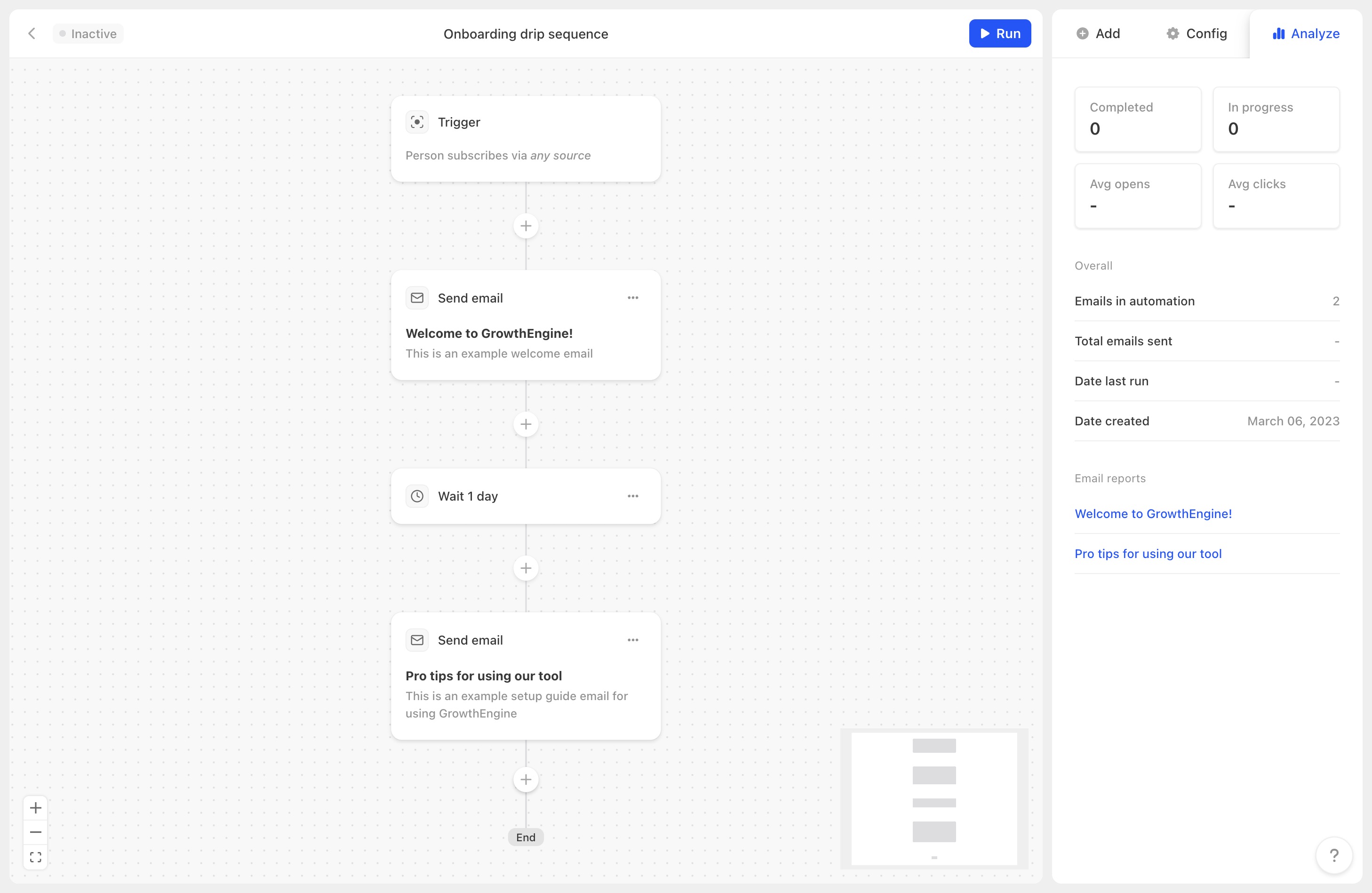
To get started, click the Automations tab in the sidebar and then New Automation. Every automation is built from two core components: a trigger and a sequence of actions.
Triggers: what starts the automation
The trigger is the event that enters a contact into your automation. You have several trigger types to choose from:
- Person subscribes: Fires when someone joins your list through any source: forms, imports, or the API.
- Person enters audience: Fires when a contact matches the conditions of one of your audience segments (based on tags, custom fields, engagement, or any combination).
- Person leaves audience: Fires when a contact no longer matches an audience's conditions. Useful for win-back or re-engagement flows.
- Date-based: Fires on a date stored in a contact's field, like a birthday, anniversary, renewal date, or any recurring occasion. Perfect for "Happy Birthday" discounts or renewal reminders.
- Custom event: Trigger automations from your own app or any external platform via our Events API or Zapier. Pass event properties directly into your emails for fully personalized transactional messages.
- Stripe event: Natively trigger automations from Stripe events like new subscriptions, cancellations, failed payments, and more, with no code or third-party middleware required.
- Shopify event: Trigger flows from Shopify activity like new orders, abandoned checkouts, and customer creation, all natively connected.
Actions: what happens next
Once a contact enters your automation, you build the flow by clicking the + icon to insert actions in sequence. Every action fires in chronological order, top to bottom.
- Send email: Deliver an email from any draft in your workspace. Pick an email theme to control the appearance and sending identity.
- Wait: Pause the flow, either for a set duration (hours, days, or weeks) or until a specific date and time.
- Conditional: Split your automation into branches based on conditions like tags, field values, audience membership, or engagement data. Each branch can have its own independent sequence of actions.
- Update fields: Automatically set or override custom field values on a contact as they move through the flow. Great for tracking lifecycle stage or lead scoring.
- Add tags / Remove tags: Apply or strip tags at any point in the flow, which can feed into audience segments or trigger other automations.
- Send a webhook: Fire a signed HTTP request to an external system when a contact reaches a step. Handy for notifying your own app or connecting to other tools.
You can chain these actions in any combination to build flows as simple or as complex as you need.
Set a goal and track conversions
Every automation can have a goal: the outcome you're actually trying to drive, like "made a purchase," "entered the customers audience," or "clicked the upgrade link." When a contact meets the goal, Audienceful marks them as converted (and, if you choose, exits them from the flow so they stop receiving follow-ups they no longer need).
Goals give you a real conversion rate for each automation, attributed within a window you control, so you can see which sequences actually move the needle, not just which ones get opened.
Analytics and conversion tracking
The Analytics tab in an automation's side panel shows how the flow is performing: contacts entered, in progress and completed, engagement across every email it has sent, revenue attributed to it, and your conversion rate once a goal is set. Each email in the sequence has its own report, so you can find the exact step where people drop off.
Automation analytics covers how to read those numbers, how to set goals, and how the attribution window works.
Editing drafts that are in a live automation
You can update your email content without ever pausing a running automation.
Simply open up any draft that's in an automation, and you'll see a bubble that says This draft is currently in live automation.
Edit the draft however you'd like (all changes will autosave locally to your workspace), and when you're ready to push the latest version into your live automation, just click the link in the bubble.
Preventing emails from sending on weekends
If you're in the B2B space, common practice is to prevent emails from sending on weekends to avoid low-engagement when people aren't at work.
To set this up, click the Gear icon in the top right of the automation builder, and use the checkboxes to configure which days automations should fire. Your automations will dynamically pause during any unchecked days.
At what time of the day will automated emails send?
Audienceful tracks what time of the day each subscriber triggered the automation, and uses that as the default time of day for future emails in the same automation (only for that subscriber).
This is recommended since it is the most accurate way to ensure your users will be most likely to engage with their email at this time, given most company audiences these days are global.
However, if you want to set a specific time of day for automation emails in a given automation, you can set it by clicking the gear icon.