Best Ghost Alternative for Email Marketing
TL;DR: Ghost is a beautiful open-source publishing platform with built-in newsletters and membership features. It's ideal for independent publishers and bloggers, but lacking the email design tools, ecommerce automation, and advanced segmentation that product-focused teams need.
Compare features
A side-by-side look at how Ghost and Audienceful compare across the features that matter most.
Ghost vs Audienceful: Summary
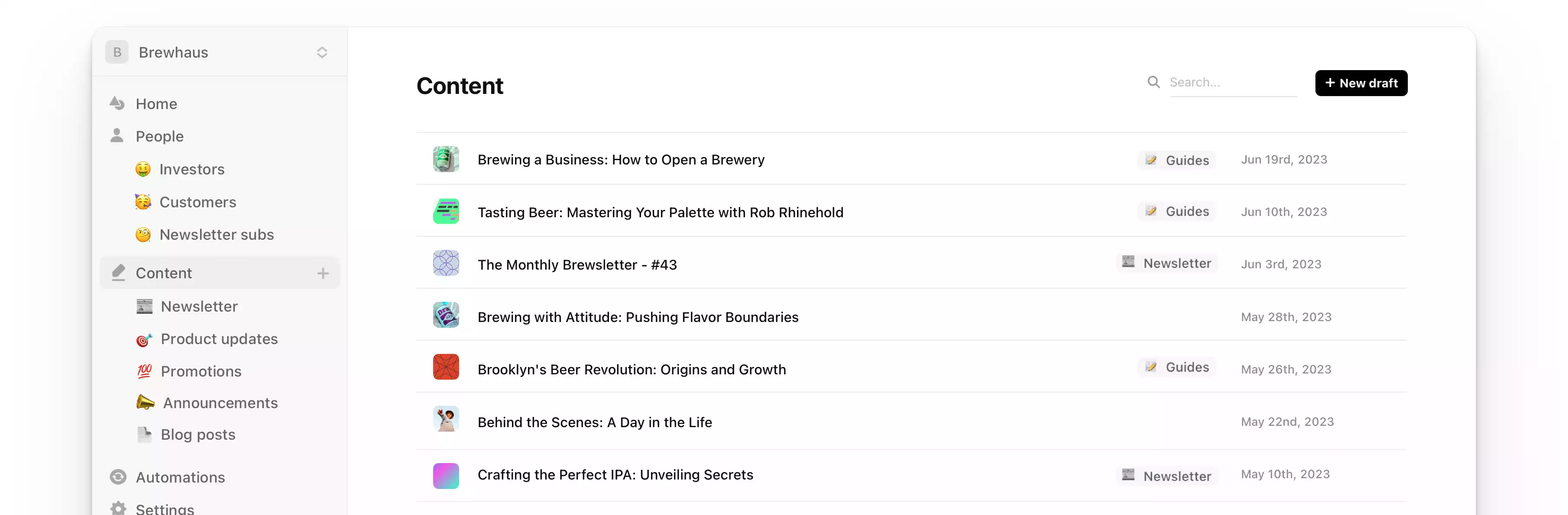
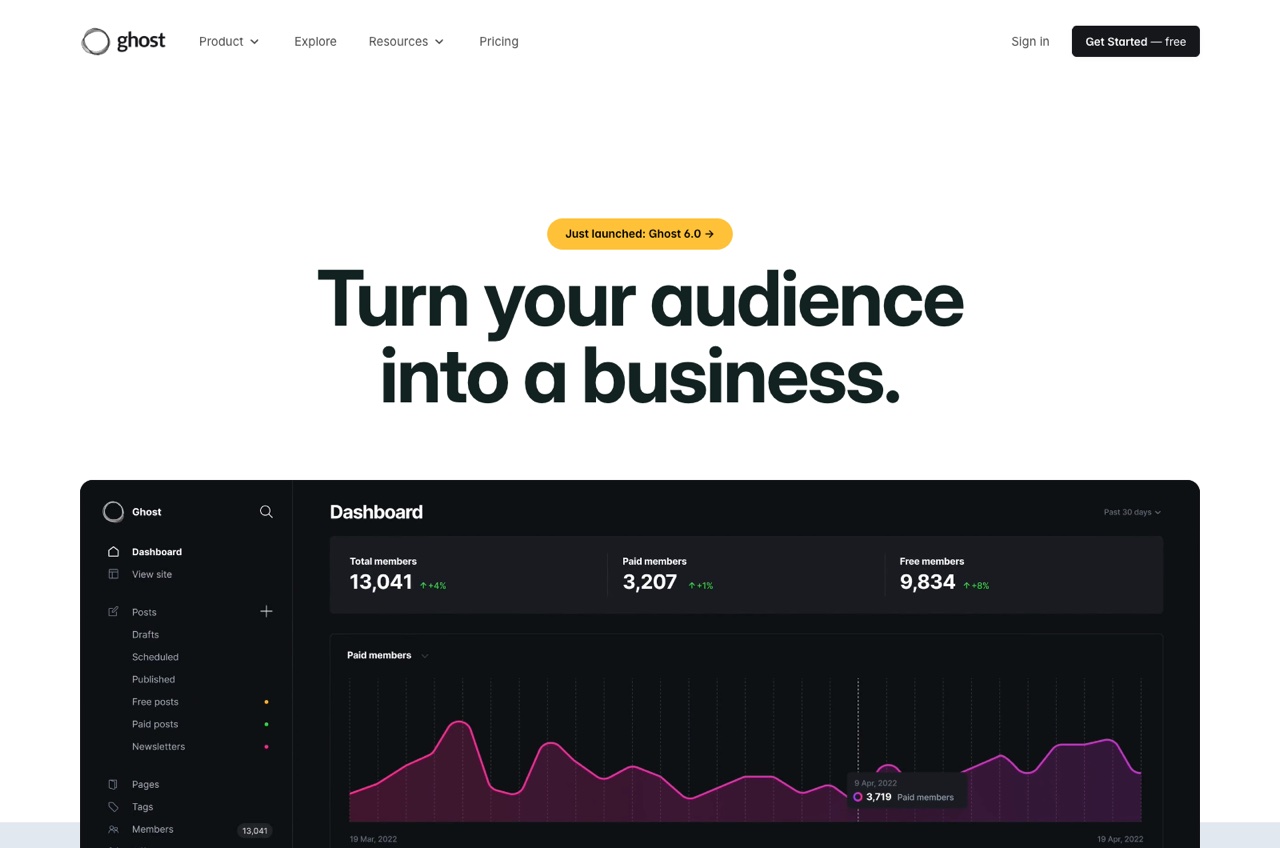
Ghost is an open-source publishing platform with built-in newsletter and membership features. It offers a beautiful, fast, Markdown-first editor optimized for long-form content, and native membership/subscription monetization through Stripe. But Ghost is a publishing platform first, not an email marketing tool. Newsletters inherit your site theme with no email design customization or drag-and-drop editor. Automation is limited to basic welcome emails, with no branching, conditional splits, or event-based triggers. Segmentation doesn't go beyond free vs. paid tiers. There's no Shopify integration, no real-time collaboration, and no AI features. It's self-hostable for free or available as managed hosting ($9-199/mo). Great for publishers and bloggers who want an all-in-one writing and monetization tool, but the wrong choice for email marketing campaigns.
Pricing: who's cheaper?
Ghost is an open-source publishing platform with optional managed hosting (Ghost Pro). There's no free tier; the self-hosted version is free but requires your own server and Mailgun account for email delivery. Ghost Pro's Publisher plan starts at $29/month for up to 1,000 members, scaling with your audience size. Audienceful's Essentials plan is a dedicated email marketing platform with automation, segmentation, and ecommerce integrations included at every tier.
Ghost Pro (Publisher) vs Audienceful (Essentials): Pricing (billed yearly)
Ghost Pro Publisher plan pricing compared to Audienceful Essentials at standard subscriber tiers. Ghost is cheaper across the board, but it's a publishing platform with basic newsletter features, while Audienceful is a dedicated email marketing platform with automation, segmentation, and ecommerce integrations.
Monthly price by contact volume
Pricing data sourced from public pricing pages · Last verified October 2026
Email Editor and Design
Summary: Audienceful's unified block editor combines writing speed with deep design control. You get a full design system with reusable styles and components, fine-grained layout tools, and the ability to buil...
Ghost's editor is one of the best writing experiences available for long-form content. It's fast, clean, and Markdown-first, built for publishing blog posts and articles, not for designing emails. The critical limitation is that Ghost newsletters simply mirror your site theme. There's no separate email editor, no drag-and-drop design tools, no reusable components, and no way to control email layout independently from your website. Your newsletter looks like your blog post in an inbox, and that's the only option. For writers who want a minimal, text-forward newsletter, that works. For teams that need branded, visually distinct email campaigns, Ghost offers no path forward.
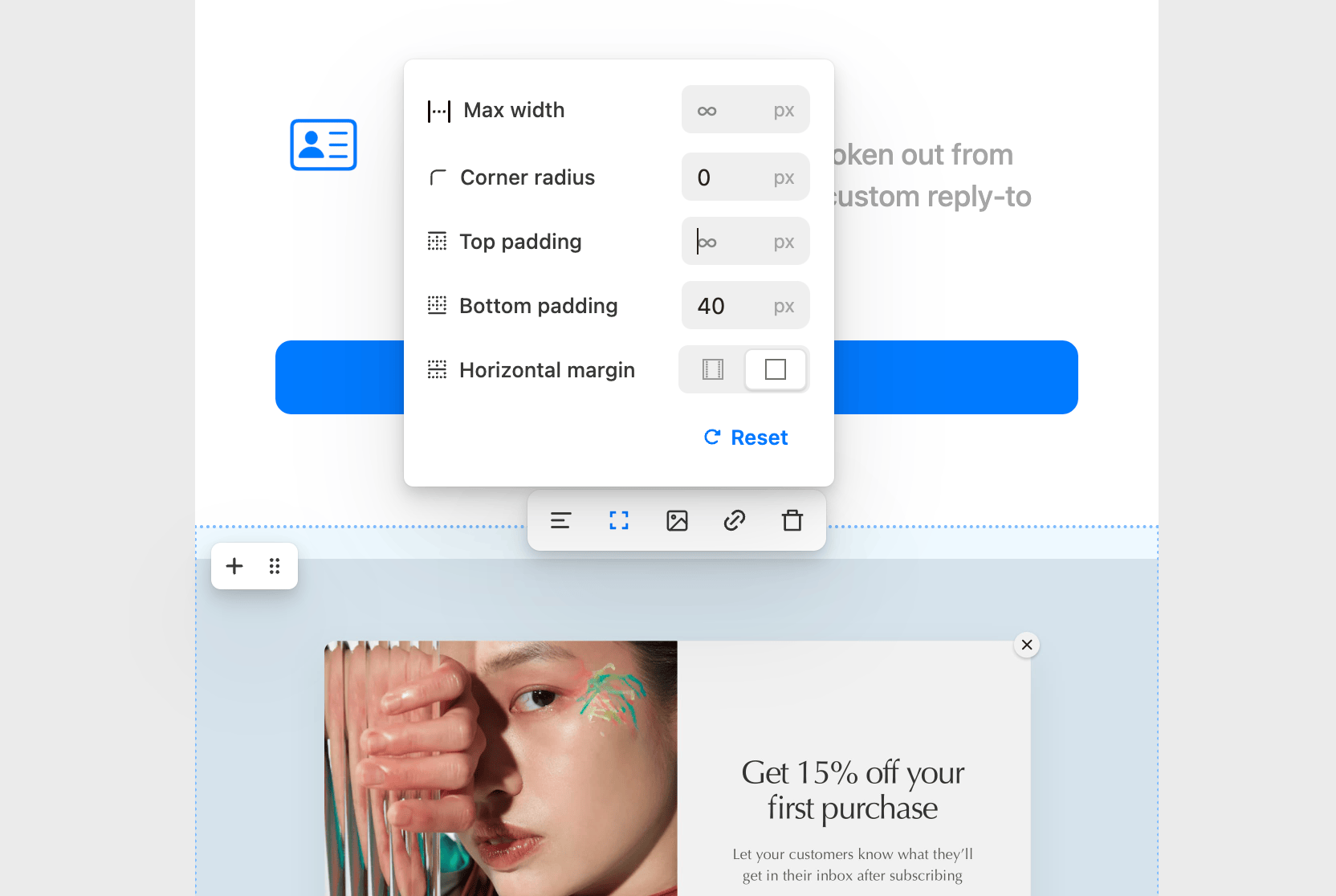
Audienceful's unified block editor combines writing speed with deep design control. You get a full design system with reusable styles and components, fine-grained layout tools, and the ability to build visually compelling emails without sacrificing the fast, keyboard-driven authoring experience. It's the difference between a publishing tool that also sends emails and an email platform purpose-built for teams who care about both content and presentation.
AI and Collaboration
Summary: Audienceful's editor was designed for teams from the start. Multiple people can work on the same email simultaneously with live cursors and presence indicators.
Ghost has no AI features: no content generation, no subject line suggestions, no AI image creation. The editor is single-user only with no real-time collaboration, so teams working on email content are stuck editing sequentially or coordinating outside the platform. For solo bloggers this is a non-issue, but for any team producing email content on a schedule, these gaps slow everything down.
Audienceful's editor was designed for teams from the start. Multiple people can work on the same email simultaneously with live cursors and presence indicators. And every plan includes a built-in AI agent that goes beyond drafting: it writes and edits emails in your voice using your best-performing sends as style references, reads URLs you paste for context, generates images natively, and can build audience segments or entire automations from a plain-language brief, proposing a plan you approve before anything sends. For teams shipping campaigns on a regular cadence, this collapses a multi-tool, multi-hour workflow into one session.
Automation and Workflows
Summary: Audienceful's automation builder handles exactly those use cases. It supports branching logic, conditional splits, and event-based triggers tied to native Stripe and Shopify integrations, so you can b...
Ghost's automation capabilities are minimal. You can set up a basic welcome email when someone subscribes, and that's essentially it. There's no visual automation builder, no branching logic, no conditional splits, no event-based triggers, and no multi-step sequences beyond simple drip campaigns. Ghost was built to publish content and manage memberships, not to orchestrate marketing workflows. If you need to send a cart abandonment sequence, a post-purchase upsell flow, or a re-engagement campaign based on subscriber behavior, Ghost has no tools for any of it.
Audienceful's automation builder handles exactly those use cases. It supports branching logic, conditional splits, and event-based triggers tied to native Stripe and Shopify integrations, so you can build flows based on purchase history, cart behavior, subscription status, and product activity. The gap here isn't a difference in approach; Ghost simply doesn't compete in this category.
Ready to see the difference?
Free up to 1,000 subscribers.
Ecommerce and Integrations
Summary: Audienceful integrates natively with both Stripe and Shopify, pulling in purchase history, subscription events, cart behavior, and product data. This powers revenue attribution that ties specific emai...
Ghost's Stripe integration is built entirely around membership monetization: free tiers, paid subscriptions, and one-time donations. It's an effective system for charging readers for access to your content. But it doesn't sync purchase data, product catalogs, or transactional events into your email workflows. There's no Shopify integration and no ecommerce-oriented features. Ghost wasn't built for online stores, SaaS products, or any business model where email marketing drives product revenue rather than content subscriptions.
Audienceful integrates natively with both Stripe and Shopify, pulling in purchase history, subscription events, cart behavior, and product data. This powers revenue attribution that ties specific emails and automations to actual transactions. Advanced behavioral segmentation lets you target based on what people have bought, how they've engaged with your product, and where they are in the customer lifecycle. Ghost tells you how many free vs. paid members you have. Audienceful tells you which emails are generating revenue.
Deliverability
Summary: Audienceful approaches deliverability as an engineering problem that needs to scale beyond simple newsletter sends. A manual approval process for new senders keeps bad actors off the platform.
Ghost handles email delivery through Mailgun, which provides solid, reliable deliverability, especially for the kind of newsletter content Ghost is designed to send. Text-heavy newsletters to engaged subscriber lists represent a favorable deliverability profile, and Ghost's infrastructure handles that well.
Audienceful approaches deliverability as an engineering problem that needs to scale beyond simple newsletter sends. A manual approval process for new senders keeps bad actors off the platform. Dynamic batching staggers sends based on inbox provider limits and engagement signals, preventing rate limit violations and bulk-sender flags. Smart retry logic automatically re-attempts delivery with optimized timing when emails are temporarily deferred. For larger, more varied sends (the kind ecommerce and SaaS teams run across multiple segments and campaigns), this infrastructure-level approach consistently delivers better inbox placement than routing everything through a single transactional email provider.
Who Each Tool Is Best For
Summary: Audienceful is built for ecommerce brands and SaaS teams who need email to drive product revenue. Deep automation with branching logic and event triggers, native Stripe and Shopify integrations, reven...
Ghost is an excellent choice for independent publishers, bloggers, and writers who want a beautiful open-source platform that handles publishing, website hosting, and membership monetization in one place. If your business model is selling content subscriptions and you want a clean, fast, Markdown-driven writing experience with built-in Stripe billing, Ghost is one of the best options available, especially if you're comfortable self-hosting to avoid the managed hosting costs.
Audienceful is built for ecommerce brands and SaaS teams who need email to drive product revenue. Deep automation with branching logic and event triggers, native Stripe and Shopify integrations, revenue attribution, advanced behavioral segmentation, and a modern collaborative editor with a built-in AI agent: these are the capabilities that product businesses need. If your emails exist to sell products, reduce churn, and grow customer lifetime value rather than to monetize a publishing audience, Audienceful is the right platform.
Frequently asked questions
Is Audienceful better than Ghost?
For ecommerce brands and SaaS teams, yes. Audienceful offers a modern block editor, native Shopify and Stripe integrations, and deliverability infrastructure designed for scale. Ghost has strengths in other areas; read the full comparison above to see the detailed breakdown.
Can I migrate from Ghost easily?
Yes. Export your subscriber list as a CSV from Ghost and import it directly into Audienceful. We handle deduplication, tagging, and validation automatically. Most teams complete their migration in under 15 minutes.
Which is cheaper, Audienceful or Ghost?
Audienceful is typically significantly cheaper. The free plan includes 1,000 subscribers with all features. At scale, Audienceful is typically 30–50% cheaper because we don't charge for unsubscribed or inactive contacts.
Does Ghost have better automation?
Ghost's automation is solid. Audienceful matches it on branching logic and adds native ecommerce triggers from Shopify and Stripe, so you can automate based on real purchase data without third-party middleware.
Which platform is better for ecommerce?
Audienceful. Native Shopify and Stripe integrations mean purchase data flows directly into segmentation and automation, with no middleware required.
How do deliverability rates compare?
Audienceful uses dynamic batching with per-provider throttling and smart retry logic, which typically results in higher inbox placement, especially for larger sends.
Migrate from Ghost in less than 5 minutes
Import your contacts, templates, and automations. We handle the hard parts.
Start Free MigrationRelated comparisons
Audienceful vs ActiveCampaign
ActiveCampaign is a marketing automation and CRM platform known for its powerful automation builder, but its sprawling feature set, dated email editor, and confusing pricing tiers make it a complex choice for teams that just want great email marketing.
See comparison →Audienceful vs Amazon SES
Amazon SES is raw email sending infrastructure from AWS. It's incredibly cheap at $0.10 per 1,000 emails, but it provides zero marketing features, no editor, no automation, and no segmentation, requiring you to build everything yourself on top of a sending pipe.
See comparison →Audienceful vs AWeber
AWeber is one of the oldest email marketing platforms, launched in 1998. It's simple and beginner-friendly but has barely evolved, offering only basic autoresponders, a dated editor, no AI, no real-time collaboration, and no meaningful ecommerce integrations.
See comparison →Stop searching.
Start emailing.
Your first 1,000 subscribers are totally free.
Start Free