Best Campaign Monitor Alternative for Growing Teams
TL;DR: Campaign Monitor is a polished email marketing platform known for beautiful templates and agency-friendly brand controls, but years of stagnation under Marigold ownership have left it without AI, modern automation, or the ecommerce depth that growing teams need.
Compare features
A side-by-side look at how Campaign Monitor and Audienceful compare across the features that matter most.
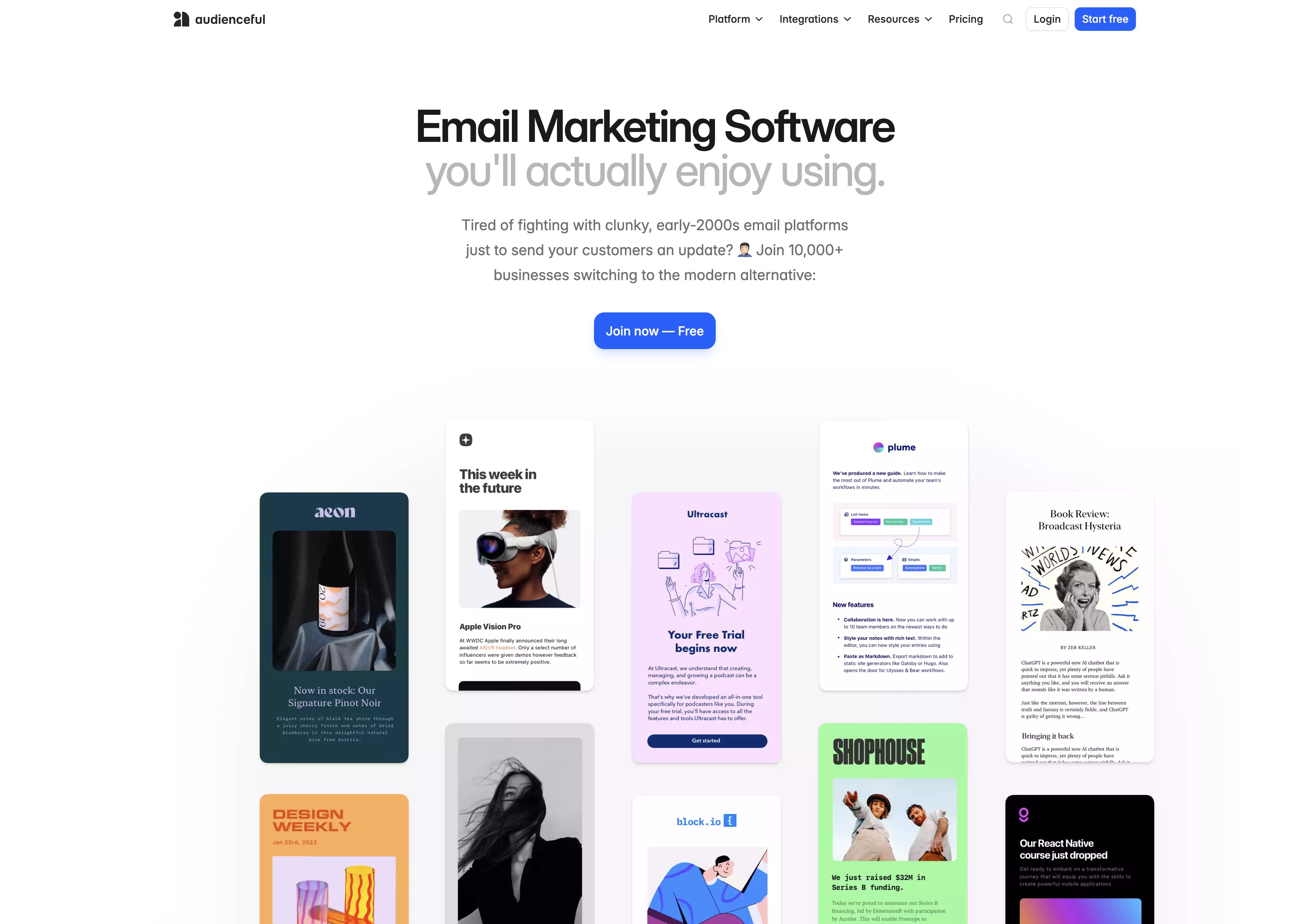
Campaign Monitor vs Audienceful: Summary
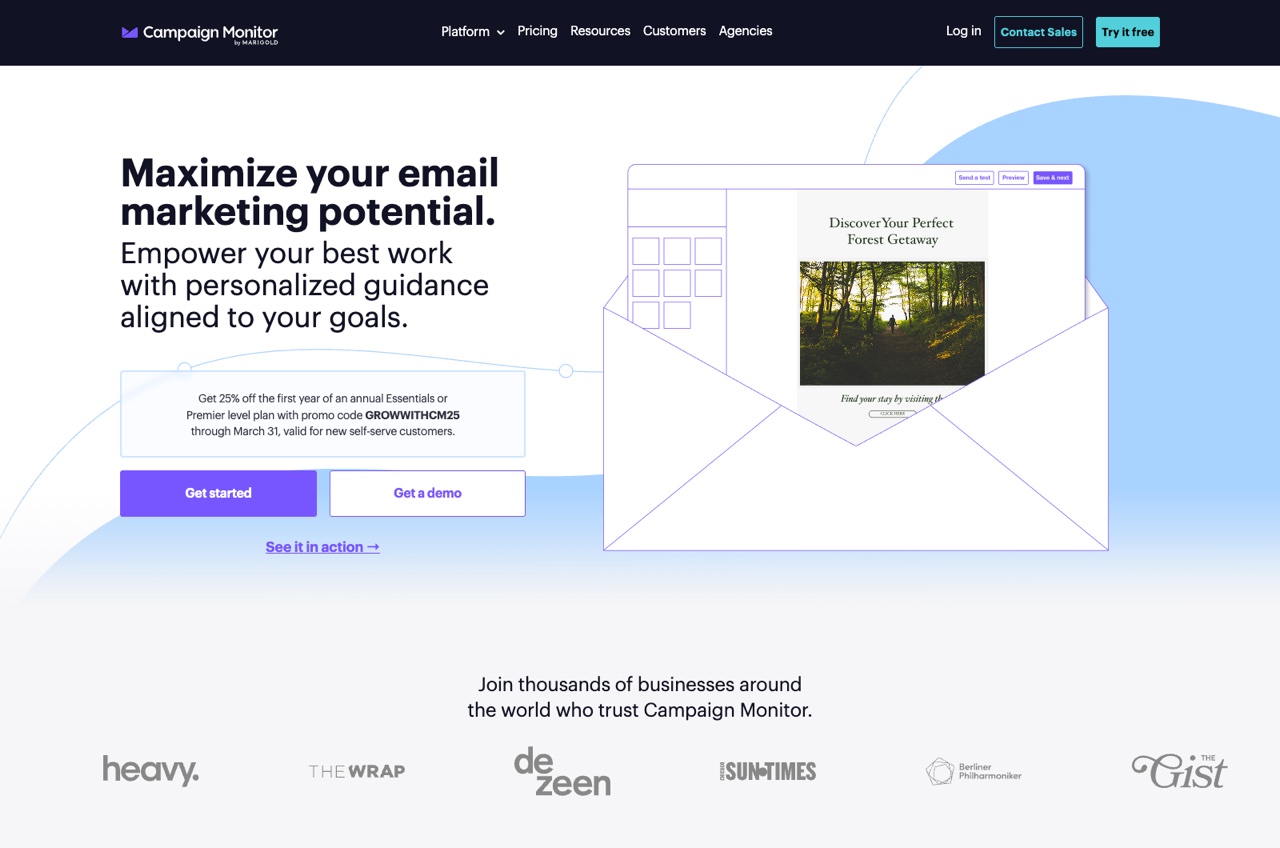
Campaign Monitor is an email marketing platform that built its reputation on polished templates and a clean drag-and-drop editor. It gained traction with agencies thanks to template locking and brand control features that let teams enforce design consistency across clients. Since its acquisition by Marigold (formerly CM Group), the product has largely stagnated: the editor still works but hasn't meaningfully evolved, automation remains limited to simple linear journeys, and there are no AI features, no real-time collaboration, and no native ecommerce integrations. Pricing runs higher than competitors for what amounts to a 2018-era feature set.
Pricing: who's cheaper?
Campaign Monitor's Essentials plan (unlimited sends) starts at $28/month for 500 contacts and scales steeply: $162/month at 10K contacts and $577/month at 50K. Above 50K contacts, Campaign Monitor requires a custom quote through their Enterprise plan, so published pricing disappears entirely. There is no free tier. Audienceful's Essentials plan is significantly cheaper at every tier, and includes features Campaign Monitor charges extra for on their Premier plan (like advanced automation and send-time optimization). The gap widens as your list grows. At 50K contacts, Audienceful costs $272/month versus Campaign Monitor's $577/month, a 53% saving. Beyond 50K, Audienceful continues to offer transparent published pricing while Campaign Monitor pushes you to sales.
Price comparison, billed yearly (unlimited sends)
Based on Campaign Monitor Essentials plan and Audienceful Essentials plan published pricing.
Monthly price by contact volume
Dotted line is estimated. Campaign Monitor doesn’t publish pricing at these volumes.
Pricing data sourced from public pricing pages · Last verified October 2026
AI and Collaboration
Summary: Audienceful includes a built-in AI agent on every plan, woven directly into the editing experience. It writes and edits emails in your voice using your best-performing sends as style references, makes...
Campaign Monitor has no AI features of any kind: no content generation, no subject line suggestions, no image generation. Every piece of copy is written manually from scratch. There's also no real-time collaboration, so teams working on the same campaign are stuck in a pass-the-draft workflow, waiting for one person to finish before the next can start.
Audienceful includes a built-in AI agent on every plan, woven directly into the editing experience. It writes and edits emails in your voice using your best-performing sends as style references, makes targeted edits to drafts, generates images inline, and works beyond the editor too. Describe a segment in plain language and it builds it with a member preview, or give it a brief and it assembles an entire automation for your approval before anything sends. Real-time collaborative editing with presence indicators means your whole team can work on the same email simultaneously, just like Google Docs. For teams that ship emails frequently, this compresses what used to be a multi-tool, multi-hour process into minutes.
Email Editor and Design
Summary: Audienceful takes a different approach with a unified block editor that combines writing speed with deep layout and design control. Design systems with reusable styles and components mean every email ...
Campaign Monitor's drag-and-drop editor was genuinely impressive when it launched. The templates are well-designed, and the template locking feature gives agencies real control over what clients and team members can and can't change. But the editor hasn't meaningfully evolved in years. There are no design systems, no reusable component libraries, and no way to build a consistent design language across campaigns without manually recreating elements each time. It's a good-looking editor that stopped getting better.
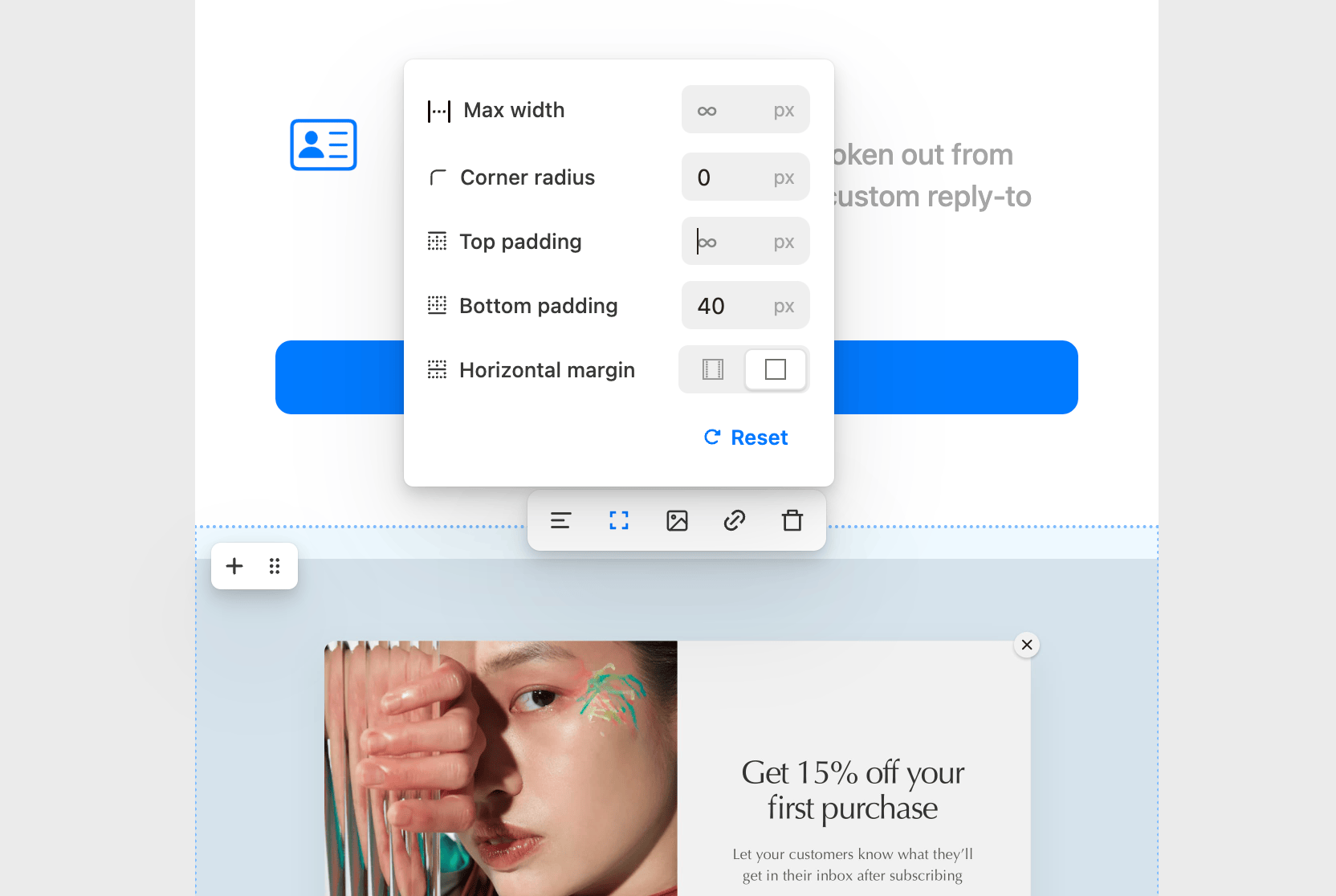
Audienceful takes a different approach with a unified block editor that combines writing speed with deep layout and design control. Design systems with reusable styles and components mean every email stays on-brand automatically, not because someone locked a template, but because the system itself enforces consistency. You get the fine-grained design control that Campaign Monitor's editor lacks, without sacrificing the ability to write and iterate quickly.
Automation and Ecommerce
Summary: Audienceful's automation builder supports branching logic, conditional splits, and event-based triggers with native Stripe and Shopify integrations. You can build flows that react to real purchase dat...
Campaign Monitor's automation builder handles the basics: welcome emails, date-based triggers, simple drip sequences. But it stops there. There's no branching logic, no conditional splits based on subscriber behavior, and no event-based triggers from ecommerce platforms or payment systems. If you need to build a post-purchase flow, a cart abandonment sequence, or anything that reacts to what customers actually do in your product or store, Campaign Monitor doesn't have the infrastructure.
Audienceful's automation builder supports branching logic, conditional splits, and event-based triggers with native Stripe and Shopify integrations. You can build flows that react to real purchase data, subscription events, and product activity, not just email opens and link clicks. For ecommerce brands and SaaS teams, this is the gap between a tool that sends emails on a schedule and one that drives revenue through intelligent, behavior-driven automation.
Ready to see the difference?
Free up to 1,000 subscribers.
Integrations and Data
Summary: Audienceful ships with native Stripe and Shopify integrations, so purchase history, subscription status, and product data sync directly into your email platform. This means you can segment on actual c...
Campaign Monitor's integration ecosystem is showing its age. There's no native Shopify integration for syncing product and purchase data, no native Stripe connection for subscription and payment events, and most advanced workflows require Zapier or custom API work to stitch together. The data you can actually act on inside Campaign Monitor is limited to basic subscriber fields and engagement metrics. There's no deep behavioral or purchase data feeding into your segments and automations.
Audienceful ships with native Stripe and Shopify integrations, so purchase history, subscription status, and product data sync directly into your email platform. This means you can segment on actual customer behavior, trigger automations from real revenue events, and build campaigns based on what people are doing, not just what list they signed up for. Advanced behavioral segmentation and revenue attribution give you a clear picture of which emails are actually driving results.
Deliverability
Summary: Audienceful matches this with a manual approval process to maintain sender quality, plus more modern deliverability engineering. Dynamic batching intelligently staggers sends based on inbox provider l...
Campaign Monitor has historically maintained a solid deliverability reputation. They run a reasonable approval process and have invested in infrastructure that keeps sender reputation clean. This is one area where the platform's maturity works in its favor: years of operation have built up strong relationships with inbox providers.
Audienceful matches this with a manual approval process to maintain sender quality, plus more modern deliverability engineering. Dynamic batching intelligently staggers sends based on inbox provider limits and engagement signals, preventing the rate-limiting and throttling issues that hit bulk senders. Smart retry logic automatically re-attempts delivery on soft bounces with optimized timing and backoff, rather than giving up or flooding providers with retries. The result is consistently strong inbox placement, especially on larger sends where even established platforms can struggle.
Who Each Tool Is Best For
Summary: Audienceful is built for ecommerce brands and SaaS teams that need email to be a real revenue channel. Deep automation with branching logic, native Stripe and Shopify data, AI-assisted content creatio...
Campaign Monitor is a reasonable choice for agencies that need template locking and brand control across multiple clients, and for teams that value a polished out-of-the-box template library over advanced features. If your email workflow is mostly "pick a template, swap the copy, hit send" and you don't need sophisticated automation or ecommerce integrations, it still gets the job done.
Audienceful is built for ecommerce brands and SaaS teams that need email to be a real revenue channel. Deep automation with branching logic, native Stripe and Shopify data, AI-assisted content creation, real-time collaboration, and advanced segmentation make it the stronger platform for teams that have outgrown basic template-and-send tools. If you need your email platform to do more than look pretty, Audienceful is the more capable choice.
Frequently asked questions
Is Audienceful better than Campaign Monitor?
For ecommerce brands and SaaS teams, yes. Audienceful offers a modern block editor, native Shopify and Stripe integrations, and deliverability infrastructure designed for scale. Campaign Monitor has strengths in other areas; read the full comparison above to see the detailed breakdown.
Can I migrate from Campaign Monitor easily?
Yes. Export your subscriber list as a CSV from Campaign Monitor and import it directly into Audienceful. We handle deduplication, tagging, and validation automatically. Most teams complete their migration in under 15 minutes.
Which is cheaper, Audienceful or Campaign Monitor?
Audienceful is typically significantly cheaper. The free plan includes 1,000 subscribers with all features. At scale, Audienceful is typically 30–50% cheaper because we don't charge for unsubscribed or inactive contacts.
Does Campaign Monitor have better automation?
Campaign Monitor's automation is solid. Audienceful matches it on branching logic and adds native ecommerce triggers from Shopify and Stripe, so you can automate based on real purchase data without third-party middleware.
Which platform is better for ecommerce?
Audienceful. Native Shopify and Stripe integrations mean purchase data flows directly into segmentation and automation, with no middleware required.
How do deliverability rates compare?
Audienceful uses dynamic batching with per-provider throttling and smart retry logic, which typically results in higher inbox placement, especially for larger sends.
Migrate from Campaign Monitor in less than 5 minutes
Import your contacts, templates, and automations. We handle the hard parts.
Start Free MigrationRelated comparisons
Audienceful vs ActiveCampaign
ActiveCampaign is a marketing automation and CRM platform known for its powerful automation builder, but its sprawling feature set, dated email editor, and confusing pricing tiers make it a complex choice for teams that just want great email marketing.
See comparison →Audienceful vs Amazon SES
Amazon SES is raw email sending infrastructure from AWS. It's incredibly cheap at $0.10 per 1,000 emails, but it provides zero marketing features, no editor, no automation, and no segmentation, requiring you to build everything yourself on top of a sending pipe.
See comparison →Audienceful vs AWeber
AWeber is one of the oldest email marketing platforms, launched in 1998. It's simple and beginner-friendly but has barely evolved, offering only basic autoresponders, a dated editor, no AI, no real-time collaboration, and no meaningful ecommerce integrations.
See comparison →Stop searching.
Start emailing.
Your first 1,000 subscribers are totally free.
Start Free