The Best HubSpot Email Alternative for Growing Teams
TL;DR: HubSpot is a massive all-in-one CRM and marketing platform where email marketing is just one piece of a much larger puzzle, with a decent email editor, powerful but expensive automation, and a pricing model that punishes you for wanting anything beyond basics.
Compare features
A side-by-side look at how HubSpot and Audienceful compare across the features that matter most.
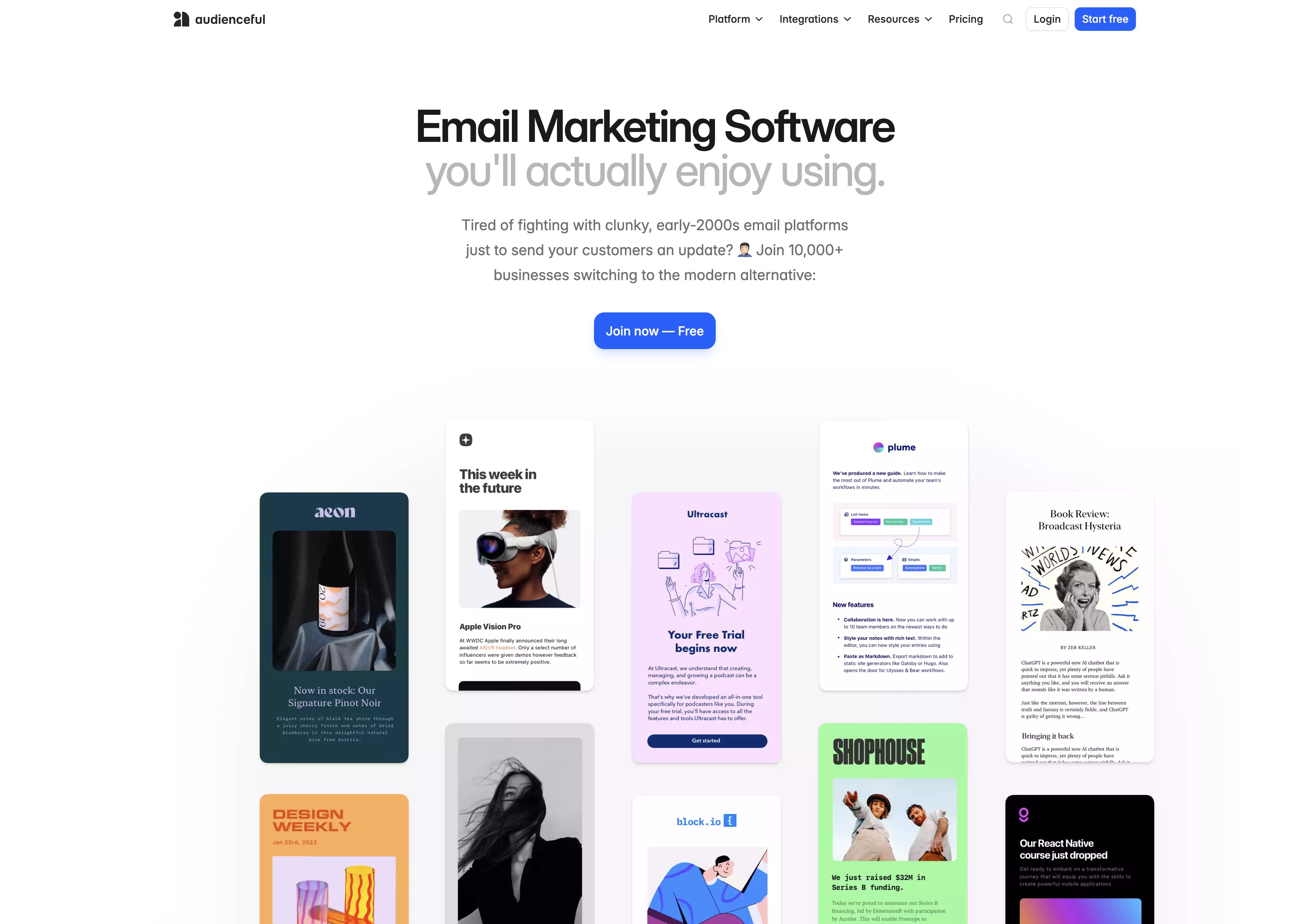
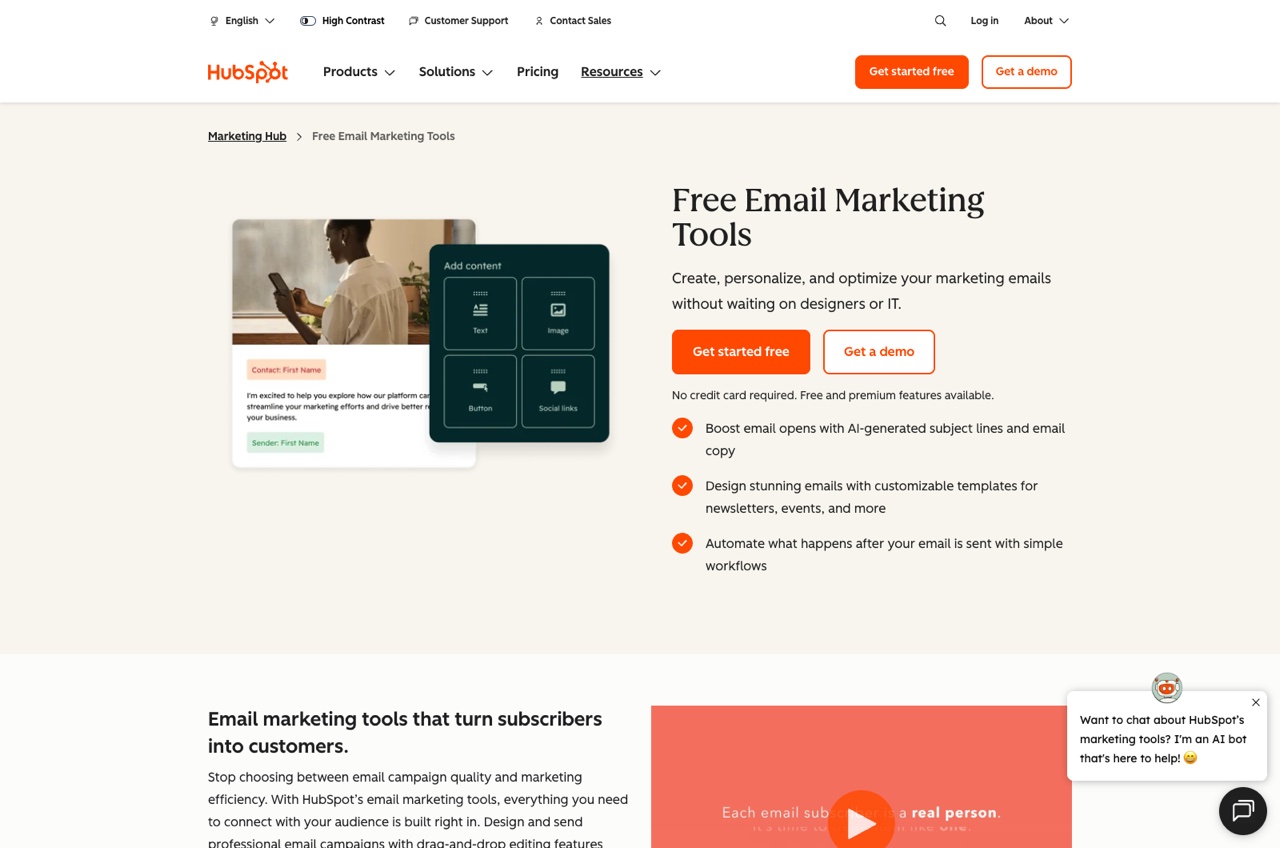
HubSpot vs Audienceful: Summary
HubSpot is the dominant all-in-one CRM and marketing platform, used by tens of thousands of businesses for sales, marketing, service, and operations. Email marketing is part of Marketing Hub, but it's one feature among dozens. The free and Starter tiers offer basic email sending with limited automation, while the real email marketing power (workflows, behavioral triggers, A/B testing) is locked behind Marketing Hub Professional at $800+/month. The email editor is competent but unremarkable, with no real-time collaboration and AI features that are spread across the platform rather than deeply embedded in the email workflow. If you're already running your entire business on HubSpot's CRM, the email tool is convenient. If you're evaluating it purely as an email marketing platform, you're paying for a lot of software you won't use.
Pricing: who's cheaper?
HubSpot's email marketing lives inside Marketing Hub, where the real features (automation workflows, A/B testing, behavioral triggers) are locked behind the Professional tier at $890/month base. That price includes just 2,000 contacts, with additional contacts sold in blocks of 5,000 at $250/month each. The cost escalates fast. Audienceful includes advanced automation and all email features on every paid plan with simple per-subscriber pricing.
Audienceful is dramatically cheaper than HubSpot at every tier
HubSpot Marketing Hub Professional pricing vs Audienceful Essentials plan. HubSpot prices based on $890/mo base + $250 per 5,000 additional contacts. Audienceful includes all features at every tier.
Monthly price by contact volume
Pricing data sourced from public pricing pages · Last verified October 2026
AI and Collaboration
Summary: Audienceful was built with AI and collaboration at the core. Multiple team members can edit the same email simultaneously with live cursors and presence indicators.
HubSpot has rolled out AI features across its platform (content assistants, chatbots, predictive lead scoring), but these are spread thin across the entire CRM suite rather than concentrated in the email experience. The email editor itself has basic AI text generation, but there's no inline AI image generation or the kind of contextual AI assistance that speeds up email creation. Collaboration is another gap: HubSpot's email editor is single-player. Teams coordinate through comments, approval workflows, and external tools rather than editing together in real time.
Audienceful was built with AI and collaboration at the core. Multiple team members can edit the same email simultaneously with live cursors and presence indicators. And where HubSpot's AI is spread thin across a CRM suite, Audienceful includes a built-in AI agent concentrated entirely on email: it writes and edits in your voice using your best-performing sends as style references, makes targeted edits to drafts, generates on-brand images natively, restyles entire themes, and can build audience segments (or complete automations with triggers, steps, and email bodies) from a plain-language brief, executing with your approval before anything sends. For teams that ship emails frequently, this eliminates the back-and-forth that slows down production in HubSpot.
Email Editor and Design
Summary: Audienceful's unified block editor combines writing speed with deep layout and design control. You get a proper design system with reusable styles and components, so brand consistency is structural ra...
HubSpot's email editor is a standard drag-and-drop builder. It works, it's reliable, and it produces decent-looking emails. But it hasn't evolved much, and it doesn't offer the kind of design depth that teams with strong brand standards need. There are no design systems: no reusable style tokens, no shared components that update globally when you change them. Every email is essentially standalone, and maintaining visual consistency across campaigns requires manual discipline. The editor feels like what it is: one feature in a CRM platform, not the primary product.
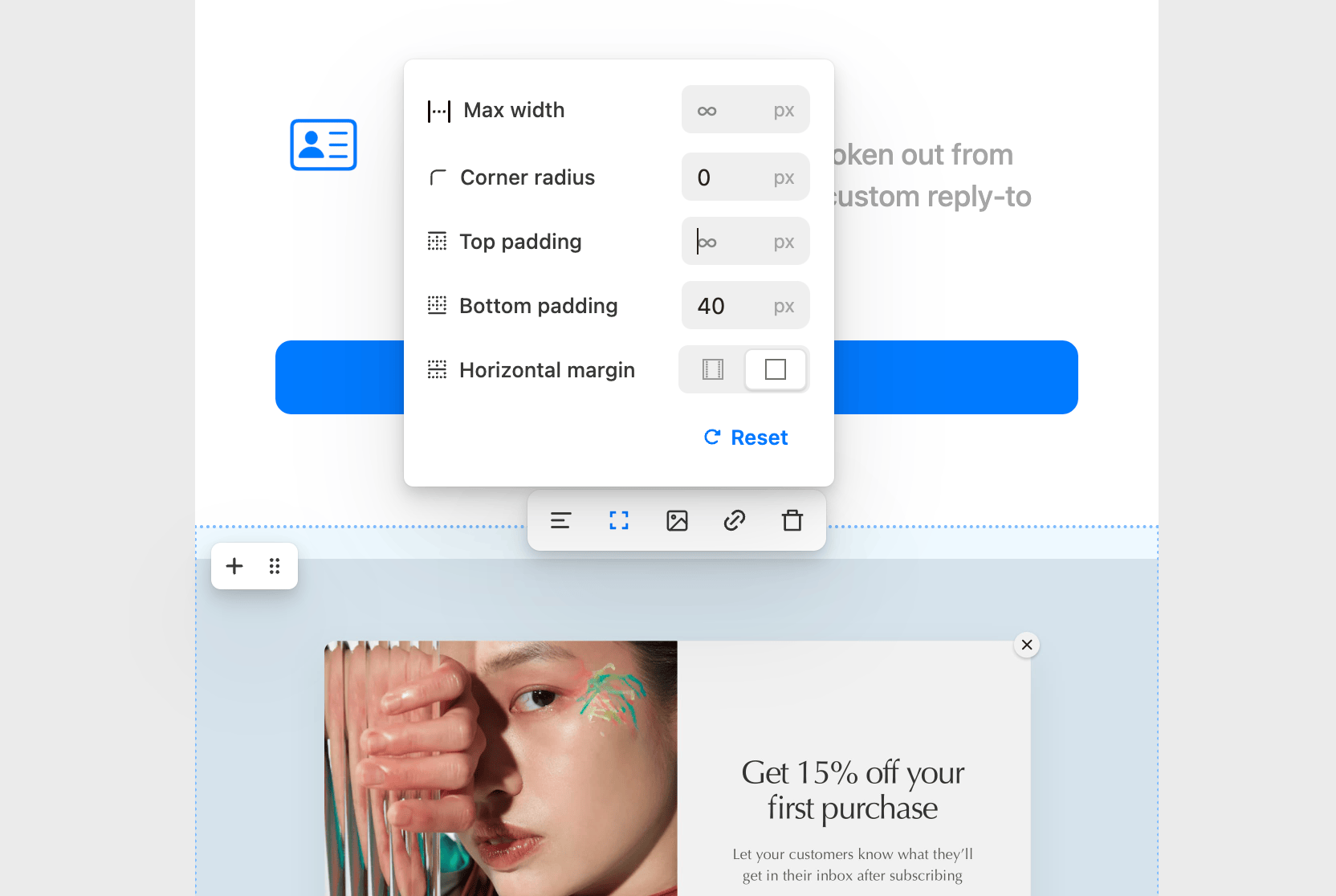
Audienceful's unified block editor combines writing speed with deep layout and design control. You get a proper design system with reusable styles and components, so brand consistency is structural rather than aspirational. The editor gives you fine-grained control over typography, spacing, and layout without sacrificing the speed of a block-based workflow. For teams where email design quality matters (not just deliverability but how the email looks and feels), it's a different class of tool than what HubSpot offers.
Automation and Workflows
Summary: Audienceful's automation builder ships with branching logic, conditional splits, and event-based triggers at a fraction of the cost. You don't need to upgrade to an enterprise tier to build a multi-st...
HubSpot's workflow automation is genuinely powerful. Branching logic, conditional splits, CRM-based triggers, deal stage changes, form submissions, page views: it can handle complex multi-step sequences. The problem is access: workflows are locked behind Marketing Hub Professional, which starts at $800+/month. On the free and Starter tiers, you get basic email sequences with limited triggers and no branching. The jump from basic email to real automation is one of the steepest price cliffs in the industry.
Audienceful's automation builder ships with branching logic, conditional splits, and event-based triggers at a fraction of the cost. You don't need to upgrade to an enterprise tier to build a multi-step welcome sequence with conditional paths based on behavior. The automation depth is comparable to HubSpot's Professional tier (triggers based on purchases, subscription events, behavioral signals, and custom events) without the pricing wall. For teams that need real automation but can't justify $800+/month, the value proposition is straightforward.
Ready to see the difference?
Free up to 1,000 subscribers.
Integrations and Data
Summary: Audienceful ships with native Shopify and Stripe integrations built in. Purchase data, subscription events, and customer profiles sync directly into segmentation and automation without middleware or t...
HubSpot's integration marketplace is enormous. It connects to virtually every business tool, and its CRM serves as a central data hub. Where HubSpot falls short for email marketers is in ecommerce-specific integrations. There's no native deep Shopify integration. The available connections are marketplace apps, not first-party. Stripe integration exists through the marketplace as well, but it's not the native, event-level integration that SaaS teams need for subscription-based automation. If you're a B2B company already running on HubSpot CRM, the data is right there. If you're an ecommerce brand or SaaS company, the integrations that matter most are either missing or shallow.
Audienceful ships with native Shopify and Stripe integrations built in. Purchase data, subscription events, and customer profiles sync directly into segmentation and automation without middleware or third-party connectors. For ecommerce teams, product and order data flows into your automations natively. For SaaS teams, Stripe integration means you can segment on MRR, trigger flows from payment failures or upgrades, and build revenue attribution into your email strategy from day one. The integration surface is smaller than HubSpot's marketplace, but the integrations that matter for email marketing are deeper.
Deliverability
Summary: Audienceful approaches deliverability with more granular send optimization. On top of a manual approval process for new accounts, Audienceful uses dynamic batching to stagger sends based on inbox prov...
HubSpot has solid deliverability infrastructure. It manages sender reputation, provides deliverability reporting, and handles authentication setup. For most senders, HubSpot's deliverability is reliable and doesn't require much hands-on management. It benefits from scale and established inbox provider relationships.
Audienceful approaches deliverability with more granular send optimization. On top of a manual approval process for new accounts, Audienceful uses dynamic batching to stagger sends based on inbox provider limits and engagement signals, avoiding the bulk-blast pattern that can trigger throttling. Smart retry with optimized backoff handles soft bounces and temporary deferrals automatically, re-attempting delivery at intervals designed to maximize inbox placement. Both platforms deliver well; Audienceful's approach gives you more technical control at the send-optimization layer.
Who Each Tool Is Best For
Summary: Audienceful is built for teams who want best-in-class email marketing without buying an entire CRM suite. If you care about the email creation experience (a modern editor with real-time collaboration,...
HubSpot is the right choice if you're already running your sales, marketing, and service operations on the HubSpot CRM and want email marketing tightly integrated with your existing data. If your team can afford Marketing Hub Professional and you need the full funnel (landing pages, forms, lead scoring, deal pipelines, and email) all under one roof, HubSpot covers it. It's strongest for B2B companies with complex sales cycles.
Audienceful is built for teams who want best-in-class email marketing without buying an entire CRM suite. If you care about the email creation experience (a modern editor with real-time collaboration, a built-in AI agent, and proper design systems) and you need powerful automation at a price that doesn't require enterprise budget approval, Audienceful is the sharper tool. It's especially strong for ecommerce brands and SaaS teams who need native Shopify and Stripe integrations, and for anyone who's looked at HubSpot's pricing and realized they'd be paying for a platform when they need an email tool.
Frequently asked questions
Is Audienceful better than HubSpot?
For ecommerce brands and SaaS teams, yes. Audienceful offers a modern block editor, native Shopify and Stripe integrations, and deliverability infrastructure designed for scale. HubSpot has strengths in other areas; read the full comparison above to see the detailed breakdown.
Can I migrate from HubSpot easily?
Yes. Export your subscriber list as a CSV from HubSpot and import it directly into Audienceful. We handle deduplication, tagging, and validation automatically. Most teams complete their migration in under 15 minutes.
Which is cheaper, Audienceful or HubSpot?
Audienceful is typically significantly cheaper. The free plan includes 1,000 subscribers with all features. At scale, Audienceful is typically 30–50% cheaper because we don't charge for unsubscribed or inactive contacts.
Does HubSpot have better automation?
HubSpot's automation is solid. Audienceful matches it on branching logic and adds native ecommerce triggers from Shopify and Stripe, so you can automate based on real purchase data without third-party middleware.
Which platform is better for ecommerce?
Audienceful. Native Shopify and Stripe integrations mean purchase data flows directly into segmentation and automation, with no middleware required.
How do deliverability rates compare?
Audienceful uses dynamic batching with per-provider throttling and smart retry logic, which typically results in higher inbox placement, especially for larger sends.
Migrate from HubSpot in less than 5 minutes
Import your contacts, templates, and automations. We handle the hard parts.
Start Free MigrationRelated comparisons
Audienceful vs ActiveCampaign
ActiveCampaign is a marketing automation and CRM platform known for its powerful automation builder, but its sprawling feature set, dated email editor, and confusing pricing tiers make it a complex choice for teams that just want great email marketing.
See comparison →Audienceful vs Amazon SES
Amazon SES is raw email sending infrastructure from AWS. It's incredibly cheap at $0.10 per 1,000 emails, but it provides zero marketing features, no editor, no automation, and no segmentation, requiring you to build everything yourself on top of a sending pipe.
See comparison →Audienceful vs AWeber
AWeber is one of the oldest email marketing platforms, launched in 1998. It's simple and beginner-friendly but has barely evolved, offering only basic autoresponders, a dated editor, no AI, no real-time collaboration, and no meaningful ecommerce integrations.
See comparison →Stop searching.
Start emailing.
Your first 1,000 subscribers are totally free.
Start Free