Best Substack Alternative for Email Marketing
TL;DR: Substack is a publishing platform for independent writers that bundles newsletters, blogs, and podcasts into one, but it's not an email marketing tool. With no design customization, no automation, no segmentation, and no ecommerce integrations, it's built for writers who want zero setup, not businesses that need email to drive revenue.
Compare features
A side-by-side look at how Substack and Audienceful compare across the features that matter most.
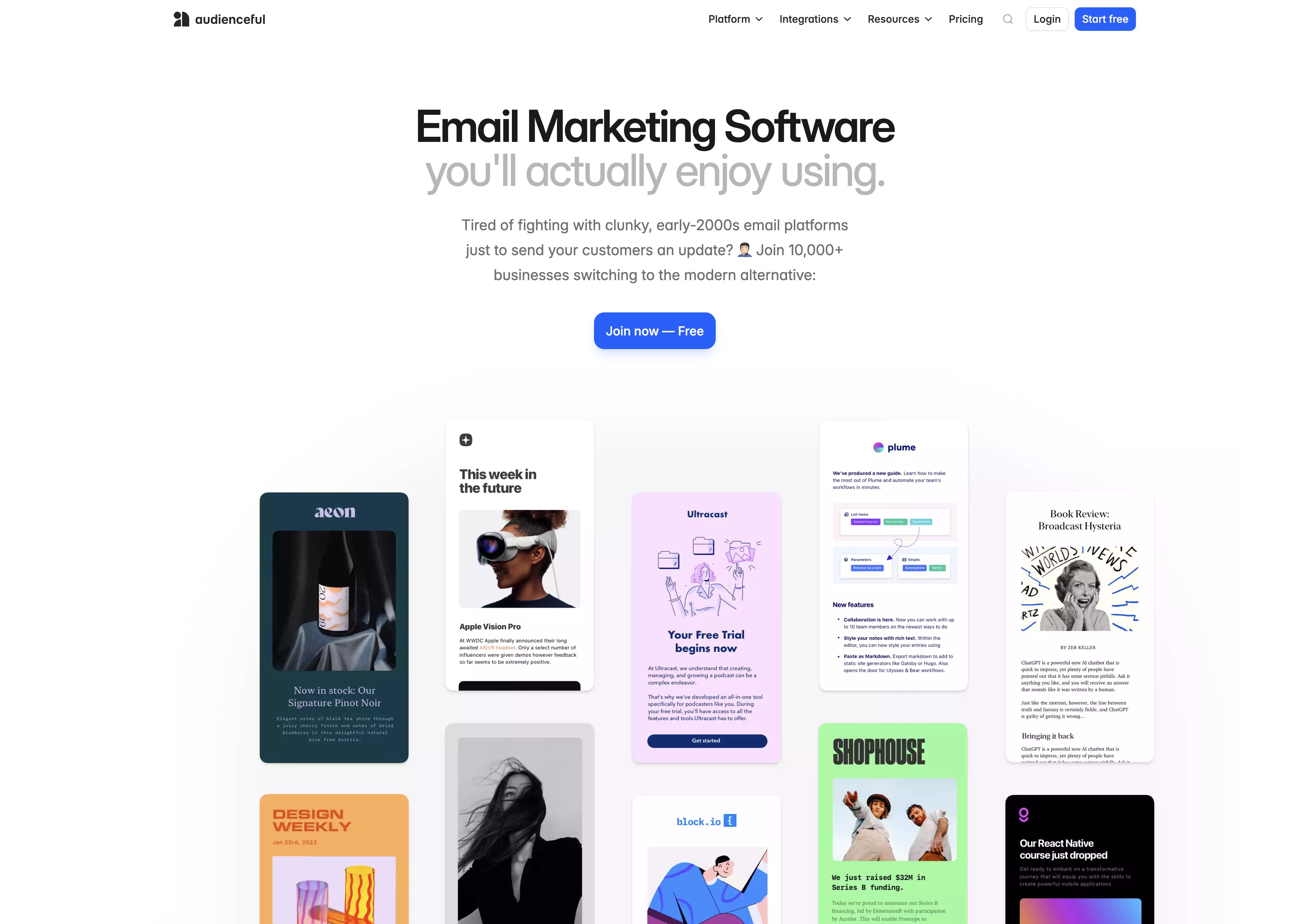
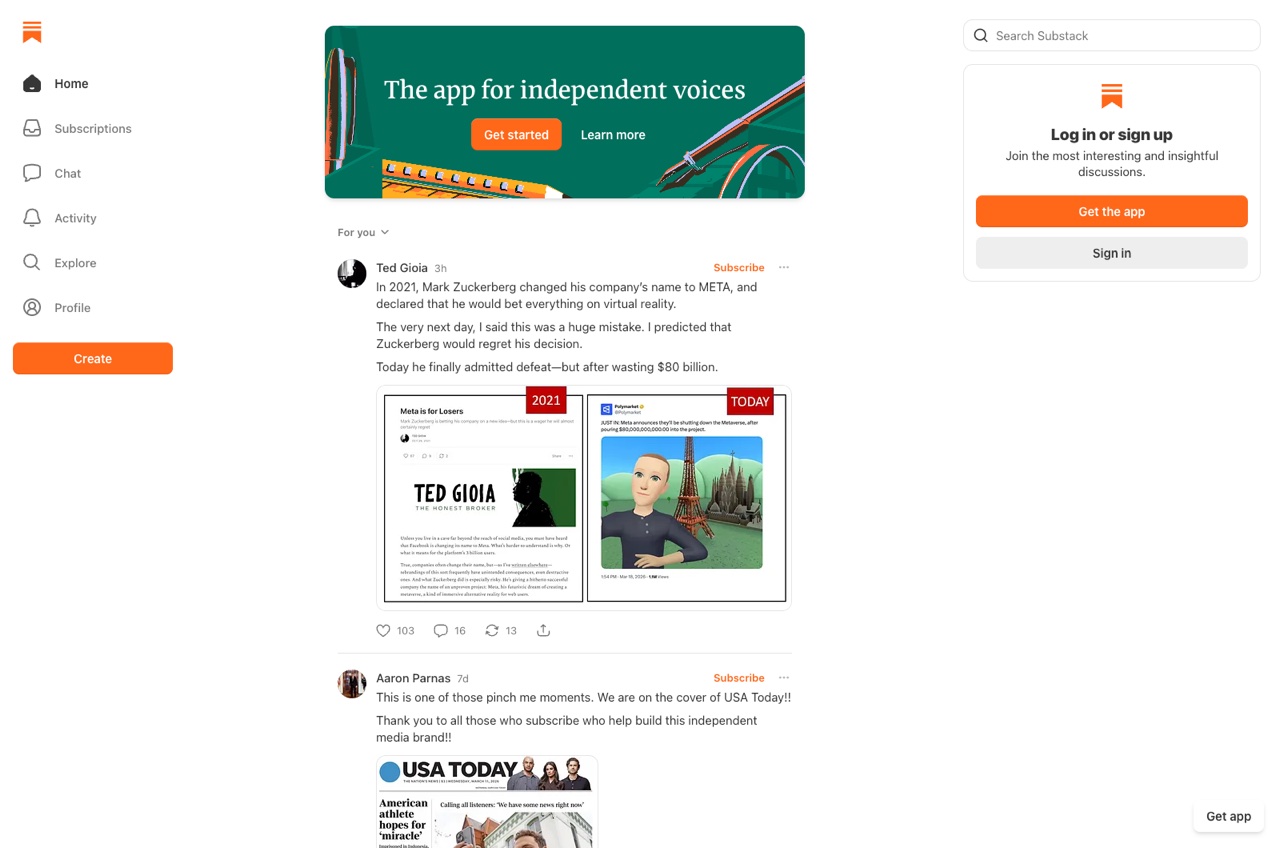
Substack vs Audienceful: Summary
Substack is a publishing platform designed for independent writers, combining newsletters, blogs, and podcasts in a single place. It takes a zero-setup approach: writers publish and Substack handles everything from hosting to email delivery. Monetization is through paid subscriptions, with Substack taking a 10% cut of revenue. It includes a built-in social network (Substack Notes) and a powerful discovery and recommendation engine. However, Substack is fundamentally not an email marketing tool. There's no email design customization, no automation, no meaningful segmentation, no ecommerce integrations, no API, and no way to build the kind of targeted, revenue-driven email programs that product businesses need.
Pricing: who's cheaper?
Substack is free to use: there are no monthly fees, no per-subscriber charges, and no tiered plans. The catch is that Substack takes a 10% cut of all paid subscription revenue you generate through the platform, on top of Stripe's payment processing fees. If you only run a free newsletter, you pay nothing. But as soon as you monetize with paid subscriptions, that 10% revenue share adds up fast, especially as your audience grows. Audienceful uses straightforward per-subscriber pricing with a generous free tier and no revenue share. You keep 100% of the revenue you generate through your Stripe or Shopify integrations. For businesses driving real revenue through email, the predictable monthly cost is significantly cheaper than giving up 10% of your top line.
Audienceful costs a flat monthly fee; Substack takes 10% of your revenue forever
Substack's model means the more successful you are, the more you pay. A creator earning $10K/month in subscriptions pays $1,000/month to Substack, far more than any email marketing tool would cost. Audienceful's pricing is based purely on subscriber count with no revenue share.
Monthly price by contact volume
Pricing data sourced from public pricing pages · Last verified October 2026
AI Agents and MCP Servers
Summary: With Audienceful, your assistant can do the work, not just read about it. The built-in AI agent and the hosted email marketing MCP server can write the issue in your editor, build the audience and sch...
Substack has no AI agent or writing assistant in its editor. Its MCP server is read-only and limited to Bestseller publications, so an assistant can look at your posts and stats but can't draft or send anything.
With Audienceful, your assistant can do the work, not just read about it. The built-in AI agent and the hosted email marketing MCP server can write the issue in your editor, build the audience and schedule the send once you've approved the exact recipients, on every plan, including Free. Our Substack MCP guide has the details.
AI and Collaboration
Summary: Audienceful's editor is built for teams moving fast. Multiple people can work on the same email at the same time with live cursors and presence indicators.
Substack has no AI features in its editor: no content generation, no subject line optimization, no AI image creation. The writing experience is clean and distraction-free, which appeals to solo writers, but there's nothing to accelerate the content creation process. There's also no real-time collaboration. Substack is built as a single-author publishing tool, so teams working on email content have no way to edit simultaneously or manage shared workflows.
Audienceful's editor is built for teams moving fast. Multiple people can work on the same email at the same time with live cursors and presence indicators. Every plan includes a built-in AI agent that writes and edits emails in your voice using your best-performing sends as style references, reads URLs you paste for context, generates on-brand images, and can answer questions about your campaign and audience data. For teams publishing on a regular schedule, this collapses what used to be a multi-tool, multi-handoff process into a single streamlined workflow.
Email Editor and Design
Summary: Audienceful gives you a unified block editor with deep layout and design control. You get a design system with reusable styles and components, fine-grained control over spacing, typography, and layout...
Substack's email editor is a basic text editor. Every email sent from Substack looks the same: the standard Substack template with the publication name at the top, text in the middle, and Substack branding at the bottom. There's no drag-and-drop builder, no HTML access, no design systems, no reusable components, and no way to customize layouts, colors, or typography. You can add images and embeds, but the visual output is identical across every Substack publication. For a writer sending a personal newsletter, this consistency is fine. For a business that needs branded, visually distinct emails, it's a dealbreaker.
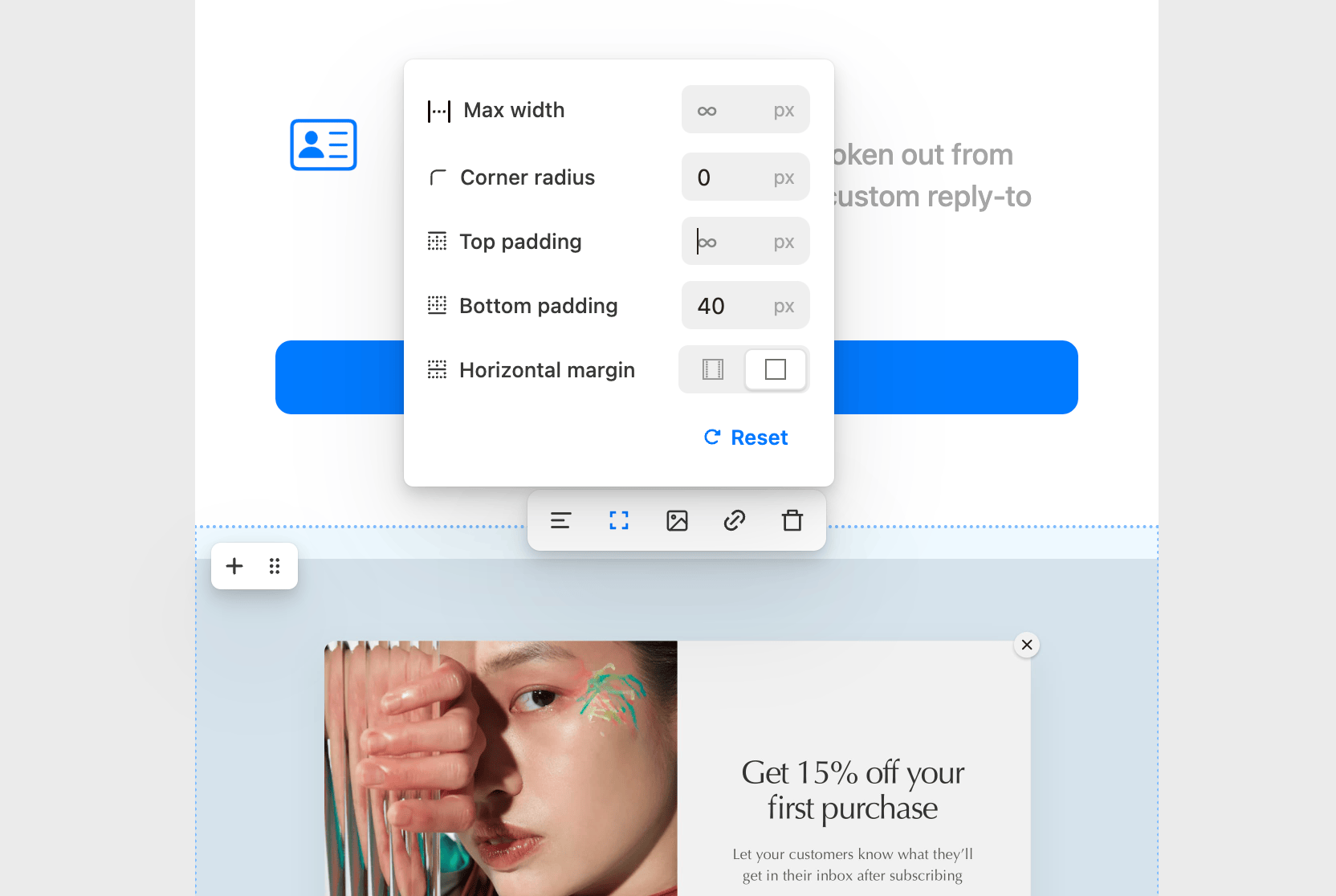
Audienceful gives you a unified block editor with deep layout and design control. You get a design system with reusable styles and components, fine-grained control over spacing, typography, and layout, and the ability to build visually rich branded emails while maintaining a fast, keyboard-driven writing flow. The gap here isn't incremental. Substack gives you a text box; Audienceful gives you a full design studio that still feels like a writer's tool.
Ready to see the difference?
Free up to 1,000 subscribers.
Automation and Ecommerce
Summary: Audienceful's automation builder is designed for the workflows ecommerce and SaaS teams actually need. Branching logic, conditional splits, and event-based triggers tied to native Stripe and Shopify i...
Substack has no automation. None. No welcome sequences, no drip campaigns, no event-triggered flows, no conditional logic. When someone subscribes, they get your posts. That's it. On the ecommerce side, Substack's only monetization model is paid subscriptions managed entirely through Substack's own billing system (which takes a 10% cut). There's no Shopify integration, no way to sell physical products, no cart abandonment flows, and no purchase-driven email sequences. Substack isn't an email marketing tool. It's a publishing platform with an email delivery mechanism.
Audienceful's automation builder is designed for the workflows ecommerce and SaaS teams actually need. Branching logic, conditional splits, and event-based triggers tied to native Stripe and Shopify integrations let you build flows based on real purchase data, subscription events, cart behavior, and product activity. The difference isn't feature-for-feature, because Substack doesn't have automation features to compare. It's a fundamentally different category of tool.
Integrations and Data
Summary: Audienceful ships with native Stripe and Shopify integrations that sync purchase history, subscription status, product catalogs, and customer data directly into your email platform. Your segments, aut...
Substack is a closed ecosystem. There's no API, no webhook support, and no meaningful integrations with other tools. You can connect a custom domain and that's about it. Your subscriber data lives inside Substack, and getting it out means CSV exports. There's no way to sync Substack with your CRM, your ecommerce platform, your analytics tools, or anything else in your marketing stack. For solo writers who live entirely inside Substack, this simplicity is part of the appeal. For any business with a broader tech stack, it's a wall.
Audienceful ships with native Stripe and Shopify integrations that sync purchase history, subscription status, product catalogs, and customer data directly into your email platform. Your segments, automations, and reporting are built on real revenue data. Revenue attribution shows you exactly which emails drive sales. For teams where email is a revenue channel tied to a broader set of business tools, having native integrations rather than a closed platform is essential.
Deliverability
Summary: Audienceful approaches deliverability as an engineering problem you can benefit from without managing yourself. A manual approval process keeps bad actors off the platform.
Substack handles deliverability for you, and for simple text-based newsletters, it does a reasonable job. Because all Substack emails share a similar format and the platform controls the sending infrastructure, there's consistency in how emails are delivered. Substack also benefits from its brand recognition, since some inbox providers treat Substack-originated emails favorably. The downside is you have zero control. You can't configure sending domains, manage IP reputation, or optimize delivery timing. You're entirely dependent on Substack's shared infrastructure and whatever deliverability decisions they make on your behalf.
Audienceful approaches deliverability as an engineering problem you can benefit from without managing yourself. A manual approval process keeps bad actors off the platform. Dynamic batching staggers sends based on inbox provider limits and engagement signals, so large sends don't trip rate limits or trigger bulk-sender flags. Smart retry logic re-attempts delivery with optimized timing when emails are temporarily deferred. For businesses sending visually rich, high-volume campaigns (the kind that are most at risk of deliverability issues), this infrastructure-level approach consistently outperforms shared platforms where you have no visibility or control.
Who Each Tool Is Best For
Summary: Audienceful is built for ecommerce brands and SaaS teams that need email marketing to drive measurable revenue. Advanced automation with branching and event triggers, native Stripe and Shopify integra...
Substack is ideal for independent writers, journalists, and creators who want the simplest possible path to publishing a newsletter and building a subscriber base. If your goal is to write long-form content, grow an audience through Substack's discovery engine, and optionally monetize through paid subscriptions, and you don't care about email design, automation, or integrations, Substack is genuinely excellent at what it does.
Audienceful is built for ecommerce brands and SaaS teams that need email marketing to drive measurable revenue. Advanced automation with branching and event triggers, native Stripe and Shopify integrations, behavioral segmentation, revenue attribution, a collaborative editor with an AI agent that can build entire automations from a plain-language brief: these are capabilities that Substack was never designed to offer because it's solving a completely different problem. If your email program needs to do more than publish blog posts to an inbox, Audienceful is the feature-complete email marketing platform for the job.
Frequently asked questions
Is Audienceful better than Substack?
For ecommerce brands and SaaS teams, yes. Audienceful offers a modern block editor, native Shopify and Stripe integrations, and deliverability infrastructure designed for scale. Substack has strengths in other areas; read the full comparison above to see the detailed breakdown.
Can I migrate from Substack easily?
Yes. Export your subscriber list as a CSV from Substack and import it directly into Audienceful. We handle deduplication, tagging, and validation automatically. Most teams complete their migration in under 15 minutes.
Which is cheaper, Audienceful or Substack?
Audienceful is typically significantly cheaper. The free plan includes 1,000 subscribers with all features. At scale, Audienceful is typically 30–50% cheaper because we don't charge for unsubscribed or inactive contacts.
Does Substack have better automation?
Substack's automation is solid. Audienceful matches it on branching logic and adds native ecommerce triggers from Shopify and Stripe, so you can automate based on real purchase data without third-party middleware.
Which platform is better for ecommerce?
Audienceful. Native Shopify and Stripe integrations mean purchase data flows directly into segmentation and automation, with no middleware required.
How do deliverability rates compare?
Audienceful uses dynamic batching with per-provider throttling and smart retry logic, which typically results in higher inbox placement, especially for larger sends.
Migrate from Substack in less than 5 minutes
Import your contacts, templates, and automations. We handle the hard parts.
Start Free MigrationRelated comparisons
Audienceful vs ActiveCampaign
ActiveCampaign is a marketing automation and CRM platform known for its powerful automation builder, but its sprawling feature set, dated email editor, and confusing pricing tiers make it a complex choice for teams that just want great email marketing.
See comparison →Audienceful vs Amazon SES
Amazon SES is raw email sending infrastructure from AWS. It's incredibly cheap at $0.10 per 1,000 emails, but it provides zero marketing features, no editor, no automation, and no segmentation, requiring you to build everything yourself on top of a sending pipe.
See comparison →Audienceful vs AWeber
AWeber is one of the oldest email marketing platforms, launched in 1998. It's simple and beginner-friendly but has barely evolved, offering only basic autoresponders, a dated editor, no AI, no real-time collaboration, and no meaningful ecommerce integrations.
See comparison →Stop searching.
Start emailing.
Your first 1,000 subscribers are totally free.
Start Free