The Amazon SES Alternative with Everything Built In
TL;DR: Amazon SES is raw email sending infrastructure from AWS. It's incredibly cheap at $0.10 per 1,000 emails, but it provides zero marketing features, no editor, no automation, and no segmentation, requiring you to build everything yourself on top of a sending pipe.
Compare features
A side-by-side look at how Amazon SES and Audienceful compare across the features that matter most.
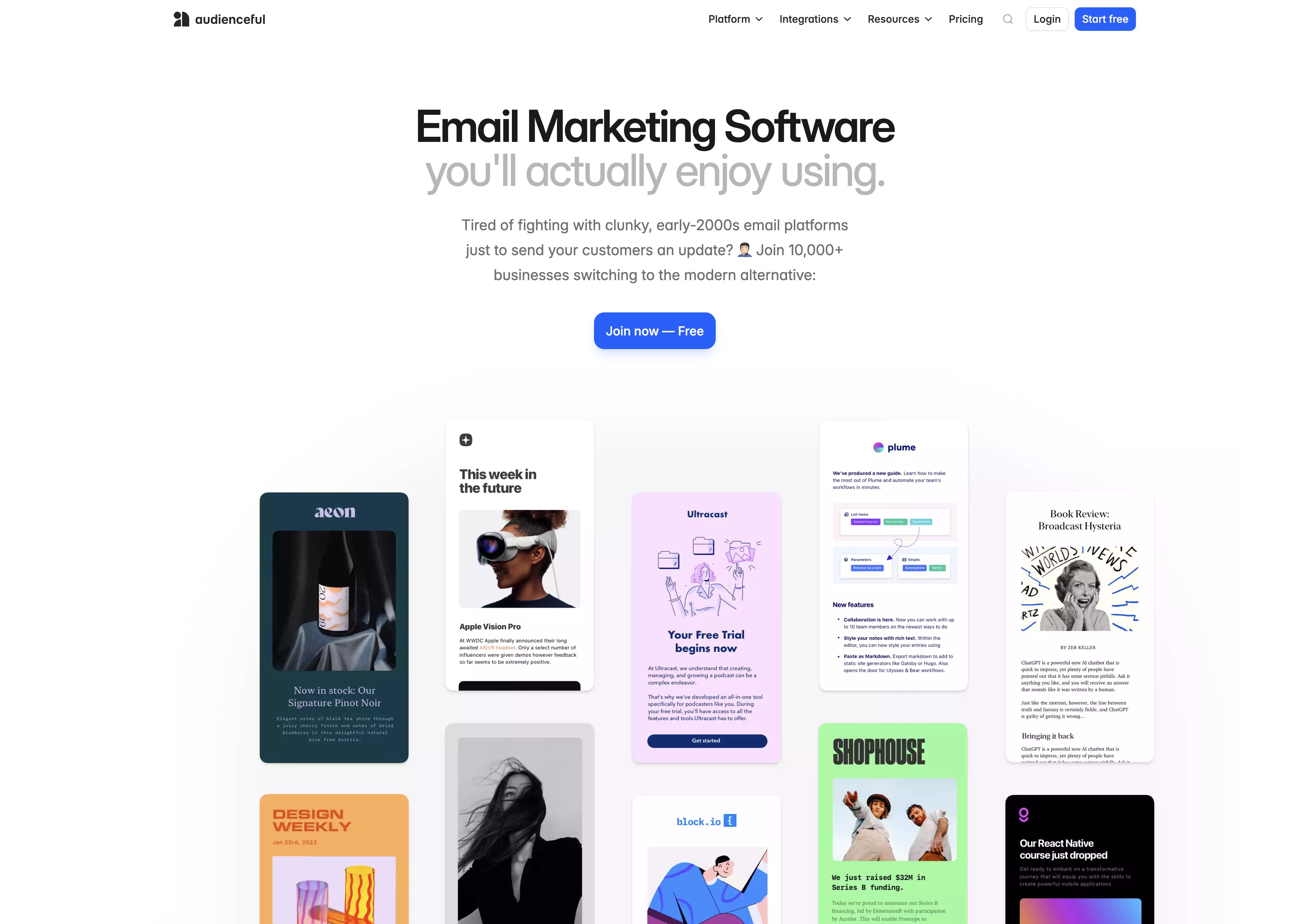
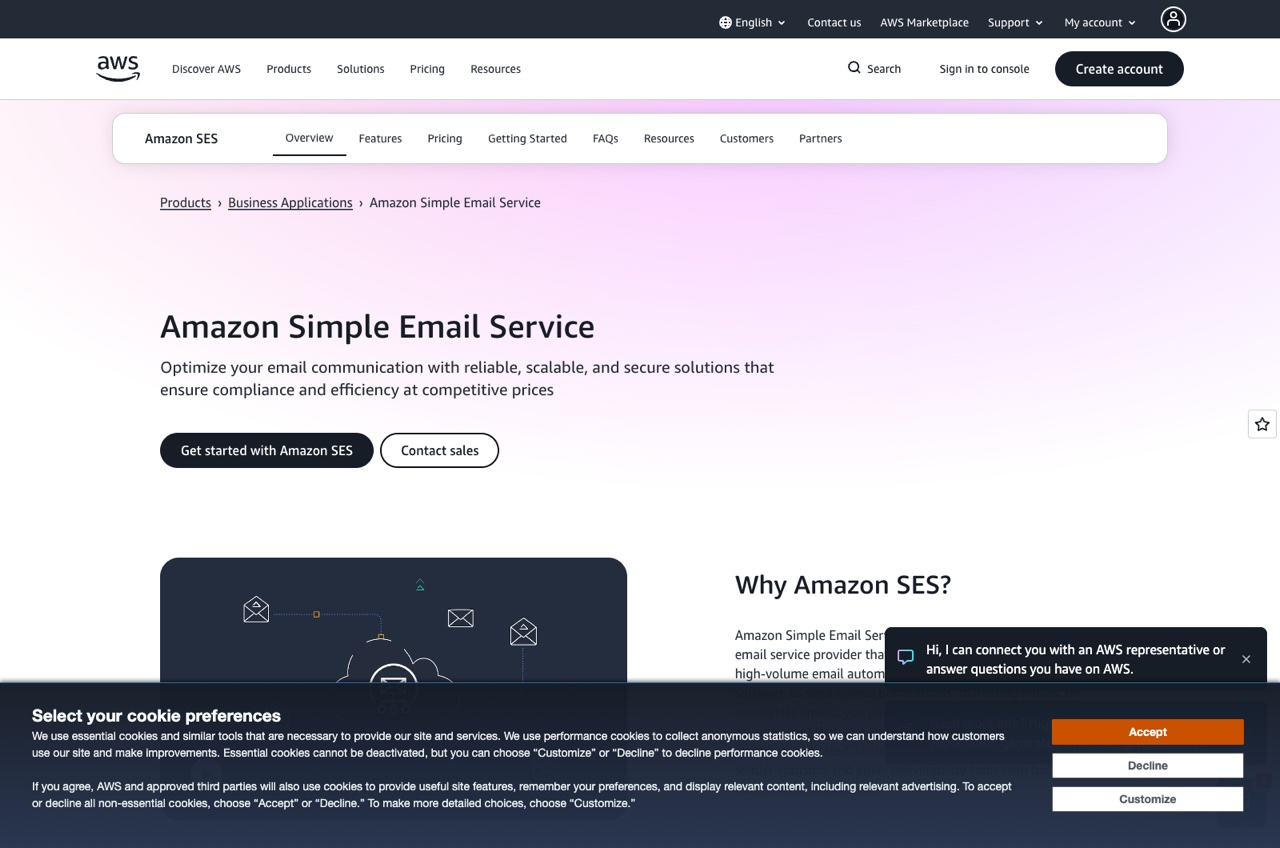
Amazon SES vs Audienceful: Summary
Amazon SES (Simple Email Service) is AWS's email sending infrastructure: a raw API for pushing emails at massive scale for almost nothing. At $0.10 per 1,000 emails, it is the cheapest way to send email, period. But that is all it does: send. There is no email editor, no drag-and-drop builder, no campaign management UI, no automation workflows, no segmentation engine, and no marketing analytics. You get an API endpoint and a set of SDKs. Everything else (the editor, the subscriber management, the automation logic, the analytics dashboard) you build yourself or stitch together from other tools. Deliverability management is entirely your responsibility: you manage your own sender reputation, handle bounces and complaints, configure authentication, and monitor your sending metrics through CloudWatch. For engineering teams that want total control and rock-bottom cost, SES is a powerful primitive. For anyone who needs to actually run email marketing, it is a foundation with nothing built on top of it.
Pricing: who's cheaper?
Amazon SES is pure sending infrastructure priced at $0.10 per 1,000 emails, but that buys you a pipe and nothing else. There is no editor, no automation, no contact management, no segmentation, and no analytics. To run actual email marketing on SES you need to build or buy every other layer yourself, and those costs add up fast. Audienceful is a feature-complete, AI-native email marketing platform with a collaborative editor, automation builder with branching logic, native Shopify and Stripe integrations, a built-in AI agent, and managed deliverability, all included in straightforward per-contact pricing.
Amazon SES is cheaper on paper, but it is not a marketing tool
SES pricing below assumes ~4 emails per contact per month at $0.10/1,000 emails. This covers sending only: no editor, no automation, no contact management, no deliverability management. Any marketing functionality must be built or purchased separately.
Monthly price by contact volume
Pricing data sourced from public pricing pages · Last verified October 2026
AI and Collaboration
Summary: Audienceful's editor is designed for teams that create email content together. Multiple people can edit the same email in real time with live cursors and presence indicators.
Amazon SES has no user interface at all beyond the AWS console, let alone AI capabilities or collaboration features. There is no email editor to embed AI into, no content generation tools, and no concept of team members working together on a campaign. Using SES for marketing email means building your own front-end tooling or integrating third-party editors, and none of that comes with AI assistance or multiplayer editing. Every piece of content is written externally and passed through the API as raw HTML or templated markup.
Audienceful's editor is designed for teams that create email content together. Multiple people can edit the same email in real time with live cursors and presence indicators. And a built-in AI agent works alongside you across the whole platform: it drafts emails in your voice using your best-performing sends as style references, makes targeted edits to drafts, restyles your theme, generates images inline, and can build segments and entire automations from a plain-language brief, previewing its work for your approval before anything happens. For teams that ship emails frequently, this eliminates the fragmented multi-tool workflow that building on SES requires.
Email Editor and Design
Summary: Audienceful takes the opposite approach with a unified block editor that combines fast writing with deep design control. A built-in design system lets you define reusable styles and components, ensuri...
Amazon SES does not have an email editor. It is a sending API. You submit HTML to an endpoint and SES delivers it. If you want a visual editor, a template system, design tokens, or any form of WYSIWYG experience, you build it yourself or buy it from someone else. There is a basic templating feature that supports simple variable substitution, but it is not a design tool. It is a way to avoid hardcoding values in your HTML payloads. For teams without dedicated email engineering resources, this is a non-starter for marketing use cases.
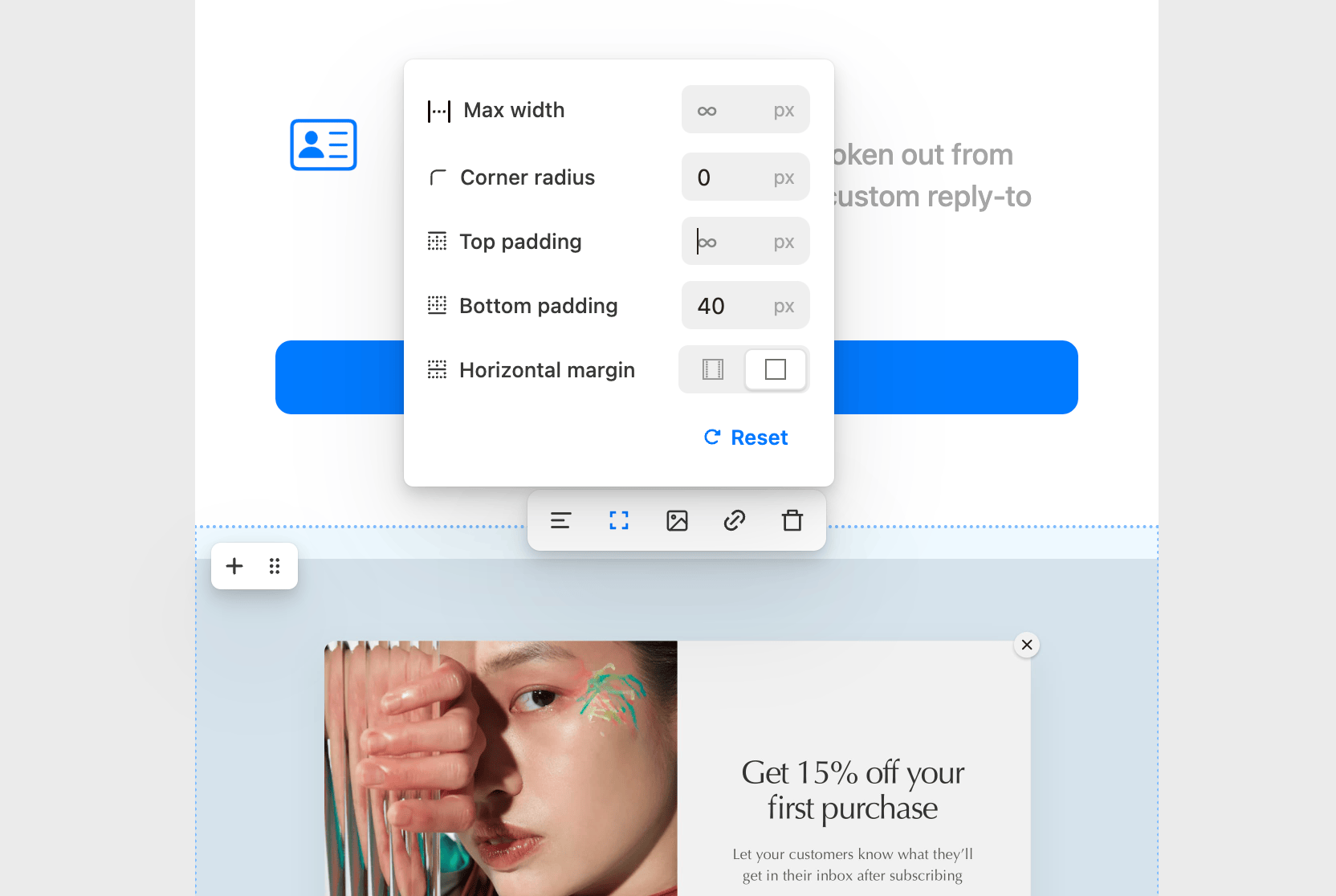
Audienceful takes the opposite approach with a unified block editor that combines fast writing with deep design control. A built-in design system lets you define reusable styles and components, ensuring every email stays on-brand without manual recreation. You get fine-grained control over layout, spacing, and typography while the writing experience stays fast and fluid. The result is a tool where producing a polished, on-brand email takes minutes rather than the hours or days of custom development that SES demands.
Automation and Ecommerce
Summary: Audienceful's automation builder is designed for teams where email drives revenue. It supports full branching logic, conditional splits, and event-based triggers connected to native Stripe and Shopify...
Amazon SES has no automation capabilities. There are no drip sequences, no triggered flows, no conditional branching, no event-based workflows. Nothing. If you want to send a welcome series, an abandoned cart sequence, or a post-purchase follow-up, you build the entire orchestration layer yourself using AWS Lambda, Step Functions, DynamoDB, or whatever infrastructure you prefer. There are no native integrations with Shopify, Stripe, or any ecommerce platform. Every data connection and workflow trigger is custom engineering work.
Audienceful's automation builder is designed for teams where email drives revenue. It supports full branching logic, conditional splits, and event-based triggers connected to native Stripe and Shopify integrations. You can build automations based on actual purchase events, subscription lifecycle changes, cart behavior, and engagement patterns. For ecommerce brands running abandoned cart, post-purchase, and win-back flows, or SaaS teams automating around trial conversions and churn prevention, Audienceful provides a complete system out of the box, no engineering team required.
Ready to see the difference?
Free up to 1,000 subscribers.
Segmentation and Data
Summary: Audienceful's segmentation is built for revenue-focused teams. Native Stripe and Shopify integrations bring purchase history, subscription data, and product catalogs directly into the platform.
Amazon SES has no concept of contacts, segments, or subscriber data. It sends emails to addresses you specify via API. It does not store contact records, track behavior, or allow you to build audience segments. Any segmentation logic must be implemented in your own application layer or data warehouse. You query your own database, determine who should receive what, and pass the appropriate addresses to SES. This gives you unlimited flexibility if you have the engineering capacity, but it means building and maintaining an entire marketing data platform from scratch.
Audienceful's segmentation is built for revenue-focused teams. Native Stripe and Shopify integrations bring purchase history, subscription data, and product catalogs directly into the platform. You can segment on purchase behavior, revenue thresholds, subscription status, product interactions, and engagement patterns, building precise audiences based on what customers actually do. Revenue attribution ties email campaigns directly to purchases, so you can measure the actual ROI of every send without building custom attribution pipelines.
Deliverability
Summary: Audienceful approaches deliverability as a first-class engineering problem. A manual approval process maintains platform-wide sender quality, preventing the reputation pollution that degrades shared i...
Amazon SES gives you the raw infrastructure for high deliverability but puts the entire burden of achieving it on you. You manage your own sender reputation, configure SPF, DKIM, and DMARC, handle bounce and complaint processing through SNS notifications, warm up new IP addresses manually, and monitor delivery metrics through CloudWatch. SES will suspend your account if your bounce or complaint rates exceed thresholds, but it does not proactively help you stay below them. There is no intelligent send optimization, no dynamic batching based on inbox provider limits, and no smart retry logic tuned for marketing sends. You get a pipe with guardrails, not a managed deliverability system.
Audienceful approaches deliverability as a first-class engineering problem. A manual approval process maintains platform-wide sender quality, preventing the reputation pollution that degrades shared infrastructure. Dynamic batching staggers sends based on inbox provider limits and engagement signals, avoiding rate-limit trips and bulk-sender flags. When emails are temporarily deferred, a smart retry system re-attempts delivery with optimized timing and backoff. This produces consistently higher inbox placement for marketing campaigns without requiring you to become a deliverability engineer.
Who Each Tool Is Best For
Summary: Audienceful is built for ecommerce brands and SaaS teams that need a feature-complete email marketing platform, not a building block. If you need a modern collaborative editor with a built-in AI agent...
Amazon SES is the right choice for engineering teams that want the cheapest possible email sending and have the technical capacity to build everything else. If you already have a custom application that manages contacts, generates HTML emails, handles automation logic, and tracks engagement, and you just need a reliable, scalable, inexpensive pipe to push messages through, SES is hard to beat on cost. It is also a natural fit for teams already deep in the AWS ecosystem who want their email infrastructure alongside their other services.
Audienceful is built for ecommerce brands and SaaS teams that need a feature-complete email marketing platform, not a building block. If you need a modern collaborative editor with a built-in AI agent, an automation builder with real branching and conditional logic, native Stripe and Shopify integrations powering advanced segmentation, and managed deliverability infrastructure, Audienceful delivers all of that without requiring engineering investment. Rather than spending months building a marketing platform on top of a sending API, you get a purpose-built tool where the first campaign can go out on day one.
Frequently asked questions
Is Audienceful better than Amazon SES?
For ecommerce brands and SaaS teams, yes. Audienceful offers a modern block editor, native Shopify and Stripe integrations, and deliverability infrastructure designed for scale. Amazon SES has strengths in other areas; read the full comparison above to see the detailed breakdown.
Can I migrate from Amazon SES easily?
Yes. Export your subscriber list as a CSV from Amazon SES and import it directly into Audienceful. We handle deduplication, tagging, and validation automatically. Most teams complete their migration in under 15 minutes.
Which is cheaper, Audienceful or Amazon SES?
Audienceful is typically significantly cheaper. The free plan includes 1,000 subscribers with all features. At scale, Audienceful is typically 30–50% cheaper because we don't charge for unsubscribed or inactive contacts.
Does Amazon SES have better automation?
Amazon SES's automation is solid. Audienceful matches it on branching logic and adds native ecommerce triggers from Shopify and Stripe, so you can automate based on real purchase data without third-party middleware.
Which platform is better for ecommerce?
Audienceful. Native Shopify and Stripe integrations mean purchase data flows directly into segmentation and automation, with no middleware required.
How do deliverability rates compare?
Audienceful uses dynamic batching with per-provider throttling and smart retry logic, which typically results in higher inbox placement, especially for larger sends.
Migrate from Amazon SES in less than 5 minutes
Import your contacts, templates, and automations. We handle the hard parts.
Start Free MigrationRelated comparisons
Audienceful vs ActiveCampaign
ActiveCampaign is a marketing automation and CRM platform known for its powerful automation builder, but its sprawling feature set, dated email editor, and confusing pricing tiers make it a complex choice for teams that just want great email marketing.
See comparison →Audienceful vs AWeber
AWeber is one of the oldest email marketing platforms, launched in 1998. It's simple and beginner-friendly but has barely evolved, offering only basic autoresponders, a dated editor, no AI, no real-time collaboration, and no meaningful ecommerce integrations.
See comparison →Audienceful vs Beehiiv
Beehiiv is a newsletter-first platform built by the ex-Morning Brew team. It's excellent for newsletter creators and media businesses, but lacks the visual email design, ecommerce automation, and SaaS integrations that product-focused teams need.
See comparison →Stop searching.
Start emailing.
Your first 1,000 subscribers are totally free.
Start Free