The Best Elastic Email Alternative for Growing Teams
TL;DR: Elastic Email is a budget email infrastructure provider offering rock-bottom per-email pricing, but its marketing features are bare minimum, with a basic editor, rudimentary automation, inconsistent deliverability from shared pools, and no AI or collaboration capabilities.
Compare features
A side-by-side look at how Elastic Email and Audienceful compare across the features that matter most.
Elastic Email vs Audienceful: Summary
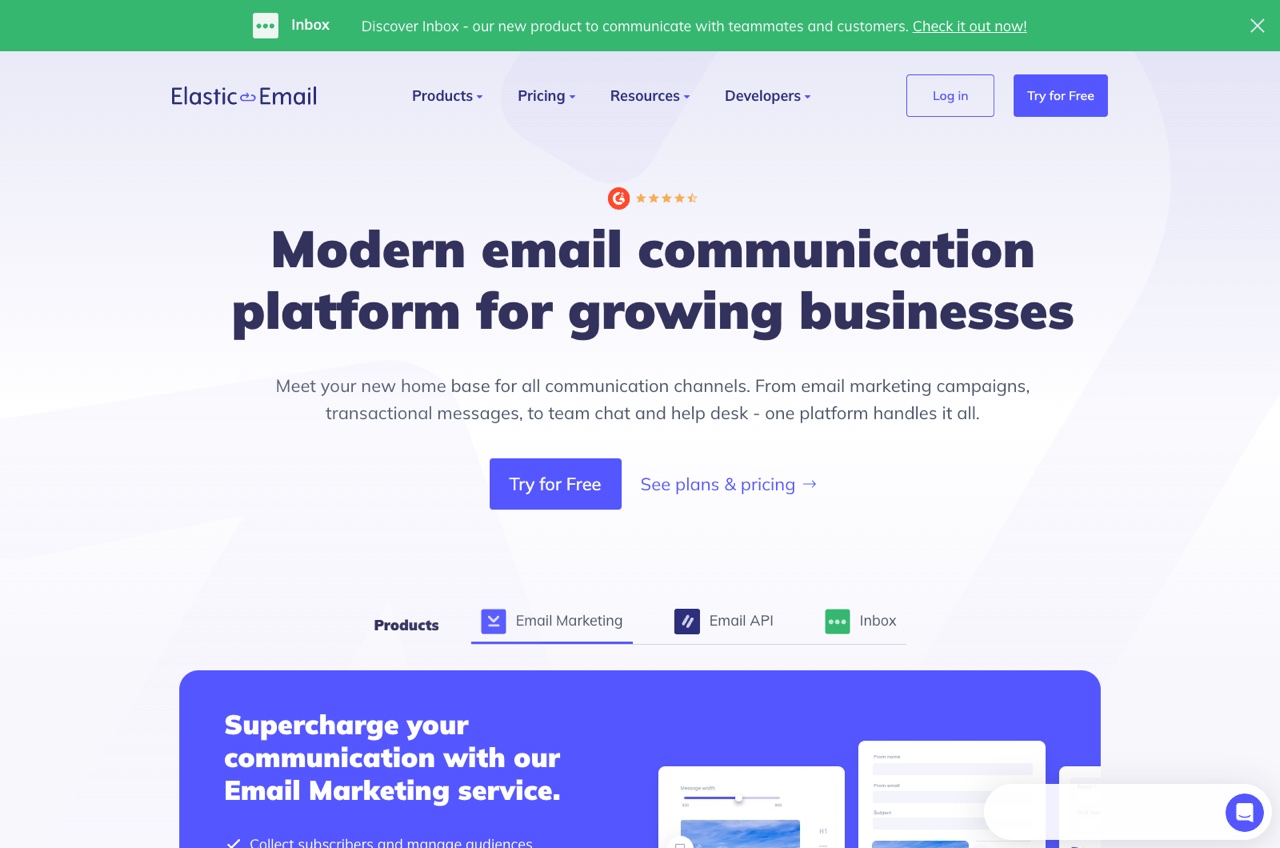
Elastic Email positions itself as one of the cheapest ways to send email at scale, with a pay-per-email pricing model that undercuts most competitors on raw cost. It offers both an API/SMTP relay for transactional email and a basic marketing UI for campaigns. The marketing side is minimal: a bare-bones email editor, rudimentary automation limited to simple autoresponders, no AI features, and no real-time collaboration. Deliverability is inconsistent because the budget infrastructure relies on shared IP pools with less sender vetting, meaning your reputation is at the mercy of other senders on the platform. There are no native ecommerce integrations, no design systems, and reporting is basic. Elastic Email includes a landing page builder, which is a nice add-on, but the overall platform is oriented toward high-volume, low-cost sending rather than sophisticated marketing. It is a sending tool, not a marketing tool.
Pricing: who's cheaper?
Elastic Email is one of the cheapest email platforms on the market, and on raw price alone, it undercuts Audienceful significantly. Their contact-based marketing plans start at just $9/month for small lists and scale to roughly half the cost of Audienceful at most tiers. If your only criterion is the lowest possible monthly bill, Elastic Email wins. But Elastic Email's low price reflects what you get: a bare-bones editor, rudimentary automation, no AI, no native ecommerce integrations, and inconsistent deliverability from shared IP pools. Audienceful costs more because it includes a real-time collaborative editor with a built-in AI agent, advanced automation with branching logic, native Stripe and Shopify integrations, revenue attribution, and deliverability infrastructure designed for consistent inbox placement.
Elastic Email is significantly cheaper than Audienceful
Based on publicly available pricing across all tiers (1K–200K contacts). Elastic Email's budget pricing reflects a simpler, more limited platform. The price gap narrows when you factor in the tools you would need to add separately to match Audienceful's capabilities.
Monthly price by contact volume
Pricing data sourced from public pricing pages · Last verified October 2026
AI and Collaboration
Summary: Audienceful's editor is built for teams that create content together. Multiple people can edit the same email in real time with live cursors and presence indicators.
Elastic Email has no AI capabilities whatsoever: no inline content generation, no subject line suggestions, no AI-powered rewriting, and no AI image creation. Every word and every visual must be created manually or sourced externally. Collaboration is equally absent: there are no real-time editing features, no presence indicators, and no way for multiple team members to work on the same campaign simultaneously. For teams producing email content regularly, this means a slow, sequential workflow where one person finishes before the next can start.
Audienceful's editor is built for teams that create content together. Multiple people can edit the same email in real time with live cursors and presence indicators. Beyond the editor, every plan includes a built-in AI agent: it writes and edits emails in your voice using your best-performing sends as style references, makes targeted edits to drafts, generates images natively, builds segments from a plain-language description, and can even run bulk list hygiene, suppressing bounced, inactive, and unsubscribed contacts on request. This eliminates the fragmented, manual workflow that Elastic Email requires.
Email Editor and Design
Summary: Audienceful takes a fundamentally different approach with a unified block editor that combines writing speed with deep design control. A built-in design system lets you define reusable styles and comp...
Elastic Email's email editor is bare minimum. You get a basic drag-and-drop builder with standard content blocks (text, images, buttons), but the design control is shallow. There are no design systems for maintaining brand consistency, no reusable components, and limited options for typography, spacing, or responsive fine-tuning. The editor feels like it exists to check a box rather than to be a serious campaign creation tool. Templates are available but similarly basic, offering little flexibility beyond color and logo swaps.
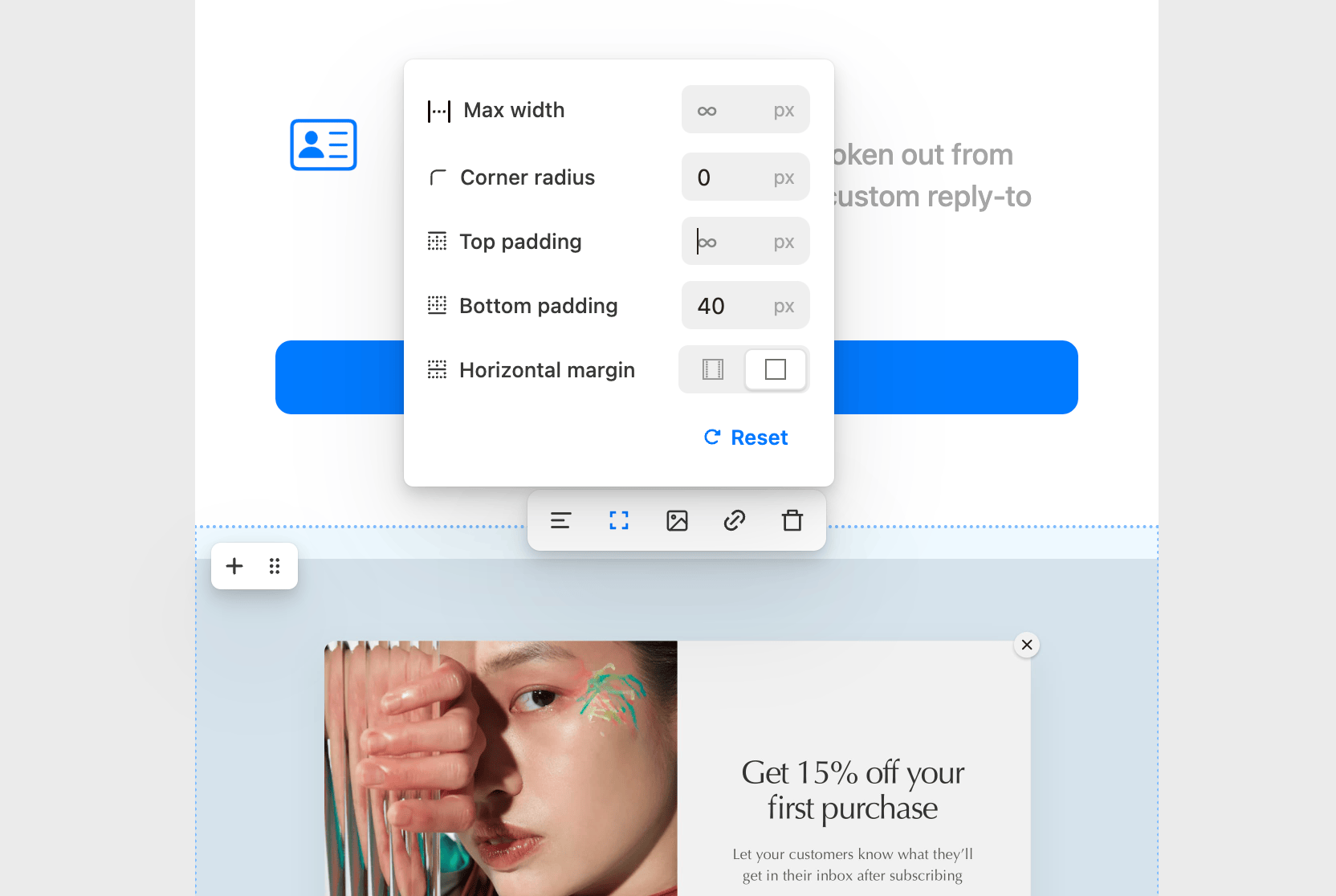
Audienceful takes a fundamentally different approach with a unified block editor that combines writing speed with deep design control. A built-in design system lets you define reusable styles and components, ensuring every email stays on-brand without manual recreation each time. You get fine-grained control over layout, spacing, and typography while the writing experience remains fast and fluid. The result is a tool where design quality and production speed work together rather than against each other.
Automation and Ecommerce
Summary: Audienceful's automation builder is designed for teams where email drives revenue. It supports full branching logic, conditional splits, and event-based triggers connected to native Stripe and Shopify...
Elastic Email's automation is rudimentary. The platform supports basic autoresponders and simple time-based drip sequences, but there is no real branching logic, no conditional splits, and no event-driven triggers beyond basic list subscription. For ecommerce or SaaS teams that need flows based on purchase behavior, subscription changes, or product interactions, the capabilities simply are not there. There are no native Shopify or Stripe integrations, so connecting commerce data requires custom development or third-party middleware that adds cost and complexity.
Audienceful's automation builder is designed for teams where email drives revenue. It supports full branching logic, conditional splits, and event-based triggers connected to native Stripe and Shopify integrations. You can build automations based on actual purchase events, subscription lifecycle changes, cart behavior, and engagement patterns, not just list membership. For ecommerce brands running abandoned cart, post-purchase, and win-back flows, or SaaS teams automating trial conversions and churn prevention, this is a categorically more capable system.
Ready to see the difference?
Free up to 1,000 subscribers.
Segmentation and Reporting
Summary: Audienceful's segmentation is built for revenue-focused teams. Native Stripe and Shopify integrations bring purchase history, subscription data, and product catalogs directly into the platform.
Elastic Email offers basic segmentation by contact properties and simple engagement metrics. You can filter by opens, clicks, and list membership, but there is no deep behavioral segmentation based on purchase history, revenue data, or product interactions. Reporting is similarly basic: you get open rates, click rates, and bounce statistics, but there is no revenue attribution, no per-campaign ROI tracking, and no way to tie email activity to actual business outcomes. For teams that need to prove email's contribution to revenue, the data simply is not available.
Audienceful's segmentation is built for revenue-focused teams. Native Stripe and Shopify integrations bring purchase history, subscription data, and product catalogs directly into the platform. You can segment on purchase behavior, revenue thresholds, subscription status, product interactions, and engagement patterns, building precise audiences based on what customers actually do. Revenue attribution ties email campaigns directly to purchases, giving you clear visibility into the ROI of every send and every automation.
Deliverability
Summary: Audienceful approaches deliverability as a first-class engineering problem. A manual approval process maintains platform-wide sender quality, preventing the reputation pollution that plagues shared-in...
Elastic Email's biggest weakness is its deliverability. The budget pricing model means shared IP pools with less rigorous sender vetting. Your sending reputation is influenced by every other sender on the platform, including the high-volume, low-quality senders that budget infrastructure attracts. Dedicated IPs are available on higher plans, but the overall sending infrastructure lacks the sophistication needed for consistent inbox placement. There is no dynamic batching, no per-provider throttling, and no smart retry logic. For high-volume senders where cost is the only concern and some spam folder placement is acceptable, this trade-off might work. For anyone who depends on their emails actually reaching the inbox, it is a significant risk.
Audienceful approaches deliverability as a first-class engineering problem. A manual approval process maintains platform-wide sender quality, preventing the reputation pollution that plagues shared-infrastructure providers like Elastic Email. Dynamic batching staggers sends based on inbox provider limits and engagement signals, avoiding the rate-limit trips and bulk-sender flags that hit less sophisticated platforms. When emails are temporarily deferred, a smart retry system re-attempts delivery with optimized timing and backoff. This produces consistently higher inbox placement, especially for marketing campaigns at scale.
Who Each Tool Is Best For
Summary: Audienceful is built for ecommerce brands and SaaS teams where marketing email is a revenue channel. If you need a modern collaborative editor with a built-in AI agent, an automation builder with real...
Elastic Email is built for one specific use case: sending high volumes of email as cheaply as possible. If you need a basic SMTP relay or API for transactional email, or if you are sending bulk campaigns where the lowest per-email cost matters more than design quality, automation sophistication, or inbox placement consistency, Elastic Email delivers on its promise of budget pricing. The included landing page builder adds some value. But it is a sending infrastructure tool with a marketing UI bolted on, not a marketing platform.
Audienceful is built for ecommerce brands and SaaS teams where marketing email is a revenue channel. If you need a modern collaborative editor with a built-in AI agent, an automation builder with real branching and conditional logic, native Stripe and Shopify integrations powering advanced segmentation, and deliverability infrastructure designed to maximize inbox placement, Audienceful is the purpose-built platform. The cost difference between Elastic Email and Audienceful disappears quickly when you factor in the revenue generated by emails that actually reach the inbox and convert.
Frequently asked questions
Is Audienceful better than Elastic Email?
For ecommerce brands and SaaS teams, yes. Audienceful offers a modern block editor, native Shopify and Stripe integrations, and deliverability infrastructure designed for scale. Elastic Email has strengths in other areas; read the full comparison above to see the detailed breakdown.
Can I migrate from Elastic Email easily?
Yes. Export your subscriber list as a CSV from Elastic Email and import it directly into Audienceful. We handle deduplication, tagging, and validation automatically. Most teams complete their migration in under 15 minutes.
Which is cheaper, Audienceful or Elastic Email?
Audienceful is typically significantly cheaper. The free plan includes 1,000 subscribers with all features. At scale, Audienceful is typically 30–50% cheaper because we don't charge for unsubscribed or inactive contacts.
Does Elastic Email have better automation?
Elastic Email's automation is solid. Audienceful matches it on branching logic and adds native ecommerce triggers from Shopify and Stripe, so you can automate based on real purchase data without third-party middleware.
Which platform is better for ecommerce?
Audienceful. Native Shopify and Stripe integrations mean purchase data flows directly into segmentation and automation, with no middleware required.
How do deliverability rates compare?
Audienceful uses dynamic batching with per-provider throttling and smart retry logic, which typically results in higher inbox placement, especially for larger sends.
Migrate from Elastic Email in less than 5 minutes
Import your contacts, templates, and automations. We handle the hard parts.
Start Free MigrationRelated comparisons
Audienceful vs ActiveCampaign
ActiveCampaign is a marketing automation and CRM platform known for its powerful automation builder, but its sprawling feature set, dated email editor, and confusing pricing tiers make it a complex choice for teams that just want great email marketing.
See comparison →Audienceful vs Amazon SES
Amazon SES is raw email sending infrastructure from AWS. It's incredibly cheap at $0.10 per 1,000 emails, but it provides zero marketing features, no editor, no automation, and no segmentation, requiring you to build everything yourself on top of a sending pipe.
See comparison →Audienceful vs AWeber
AWeber is one of the oldest email marketing platforms, launched in 1998. It's simple and beginner-friendly but has barely evolved, offering only basic autoresponders, a dated editor, no AI, no real-time collaboration, and no meaningful ecommerce integrations.
See comparison →Stop searching.
Start emailing.
Your first 1,000 subscribers are totally free.
Start Free