Best Zoho Campaigns Alternative for Modern Teams
TL;DR: Zoho Campaigns is a budget email marketing tool built for the Zoho ecosystem. It's deeply integrated with Zoho CRM but limited as a standalone platform, with a dated editor, basic automation, and no modern collaboration or AI features.
Compare features
A side-by-side look at how Zoho Campaigns and Audienceful compare across the features that matter most.
Zoho Campaigns vs Audienceful: Summary
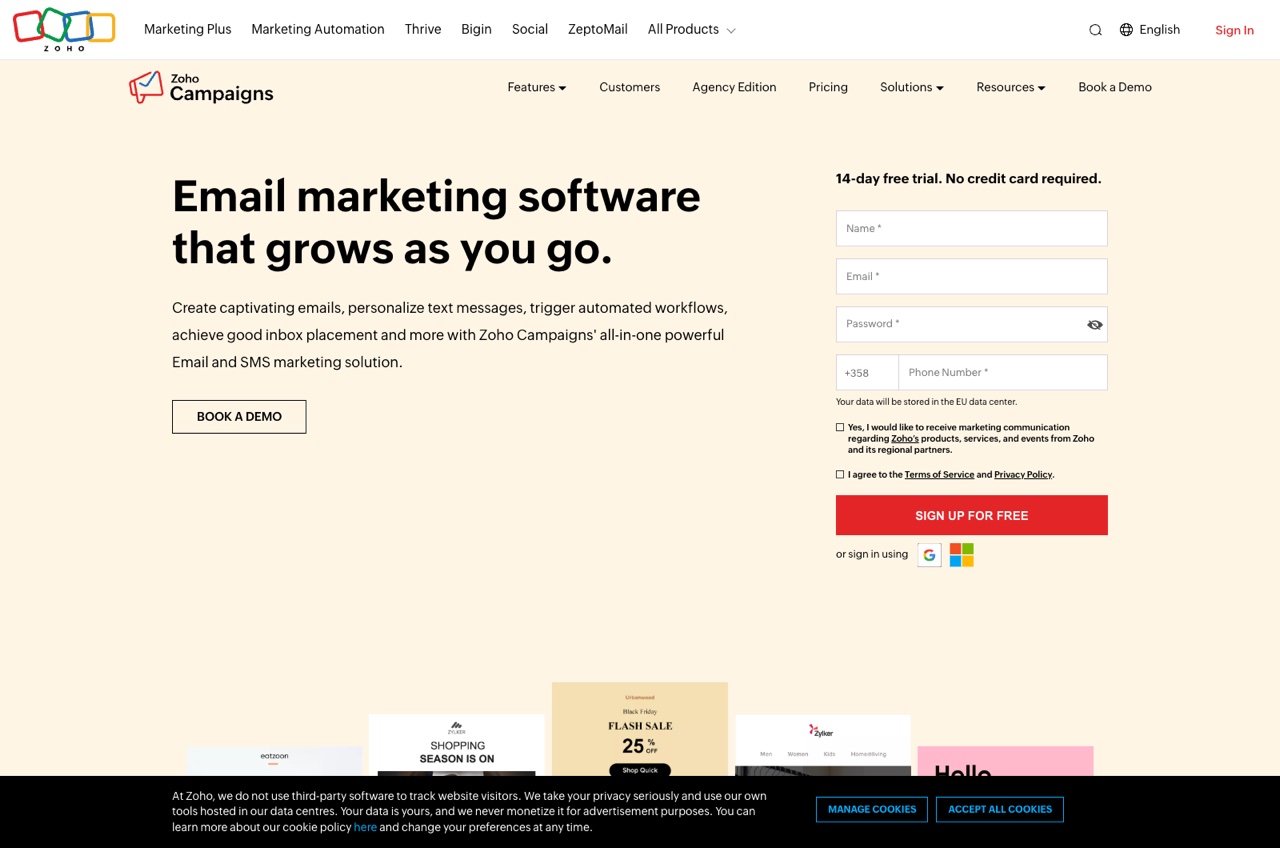
Zoho Campaigns is the email marketing arm of the sprawling Zoho ecosystem. Its main selling point is deep integration with Zoho CRM, Books, Desk, and the rest of the suite. If your business already runs on Zoho, Campaigns can pull CRM contact data directly into segmentation and targeting. As a standalone email tool, however, it falls short of modern standards. The editor is functional but dated, automation is limited compared to dedicated platforms, and there are no real-time collaboration features, no AI in the editor, and no native ecommerce integrations. Pricing is very affordable, but the product feels like a checkbox addition to the Zoho suite rather than a best-in-class email marketing platform.
Pricing: who's cheaper?
Zoho Campaigns is one of the most affordable email marketing tools available, especially if you already use the Zoho ecosystem. Their Standard plan starts at just $7/mo for 1,000 contacts on monthly billing, and stays well below most competitors as you scale. Audienceful costs more, but includes a built-in AI agent, real-time collaboration, Shopify and Stripe integrations, and advanced automation that Zoho Campaigns does not offer at any tier.
Monthly price by contact volume
Pricing data sourced from public pricing pages · Last verified October 2026
AI and Collaboration
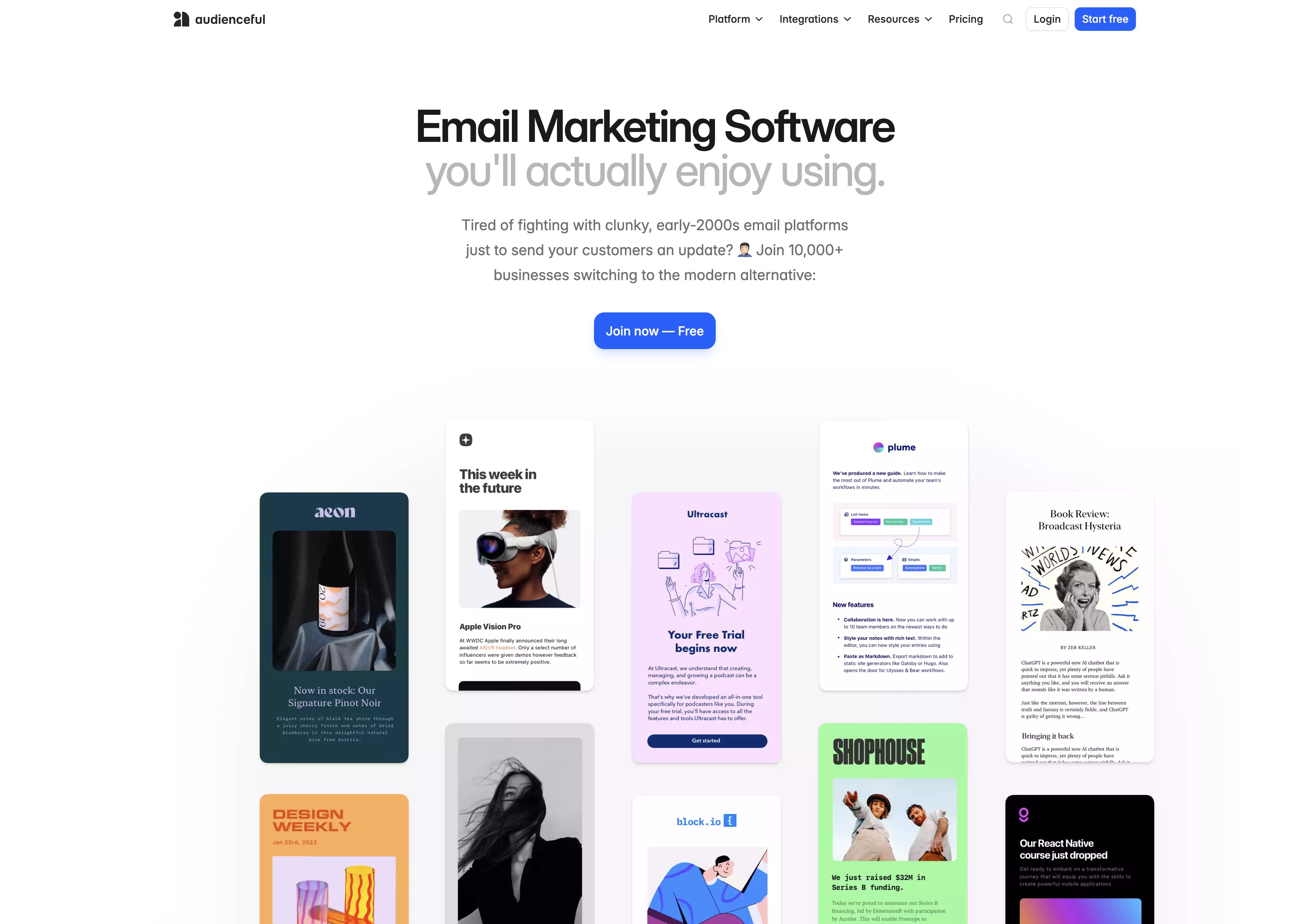
Summary: Audienceful's editor is built for modern teams. Multiple people can edit the same email in real time with live cursors and presence indicators.
Zoho Campaigns has no AI capabilities inside the email editor. There is no inline content generation, no AI-powered rewriting, and no AI image creation. If you want AI assistance with your email copy, you are working in a separate tool and pasting results back in. Team collaboration is similarly absent: there are no real-time editing features, no live cursors, and no way for multiple team members to work on the same email at once. For teams that ship emails frequently, this means a slow, sequential workflow.
Audienceful's editor is built for modern teams. Multiple people can edit the same email in real time with live cursors and presence indicators. A built-in AI agent (included on every plan) writes and edits emails in your voice using your best-performing sends as style references, makes targeted edits to drafts, generates on-brand images natively, and can run bulk list hygiene like suppressing bounced or inactive contacts on request.
Email Editor and Design
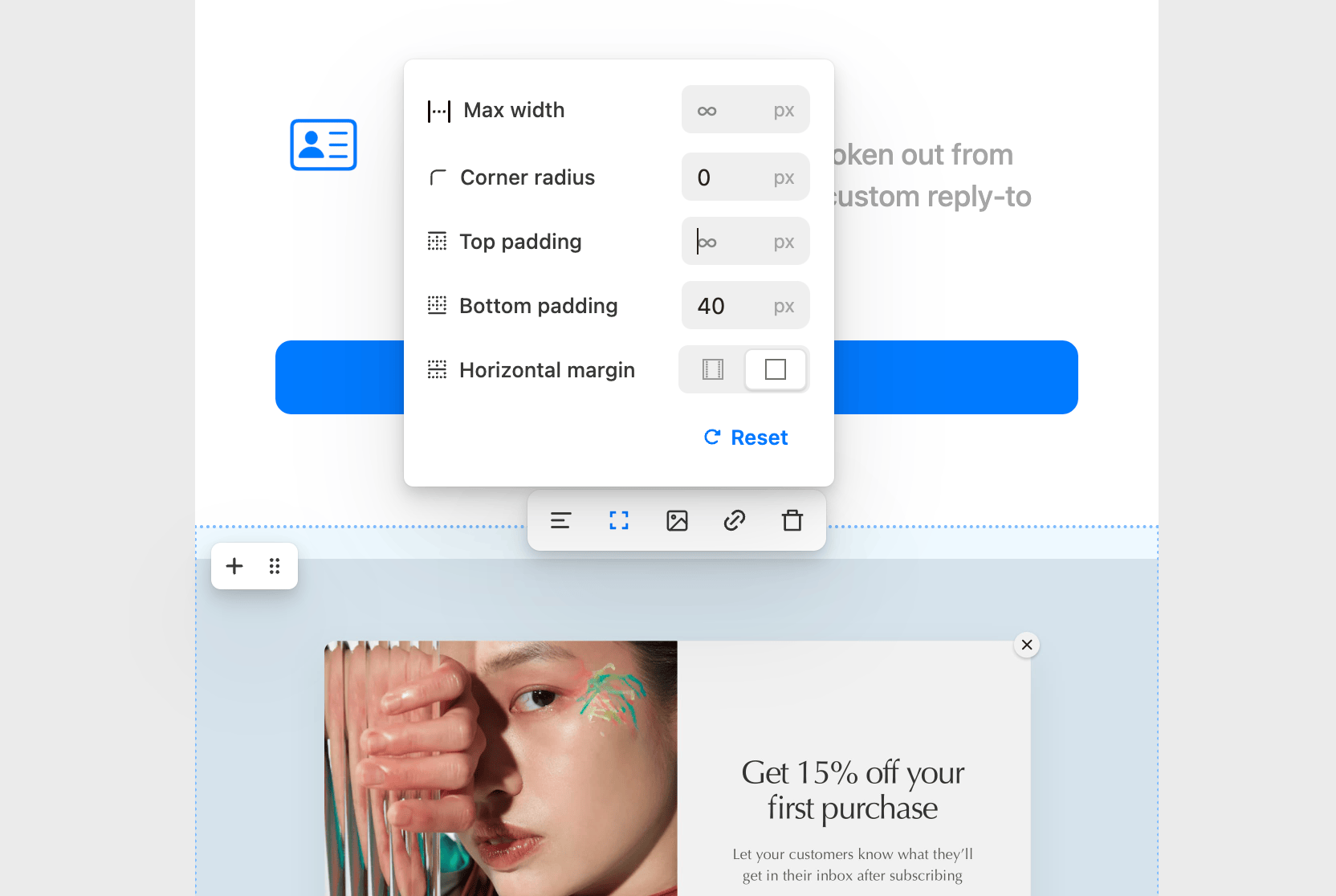
Summary: Audienceful takes a different approach with a unified block editor that combines writing speed with deep design control. You get a design system with reusable styles and components, ensuring every ema...
Zoho Campaigns uses a drag-and-drop email editor that is functional but visibly dated. You can build basic layouts with text, images, buttons, and columns, but the interface feels corporate and sluggish compared to modern editors. There are no design systems for maintaining consistent branding, no reusable components, and limited fine-grained control over typography, spacing, and layout. The editor has not kept pace with what design-conscious teams expect from a modern email tool.
Audienceful takes a different approach with a unified block editor that combines writing speed with deep design control. You get a design system with reusable styles and components, ensuring every email stays on-brand without manually recreating layouts each time. The editor gives you fine-grained control over layout, spacing, and typography while keeping the writing experience fast and fluid, closing the gap between design quality and production speed.
Automation and Ecommerce
Summary: Audienceful's automation builder is designed for revenue-focused teams. It supports full branching logic, conditional splits, and event-based triggers that connect directly to native Stripe and Shopif...
Zoho Campaigns has an automation builder, but it is limited compared to dedicated email marketing platforms. You can set up basic drip sequences and simple triggers, but the branching logic is shallow, conditional splits are restricted, and the range of event triggers available is narrow. There is no native Shopify integration, so ecommerce teams cannot build flows based on purchase events, cart abandonment, or product interactions without heavy workarounds. There is no native Stripe integration either, leaving SaaS teams without direct access to subscription lifecycle data for automation.
Audienceful's automation builder is designed for revenue-focused teams. It supports full branching logic, conditional splits, and event-based triggers that connect directly to native Stripe and Shopify integrations. This means you can build automations based on actual purchase events, subscription changes, product interactions, and behavioral data, not just form submissions and list membership. For ecommerce brands and SaaS teams, this is a fundamentally more capable automation system.
Ready to see the difference?
Free up to 1,000 subscribers.
Integrations and Data
Summary: Audienceful focuses its integration depth where it matters for revenue teams. Native Stripe and Shopify integrations sync purchase history, subscription data, and product catalogs directly into the pl...
The core value proposition of Zoho Campaigns is its integration with the Zoho ecosystem. If your business uses Zoho CRM, you get deep syncing of contact records, deal stages, and CRM fields directly into your email segmentation. Zoho Analytics provides powerful reporting if you are already invested in that tool. However, outside of the Zoho ecosystem, integrations are thin. There is no native Shopify or Stripe connection, and most third-party integrations require Zapier or custom API work. If you are not a Zoho shop, the integration story is weak.
Audienceful focuses its integration depth where it matters for revenue teams. Native Stripe and Shopify integrations sync purchase history, subscription data, and product catalogs directly into the platform. This powers advanced behavioral segmentation. You can segment on actual purchase behavior, subscription status, revenue thresholds, and product interactions rather than relying on basic tags and list membership. Revenue attribution is built in, connecting email campaigns directly to the revenue they generate.
Deliverability
Summary: Audienceful approaches deliverability as an engineering challenge. On top of a manual approval process to maintain platform quality, Audienceful uses dynamic batching to stagger sends based on inbox p...
Zoho Campaigns has mixed deliverability results. The platform uses shared sending infrastructure, and sender reputation can vary depending on the quality of other accounts on the same infrastructure. There is a dedicated IP option on higher tiers, but the base experience lacks intelligent send optimization. There is no dynamic batching, no per-provider throttling, and no smart retry logic for deferred messages. For teams sending to large lists, this can result in inconsistent inbox placement.
Audienceful approaches deliverability as an engineering challenge. On top of a manual approval process to maintain platform quality, Audienceful uses dynamic batching to stagger sends based on inbox provider limits and engagement signals, preventing the rate-limit trips and bulk-sender flags that plague shared-infrastructure platforms. When emails are temporarily deferred, a smart retry system re-attempts delivery with optimized timing and backoff rather than giving up or hammering the provider. This produces consistently higher inbox placement, especially on larger sends.
Who Each Tool Is Best For
Summary: Audienceful is built for ecommerce brands and SaaS teams where email is a core revenue driver. If you need deep automation with real branching logic, native Stripe and Shopify data powering your segme...
Zoho Campaigns makes sense if your business is already deeply invested in the Zoho ecosystem and you need basic email marketing that pulls directly from your Zoho CRM data. Its pricing is very affordable, and the CRM integration is genuinely useful for teams that rely on Zoho for their entire business stack. As a standalone email marketing tool, however, it does not compete with platforms built specifically for email.
Audienceful is built for ecommerce brands and SaaS teams where email is a core revenue driver. If you need deep automation with real branching logic, native Stripe and Shopify data powering your segmentation, a modern collaborative editor with an AI agent that can build segments and entire automations from a plain-language brief, and deliverability infrastructure that scales with your list, Audienceful is the more capable platform.
Frequently asked questions
Is Audienceful better than Zoho Campaigns?
For ecommerce brands and SaaS teams, yes. Audienceful offers a modern block editor, native Shopify and Stripe integrations, and deliverability infrastructure designed for scale. Zoho Campaigns has strengths in other areas; read the full comparison above to see the detailed breakdown.
Can I migrate from Zoho Campaigns easily?
Yes. Export your subscriber list as a CSV from Zoho Campaigns and import it directly into Audienceful. We handle deduplication, tagging, and validation automatically. Most teams complete their migration in under 15 minutes.
Which is cheaper, Audienceful or Zoho Campaigns?
Audienceful is typically significantly cheaper. The free plan includes 1,000 subscribers with all features. At scale, Audienceful is typically 30–50% cheaper because we don't charge for unsubscribed or inactive contacts.
Does Zoho Campaigns have better automation?
Zoho Campaigns's automation is solid. Audienceful matches it on branching logic and adds native ecommerce triggers from Shopify and Stripe, so you can automate based on real purchase data without third-party middleware.
Which platform is better for ecommerce?
Audienceful. Native Shopify and Stripe integrations mean purchase data flows directly into segmentation and automation, with no middleware required.
How do deliverability rates compare?
Audienceful uses dynamic batching with per-provider throttling and smart retry logic, which typically results in higher inbox placement, especially for larger sends.
Migrate from Zoho Campaigns in less than 5 minutes
Import your contacts, templates, and automations. We handle the hard parts.
Start Free MigrationRelated comparisons
Audienceful vs ActiveCampaign
ActiveCampaign is a marketing automation and CRM platform known for its powerful automation builder, but its sprawling feature set, dated email editor, and confusing pricing tiers make it a complex choice for teams that just want great email marketing.
See comparison →Audienceful vs Amazon SES
Amazon SES is raw email sending infrastructure from AWS. It's incredibly cheap at $0.10 per 1,000 emails, but it provides zero marketing features, no editor, no automation, and no segmentation, requiring you to build everything yourself on top of a sending pipe.
See comparison →Audienceful vs AWeber
AWeber is one of the oldest email marketing platforms, launched in 1998. It's simple and beginner-friendly but has barely evolved, offering only basic autoresponders, a dated editor, no AI, no real-time collaboration, and no meaningful ecommerce integrations.
See comparison →Stop searching.
Start emailing.
Your first 1,000 subscribers are totally free.
Start Free