Best Customer.io Alternative for Email Marketing
TL;DR: Customer.io is a developer-focused messaging platform built for SaaS and product teams, offering powerful event-based automation and multi-channel messaging, but its bare-bones email editor and steep technical requirements make it a poor fit for teams that want to move fast without leaning on engineering.
Compare features
A side-by-side look at how Customer.io and Audienceful compare across the features that matter most.
Customer.io vs Audienceful: Summary
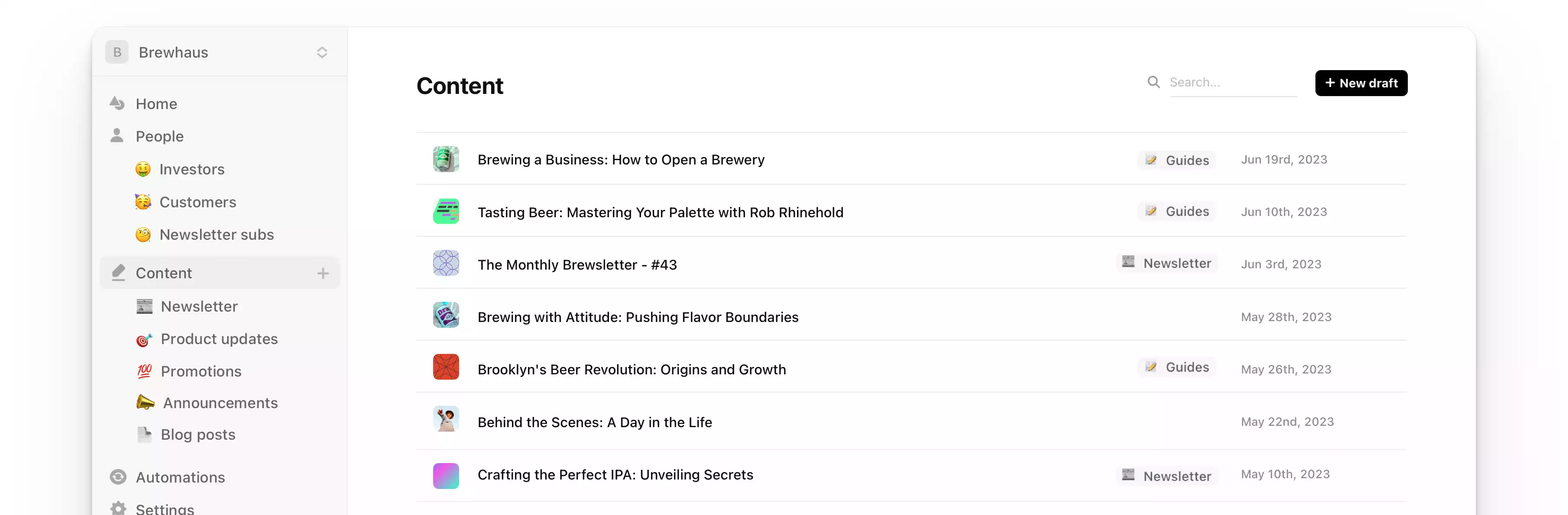
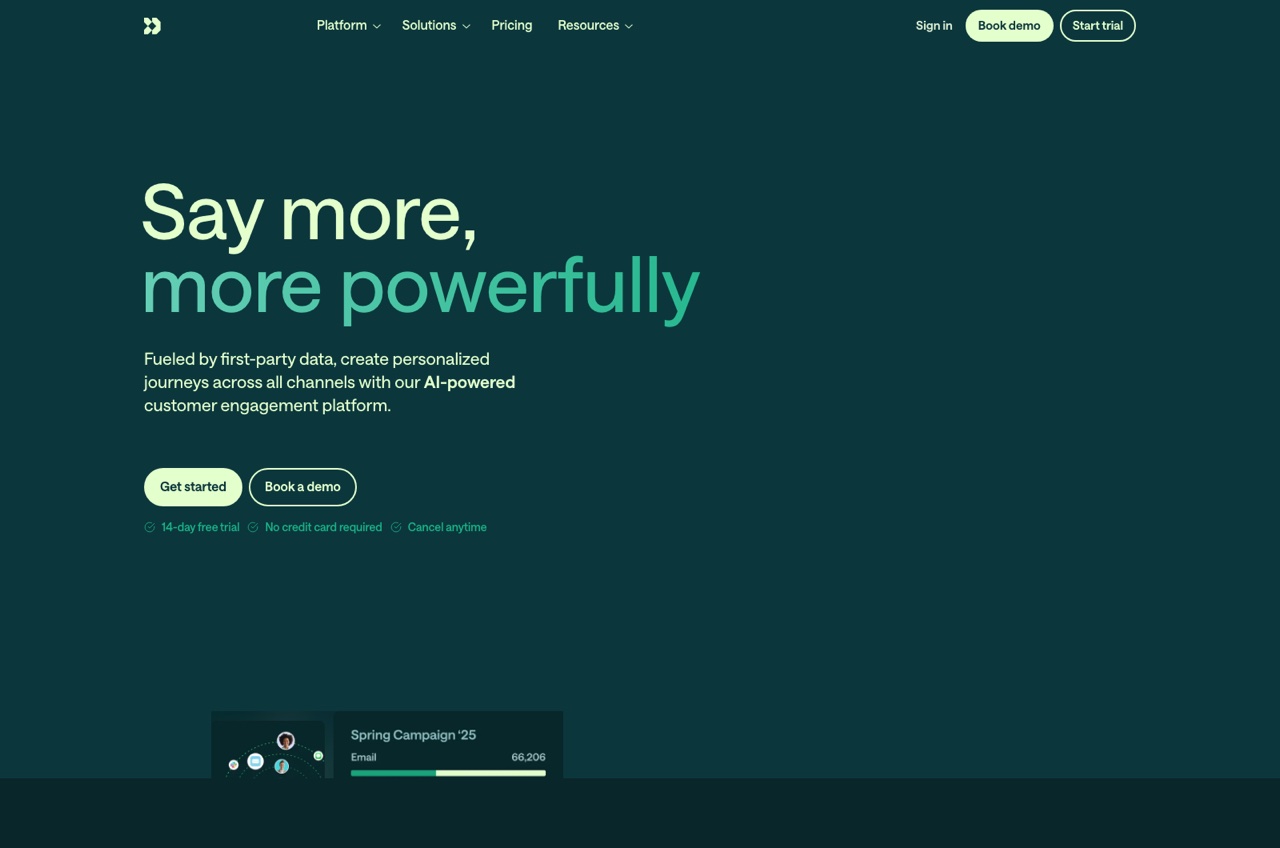
Customer.io is a developer-and-product-focused messaging platform designed for SaaS teams that want deep event-based automation across email, push, SMS, and in-app channels. Its automation engine is genuinely powerful. You can trigger workflows from any custom event your product emits. But the email editing experience is essentially code-first: there's no real drag-and-drop builder, no visual design tools for marketers, and building anything beyond a plain-text transactional email requires a developer writing HTML. Pricing is per message volume rather than contacts, which can get expensive fast at scale.
Pricing: who's cheaper?
Customer.io and Audienceful use fundamentally different pricing models, which makes direct comparison tricky. Customer.io charges based on the number of profiles (contacts) in your workspace, starting at $100/month for up to 5,000 profiles on their Essentials plan. Additional profiles cost $0.009 each, and you get 1 million email sends included, with overage at $0.12 per 1,000 emails. There is no free tier. Their Premium plan starts at $1,000/month with custom volume pricing, and they push accounts over 50K profiles toward Premium. Audienceful charges a flat monthly rate based on your contact count with unlimited email sends on every plan. There are no message overage fees, no per-email charges, and no surprise costs as your sending volume grows. For most teams, this means Audienceful is significantly cheaper, especially as you scale.
Customer.io Essentials vs Audienceful Essentials
Based on Customer.io's published Essentials plan pricing (profile-based, with $0.009/profile overage above 5K) and Audienceful's Essentials plan pricing. Customer.io costs assume standard email volume within the included 1M sends/month. At 100K+ profiles, Customer.io requires their Premium plan starting at $1,000/month.
Monthly price by contact volume
Dotted line is estimated. Customer.io doesn’t publish pricing at these volumes.
Pricing data sourced from public pricing pages · Last verified October 2026
AI and Collaboration
Summary: Audienceful's editor is built for teams that want to move fast together. Multiple people can edit the same email in real time with presence indicators and live cursors, just like a modern doc editor.
Customer.io has no AI features in its editor and no real-time collaboration. Building an email means a developer writes HTML or a marketer struggles through a minimal code-based editor alone. There's no way for multiple team members to work on a campaign simultaneously, no live cursors, no presence indicators. Content creation is entirely manual and typically bottlenecked by whoever on your team can write HTML email code.
Audienceful's editor is built for teams that want to move fast together. Multiple people can edit the same email in real time with presence indicators and live cursors, just like a modern doc editor. And instead of bolt-on AI text features, Audienceful includes a built-in AI agent on every plan: it writes and edits emails in your voice using your best-performing sends as style references, makes targeted edits to drafts, generates on-brand images inline, and can even build audience segments or entire automations (trigger, steps, and email bodies) from a plain-language brief, with your approval before anything sends. For teams that ship emails regularly, this eliminates the back-and-forth between marketers, developers, and external AI tools that Customer.io's workflow demands.
Email Editor and Design
Summary: Audienceful takes a fundamentally different approach with a unified block editor that gives you deep layout and design control without requiring code. You get a full design system with reusable styles...
Customer.io's email editor is its weakest point. It's essentially an HTML code editor with a thin visual preview layer. There's no real drag-and-drop builder, no design systems, no reusable components, and no way for a non-technical marketer to build a polished, on-brand email without developer help. If you want anything beyond a plain transactional message, you're writing code or maintaining a library of HTML templates that someone on your engineering team built and now has to update every time the brand evolves.
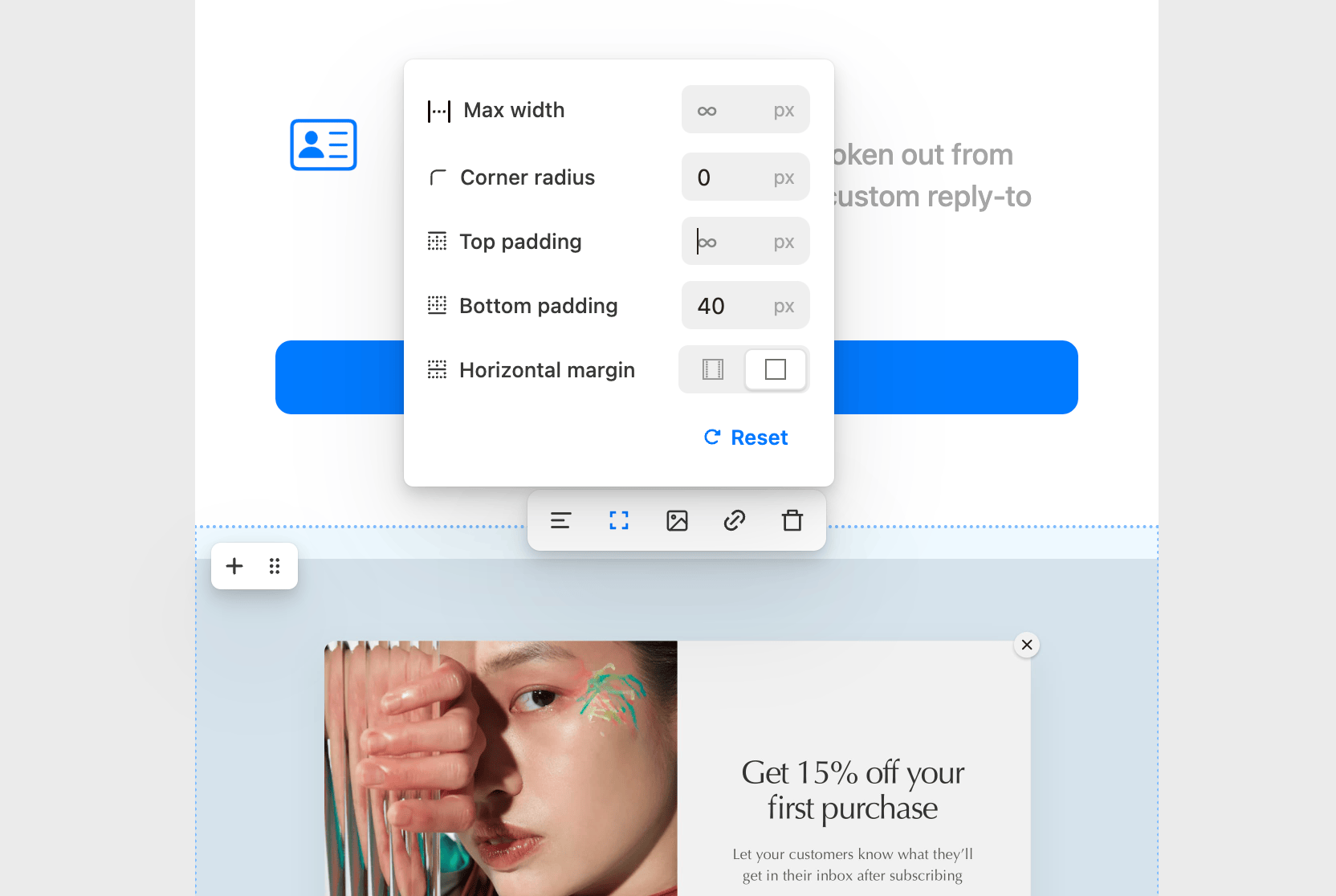
Audienceful takes a fundamentally different approach with a unified block editor that gives you deep layout and design control without requiring code. You get a full design system with reusable styles and components, so every email stays on-brand whether a marketer or a founder builds it. The editor combines the speed of writing in blocks with the precision of a design tool, so there's no choosing between a code editor and a toy drag-and-drop builder. For teams where both marketers and technical staff touch email, this is the difference between a developer bottleneck and a self-serve workflow.
Automation and Ecommerce
Summary: Audienceful's automation builder matches Customer.io on sophistication (branching logic, conditional splits, event-based triggers) while adding native Stripe and Shopify integrations that Customer.io ...
Customer.io's automation engine is genuinely strong. It's the core of the product. You can trigger workflows from any custom event your product sends, build complex branching flows, and orchestrate messages across channels. For SaaS product-led growth use cases like onboarding sequences triggered by feature adoption, Customer.io is purpose-built. Where it falls short is ecommerce: there's no native Shopify integration, no built-in product catalog sync, and no turnkey flows for cart abandonment, post-purchase, or browse behavior. If you're an ecommerce brand, you're stitching together workarounds.
Audienceful's automation builder matches Customer.io on sophistication (branching logic, conditional splits, event-based triggers) while adding native Stripe and Shopify integrations that Customer.io lacks. You can build flows based on actual purchase data, subscription lifecycle events, product activity, and cart behavior without any middleware or custom engineering. For ecommerce and SaaS teams alike, you get the power of an event-driven automation engine with plug-and-play integrations that don't require your engineering team to wire everything together.
Ready to see the difference?
Free up to 1,000 subscribers.
Integrations and Data
Summary: Audienceful ships with native Stripe and Shopify integrations that work out of the box, with no pipelines to configure and no engineering tickets to file. Your subscriber data, purchase history, subsc...
Customer.io has strong data ingestion capabilities: it can accept custom events and attributes via API, and it connects to data warehouses and CDPs through its data pipelines. It has a Stripe integration, but it's routed through data pipelines rather than being a native plug-and-play connection. There's no native Shopify integration at all. For SaaS teams with dedicated engineering resources, the flexibility is valuable. For everyone else, the setup cost is high and ongoing maintenance falls on your technical team.
Audienceful ships with native Stripe and Shopify integrations that work out of the box, with no pipelines to configure and no engineering tickets to file. Your subscriber data, purchase history, subscription events, and product catalog sync directly into your email platform. This means you can segment on real purchase behavior, trigger automations from revenue events, and build campaigns informed by what customers are actually doing, all without needing a developer to maintain the plumbing.
Deliverability
Summary: Audienceful treats deliverability as an engineering problem. On top of a manual approval process to keep bad senders off the platform, Audienceful uses dynamic batching to stagger sends based on inbox...
Customer.io handles deliverability competently for a developer-focused platform. It supports dedicated IPs on higher plans and provides basic deliverability reporting. But its approach is largely hands-off: you're responsible for warming your IP, managing your sender reputation, and monitoring your own deliverability metrics. There's no intelligent send-rate optimization built into the platform, and if you're on a shared IP, your reputation is tied to other senders on the same pool.
Audienceful treats deliverability as an engineering problem. On top of a manual approval process to keep bad senders off the platform, Audienceful uses dynamic batching to stagger sends based on inbox provider limits and engagement signals, so you're never tripping rate limits or triggering bulk-sender flags. Smart retry logic automatically re-attempts delivery with optimized timing and backoff when emails soft-bounce or get deferred, rather than giving up or flooding providers with retries. The result is consistently higher inbox placement, especially for larger sends where platforms that take a hands-off approach tend to see deliverability drop.
Who Each Tool Is Best For
Summary: Audienceful is built for ecommerce brands and SaaS teams that want the same automation power without the developer dependency. You get a modern editor with real-time collaboration, a built-in AI agent...
Customer.io is a strong choice for SaaS companies with dedicated engineering resources that want deep event-based automation and multi-channel messaging. If your team has developers who can set up and maintain the platform, and your primary use case is product-triggered messaging, it's a capable tool, as long as you don't need a good email editing experience.
Audienceful is built for ecommerce brands and SaaS teams that want the same automation power without the developer dependency. You get a modern editor with real-time collaboration, a built-in AI agent, native Stripe and Shopify integrations, advanced behavioral segmentation, and revenue attribution, all in a platform that marketers can actually use without filing engineering tickets. If email is a core revenue channel and you want your team to move fast, Audienceful gives you Customer.io-level automation with a dramatically better day-to-day experience.
Frequently asked questions
Is Audienceful better than Customer.io?
For ecommerce brands and SaaS teams, yes. Audienceful offers a modern block editor, native Shopify and Stripe integrations, and deliverability infrastructure designed for scale. Customer.io has strengths in other areas; read the full comparison above to see the detailed breakdown.
Can I migrate from Customer.io easily?
Yes. Export your subscriber list as a CSV from Customer.io and import it directly into Audienceful. We handle deduplication, tagging, and validation automatically. Most teams complete their migration in under 15 minutes.
Which is cheaper, Audienceful or Customer.io?
Audienceful is typically significantly cheaper. The free plan includes 1,000 subscribers with all features. At scale, Audienceful is typically 30–50% cheaper because we don't charge for unsubscribed or inactive contacts.
Does Customer.io have better automation?
Customer.io's automation is solid. Audienceful matches it on branching logic and adds native ecommerce triggers from Shopify and Stripe, so you can automate based on real purchase data without third-party middleware.
Which platform is better for ecommerce?
Audienceful. Native Shopify and Stripe integrations mean purchase data flows directly into segmentation and automation, with no middleware required.
How do deliverability rates compare?
Audienceful uses dynamic batching with per-provider throttling and smart retry logic, which typically results in higher inbox placement, especially for larger sends.
Migrate from Customer.io in less than 5 minutes
Import your contacts, templates, and automations. We handle the hard parts.
Start Free MigrationRelated comparisons
Audienceful vs ActiveCampaign
ActiveCampaign is a marketing automation and CRM platform known for its powerful automation builder, but its sprawling feature set, dated email editor, and confusing pricing tiers make it a complex choice for teams that just want great email marketing.
See comparison →Audienceful vs Amazon SES
Amazon SES is raw email sending infrastructure from AWS. It's incredibly cheap at $0.10 per 1,000 emails, but it provides zero marketing features, no editor, no automation, and no segmentation, requiring you to build everything yourself on top of a sending pipe.
See comparison →Audienceful vs AWeber
AWeber is one of the oldest email marketing platforms, launched in 1998. It's simple and beginner-friendly but has barely evolved, offering only basic autoresponders, a dated editor, no AI, no real-time collaboration, and no meaningful ecommerce integrations.
See comparison →Stop searching.
Start emailing.
Your first 1,000 subscribers are totally free.
Start Free