The Best Klaviyo Alternative for Growing Teams
TL;DR: Klaviyo is the dominant email and SMS platform for ecommerce, with powerful automation and segmentation. But it has a dated editor, no real-time collaboration, and a sprawling feature set that's increasingly complex and expensive as you scale.
Compare features
A side-by-side look at how Klaviyo and Audienceful compare across the features that matter most.
Klaviyo vs Audienceful: Summary
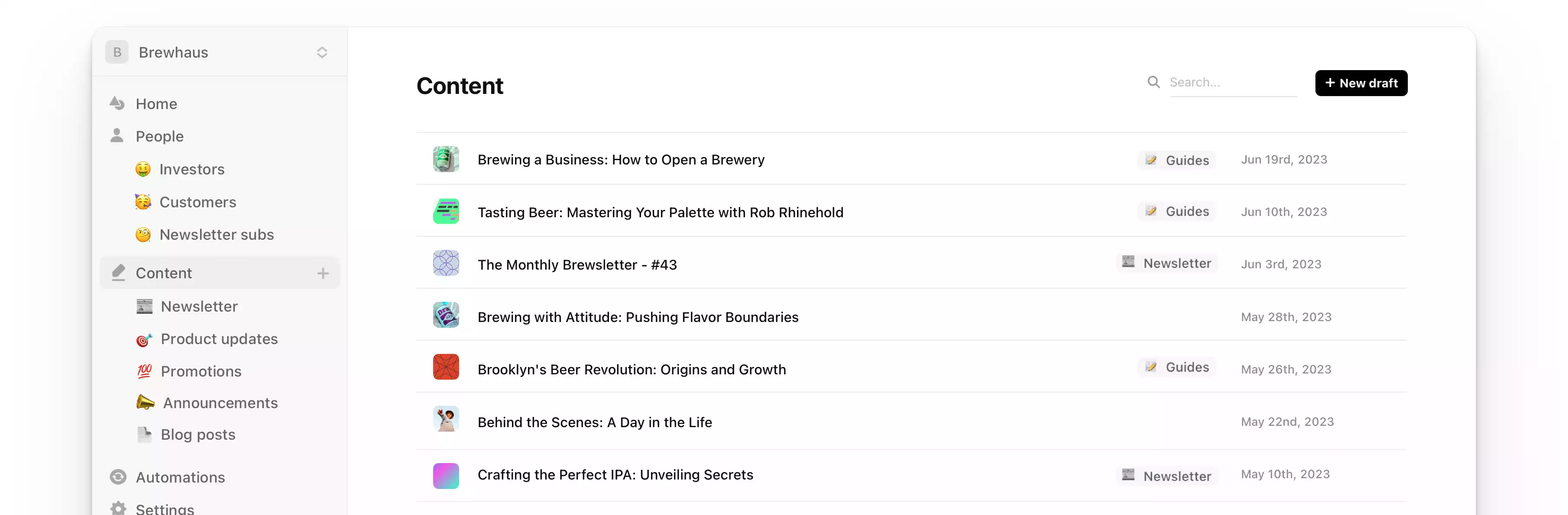
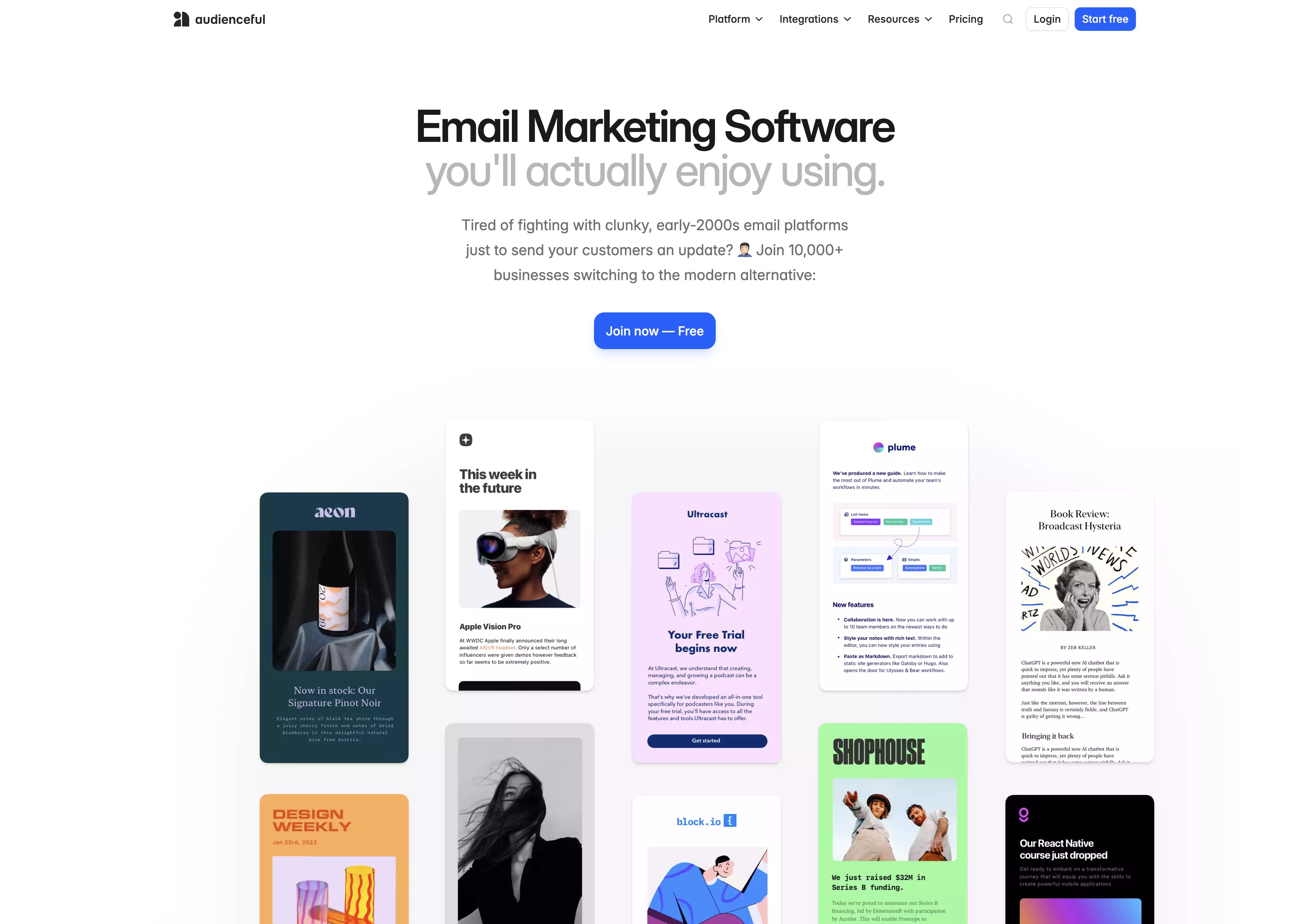
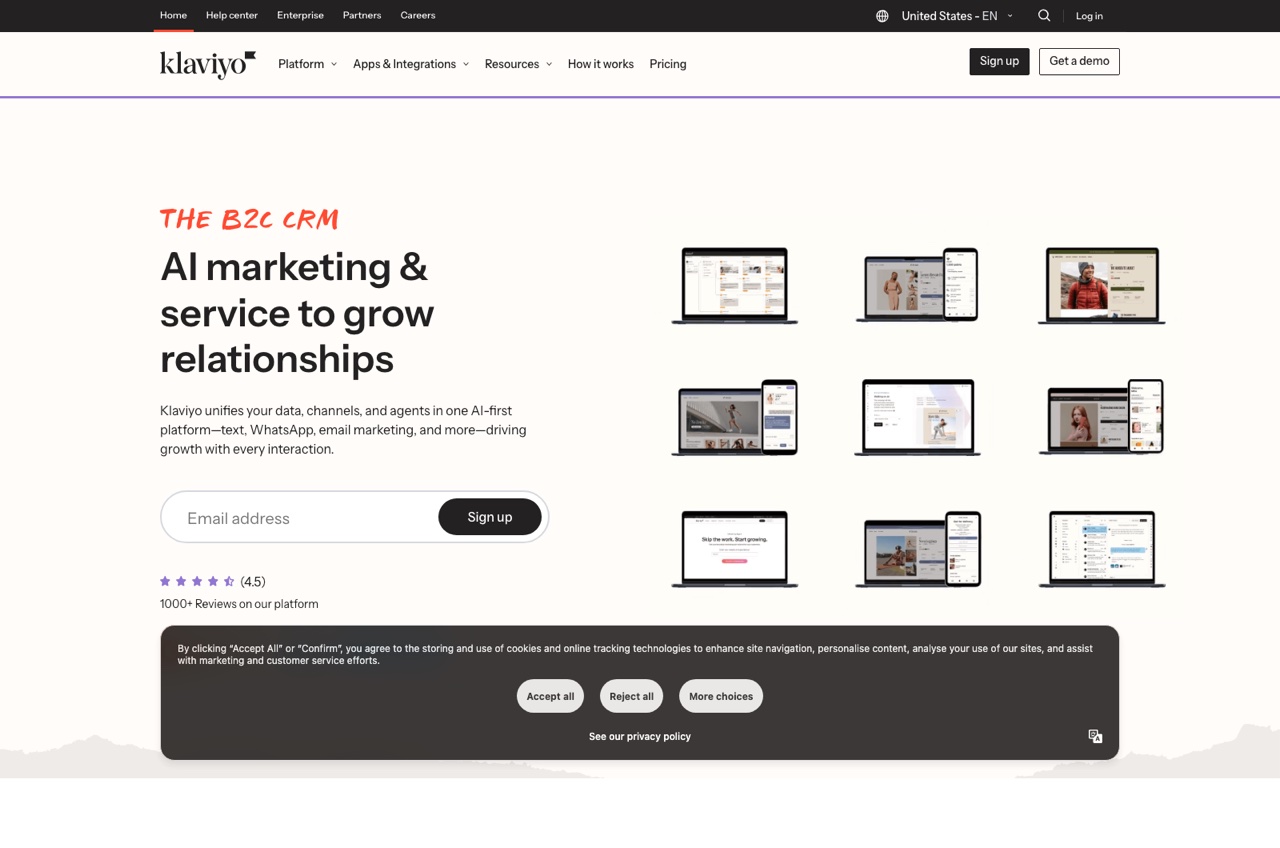
Klaviyo is the go-to email and SMS marketing platform for ecommerce brands, especially Shopify stores. It built its reputation on deep automation flows and behavioral segmentation, and it delivers on both. But the platform has expanded aggressively into SMS, reviews, CDP, and push notifications, and with that growth has come a sprawling UI, a steep learning curve, and an email editor that feels increasingly dated. Klaviyo's drag-and-drop builder gets the job done but lacks real design systems, real-time collaboration, or deeply integrated AI. Since going public, its product direction has tilted enterprise and upmarket, and its pricing reflects that.
Pricing: who's cheaper?
Klaviyo's Email plan starts free for up to 250 active profiles, then jumps to $30/month at 1,000 contacts. Pricing scales steeply from there, especially once you pass 10K contacts. Since February 2025, Klaviyo bills based on active profiles in your account regardless of whether you email them, which means your bill can creep up even if your sending volume stays flat. Audienceful's Essentials plan includes all features at every tier with no per-feature upsells. At smaller list sizes, the two platforms are close in price. But as you scale past 10K contacts, Klaviyo's pricing pulls away sharply. By 50K contacts, Klaviyo costs nearly double what Audienceful charges, and the gap only widens from there. Klaviyo also pushes enterprise pricing (Klaviyo One) above $10K/month spend, adding a 20% surcharge.
Audienceful is up to 57% cheaper at scale
Based on published Klaviyo Email plan pricing and Audienceful Essentials plan pricing as of March 2026.
Monthly price by contact volume
Pricing data sourced from public pricing pages · Last verified October 2026
AI Agents and MCP Servers
Summary: Audienceful gives you both on every plan, including Free. The built-in AI agent builds audiences, automations and emails from a brief and waits for your approval, and the hosted email marketing MCP se...
Klaviyo has both pieces. Composer, its in-app agent (in public beta), builds campaigns and flows from a prompt, and Klaviyo's MCP server connects Claude, ChatGPT and other assistants to your account. The MCP side is mostly for reading and drafting: it reports on performance and drafts campaigns, but it can't send them, and flows are read-only. Composer also runs on Klaviyo AI credits.
Audienceful gives you both on every plan, including Free. The built-in AI agent builds audiences, automations and emails from a brief and waits for your approval, and the hosted email marketing MCP server lets Claude, ChatGPT, Gemini or Cursor do the same work, through to scheduling the send once you've approved the exact recipients. New automations arrive paused, and the MCP server doesn't use AI credits. Our Klaviyo MCP guide compares the two servers tool by tool.
AI and Collaboration
Summary: Audienceful's editor treats AI and collaboration as foundational, not afterthoughts. Multiple team members can edit the same email simultaneously with live cursors and presence indicators, just like G...
Klaviyo has added AI features over time (subject line suggestions, predictive analytics, and some generative text capabilities), but they feel tacked on rather than deeply integrated into the editing experience. You're still bouncing between panels and modal windows to use them, and AI image generation isn't part of the workflow at all. Collaboration is a bigger gap: Klaviyo's editor is single-player. If your team needs to work on an email together, you're taking turns, leaving comments outside the tool, or passing screenshots back and forth.
Audienceful's editor treats AI and collaboration as foundational, not afterthoughts. Multiple team members can edit the same email simultaneously with live cursors and presence indicators, just like Google Docs. And instead of scattered AI panels, every plan includes a built-in AI agent: it writes and edits emails in your voice using your best-performing sends as style references, reads URLs you paste for context, generates images, restyles entire themes, and can build segments or complete automations from a plain-language brief, proposing a plan and executing it only with your approval. For teams shipping email regularly, this means faster iteration cycles and fewer handoff bottlenecks.
Email Editor and Design
Summary: Audienceful takes a different approach with a unified block editor that combines writing speed with deep layout and design control. You get a proper design system with reusable styles and components, ...
Klaviyo's drag-and-drop editor is functional and reliable, but it hasn't evolved much. Building emails means dragging content blocks into a column layout, adjusting settings in side panels, and hoping the result looks consistent across campaigns. There's no design system: no reusable styles, no shared components, no way to enforce brand consistency at the system level. Every new email starts from scratch or from a template you manually maintain. The editing experience is workable but slow, especially for teams that care about design quality.
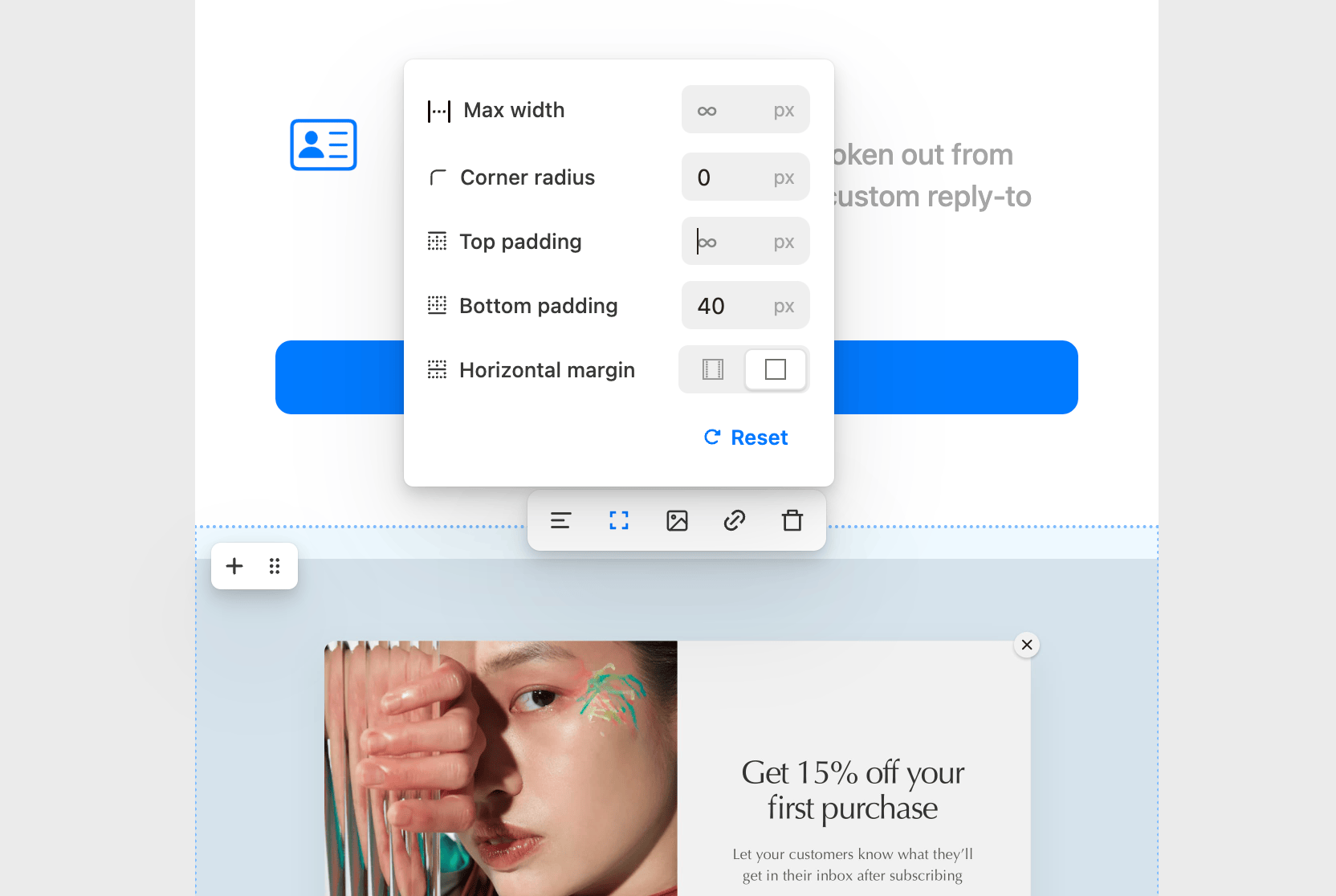
Audienceful takes a different approach with a unified block editor that combines writing speed with deep layout and design control. You get a proper design system with reusable styles and components, so brand consistency is built into the tool rather than enforced by discipline. The editor gives you fine-grained control over layout, spacing, and typography without sacrificing the speed of a block-based workflow. For teams that want their emails to look intentional (not just functional), it's a meaningful step up from Klaviyo's builder.
Ready to see the difference?
Free up to 1,000 subscribers.
Automation and Ecommerce
Summary: Audienceful's automation builder operates at the same level (branching logic, conditional splits, event-based triggers, and deep data-driven flows) and adds a capability Klaviyo doesn't have: describe...
This is Klaviyo's home turf, and it's genuinely strong here. Klaviyo's flow builder supports branching logic, conditional splits, time delays, and triggers based on purchase behavior, browsing activity, cart events, and more. The Shopify integration is best-in-class, syncing product catalogs, order data, and customer profiles in real time. If you're running a Shopify store and need complex post-purchase flows or win-back campaigns, Klaviyo has the depth to handle it.
Audienceful's automation builder operates at the same level (branching logic, conditional splits, event-based triggers, and deep data-driven flows) and adds a capability Klaviyo doesn't have: describe a workflow in plain language and the built-in AI agent assembles the entire automation, trigger, steps, and email bodies included, for you to review before it goes live. Audienceful also ships with a native Stripe integration alongside Shopify, which means SaaS teams can build automations around subscription events, payment failures, and revenue milestones, something Klaviyo doesn't natively support.
Integrations and Data
Summary: Audienceful ships with native Shopify and Stripe integrations, covering both ecommerce and SaaS use cases out of the box. Purchase data, subscription events, and customer profiles sync directly into y...
Klaviyo's integration ecosystem is large, especially for ecommerce. Its Shopify integration is the gold standard, and it connects well with other ecommerce platforms, review tools, and loyalty programs. Where Klaviyo falls short is outside ecommerce. There's no native Stripe integration, no first-class support for SaaS billing events, and limited tooling for teams whose revenue model isn't a product catalog. If your business runs on subscriptions or usage-based billing, Klaviyo's data model doesn't map cleanly to your needs.
Audienceful ships with native Shopify and Stripe integrations, covering both ecommerce and SaaS use cases out of the box. Purchase data, subscription events, and customer profiles sync directly into your segmentation and automation with no middleware, no Zapier glue. For ecommerce teams, the Shopify integration delivers the product and order data you need. For SaaS teams, the Stripe integration means you can segment on MRR, trigger flows from payment events, and build revenue attribution into your email strategy from day one.
Deliverability
Summary: Audienceful approaches deliverability with a similar level of seriousness but with more granular send optimization. On top of a manual approval process, Audienceful uses dynamic batching to stagger se...
Klaviyo has solid deliverability infrastructure. It runs a vetting process for new accounts, offers dedicated IPs at higher tiers, and provides deliverability dashboards for monitoring sender reputation. For large ecommerce senders, Klaviyo's infrastructure generally performs well, and its scale means it has established relationships with major inbox providers.
Audienceful approaches deliverability with a similar level of seriousness but with more granular send optimization. On top of a manual approval process, Audienceful uses dynamic batching to stagger sends based on inbox provider limits and engagement signals, avoiding the bulk-blast pattern that can trigger throttling. Smart retry with optimized backoff handles soft bounces and temporary deferrals automatically, re-attempting delivery at intervals that maximize inbox placement rather than flooding providers. Both platforms take deliverability seriously; Audienceful's approach is more technically hands-on at the send-optimization layer.
Who Each Tool Is Best For
Summary: Audienceful is built for ecommerce brands and SaaS teams who want powerful automation and segmentation without the platform bloat. If you care about the email creation experience (a modern editor with...
Klaviyo is the right choice for large ecommerce operations that need a battle-tested platform with deep Shopify integration, a massive automation template library, and don't mind the complexity and cost that come with a sprawling feature set. If you're running a high-volume Shopify store and need SMS, reviews, and CDP capabilities under one roof, Klaviyo covers it.
Audienceful is built for ecommerce brands and SaaS teams who want powerful automation and segmentation without the platform bloat. If you care about the email creation experience (a modern editor with real-time collaboration, an AI agent that does real work rather than bolted-on suggestions, and proper design systems) and you want the same automation depth without the steep learning curve, Audienceful is the sharper tool. It's especially strong for teams that need native Stripe support alongside Shopify, or for anyone who's found Klaviyo's UI overwhelming relative to what they actually use.
Frequently asked questions
Is Audienceful better than Klaviyo?
For ecommerce brands and SaaS teams, yes. Audienceful offers a modern block editor, native Shopify and Stripe integrations, and deliverability infrastructure designed for scale. Klaviyo has strengths in other areas; read the full comparison above to see the detailed breakdown.
Can I migrate from Klaviyo easily?
Yes. Export your subscriber list as a CSV from Klaviyo and import it directly into Audienceful. We handle deduplication, tagging, and validation automatically. Most teams complete their migration in under 15 minutes.
Which is cheaper, Audienceful or Klaviyo?
Audienceful is typically significantly cheaper. The free plan includes 1,000 subscribers with all features. At scale, Audienceful is typically 30–50% cheaper because we don't charge for unsubscribed or inactive contacts.
Does Klaviyo have better automation?
Klaviyo's automation is solid. Audienceful matches it on branching logic and adds native ecommerce triggers from Shopify and Stripe, so you can automate based on real purchase data without third-party middleware.
Which platform is better for ecommerce?
Audienceful. Native Shopify and Stripe integrations mean purchase data flows directly into segmentation and automation, with no middleware required.
How do deliverability rates compare?
Audienceful uses dynamic batching with per-provider throttling and smart retry logic, which typically results in higher inbox placement, especially for larger sends.
Migrate from Klaviyo in less than 5 minutes
Import your contacts, templates, and automations. We handle the hard parts.
Start Free MigrationRelated comparisons
Audienceful vs ActiveCampaign
ActiveCampaign is a marketing automation and CRM platform known for its powerful automation builder, but its sprawling feature set, dated email editor, and confusing pricing tiers make it a complex choice for teams that just want great email marketing.
See comparison →Audienceful vs Amazon SES
Amazon SES is raw email sending infrastructure from AWS. It's incredibly cheap at $0.10 per 1,000 emails, but it provides zero marketing features, no editor, no automation, and no segmentation, requiring you to build everything yourself on top of a sending pipe.
See comparison →Audienceful vs AWeber
AWeber is one of the oldest email marketing platforms, launched in 1998. It's simple and beginner-friendly but has barely evolved, offering only basic autoresponders, a dated editor, no AI, no real-time collaboration, and no meaningful ecommerce integrations.
See comparison →Stop searching.
Start emailing.
Your first 1,000 subscribers are totally free.
Start Free