The Best Getsitecontrol Alternative for Email
TL;DR: Getsitecontrol is primarily a website widget and popup platform that has bolted on email marketing, but its email editor is basic, automation is limited to simple autoresponders, there's no AI or collaboration features, and it lacks the depth to compete as a standalone email marketing tool.
Compare features
A side-by-side look at how Getsitecontrol and Audienceful compare across the features that matter most.


Getsitecontrol vs Audienceful: Summary
Getsitecontrol started as a website widget platform (popups, slide-ins, surveys, and notification bars) and has since expanded into email marketing. Its strength is on the lead capture side: the popup and form builders are polished, with advanced targeting rules based on page URL, scroll depth, exit intent, and visitor behavior. There's a Shopify app that makes it easy to deploy widgets on ecommerce stores. But the email marketing side of Getsitecontrol is clearly a secondary feature, not the core product. The email editor is functional but basic, with limited layout control and no design system capabilities. Automation is restricted to simple autoresponders and basic triggers; there's no visual workflow builder with branching logic or conditional splits. There's no real-time collaboration, no AI content or image generation, no native Stripe integration, and no advanced behavioral segmentation. Deliverability is adequate but lacks the sophisticated send management that dedicated email platforms offer. For small ecommerce stores that want popups and basic email sends in a single tool, Getsitecontrol can consolidate two needs. But anyone who treats email as a serious revenue channel will quickly hit the ceiling of what the email side can do.
Pricing: who's cheaper?
Getsitecontrol uses a unique pricing model: the platform fee is low ($19–$29/month depending on plan), but emails are purchased separately at $1.40–$2.00 per 1,000 sent. There's no per-contact charge; you pay based on send volume. That sounds attractive at first, but costs add up quickly once you're emailing your full list regularly. The estimates below assume the Pro Max plan ($29/month) and sending 4 emails per month to your full list, a typical newsletter or ecommerce cadence. Audienceful uses straightforward per-subscriber pricing with unlimited sends included. No per-email fees, no surprise usage charges.
Audienceful is more expensive at small volumes, but cheaper at scale
At under 3K contacts, Getsitecontrol's usage-based model costs less. But once your list grows past 10K contacts and you're sending regularly, Audienceful's flat pricing becomes the better deal, and the gap widens as volume increases.
Monthly price by contact volume
Pricing data sourced from public pricing pages · Last verified October 2026
AI and Collaboration
Summary: Audienceful builds AI and collaboration directly into the platform. Multiple team members can work on the same email at the same time with live cursors and real-time presence indicators.
Getsitecontrol has no AI features anywhere in its platform. There's no content generation, no subject line suggestions, no AI-assisted rewriting, and no image generation. Every email is written manually from scratch. Collaboration is also absent. There's no way for multiple team members to work on the same campaign simultaneously. If your team reviews or co-edits emails, you're coordinating outside the platform entirely.
Audienceful builds AI and collaboration directly into the platform. Multiple team members can work on the same email at the same time with live cursors and real-time presence indicators. Every plan also includes a built-in AI agent: it writes and edits emails in your voice using your best-performing sends as style references, makes targeted edits to drafts, generates images without switching tabs, and can build audience segments (or entire automations) from a plain-language description, previewing its plan for your approval before anything sends. For teams producing emails on a regular schedule, this eliminates the single-editor bottleneck and the workflow of bouncing between your email tool, an AI writing assistant, and stock image sites.
Email Editor and Design
Summary: Audienceful's unified block editor provides the speed of a modern document editor with deep layout and design control. A built-in design system lets you define reusable styles and components so every ...
Getsitecontrol's email editor gets the job done for simple campaigns (a header, some text, an image, a button), but it doesn't go much further. There's no concept of a design system: you can't define reusable styles, components, or brand tokens that automatically apply across campaigns. Each email is styled individually, which means brand consistency depends entirely on whoever is building that particular send. Advanced layout arrangements, precise spacing, and custom typography are limited. The editor was designed to support the popup platform's email follow-up use case, not to be a full-featured campaign builder.
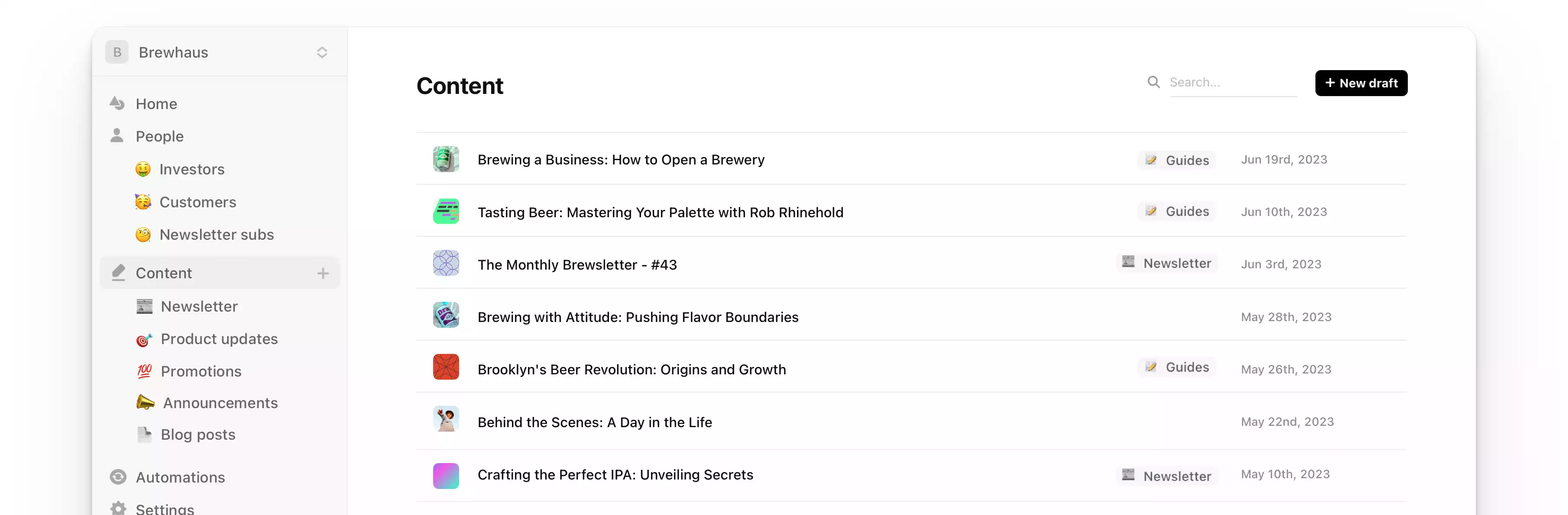
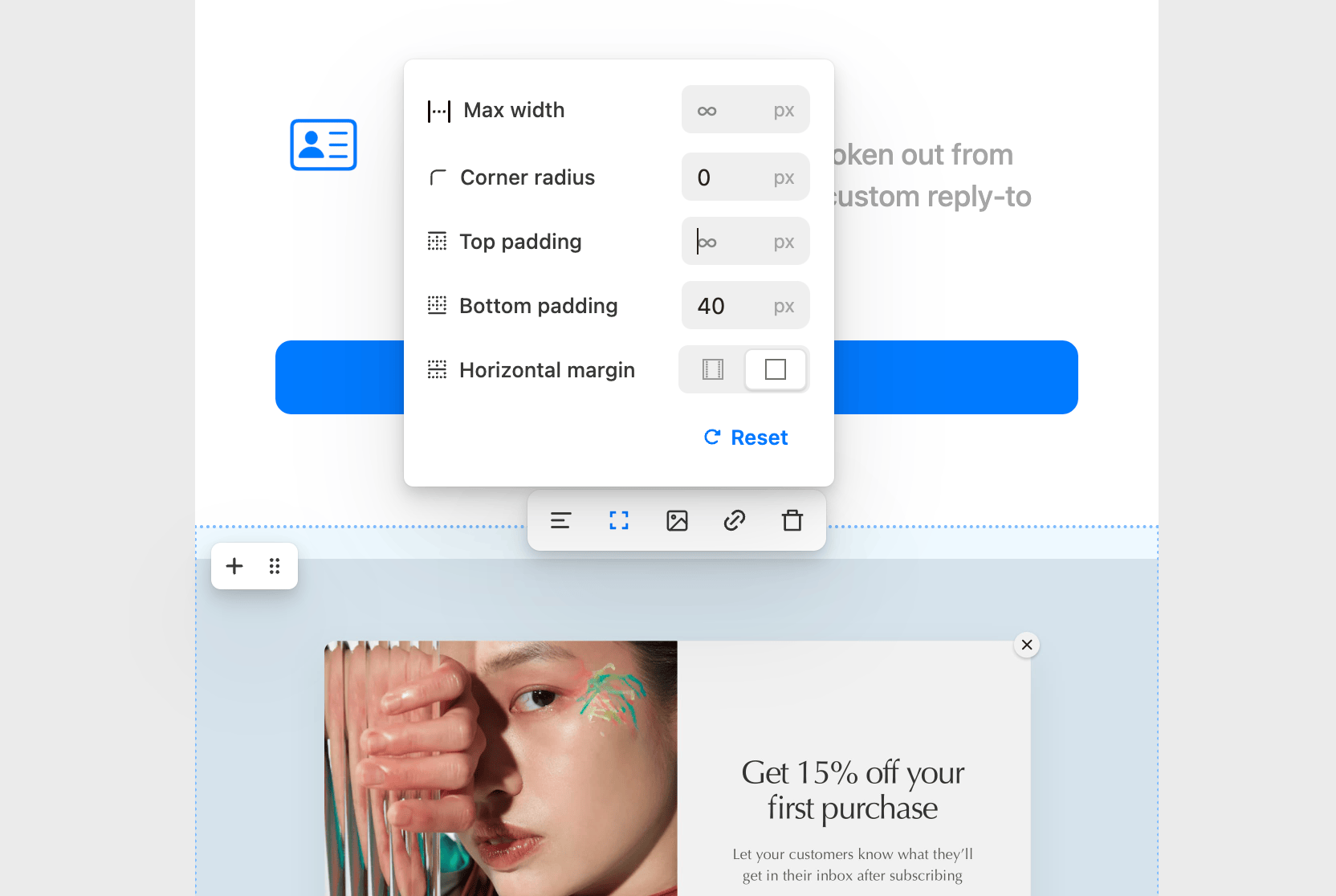
Audienceful's unified block editor provides the speed of a modern document editor with deep layout and design control. A built-in design system lets you define reusable styles and components so every email stays on-brand without manual effort. You get precise control over spacing, typography, and layout structure without writing HTML. For teams that care about design consistency and want their emails to reflect the same quality as their product, it's a fundamentally different editing experience from what Getsitecontrol offers.
Automation
Summary: Audienceful's automation builder supports full branching logic, conditional splits, wait conditions, and event-based triggers powered by native Stripe and Shopify integrations. You can build multi-ste...
Getsitecontrol's automation capabilities are basic. You can set up simple autoresponders, like a welcome email after signup or a follow-up after a form submission, but there's no visual workflow builder, no branching logic, no conditional splits, and no sophisticated event-based triggers. If you need to build multi-step sequences that adapt based on user behavior, purchase history, or engagement data, you'll hit the limits immediately. The automation is designed for straightforward follow-ups attached to the popup and form widgets, not for the kind of lifecycle marketing that drives revenue.
Audienceful's automation builder supports full branching logic, conditional splits, wait conditions, and event-based triggers powered by native Stripe and Shopify integrations. You can build multi-step flows that adapt based on purchase behavior, subscription changes, cart events, and engagement patterns. Revenue attribution is tied directly to automation branches, so you can measure which paths are actually driving conversions. For teams running abandoned cart sequences, trial-to-paid flows, churn prevention campaigns, or upsell sequences, the gap between Getsitecontrol's autoresponders and Audienceful's automation engine is substantial.
Ready to see the difference?
Free up to 1,000 subscribers.
Integrations and Segmentation
Summary: Audienceful takes a deeper approach to the integrations that matter for revenue-focused teams. Native Stripe and Shopify integrations sync purchase history, subscription data, and product catalogs dir...
Getsitecontrol has a Shopify app and integrates with several third-party tools through Zapier and direct connections, but its integration depth is shallow on the email side. There's no native Stripe integration, which means SaaS companies and subscription businesses can't trigger automations or segment based on billing data. Segmentation is limited to basic criteria: form submissions, email engagement, and simple tags. You won't find advanced behavioral segmentation based on purchase frequency, lifetime value, product affinity, or subscription status. The platform captures leads well through its popups and forms, but the data you can act on once those leads are in your email list is limited.
Audienceful takes a deeper approach to the integrations that matter for revenue-focused teams. Native Stripe and Shopify integrations sync purchase history, subscription data, and product catalogs directly into the platform. Segmentation goes beyond tags and open rates into actual revenue behavior: purchase frequency, average order value, product affinity, subscription status, and plan tier. For teams where email is a revenue channel (not just a notification channel), the ability to target based on real behavioral and transactional data is a meaningful advantage over Getsitecontrol's basic list management.
Deliverability
Summary: Audienceful approaches deliverability as an engineering problem. A manual sender approval process prevents bad actors from degrading shared reputation.
Getsitecontrol's deliverability is adequate for the volume most of its users send. Domain authentication is supported, and the platform handles basic compliance requirements. However, there's no sophisticated send management: no dynamic batching based on inbox provider rate limits, no smart retry logic for deferred messages, and limited visibility into how your sends are performing across different providers. For small lists and infrequent sends this is fine, but as volume grows, the lack of advanced sending infrastructure can lead to deliverability issues, particularly with large campaigns hitting Gmail or Outlook.
Audienceful approaches deliverability as an engineering problem. A manual sender approval process prevents bad actors from degrading shared reputation. Dynamic batching staggers sends based on inbox provider rate limits and real-time engagement signals, so bulk sends don't trigger rate limiting or spam filtering. Smart retry logic re-attempts delivery on soft bounces with optimized backoff timing rather than giving up or hammering the provider. The result is consistently higher inbox placement, especially on the larger sends where Getsitecontrol's simpler infrastructure is most likely to underperform.
Who Each Tool Is Best For
Summary: Audienceful is built for ecommerce brands and SaaS teams that treat email as a serious revenue channel. If you need a modern editor your team can collaborate in, automation with real branching and con...
Getsitecontrol makes sense for small ecommerce stores or websites that primarily need on-site widgets (popups, slide-ins, surveys, notification bars) and want to attach basic email follow-ups to those widgets without paying for a separate email marketing tool. If your email needs are simple (welcome emails, occasional newsletters, basic autoresponders) and your primary goal is lead capture through on-site targeting, Getsitecontrol consolidates those needs in one place. But if email is a meaningful part of your growth strategy, you'll outgrow the email side quickly.
Audienceful is built for ecommerce brands and SaaS teams that treat email as a serious revenue channel. If you need a modern editor your team can collaborate in, automation with real branching and conditional logic, native Stripe and Shopify data powering your segmentation, an AI agent built into your workflow, and deliverability infrastructure designed for scale, Audienceful is the more capable platform. The gap is especially clear for teams that have moved past basic autoresponders and need the kind of depth that a popup tool with email tacked on simply cannot provide.
Frequently asked questions
Is Audienceful better than Getsitecontrol?
For ecommerce brands and SaaS teams, yes. Audienceful offers a modern block editor, native Shopify and Stripe integrations, and deliverability infrastructure designed for scale. Getsitecontrol has strengths in other areas; read the full comparison above to see the detailed breakdown.
Can I migrate from Getsitecontrol easily?
Yes. Export your subscriber list as a CSV from Getsitecontrol and import it directly into Audienceful. We handle deduplication, tagging, and validation automatically. Most teams complete their migration in under 15 minutes.
Which is cheaper, Audienceful or Getsitecontrol?
Audienceful is typically significantly cheaper. The free plan includes 1,000 subscribers with all features. At scale, Audienceful is typically 30–50% cheaper because we don't charge for unsubscribed or inactive contacts.
Does Getsitecontrol have better automation?
Getsitecontrol's automation is solid. Audienceful matches it on branching logic and adds native ecommerce triggers from Shopify and Stripe, so you can automate based on real purchase data without third-party middleware.
Which platform is better for ecommerce?
Audienceful. Native Shopify and Stripe integrations mean purchase data flows directly into segmentation and automation, with no middleware required.
How do deliverability rates compare?
Audienceful uses dynamic batching with per-provider throttling and smart retry logic, which typically results in higher inbox placement, especially for larger sends.
Migrate from Getsitecontrol in less than 5 minutes
Import your contacts, templates, and automations. We handle the hard parts.
Start Free MigrationRelated comparisons
Audienceful vs ActiveCampaign
ActiveCampaign is a marketing automation and CRM platform known for its powerful automation builder, but its sprawling feature set, dated email editor, and confusing pricing tiers make it a complex choice for teams that just want great email marketing.
See comparison →Audienceful vs Amazon SES
Amazon SES is raw email sending infrastructure from AWS. It's incredibly cheap at $0.10 per 1,000 emails, but it provides zero marketing features, no editor, no automation, and no segmentation, requiring you to build everything yourself on top of a sending pipe.
See comparison →Audienceful vs AWeber
AWeber is one of the oldest email marketing platforms, launched in 1998. It's simple and beginner-friendly but has barely evolved, offering only basic autoresponders, a dated editor, no AI, no real-time collaboration, and no meaningful ecommerce integrations.
See comparison →Stop searching.
Start emailing.
Your first 1,000 subscribers are totally free.
Start Free