The Best Omnisend Alternative for Growing Teams
TL;DR: Omnisend is an ecommerce-focused email and SMS platform with strong pre-built automation workflows, but a limited editor, no real-time collaboration, no AI tools, and automation that's better for beginners than for teams building custom flows.
Compare features
A side-by-side look at how Omnisend and Audienceful compare across the features that matter most.
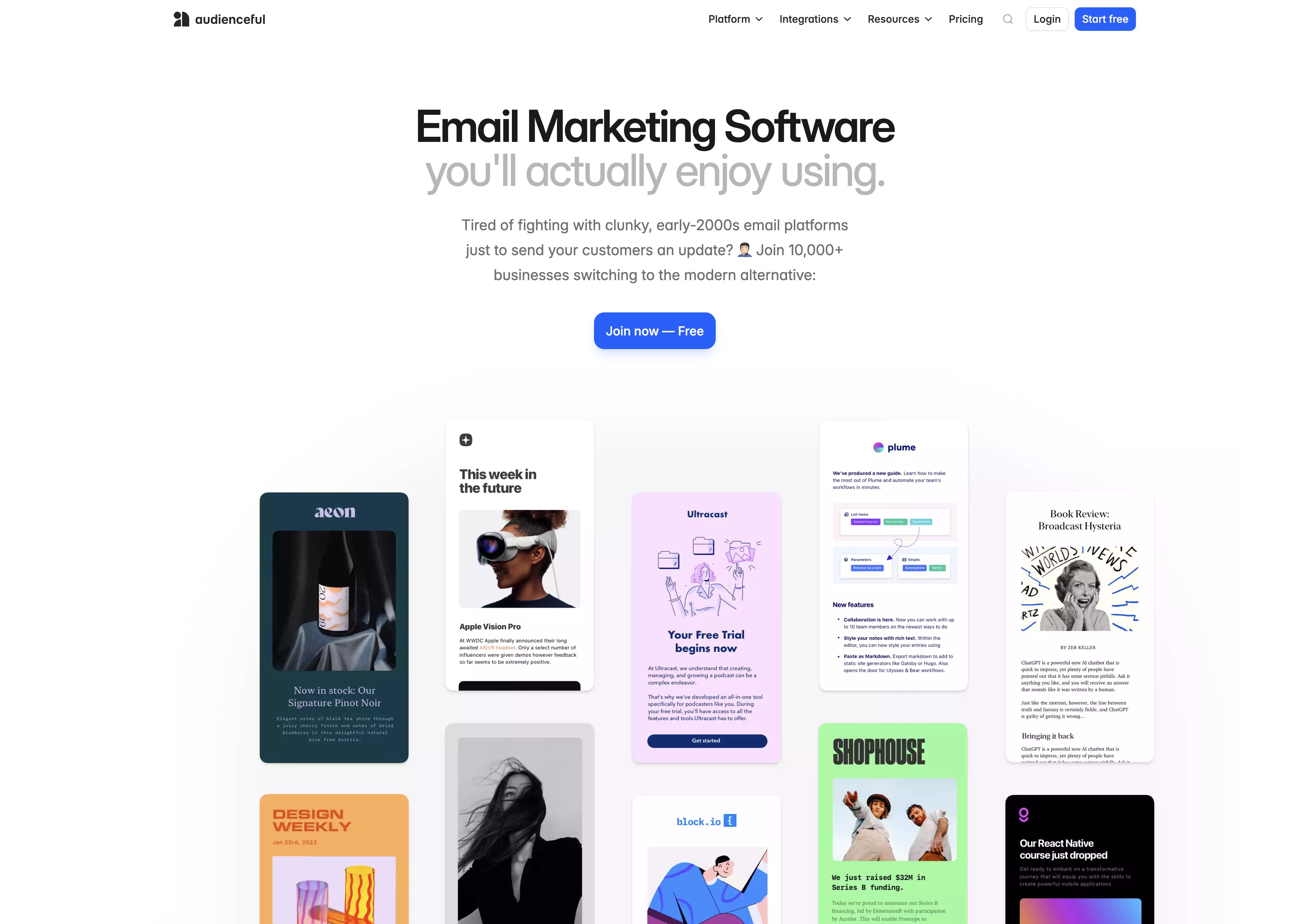
Omnisend vs Audienceful: Summary
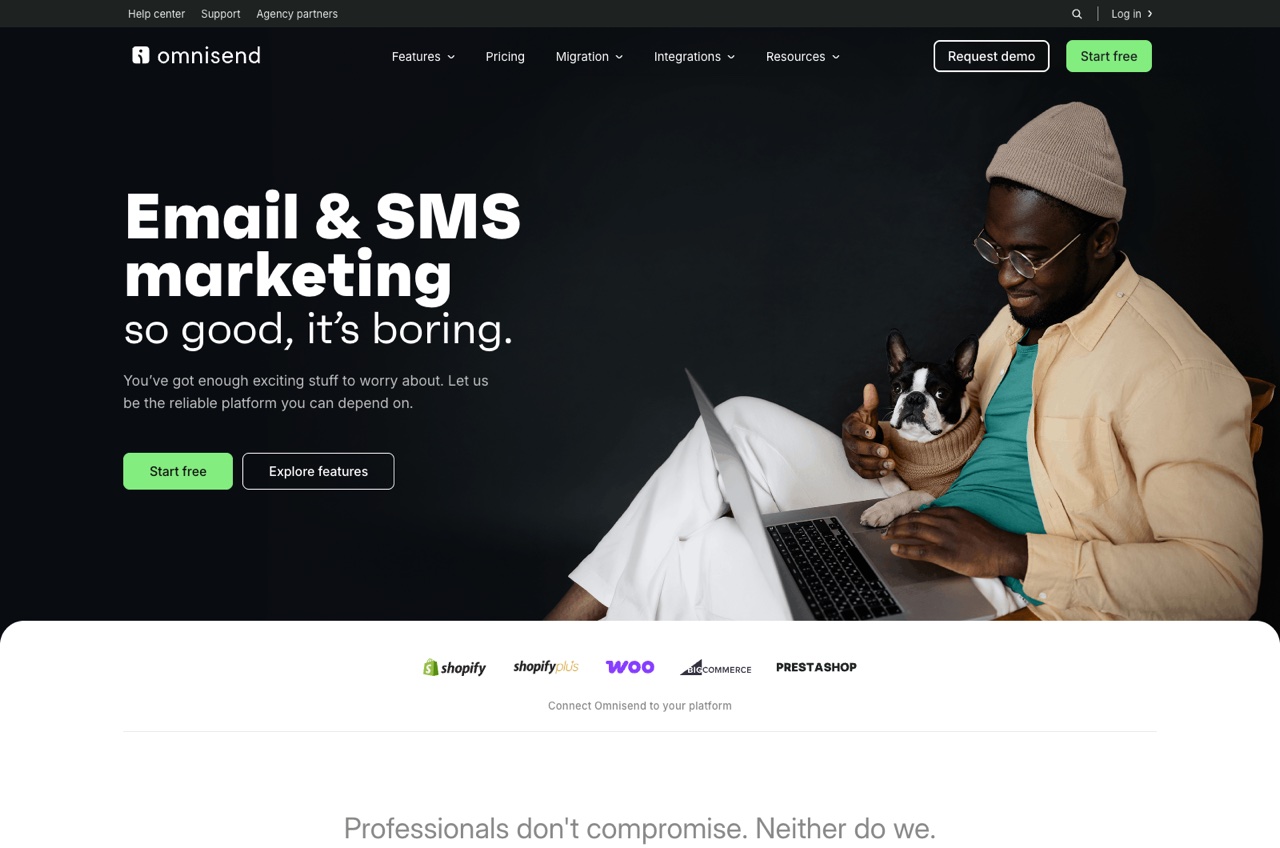
Omnisend is an ecommerce-focused email and SMS marketing platform popular with Shopify and WooCommerce stores. Its main draw is a library of pre-built automation workflows (welcome series, cart abandonment, post-purchase) that let beginners get up and running quickly. The bundled SMS is a genuine convenience. But the email editor is a basic drag-and-drop builder with no design systems, no real-time collaboration, and no AI capabilities. Automation is template-driven and lacks advanced branching or conditional logic for custom flows. There's no native Stripe integration, so SaaS teams are out of luck. Deliverability runs on shared infrastructure, and the platform's focus is squarely on small-to-mid ecommerce stores rather than teams that need depth or flexibility.
Pricing: who's cheaper?
Omnisend's Standard plan starts at $16/month for 500 contacts and scales with list size, charging 12x your contact count in monthly email sends. The free plan is limited to 250 contacts and 500 emails per month. Pricing gets steep at higher tiers, particularly past 10K contacts where per-contact costs accelerate. Audienceful offers straightforward per-subscriber pricing with a free tier and no charges for unsubscribed or inactive contacts. At lower contact counts, Omnisend's Standard plan is cheaper, but the gap narrows quickly as your list grows, and Audienceful becomes more cost-effective at mid-to-high volumes. Omnisend's Standard plan also caps out around 150K contacts, pushing larger senders onto custom pricing.
Omnisend is cheaper at small scale, Audienceful wins as you grow
Based on publicly listed Standard plan pricing from Omnisend and Audienceful Essentials plan pricing across common contact tiers.
Monthly price by contact volume
Pricing data sourced from public pricing pages · Last verified October 2026
AI and Collaboration
Summary: Audienceful treats AI and collaboration as core to the editing experience. Multiple team members can work on the same email simultaneously with live cursors and real-time presence, similar to Google D...
Omnisend has no meaningful AI capabilities in its email editor. There's no AI content generation, no subject line AI, and no AI image generation. You're writing and designing everything manually. Collaboration is similarly absent: Omnisend's editor is single-player. If multiple team members need to touch an email, you're working sequentially, sharing screenshots in Slack, or maintaining a review process entirely outside the tool.
Audienceful treats AI and collaboration as core to the editing experience. Multiple team members can work on the same email simultaneously with live cursors and real-time presence, similar to Google Docs. Every plan also includes a built-in AI agent that acts like a teammate: it drafts and edits emails in your voice using your best-performing sends as style references, reads URLs you paste for context, generates images, restyles themes, and can build audience segments or entire automations from a plain-language brief, executing only with your approval. For teams producing email at any real cadence, the difference in velocity is significant.
Email Editor and Design
Summary: Audienceful's unified block editor combines writing speed with deep layout and design control. A proper design system with reusable styles and components means brand consistency is structural, not asp...
Omnisend's drag-and-drop editor is serviceable for putting together basic campaigns. You drag blocks into a layout, adjust settings in side panels, and move on. It handles the fundamentals (text, images, buttons, product blocks), but there's no design system underneath. No reusable styles, no shared components, no way to enforce brand consistency at the system level. Every email is a standalone effort, and if your brand guidelines evolve, you're updating templates one by one. The editor is fine for simple promotional sends but hits its ceiling fast if you care about design quality or efficiency.
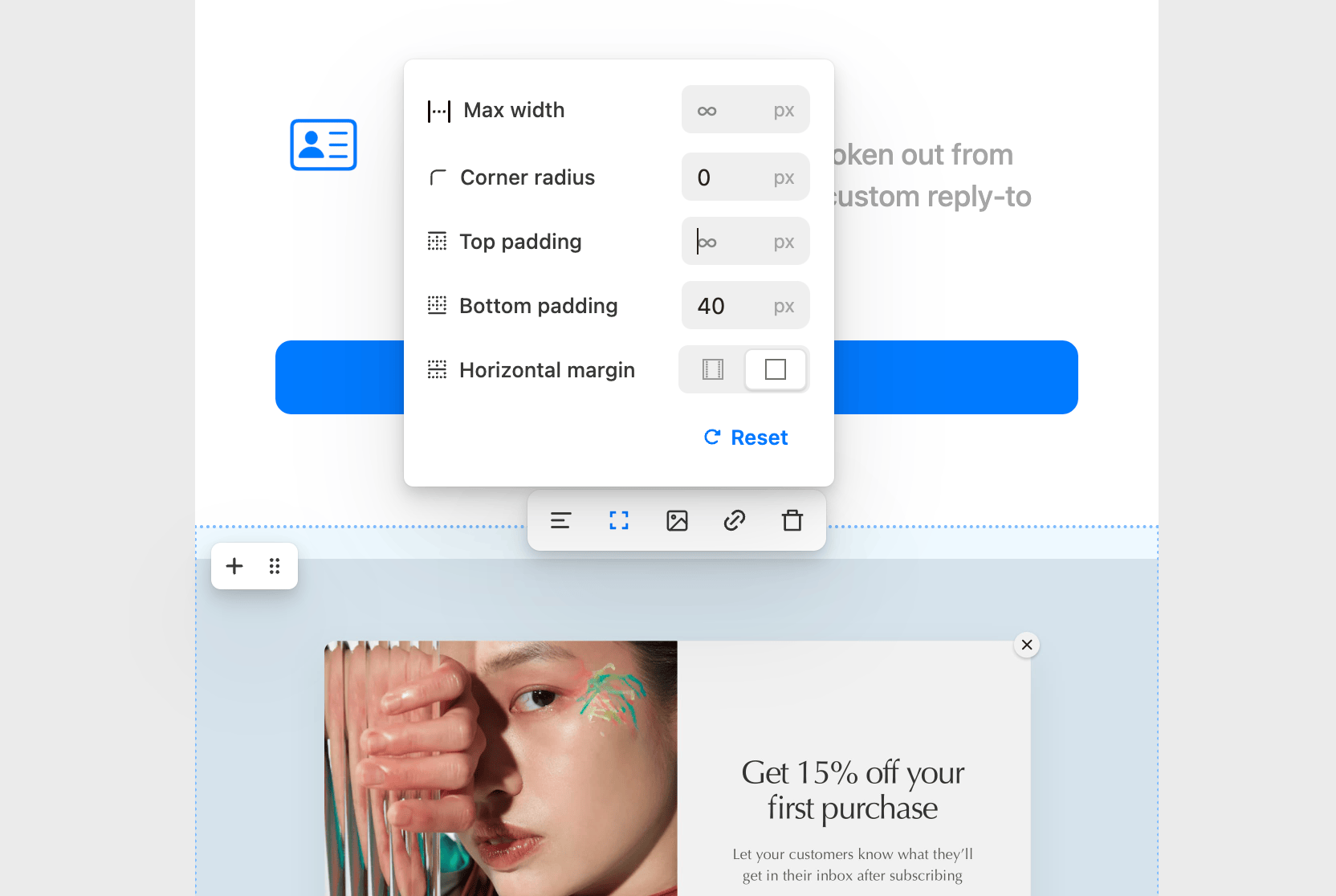
Audienceful's unified block editor combines writing speed with deep layout and design control. A proper design system with reusable styles and components means brand consistency is structural, not aspirational. You get fine-grained control over spacing, typography, and layout without giving up the speed of a block-based workflow. For teams that want their emails to look intentional and consistent (not just functional), it's a fundamentally different editing experience than what Omnisend offers.
Automation and Ecommerce
Summary: Audienceful's automation builder is designed for teams that need both speed and depth. It supports branching logic, conditional splits, event-based triggers, and complex multi-step flows that go well ...
Omnisend's automation is its strongest selling point, and for beginners it delivers. The pre-built workflow library covers the ecommerce essentials (welcome series, abandoned cart, browse abandonment, post-purchase, win-back), and you can be up and running in minutes. The Shopify and WooCommerce integrations feed product and order data into these workflows cleanly. The limitation is depth: Omnisend's automation lacks advanced branching, meaningful conditional splits, or the flexibility to build truly custom flows. If your automation needs go beyond the templates, you'll hit the walls quickly.
Audienceful's automation builder is designed for teams that need both speed and depth. It supports branching logic, conditional splits, event-based triggers, and complex multi-step flows that go well beyond template-driven automation. The native Shopify integration handles ecommerce triggers and product data, and a native Stripe integration extends automation to subscription events, payment failures, and revenue milestones, covering SaaS use cases that Omnisend simply can't address. If you've outgrown pre-built workflows and need automation that adapts to your specific business logic, Audienceful has the depth.
Ready to see the difference?
Free up to 1,000 subscribers.
Integrations and Data
Summary: Audienceful ships with native Shopify and Stripe integrations, covering both ecommerce and SaaS use cases without middleware or workarounds. Purchase data, subscription events, and customer profiles s...
Omnisend integrates well with the ecommerce ecosystem: Shopify, WooCommerce, BigCommerce, and a selection of ecommerce-adjacent tools. Product catalogs, order data, and customer profiles sync into the platform for use in segmentation and automation. The limitation is scope: Omnisend is built exclusively for ecommerce stores. There's no native Stripe integration, no support for SaaS billing events, and limited flexibility for businesses whose data doesn't fit neatly into a product-catalog model. If your revenue comes from subscriptions, usage-based pricing, or anything outside traditional ecommerce, Omnisend's data model doesn't serve you.
Audienceful ships with native Shopify and Stripe integrations, covering both ecommerce and SaaS use cases without middleware or workarounds. Purchase data, subscription events, and customer profiles sync directly into segmentation and automation. For ecommerce teams, the Shopify integration delivers product and order data. For SaaS teams, the Stripe integration means you can segment on MRR, trigger automations from payment events, and build revenue attribution into your email strategy natively. Advanced behavioral segmentation works across both data sources, giving you a unified view of customer activity regardless of your business model.
Deliverability
Summary: Audienceful takes a more technically rigorous approach to deliverability. A manual approval process screens new senders before they hit shared infrastructure.
Omnisend's deliverability is adequate but unremarkable. It runs on shared sending infrastructure, which means your sender reputation is partially influenced by other senders on the same IPs. Omnisend does basic list hygiene and provides deliverability reporting, but there's limited control over send optimization: no dynamic batching, no per-provider throttling, and no sophisticated retry logic. For small-to-mid volume senders, this is generally fine. For teams scaling their sends or operating in competitive inboxes, shared infrastructure introduces risk.
Audienceful takes a more technically rigorous approach to deliverability. A manual approval process screens new senders before they hit shared infrastructure. Dynamic batching staggers sends based on inbox provider limits and engagement signals, avoiding the bulk-blast pattern that triggers throttling. Smart retry with optimized backoff handles soft bounces and temporary deferrals automatically, re-attempting delivery at intervals designed to maximize inbox placement. If deliverability is a priority (and for any serious email program it should be), Audienceful's send-layer optimization is meaningfully more advanced.
Who Each Tool Is Best For
Summary: Audienceful is built for ecommerce brands and SaaS teams that want more from their email platform without more complexity. If you care about the email creation experience (a modern editor with real-ti...
Omnisend is a solid choice for small ecommerce stores on Shopify or WooCommerce that want pre-built automation workflows, bundled SMS, and a simple interface to get email marketing running without a steep learning curve. If your needs are straightforward (standard ecommerce flows, basic campaigns, multi-channel via SMS and push) and you don't need deep customization, Omnisend covers the basics well.
Audienceful is built for ecommerce brands and SaaS teams that want more from their email platform without more complexity. If you care about the email creation experience (a modern editor with real-time collaboration, an AI agent built into the workflow, and proper design systems) and you need automation that goes beyond templates with real branching and conditional logic, Audienceful is the more capable tool. It's especially strong for teams that need native Stripe support alongside Shopify, or for anyone who's outgrown Omnisend's template-driven approach and wants depth without switching to an enterprise platform.
Frequently asked questions
Is Audienceful better than Omnisend?
For ecommerce brands and SaaS teams, yes. Audienceful offers a modern block editor, native Shopify and Stripe integrations, and deliverability infrastructure designed for scale. Omnisend has strengths in other areas; read the full comparison above to see the detailed breakdown.
Can I migrate from Omnisend easily?
Yes. Export your subscriber list as a CSV from Omnisend and import it directly into Audienceful. We handle deduplication, tagging, and validation automatically. Most teams complete their migration in under 15 minutes.
Which is cheaper, Audienceful or Omnisend?
Audienceful is typically significantly cheaper. The free plan includes 1,000 subscribers with all features. At scale, Audienceful is typically 30–50% cheaper because we don't charge for unsubscribed or inactive contacts.
Does Omnisend have better automation?
Omnisend's automation is solid. Audienceful matches it on branching logic and adds native ecommerce triggers from Shopify and Stripe, so you can automate based on real purchase data without third-party middleware.
Which platform is better for ecommerce?
Audienceful. Native Shopify and Stripe integrations mean purchase data flows directly into segmentation and automation, with no middleware required.
How do deliverability rates compare?
Audienceful uses dynamic batching with per-provider throttling and smart retry logic, which typically results in higher inbox placement, especially for larger sends.
Migrate from Omnisend in less than 5 minutes
Import your contacts, templates, and automations. We handle the hard parts.
Start Free MigrationRelated comparisons
Audienceful vs ActiveCampaign
ActiveCampaign is a marketing automation and CRM platform known for its powerful automation builder, but its sprawling feature set, dated email editor, and confusing pricing tiers make it a complex choice for teams that just want great email marketing.
See comparison →Audienceful vs Amazon SES
Amazon SES is raw email sending infrastructure from AWS. It's incredibly cheap at $0.10 per 1,000 emails, but it provides zero marketing features, no editor, no automation, and no segmentation, requiring you to build everything yourself on top of a sending pipe.
See comparison →Audienceful vs AWeber
AWeber is one of the oldest email marketing platforms, launched in 1998. It's simple and beginner-friendly but has barely evolved, offering only basic autoresponders, a dated editor, no AI, no real-time collaboration, and no meaningful ecommerce integrations.
See comparison →Stop searching.
Start emailing.
Your first 1,000 subscribers are totally free.
Start Free