The Best Constant Contact Alternative for Growth
TL;DR: Constant Contact is one of the longest-running email marketing platforms, trusted by millions of small businesses, but its aging interface, bare-bones automation, and lack of modern editor or AI features make it a poor fit for ecommerce and SaaS teams that need email to drive real revenue.
Compare features
A side-by-side look at how Constant Contact and Audienceful compare across the features that matter most.
Constant Contact vs Audienceful: Summary
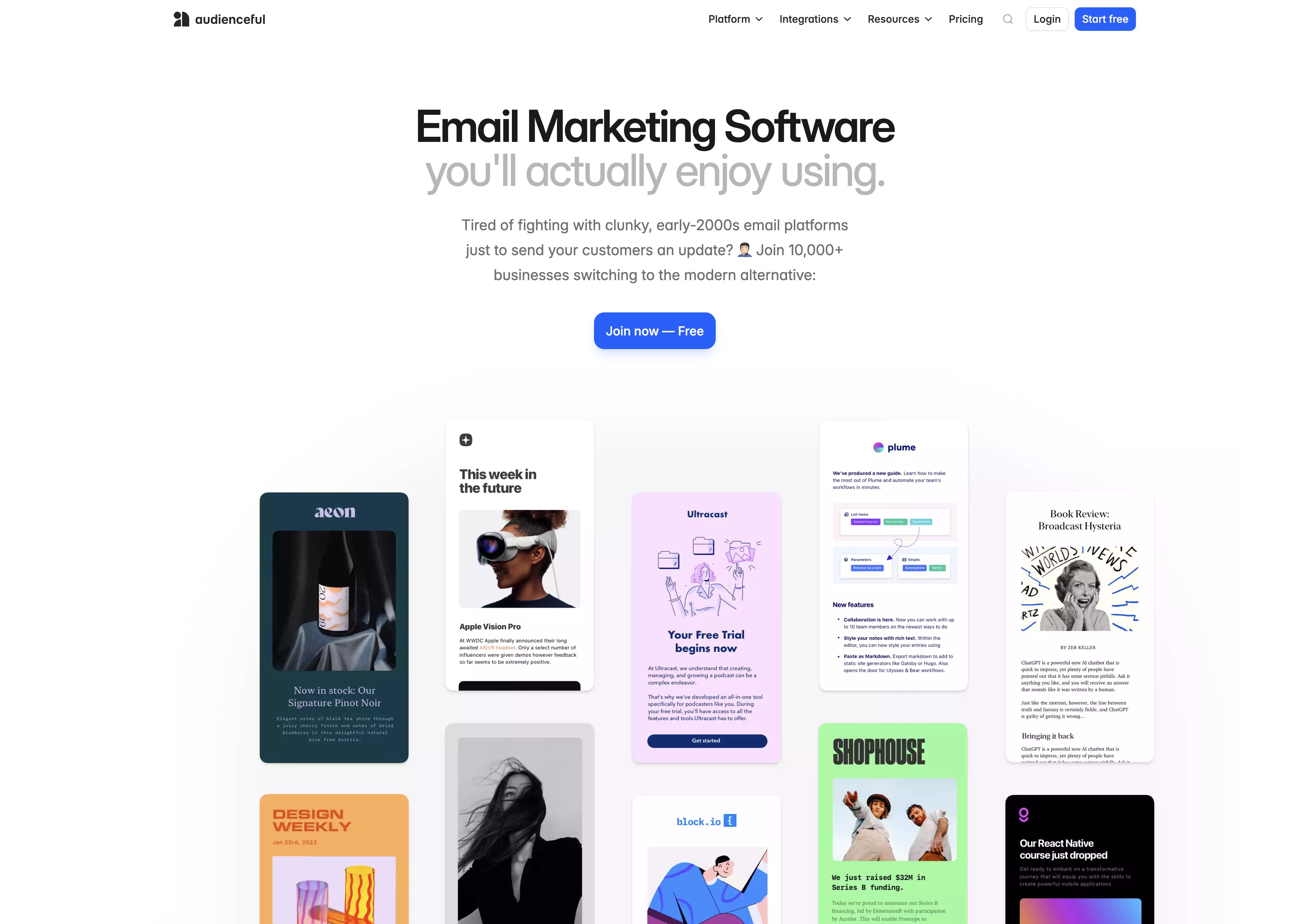
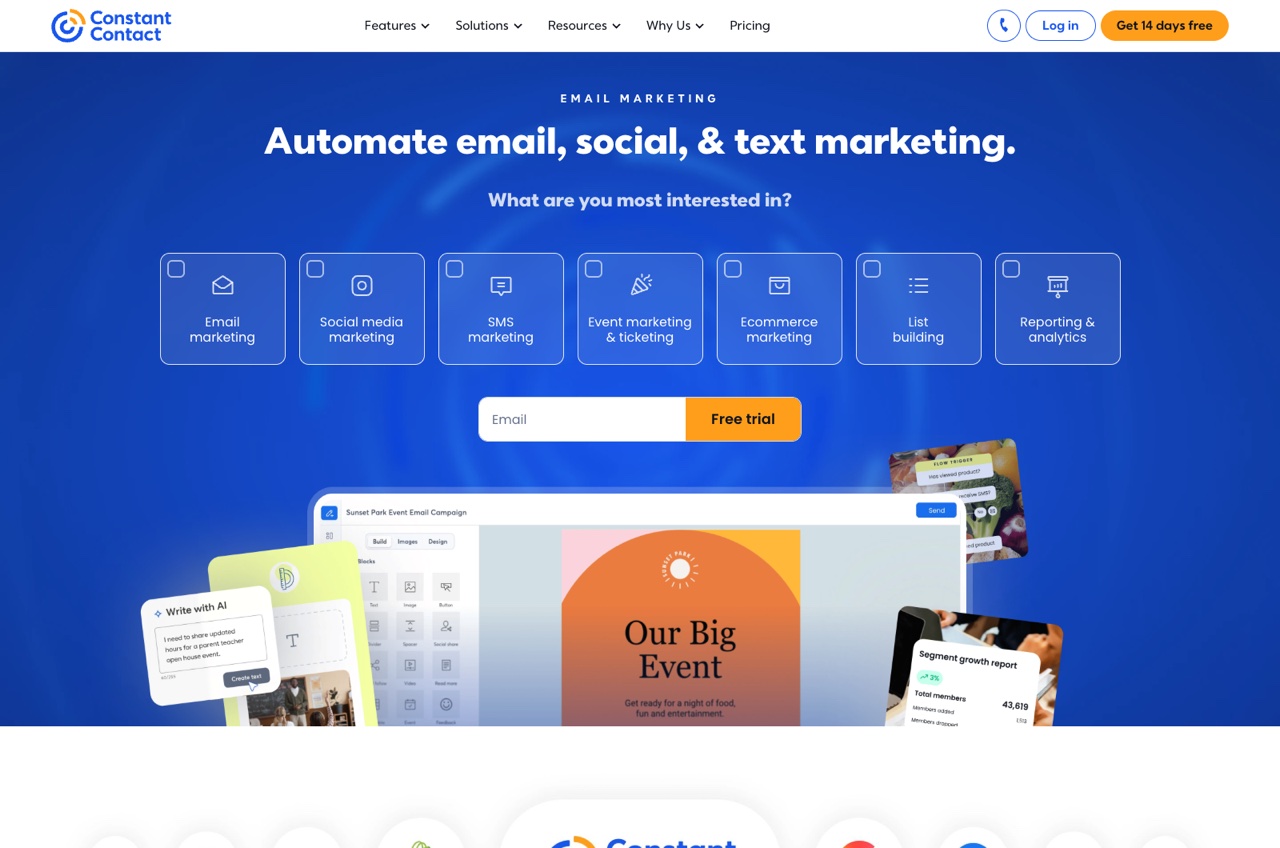
Constant Contact is one of the oldest names in email marketing, founded in 1995 and widely used by small local businesses, nonprofits, and solopreneurs. Over the years it's expanded well beyond email into social media management, event marketing, SMS, and even basic website building, trying to be a one-stop shop for small business marketing. The email editor is a standard drag-and-drop builder that gets the job done but offers nothing notable in terms of design flexibility or modern editing features. Automation is where Constant Contact falls furthest behind: it's limited to basic autoresponders and simple sequences, with no real journey builder, branching logic, or event-based triggers. There are no meaningful AI features, no real-time collaboration, no design systems, and no native Stripe integration. The Shopify integration exists but is surface-level. For small local businesses sending simple newsletters, Constant Contact is a familiar and adequate choice, but ecommerce brands and SaaS teams will quickly outgrow what it can offer.
Pricing: who's cheaper?
Constant Contact's Standard plan starts at $35/month for up to 500 contacts and scales steeply as your list grows. Audienceful comes in lower at every comparable tier. Its free plan covers up to 1,000 contacts, and the paid Essentials plan starts at $29/month (billed yearly) for up to 3,000 contacts versus Constant Contact's $55, with the gap widening as your list grows. Beyond 50,000 contacts, Constant Contact doesn't publish pricing and requires a custom quote, while Audienceful keeps transparent pricing all the way to 200K. The bigger consideration is what you get for the money. Constant Contact's Standard plan includes basic automation and segmentation but lacks a modern editor, AI features, native Stripe integration, or real-time collaboration. Audienceful's Essentials plan includes all of those out of the box, so you're getting significantly more capability, at a lower price, per dollar with Audienceful.
Constant Contact Standard vs Audienceful Essentials: pricing by contacts (billed yearly)
Based on published pricing for Constant Contact Standard and Audienceful Essentials plans as of March 2026. Constant Contact tiers cover "up to" a contact ceiling, so the price shown is the tier that accommodates that contact count.
Monthly price by contact volume
Dotted line is estimated. Constant Contact doesn’t publish pricing at these volumes.
Pricing data sourced from public pricing pages · Last verified October 2026
AI and Collaboration
Summary: Audienceful treats AI and collaboration as core to the entire platform. Multiple team members can work on the same email at the same time with live cursors and presence indicators, just like working i...
Constant Contact has no meaningful AI features in its email editor. There's no inline content generation, no AI-powered rewriting or brainstorming, and no AI image creation. Writing emails in Constant Contact is an entirely manual process: you type everything yourself, source your own images, and iterate on copy without any intelligent assistance. There's also no real-time collaboration: if multiple team members need to work on a campaign, they take turns rather than editing simultaneously.
Audienceful treats AI and collaboration as core to the entire platform. Multiple team members can work on the same email at the same time with live cursors and presence indicators, just like working in a shared document. And every plan includes a built-in AI agent that goes far beyond copy suggestions. It writes and edits emails in your voice using your best-performing sends as style references, generates images, restyles entire themes, builds audience segments from a plain-language description, and can assemble a complete automation from a brief, with your approval before anything sends. For teams producing campaigns regularly, this collapses what used to be a multi-tool workflow into a single environment.
Email Editor and Design
Summary: Audienceful's unified block editor gives you the fluidity of writing in a modern document editor with deep layout and design control underneath. A built-in design system lets you define reusable style...
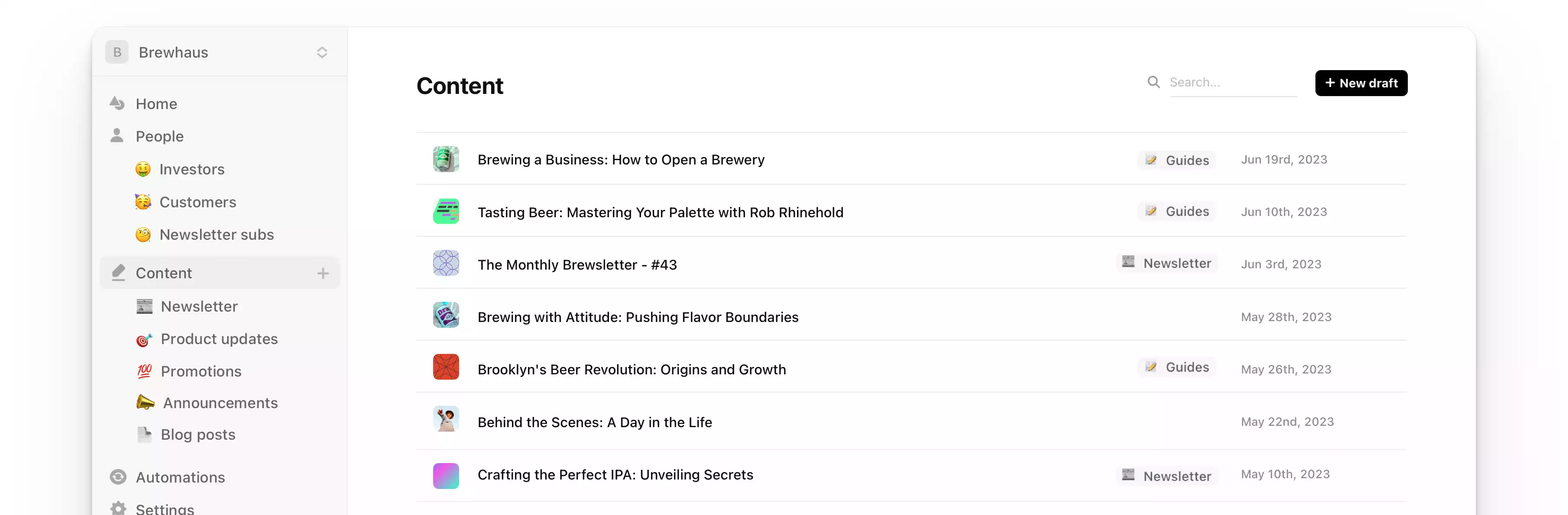
Constant Contact's email editor is a serviceable drag-and-drop builder. You pick a template, drop in content blocks, adjust colors and fonts, and send. It works, but it's unremarkable. There's no concept of a design system, so every email is a standalone effort with no enforced brand consistency. Layout flexibility is limited to what the template structure allows, and achieving anything beyond a standard single-column or two-column layout means fighting the builder or accepting its constraints. The interface itself feels dated compared to modern tools: functional, but clearly built in a different era of web design.
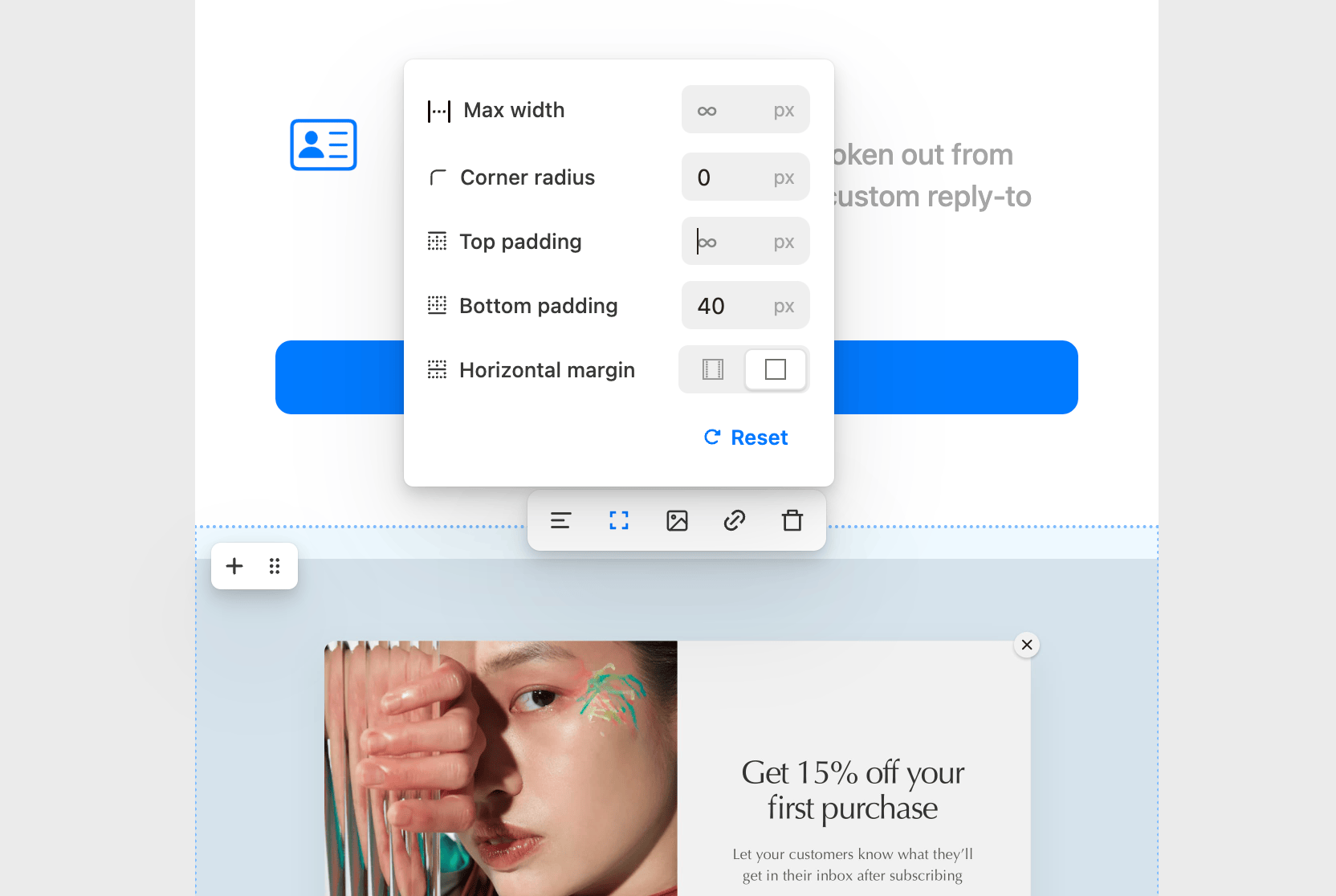
Audienceful's unified block editor gives you the fluidity of writing in a modern document editor with deep layout and design control underneath. A built-in design system lets you define reusable styles, colors, and components so every email your team sends stays on-brand without manual enforcement. You get fine-grained control over spacing, typography, and layout structures without touching HTML. For teams that care about design quality and brand consistency across campaigns, it's a fundamentally different class of editor.
Automation and Ecommerce
Summary: Audienceful's automation builder is designed to compete at the Klaviyo and Customer.io level. It supports full branching logic, conditional splits, wait conditions, and event-based triggers that pull ...
Automation is Constant Contact's most significant weakness. What's available amounts to basic autoresponders: welcome emails, birthday messages, and simple drip sequences triggered by list joins or date fields. There's no visual journey builder with branching paths, no conditional logic based on subscriber behavior, and no event-based triggers tied to purchase data or product interactions. For ecommerce teams, this means you can't build post-purchase flows, cart abandonment sequences, or replenishment reminders driven by actual transaction data. The Shopify integration exists but provides only shallow data, enough to segment by "has purchased" but not enough to build sophisticated revenue-driving automations.
Audienceful's automation builder is designed to compete at the Klaviyo and Customer.io level. It supports full branching logic, conditional splits, wait conditions, and event-based triggers that pull directly from native Stripe and Shopify integrations. You can trigger flows based on actual purchase history, subscription changes, cart events, and product-level interactions, with no middleware and no data lag. Revenue attribution connects directly to your automations, showing exactly which flows generate sales. For ecommerce brands and SaaS teams, this is the gap between email as a newsletter tool and email as a measurable revenue channel.
Ready to see the difference?
Free up to 1,000 subscribers.
Integrations and Data
Summary: Audienceful goes deeper where it matters: native Stripe and Shopify integrations sync purchase history, subscription lifecycle data, and product catalogs directly into the platform with no middleware ...
Constant Contact offers a reasonable set of integrations for a platform targeting small businesses: connections to popular CRMs, ecommerce platforms, social media tools, and form builders. The Shopify integration syncs basic contact and order data, but it lacks the depth needed for advanced segmentation or automation triggers based on product-level behavior. There's no native Stripe integration, which means SaaS companies can't use subscription status, MRR data, or billing events to drive email campaigns. Segmentation in Constant Contact is primarily list-based and tag-based, which is useful for basic targeting but limited when you need to segment by purchase frequency, product affinity, or revenue behavior.
Audienceful goes deeper where it matters: native Stripe and Shopify integrations sync purchase history, subscription lifecycle data, and product catalogs directly into the platform with no middleware or extra cost. This enables segmentation that goes far beyond opens, clicks, and tags and into actual revenue behavior like average order value, purchase recency, product categories bought, and subscription plan changes. For teams where email is a revenue channel rather than just a communications tool, the depth of available data for targeting and personalization is a material advantage.
Deliverability
Summary: Audienceful approaches deliverability as an engineering problem rather than just an infrastructure checkbox. A manual sender approval process keeps bad actors off the platform, protecting shared reput...
Constant Contact maintains adequate deliverability for a platform of its size. They handle domain authentication, have abuse monitoring in place, and enforce compliance standards. As a large-volume sender, their IP addresses are generally recognized by major inbox providers. However, all senders share infrastructure, and there's no intelligent send-rate optimization, per-provider throttling, or sophisticated retry logic. For small newsletters, this is fine. For larger sends or high-volume ecommerce campaigns, the lack of sending intelligence means you're more likely to hit rate limits or land in promotions tabs during peak sending times.
Audienceful approaches deliverability as an engineering problem rather than just an infrastructure checkbox. A manual sender approval process keeps bad actors off the platform, protecting shared reputation from the start. Dynamic batching intelligently staggers sends based on inbox provider rate limits and real-time engagement signals, preventing large campaigns from tripping bulk-sender flags at Gmail, Outlook, or Yahoo. When emails soft-bounce or get temporarily deferred, a smart retry system re-attempts delivery with optimized backoff timing. The result is consistently higher inbox placement, particularly on larger sends where scale-related throttling matters most.
Who Each Tool Is Best For
Summary: Audienceful is built for ecommerce brands and SaaS teams that need email to actively drive revenue. If you want a modern collaborative editor with AI built in, automation that rivals dedicated ecommer...
Constant Contact remains a reasonable choice for small local businesses, nonprofits, and solopreneurs who need a familiar, easy-to-use platform for sending basic newsletters and event invitations. If your email strategy doesn't extend beyond regular broadcasts and simple autoresponders, and you value phone support and a recognizable brand, Constant Contact covers the basics, though you'll hit its ceiling quickly if your needs grow.
Audienceful is built for ecommerce brands and SaaS teams that need email to actively drive revenue. If you want a modern collaborative editor with AI built in, automation that rivals dedicated ecommerce platforms, native Stripe and Shopify data flowing into every segment and trigger, and deliverability infrastructure engineered for scale, Audienceful is the more capable tool for teams that have outgrown what a legacy small-business platform can offer.
Frequently asked questions
Is Audienceful better than Constant Contact?
For ecommerce brands and SaaS teams, yes. Audienceful offers a modern block editor, native Shopify and Stripe integrations, and deliverability infrastructure designed for scale. Constant Contact has strengths in other areas; read the full comparison above to see the detailed breakdown.
Can I migrate from Constant Contact easily?
Yes. Export your subscriber list as a CSV from Constant Contact and import it directly into Audienceful. We handle deduplication, tagging, and validation automatically. Most teams complete their migration in under 15 minutes.
Which is cheaper, Audienceful or Constant Contact?
Audienceful is typically significantly cheaper. The free plan includes 1,000 subscribers with all features. At scale, Audienceful is typically 30–50% cheaper because we don't charge for unsubscribed or inactive contacts.
Does Constant Contact have better automation?
Constant Contact's automation is solid. Audienceful matches it on branching logic and adds native ecommerce triggers from Shopify and Stripe, so you can automate based on real purchase data without third-party middleware.
Which platform is better for ecommerce?
Audienceful. Native Shopify and Stripe integrations mean purchase data flows directly into segmentation and automation, with no middleware required.
How do deliverability rates compare?
Audienceful uses dynamic batching with per-provider throttling and smart retry logic, which typically results in higher inbox placement, especially for larger sends.
Migrate from Constant Contact in less than 5 minutes
Import your contacts, templates, and automations. We handle the hard parts.
Start Free MigrationRelated comparisons
Audienceful vs ActiveCampaign
ActiveCampaign is a marketing automation and CRM platform known for its powerful automation builder, but its sprawling feature set, dated email editor, and confusing pricing tiers make it a complex choice for teams that just want great email marketing.
See comparison →Audienceful vs Amazon SES
Amazon SES is raw email sending infrastructure from AWS. It's incredibly cheap at $0.10 per 1,000 emails, but it provides zero marketing features, no editor, no automation, and no segmentation, requiring you to build everything yourself on top of a sending pipe.
See comparison →Audienceful vs AWeber
AWeber is one of the oldest email marketing platforms, launched in 1998. It's simple and beginner-friendly but has barely evolved, offering only basic autoresponders, a dated editor, no AI, no real-time collaboration, and no meaningful ecommerce integrations.
See comparison →Stop searching.
Start emailing.
Your first 1,000 subscribers are totally free.
Start Free