Best Privy Alternativefor Email Marketing
Privy is an ecommerce conversion platform built around popups and on-site displays, but its email marketing features are secondary, with a basic editor, template-driven automation, no real-time collaboration, AI limited to copywriting, and no custom workflow builder.




Compare features.
Privy and Audienceful, side by side.
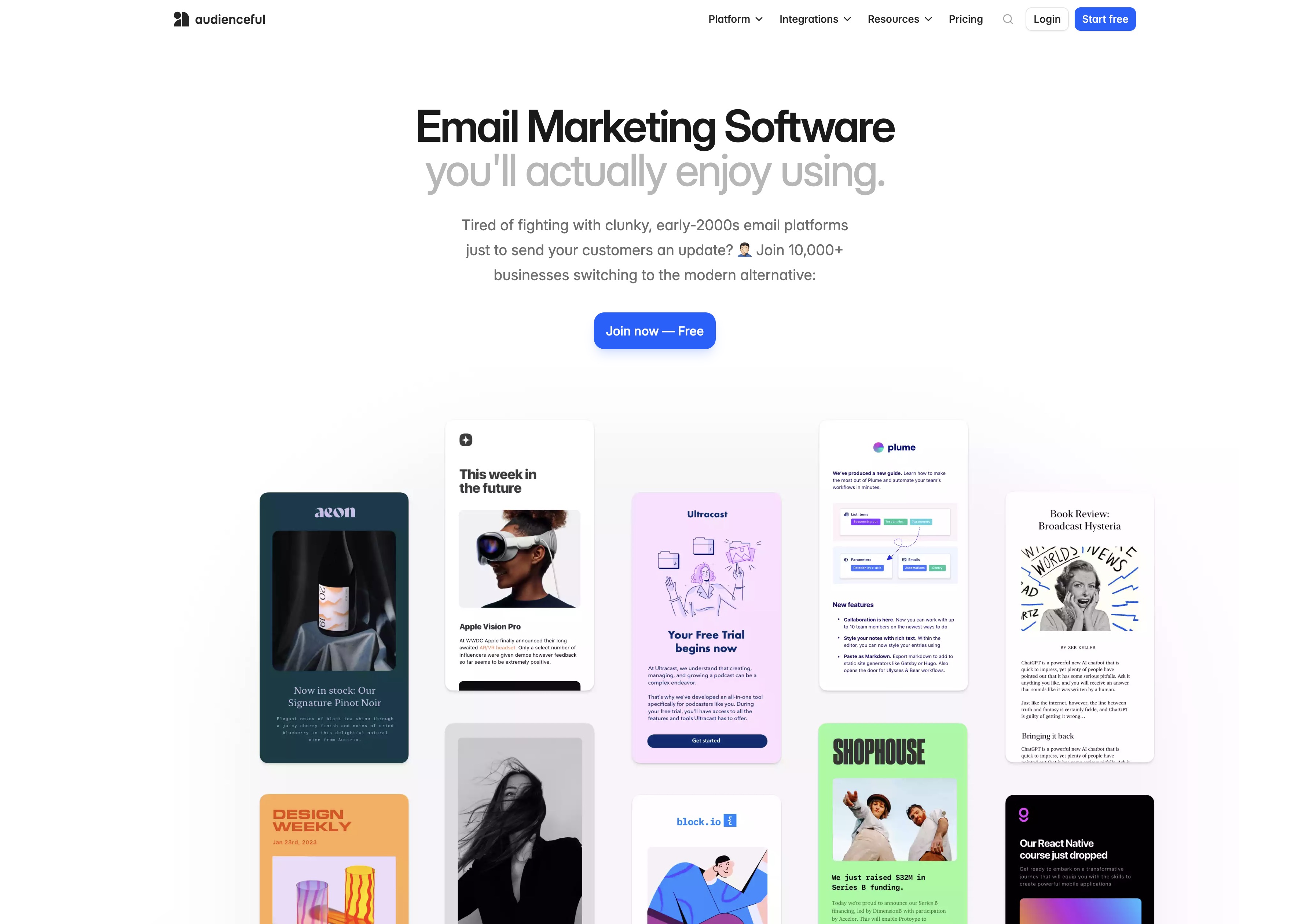
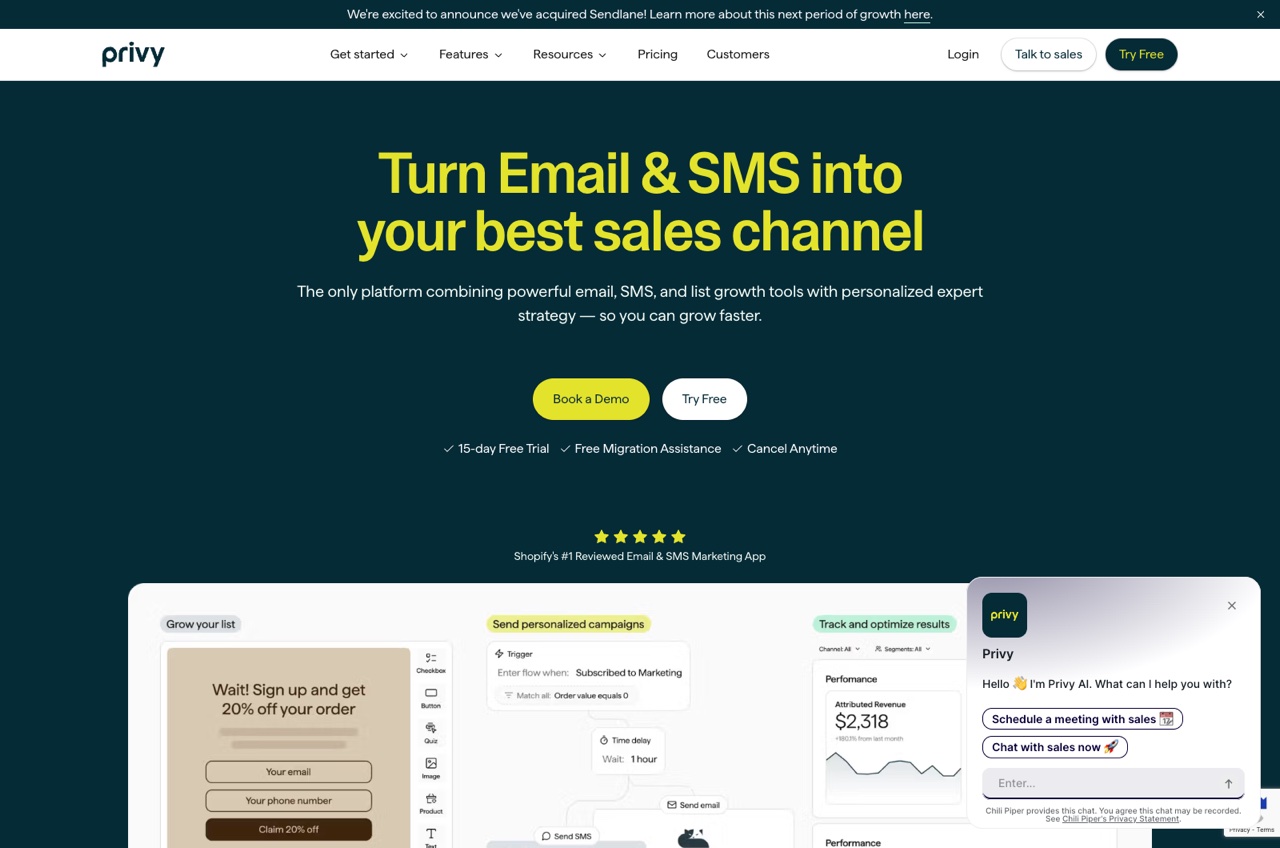
Privy vs Audienceful: summary
Privy is an ecommerce conversion platform that started as a popup and on-site display builder and later expanded into email and SMS marketing. Its core strength is still popups: the display builder offers solid targeting rules, spin-to-win wheels, banners, and exit-intent triggers that help Shopify stores capture emails and reduce cart abandonment. The Shopify integration is tight for that use case. But the email side of the platform is clearly secondary. The email editor is basic, automation is limited to pre-built templates like cart abandonment and welcome series with no custom workflow builder or branching logic, and there's no real-time collaboration. An AI Assistant drafts copy, but it doesn't build segments or flows. There's no native Stripe integration, no design systems, and no advanced segmentation. SMS is bundled, which is convenient. Privy works well for small Shopify stores that want popups and basic email in a single tool, but it's not a serious email marketing platform for teams that need depth or flexibility.
Pricing: who's cheaper?
Privy's Starter plan with email starts at $30/month for up to 1,500 contacts, while Audienceful's Free plan covers up to 1,000 contacts. Privy's per-contact costs then climb quickly as your list grows. At 3,000 contacts Privy is $60/month against $29 on Audienceful, and at 50,000 contacts you're paying $540/month on Privy versus $272/month on Audienceful. Keep in mind that Privy's Starter plan pairs a basic editor with template-driven automation, while Audienceful's Essentials plan includes the built-in AI agent, real-time collaboration, and a custom automation builder.
Audienceful is cheaper than Privy at every size compared
At 1K contacts Privy is $30/month and Audienceful is free. From 3K up, Audienceful costs roughly half of what Privy does, and the dollar gap grows at every tier above that.
Monthly price by contact volume
Pricing data sourced from public pricing pages · Last verified October 2026
AI and Collaboration
Audienceful treats AI and collaboration as core to the editing experience. Multiple team members can work on the same email simultaneously with live cursors and real-time presence, similar to Google D...
Privy's AI Assistant writes email and SMS copy and popup headlines and suggests offers, which helps with a first draft. It stops at copy: there's no AI image generation, and nothing that builds segments or automations for you. Collaboration is similarly absent: Privy's editor is single-player. If your team needs to review or co-edit an email, you're working sequentially, passing screenshots around, or managing feedback entirely outside the tool.
Audienceful treats AI and collaboration as core to the editing experience. Multiple team members can work on the same email simultaneously with live cursors and real-time presence, similar to Google Docs. A built-in AI agent, included on every plan, writes and edits emails in your voice using your best-performing sends as style references, makes targeted edits to drafts, generates images in context, and can even build audience segments from a plain-language description. For teams producing email at any real cadence, the difference in velocity is substantial.
Email Editor and Design
Audienceful's unified block editor combines writing speed with deep layout and design control. A proper design system with reusable styles and components means brand consistency is structural, not asp...
Privy's email editor reflects the platform's origins as a popup tool. It handles the basics but doesn't go deep. You get a simple drag-and-drop builder with standard blocks for text, images, buttons, and products. There are no design systems, no reusable styles or components, and no way to enforce brand consistency at a structural level. Every email is essentially a standalone effort, and if your brand evolves, you're updating templates individually. The editor is adequate for simple promotional sends but runs out of capability quickly if you care about design quality or production efficiency.
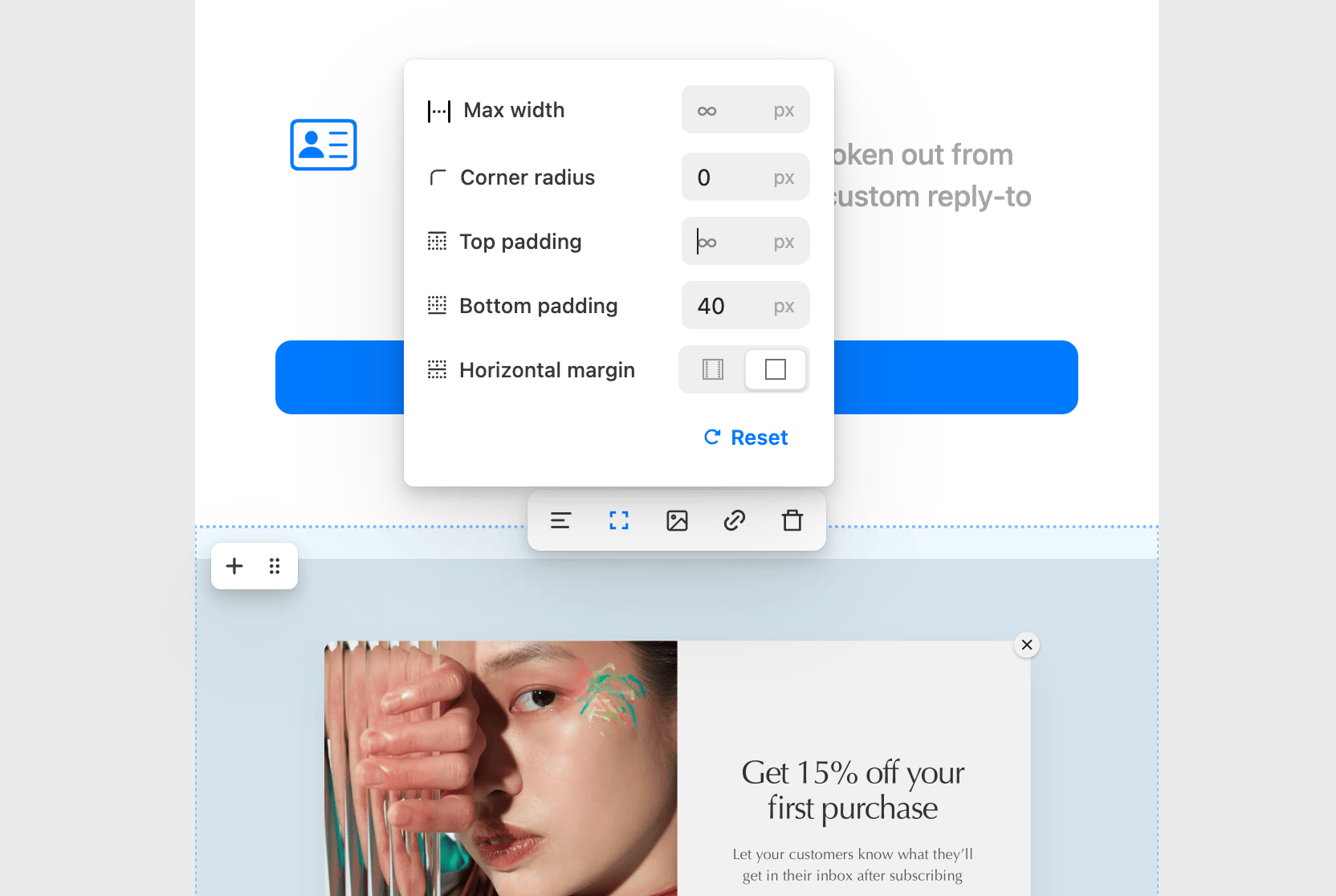
Audienceful's unified block editor combines writing speed with deep layout and design control. A proper design system with reusable styles and components means brand consistency is structural, not aspirational. You get fine-grained control over spacing, typography, and layout without giving up the speed of a block-based workflow. For teams that want their emails to look intentional and consistent (not just functional), it's a fundamentally different editing experience than what Privy offers.
Automation and Workflows
Audienceful's automation builder is designed for teams that need both speed and depth. It supports branching logic, conditional splits, event-based triggers, and complex multi-step flows that go well ...
Privy's automation covers the standard ecommerce essentials (cart abandonment, welcome series, post-purchase follow-ups) through pre-built templates. For small Shopify stores, these templates get you running quickly without configuration. The limitation is that there's no custom workflow builder. You can't create automations with branching logic, conditional splits, or event-based triggers beyond the provided templates. If your automation needs go beyond the standard flows, Privy simply doesn't have the tools to support them.
Audienceful's automation builder is designed for teams that need both speed and depth. It supports branching logic, conditional splits, event-based triggers, and complex multi-step flows that go well beyond template-driven automation. The native Shopify integration handles ecommerce triggers and product data, and a native Stripe integration extends automation to subscription events, payment failures, and revenue milestones, covering SaaS use cases that Privy can't address. If you need automation that adapts to your specific business logic rather than forcing you into pre-built patterns, Audienceful has the depth.
Ready to see the difference?
Free up to 1,000 subscribers.
Integrations and Data
Audienceful ships with native Shopify and Stripe integrations, covering both ecommerce and SaaS use cases without middleware or workarounds. Purchase data, subscription events, and customer profiles s...
Privy integrates tightly with Shopify, and that's where its integration story both starts and largely ends. Product data, cart information, and customer profiles from Shopify feed into popups, email templates, and basic segmentation. There's no native Stripe integration, no support for SaaS billing events, and limited flexibility for businesses whose data model doesn't revolve around a Shopify store. The platform's focus is squarely on small-to-mid ecommerce stores. If your revenue comes from subscriptions or anything outside traditional product sales, Privy's data model doesn't serve you.
Audienceful ships with native Shopify and Stripe integrations, covering both ecommerce and SaaS use cases without middleware or workarounds. Purchase data, subscription events, and customer profiles sync directly into segmentation and automation. Advanced behavioral segmentation works across both data sources, with revenue attribution built in, giving you a unified view of customer activity regardless of your business model. For teams that need their email platform to understand more than just cart data, the integration depth is meaningfully broader.
Deliverability
Audienceful takes a more technically rigorous approach to deliverability. A manual approval process screens new senders before they hit shared infrastructure.
Privy's deliverability is adequate for the scale of most of its users: small Shopify stores sending to modest-sized lists. It handles the fundamentals and provides basic reporting on opens, clicks, and bounces. But there's no dynamic batching, no per-provider throttling, and no sophisticated retry logic. For stores with small lists and straightforward sends, this is generally fine. For teams scaling their email volume or competing for placement in crowded inboxes, the lack of send-layer optimization becomes a limiting factor.
Audienceful takes a more technically rigorous approach to deliverability. A manual approval process screens new senders before they hit shared infrastructure. Dynamic batching staggers sends based on inbox provider limits and engagement signals, avoiding the bulk-blast pattern that triggers throttling. Smart retry with optimized backoff handles soft bounces and temporary deferrals automatically, re-attempting delivery at sensible intervals. Every address is checked on import for typos, dead inboxes and disposable domains, and a built-in Deliverability dashboard grades your setup and keeps checking SPF, DKIM, DMARC and DNS records with plain-English fixes. On Growth, 24/7 monitoring tracks sender reputation, blocklists, list warmth and inbox-provider breakdowns, enterprise-level tooling that usually means paying for a separate monitoring service.
Who Each Tool Is Best For
Audienceful is built for ecommerce brands and SaaS teams that want a feature-complete email marketing platform. If you care about the email creation experience (a modern editor with real-time collabor...
Privy is a good fit for small Shopify stores that want popups, on-site displays, and basic email marketing bundled into a single platform. If your primary need is capturing email addresses through popups and sending simple promotional campaigns or standard ecommerce automations, Privy covers those basics in a straightforward package. The bundled SMS is a genuine convenience for stores that want multi-channel without managing separate tools.
Audienceful is built for ecommerce brands and SaaS teams that want a feature-complete email marketing platform. If you care about the email creation experience (a modern editor with real-time collaboration, an AI agent that can draft campaigns and build entire automations from a plain-language brief, and proper design systems) and you need automation that goes beyond templates with real branching and conditional logic, Audienceful is the more capable tool. It's especially strong for teams that need native Stripe support alongside Shopify, or for anyone who's outgrown Privy's popup-first approach and wants a platform where email marketing is the core product, not an add-on.
Migrate from Privy in less than 5 minutes
Bring your contacts over with a CSV import, then start from ready-made email templates and automations.
Start free migrationPrivy guides.
Pricing, alternatives and switching guides for Privy.
- Privy Pricing: What Email, SMS and Pop-Ups Cost in 2026Privy pricing checked November 2026: every email tier from 1,500 to 250,000 contacts, SMS credit packs, pop-ups-only plans, how mailable contact billing works and real store totals.
- Is Privy Too Expensive? How to Cut the Bill or SwitchDecide whether Privy is too expensive for your Shopify store. See dated Privy prices from 1K to 100K contacts, six ways to cut the bill and the math on switching.
- 8 Best Privy Alternatives (and Seguno Alternatives) for Shopify Stores in 2026Privy and Seguno get small Shopify stores collecting emails fast. When you want stronger flows, segments on purchase behavior and revenue per email, here are the alternatives, with prices at 1,000, 10,000 and 50,000 contacts.
- Klaviyo vs Privy: Do You Need One, the Other, or Both?Klaviyo vs Privy for Shopify stores: verified prices at 1K to 100K contacts, the cost of running both, popups, flows, SMS and how the integration works.
- How to Migrate From Privy: Shopify Popups, Email and SMSMigrate from Privy with contact exports, Shopify consent checks, popup documentation, discount testing and an email and SMS handover plan.
- Privy Emails Going to Spam? How to Find the Cause and Fix ItPrivy emails going to spam? Move off Privy's shared sender address, authenticate your domain, update old emails, clean pop-up signups and warm up on engaged contacts.
- How to Migrate From Privy to KlaviyoA Privy to Klaviyo migration guide: keep Privy popups synced to Klaviyo or move everything, with consent mapping, form rebuilds, flows, SMS and dated costs.
More comparisons.
How Audienceful stacks up elsewhere.
Audienceful vs Klaviyo
Klaviyo is the dominant email and SMS platform for ecommerce, with powerful automation and segmentation. But it has a dated editor, no real-time collaboration, and a sprawling feature set that's increasingly complex and expensive as you scale.
See comparison →Audienceful vs ActiveCampaign
ActiveCampaign is a marketing automation and CRM platform known for its powerful automation builder, but its sprawling feature set, dated email editor, and confusing pricing tiers make it a complex choice for teams that just want great email marketing.
See comparison →Audienceful vs Amazon SES
Amazon SES is raw email sending infrastructure from AWS. It charges $0.10 per 1,000 emails, but it provides zero marketing features, no editor, no automation, and no segmentation, requiring you to build everything yourself on top of a sending pipe.
See comparison →Join 10,000+ making the switch.
See why teams move all email to Audienceful.

“Holy sh*t this is fantastic… I'm really impressed so far. You all have built something special here.”


“I love products like Audienceful. It hints at a better future, connecting creatives with richer workflows.”


“So much easier to use… has already saved us hundreds of hours.”

Frequently asked questions
How much does Privy cost?
Privy's Starter plan with email starts at $30 a month for up to 1,500 contacts, and the price rises with list size. At the list sizes compared on this page, Privy costs about $60 a month at 3,000 contacts, $165 at 10,000 and $540 at 50,000.
Which costs less, Privy or Audienceful?
Audienceful costs less than Privy at every list size compared on this page. At 3,000 contacts Privy is about $60 a month against $29 for Audienceful Essentials billed yearly, and at 50,000 contacts it is $540 against $272. The gap widens as the list grows.
What's the main difference between Privy and Audienceful?
Privy started as a popup and on-site display builder, and that is still its strength: targeting rules, spin-to-win wheels, banners and exit-intent triggers. Its email side is secondary, with a basic editor and automation limited to pre-built templates. Audienceful is built around email, with a block editor that has design systems and real-time collaboration, an automation builder with branching and conditional splits, and a built-in AI agent.
Does Privy have a custom automation builder?
No. Privy's automation runs on pre-built templates such as cart abandonment, welcome series and post-purchase follow-ups, which get a small Shopify store running quickly. There is no custom workflow builder, branching or conditional splits. Audienceful's automation builder supports branching, conditional splits and event triggers fed by native Shopify and Stripe data.
Who is Privy best for?
Privy suits small Shopify stores whose main goal is capturing emails with popups and sending simple promotions and standard ecommerce flows. Its popup builder has strong targeting, the Shopify integration is tight, and SMS is bundled. Teams that need custom automation, Stripe data or deeper email design tend to outgrow Privy.
How do I move from Privy to Audienceful?
Export your contacts from Privy as a CSV, then in Audienceful go to People > Add > Import CSV and map the columns to fields. Tags carry over as tags, custom data becomes custom fields, and segments get rebuilt as audiences. Connect the native Shopify integration, verify your sending domain, warm up lists of roughly 10,000 or more gradually, and rebuild your forms and key automations. Migration help is available at support@audienceful.com.
