The Best Iterable Alternative for Growing Teams
TL;DR: Iterable is an enterprise cross-channel marketing platform built for large organizations with dedicated marketing ops teams, but its complexity, implementation overhead, and enterprise pricing make it overkill for most ecommerce and SaaS businesses that just need to send great emails and drive revenue.
Compare features
A side-by-side look at how Iterable and Audienceful compare across the features that matter most.
Iterable vs Audienceful: Summary
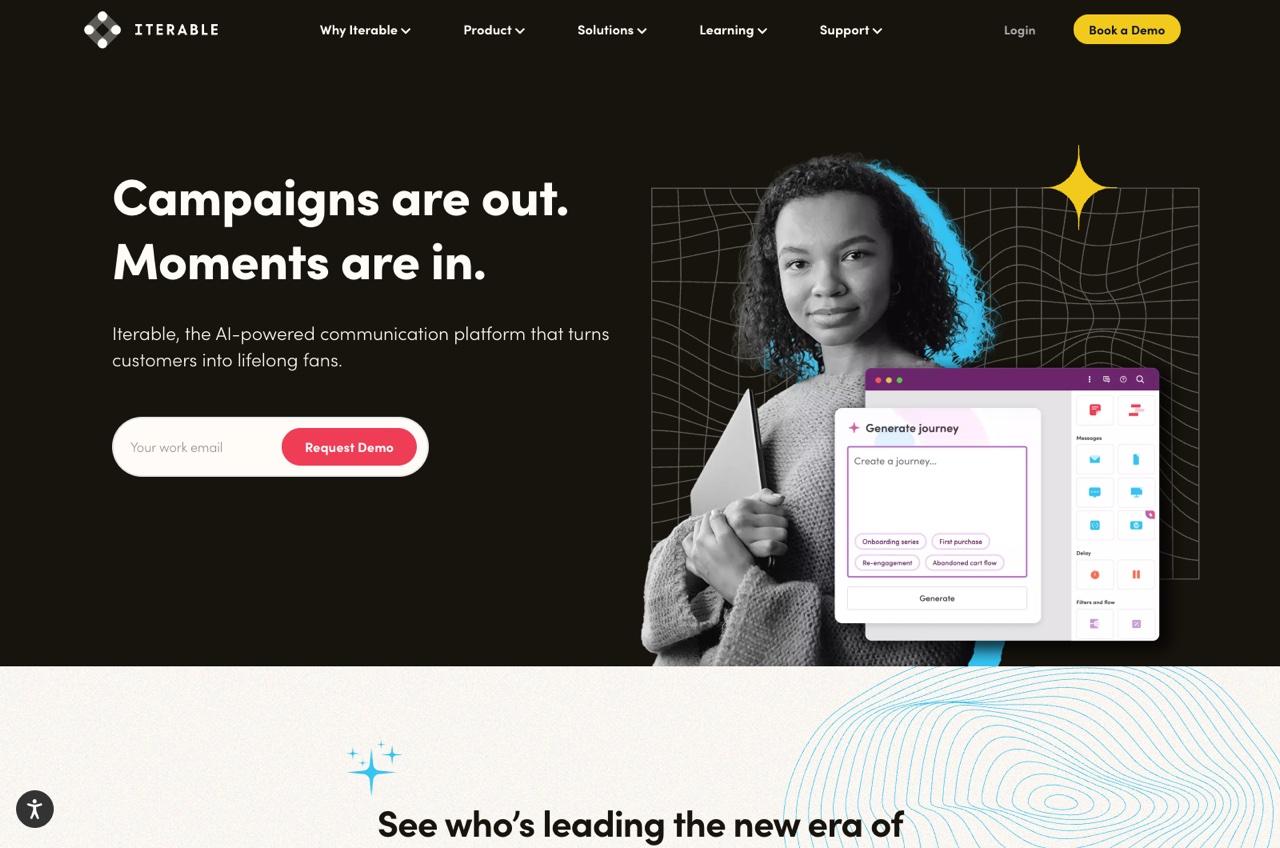
Iterable is an enterprise-grade cross-channel marketing platform that handles email, push notifications, SMS, and in-app messaging. Its workflow and journey builder is genuinely powerful: you can orchestrate complex multi-channel campaigns with sophisticated branching and channel optimization. But Iterable is built for large organizations with dedicated marketing operations teams. The email editor exists but is secondary to the workflow engine, there's no real-time collaboration, and implementation typically requires months of onboarding and technical setup. Pricing starts in the thousands per month with custom contracts, making it inaccessible for most growing businesses.
Pricing: who's cheaper?
Iterable uses custom enterprise pricing with annual contracts. They don't publish rates on their website, but plans typically start at $1,000+/month with pricing scaling based on contacts, channels, and message volume. Getting a quote requires a sales call and most contracts lock you in annually. For growing ecommerce and SaaS teams, this means paying enterprise rates before you need enterprise features. Audienceful offers transparent, published pricing that scales with your subscriber count: no sales calls, no annual lock-in, and a free tier to start.
Audienceful vs Iterable pricing
Iterable does not publish pricing. All plans are custom quotes requiring a sales conversation. Audienceful's pricing is public and transparent, starting free and scaling by subscriber count.
Iterable doesn’t publish per-tier pricing; plans are custom quotes through their sales team. Audienceful’s pricing is public and transparent at every tier.
AI and Collaboration
Summary: Audienceful puts AI directly where you create and run campaigns. Every plan includes a built-in AI agent that writes and edits emails in your voice using your best-performing sends as style references...
Iterable has AI features, but they operate at the infrastructure level: send time optimization, channel optimization, and predictive goals that determine when and where to reach a user. These are genuinely useful for enterprise teams running complex cross-channel campaigns. What Iterable doesn't have is any AI in the actual email creation process. There's no content generation, no subject line suggestions from AI, no image generation. You're writing everything from scratch. There's also no real-time collaboration. One person builds the email, and coordination happens outside the tool.
Audienceful puts AI directly where you create and run campaigns. Every plan includes a built-in AI agent that writes and edits emails in your voice using your best-performing sends as style references, makes targeted edits to drafts, generates on-brand images, restyles entire themes, and can build audience segments (or complete automations with triggers, steps, and email bodies) from a plain-language brief, executing with your approval before anything sends. Real-time collaborative editing means multiple team members can work on the same email simultaneously with live cursors and presence indicators. For teams that ship emails regularly, this collapses the workflow from "brief > draft > review > revise" into a single collaborative session.
Email Editor and Design
Summary: Audienceful's unified block editor treats email design as a first-class concern. You get deep layout and design control with a full design system: reusable styles, components, and brand settings that ...
Iterable's email editor exists to serve its workflow engine; it's functional but not where the product shines. You get a basic drag-and-drop builder and HTML editing, but there are no design systems, no reusable style frameworks, and limited layout control compared to dedicated email tools. Building a polished, on-brand email in Iterable requires either a skilled HTML developer or accepting the limitations of a basic template builder. The editor is clearly an afterthought in a platform that's really about journey orchestration.
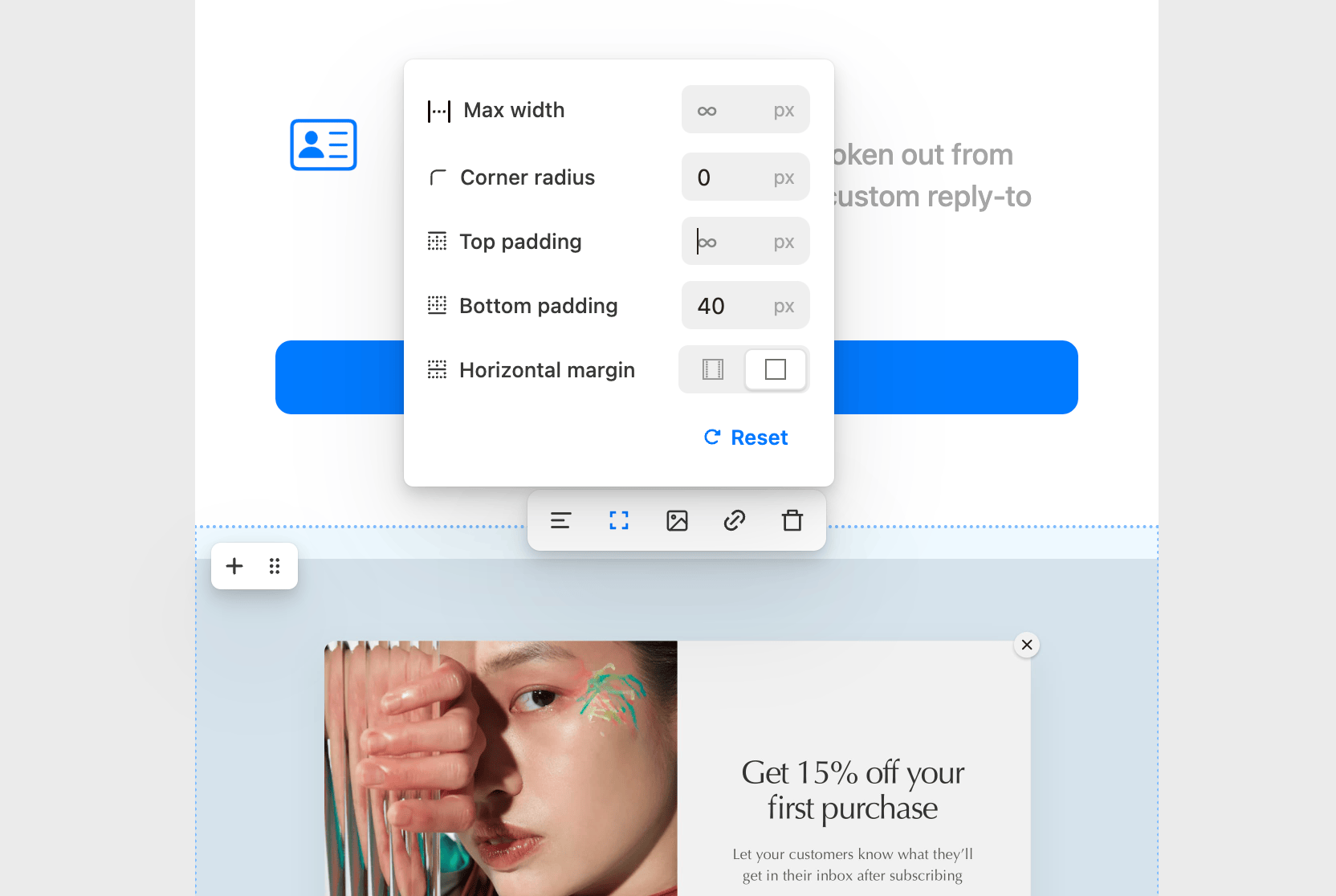
Audienceful's unified block editor treats email design as a first-class concern. You get deep layout and design control with a full design system: reusable styles, components, and brand settings that keep every email consistent whether a marketer or a founder builds it. The editor combines the speed of writing in blocks with the precision of a design tool, so you never have to choose between creative control and ease of use. For teams where the email itself is the product (not just a node in a workflow), the editing experience is night and day.
Automation and Ecommerce
Summary: Audienceful's automation builder delivers the same sophistication (branching logic, conditional splits, event-based triggers) with native Stripe and Shopify integrations that work immediately. You can...
Iterable's journey builder is the heart of the product and it's genuinely impressive. You can build complex multi-step, multi-channel workflows with branching, A/B testing, holdout groups, and channel optimization. For enterprise teams orchestrating campaigns across email, push, SMS, and in-app simultaneously, it's a powerful engine. But for ecommerce specifically, nothing is plug-and-play. Shopify and Stripe integrations exist but require technical implementation. There are no turnkey cart abandonment flows, no one-click product catalog syncs, no out-of-the-box revenue attribution that just works on day one.
Audienceful's automation builder delivers the same sophistication (branching logic, conditional splits, event-based triggers) with native Stripe and Shopify integrations that work immediately. You can build flows based on purchase data, subscription lifecycle events, cart behavior, and product activity without any middleware or implementation project. Revenue attribution is built in, so you can see exactly which emails drive sales. For ecommerce and SaaS teams, you get automation power comparable to Iterable's without the months of setup or the dedicated ops team to maintain it.
Ready to see the difference?
Free up to 1,000 subscribers.
Integrations and Data
Summary: Audienceful ships with native Stripe and Shopify integrations that work out of the box. Connect your account, and your subscriber data, purchase history, subscription events, and product catalog sync ...
Iterable has a broad integration ecosystem befitting an enterprise platform, connecting to data warehouses, CDPs, and major marketing tools. But "connects to" is doing heavy lifting here. Most integrations require technical implementation, API configuration, and ongoing maintenance by your engineering or ops team. Nothing is truly plug-and-play. Getting your Shopify data, Stripe events, or product analytics flowing into Iterable is a project, not a toggle. For large companies with dedicated integration engineers, this flexibility is valuable. For everyone else, it's a barrier.
Audienceful ships with native Stripe and Shopify integrations that work out of the box. Connect your account, and your subscriber data, purchase history, subscription events, and product catalog sync directly into the platform. You can segment on real purchase behavior, trigger automations from revenue events, and build campaigns informed by actual customer activity without filing engineering tickets or maintaining custom integrations. The trade-off is that Audienceful focuses on the integrations that matter most for ecommerce and SaaS rather than trying to connect to everything.
Deliverability
Summary: Audienceful approaches deliverability as an engineering problem solved at the platform level rather than a consulting engagement. A manual approval process keeps bad senders off the platform from the ...
Iterable handles deliverability well, since it's an enterprise platform and deliverability is table stakes at that level. You get dedicated IP options, IP warm-up tools, and deliverability reporting. Enterprise customers typically get some level of deliverability consulting as part of their onboarding. The infrastructure is solid, and large senders generally see good inbox placement once properly configured. The setup and optimization, however, is part of the broader implementation effort that Iterable requires.
Audienceful approaches deliverability as an engineering problem solved at the platform level rather than a consulting engagement. A manual approval process keeps bad senders off the platform from the start. Dynamic batching staggers sends based on inbox provider limits and engagement signals, so you never trip rate limits or trigger bulk-sender flags. Smart retry logic automatically re-attempts delivery with optimized timing and backoff when emails soft-bounce or get deferred. You get enterprise-grade inbox placement without the enterprise-grade setup process.
Who Each Tool Is Best For
Summary: Audienceful is built for ecommerce brands and SaaS teams that want serious automation and segmentation power without the enterprise overhead. You get a modern editor with real-time collaboration, a bu...
Iterable is built for large organizations: think companies with 100+ employees, dedicated marketing operations teams, and budgets that start at five figures annually for email tooling alone. If you're orchestrating complex cross-channel campaigns across email, push, SMS, and in-app messaging at scale, and you have the team and budget to implement and maintain an enterprise platform, Iterable is a strong choice. It's genuinely powerful for what it does.
Audienceful is built for ecommerce brands and SaaS teams that want serious automation and segmentation power without the enterprise overhead. You get a modern editor with real-time collaboration, a built-in AI agent, native Stripe and Shopify integrations, advanced behavioral segmentation, and revenue attribution, all at a fraction of Iterable's cost and without months of implementation. If email is a core revenue channel and you need a tool your team can actually use on day one, Audienceful delivers the capabilities that matter without the complexity tax.
Frequently asked questions
Is Audienceful better than Iterable?
For ecommerce brands and SaaS teams, yes. Audienceful offers a modern block editor, native Shopify and Stripe integrations, and deliverability infrastructure designed for scale. Iterable has strengths in other areas; read the full comparison above to see the detailed breakdown.
Can I migrate from Iterable easily?
Yes. Export your subscriber list as a CSV from Iterable and import it directly into Audienceful. We handle deduplication, tagging, and validation automatically. Most teams complete their migration in under 15 minutes.
Which is cheaper, Audienceful or Iterable?
Audienceful is typically significantly cheaper. The free plan includes 1,000 subscribers with all features. At scale, Audienceful is typically 30–50% cheaper because we don't charge for unsubscribed or inactive contacts.
Does Iterable have better automation?
Iterable's automation is solid. Audienceful matches it on branching logic and adds native ecommerce triggers from Shopify and Stripe, so you can automate based on real purchase data without third-party middleware.
Which platform is better for ecommerce?
Audienceful. Native Shopify and Stripe integrations mean purchase data flows directly into segmentation and automation, with no middleware required.
How do deliverability rates compare?
Audienceful uses dynamic batching with per-provider throttling and smart retry logic, which typically results in higher inbox placement, especially for larger sends.
Migrate from Iterable in less than 5 minutes
Import your contacts, templates, and automations. We handle the hard parts.
Start Free MigrationRelated comparisons
Audienceful vs ActiveCampaign
ActiveCampaign is a marketing automation and CRM platform known for its powerful automation builder, but its sprawling feature set, dated email editor, and confusing pricing tiers make it a complex choice for teams that just want great email marketing.
See comparison →Audienceful vs Amazon SES
Amazon SES is raw email sending infrastructure from AWS. It's incredibly cheap at $0.10 per 1,000 emails, but it provides zero marketing features, no editor, no automation, and no segmentation, requiring you to build everything yourself on top of a sending pipe.
See comparison →Audienceful vs AWeber
AWeber is one of the oldest email marketing platforms, launched in 1998. It's simple and beginner-friendly but has barely evolved, offering only basic autoresponders, a dated editor, no AI, no real-time collaboration, and no meaningful ecommerce integrations.
See comparison →Stop searching.
Start emailing.
Your first 1,000 subscribers are totally free.
Start Free