The Best ConvertKit Alternative for Growing Teams
TL;DR: Kit (formerly ConvertKit) is a creator-focused email platform built around plain-text emails and tag-based subscriber management. It's great for bloggers and YouTubers, but lacks the visual design tools, deep automation, and ecommerce integrations that growing product businesses need.
Compare features
A side-by-side look at how Kit (ConvertKit) and Audienceful compare across the features that matter most.
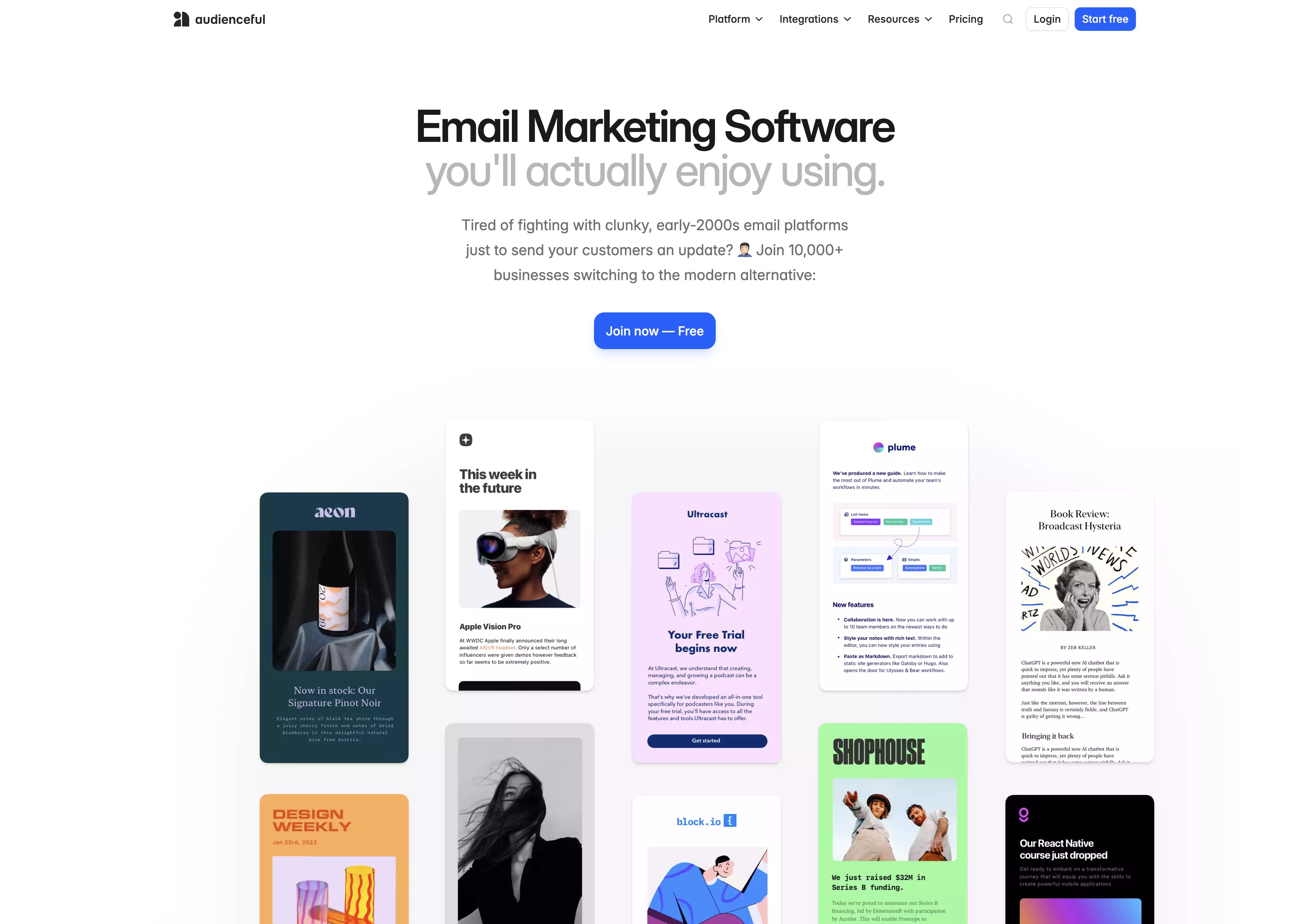
Kit (ConvertKit) vs Audienceful: Summary
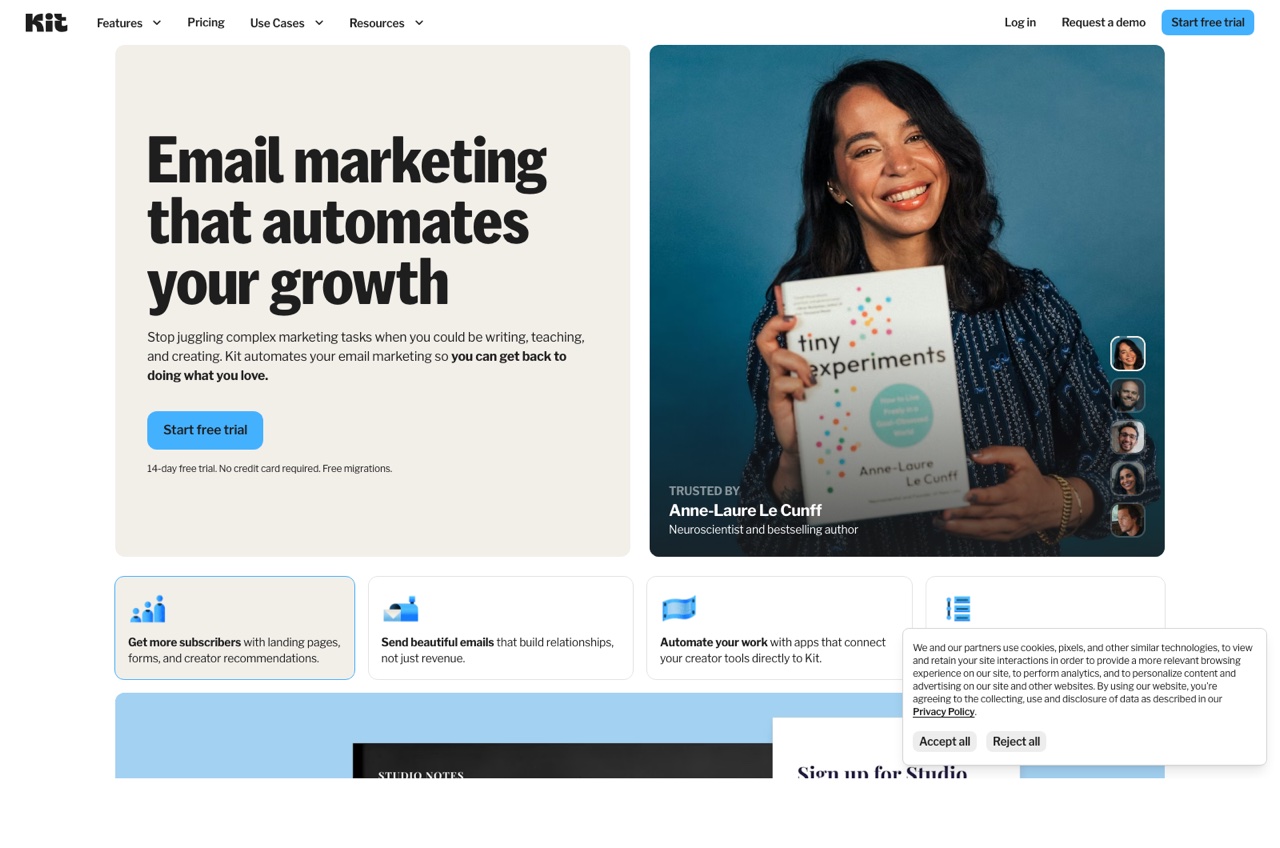
Kit (formerly ConvertKit) is an email marketing platform designed for individual creators: bloggers, podcasters, and YouTubers. It takes a plain-text-first approach to email, intentionally minimizing visual design in favor of simple, text-heavy messages. It offers tag-based subscriber management instead of lists, a visual automation builder for basic sequences, and a Creator Network feature for cross-promotion. Kit also includes lightweight commerce tools for selling digital products via Stripe, but it lacks native ecommerce integrations, real-time collaboration, AI features, and the depth of automation and segmentation that product-focused teams require.
Pricing: who's cheaper?
Kit's free Newsletter plan supports up to 10,000 subscribers but strips out most of the features that make email marketing useful: you get one automation, Kit branding on all your forms and emails, and no advanced segmentation or reporting. Once you move to the Creator plan where the real features live, pricing scales from $39/month at 1,000 subscribers up to $679/month at 100,000. Audienceful's Essentials plan starts at $29/month (billed yearly) for up to 3,000 subscribers with full access to every core feature (automation, segmentation, native Stripe and Shopify integrations, AI, and collaboration) included from day one with no branding restrictions. At lower subscriber counts Kit looks cheaper on paper, but you're comparing a feature-limited creator tool to a full-stack email platform. Once you factor in the Zapier subscriptions, third-party design tools, and collaboration workarounds that Kit requires, the gap narrows fast. At higher volumes Kit's pricing climbs steeply, and by 100K subscribers Audienceful is meaningfully cheaper while offering significantly more capability.
Kit Creator plan vs Audienceful Essentials plan (billed yearly)
Based on published pricing from Kit and Audienceful as of March 2026. Kit does not publish exact pricing at every tier. Blanks indicate the tier is not offered at that exact subscriber count.
Monthly price by contact volume
Dotted line is estimated. Kit (ConvertKit) doesn’t publish pricing at these volumes.
Pricing data sourced from public pricing pages · Last verified October 2026
AI Agents and MCP Servers
Summary: Audienceful gives you both on every plan, including Free. The built-in AI agent builds audiences, automations and emails from a brief and waits for your approval, and the hosted email marketing MCP se...
Kit's built-in AI is limited to subject-line suggestions; there's no agent in the app. Its MCP server is stronger: Claude or ChatGPT can manage subscribers and tags, draft broadcasts and sequences, and schedule a broadcast once you confirm. Segments are read-only, and the server only works on paid Kit plans.
Audienceful gives you both on every plan, including Free. The built-in AI agent builds audiences, automations and emails from a brief and waits for your approval, and the hosted email marketing MCP server lets Claude, ChatGPT, Gemini or Cursor do the same work, through to scheduling the send once you've approved the exact recipients. New automations arrive paused, and the MCP server doesn't use AI credits. Our Kit MCP guide compares the two side by side.
AI and Collaboration
Summary: Audienceful's editor is built for teams. Multiple people can work on the same email simultaneously with live cursors and presence indicators, just like a modern document editor.
Kit has no AI features in its editor: no content generation, no subject line suggestions, no AI image creation. Every email is written entirely from scratch. There's also no real-time collaboration, so teams working on email campaigns are stuck with the pass-it-back-and-forth workflow of sharing drafts manually or waiting for one person to finish before the next can start.
Audienceful's editor is built for teams. Multiple people can work on the same email simultaneously with live cursors and presence indicators, just like a modern document editor. Beyond the editor, every plan includes a built-in AI agent: it writes and edits emails in your voice using your best-performing sends as style references, reads URLs you paste for context, generates images, restyles themes, builds segments from a plain-language description, and can assemble entire automations from a brief, always with your approval before anything sends. For teams shipping emails on a regular cadence, this compresses what used to take hours across multiple tools into minutes in one.
Email Editor and Design
Summary: Audienceful takes the opposite approach with a unified block editor that gives you both writing speed and deep design control in one place. You get a design system with reusable styles and components,...
Kit's email editor is intentionally minimal. The platform was built around a plain-text-first philosophy: the idea that simple, text-heavy emails perform better for creator audiences. That may be true for a solo blogger sending a weekly newsletter, but it means Kit offers almost no visual design capabilities. There's no meaningful drag-and-drop editor, no design systems, no reusable components, and no way to create the kind of branded, visually rich emails that product companies and ecommerce brands need. If you want your emails to look like anything more than a plain text message with a link, Kit will fight you every step of the way.
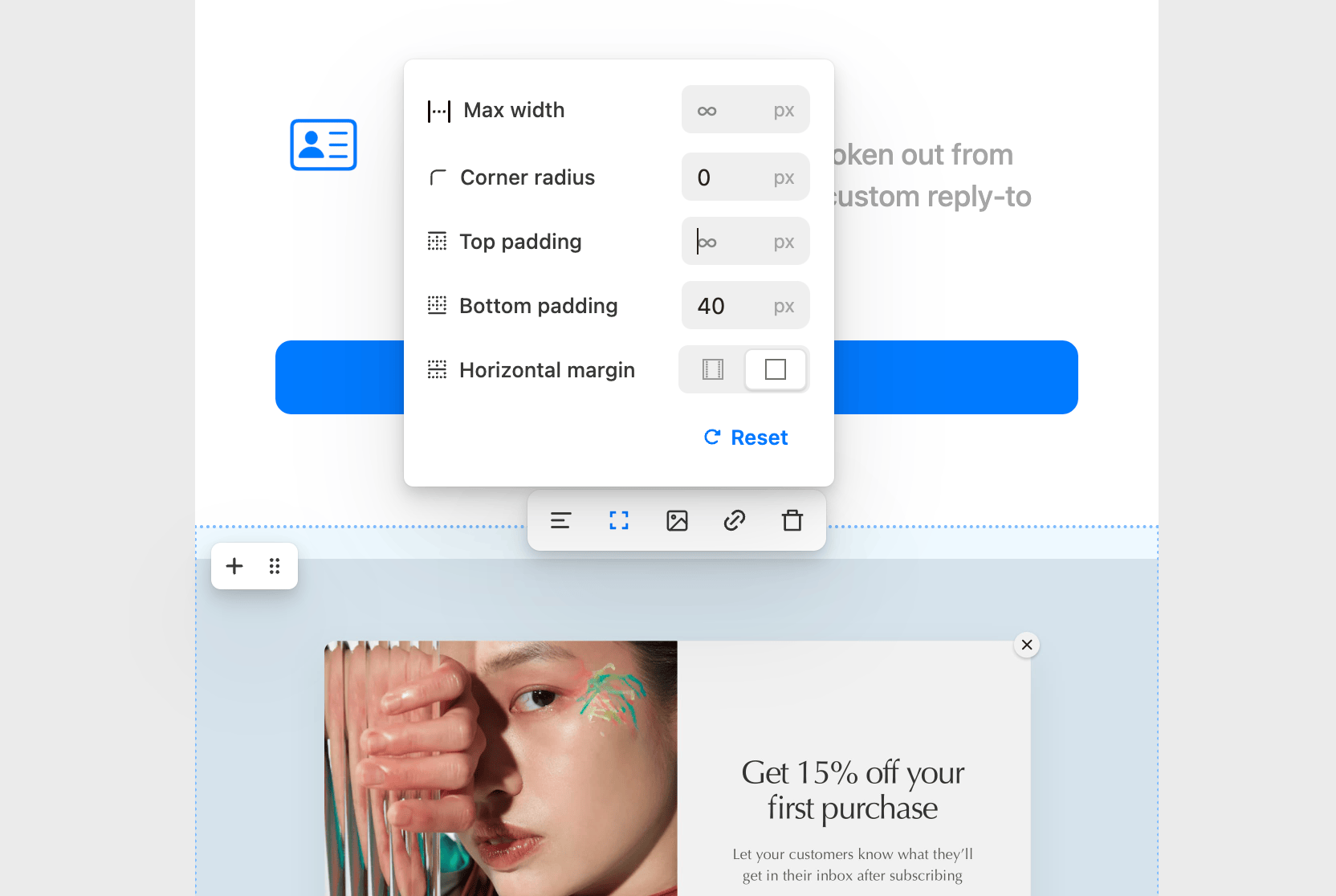
Audienceful takes the opposite approach with a unified block editor that gives you both writing speed and deep design control in one place. You get a design system with reusable styles and components, fine-grained layout controls, and the ability to build visually compelling emails without sacrificing the fast, keyboard-driven writing experience. For teams where brand consistency and visual quality matter (which is most product and ecommerce teams), it's a fundamentally more capable editing experience.
Ready to see the difference?
Free up to 1,000 subscribers.
Automation and Ecommerce
Summary: Audienceful's automation builder is designed for the complexity that ecommerce and SaaS teams actually deal with. It supports branching logic, conditional splits, and event-based triggers tied to nati...
Kit's visual automation builder is easy to pick up and works well enough for simple creator workflows like welcome sequences, tag-based triggers, and basic time-delay flows. But it runs out of depth quickly. There's no sophisticated branching logic, no conditional splits based on real-time behavior, and no event-based triggers from ecommerce platforms or SaaS products. Kit's commerce features are limited to selling digital products (ebooks, courses, etc.) through a basic Stripe checkout. It's not a real ecommerce integration, and it doesn't support the kind of purchase-driven automation flows that product businesses rely on.
Audienceful's automation builder is designed for the complexity that ecommerce and SaaS teams actually deal with. It supports branching logic, conditional splits, and event-based triggers tied to native Stripe and Shopify integrations, so you can build flows based on actual purchase data, subscription events, cart behavior, and product activity. The gap here isn't subtle: Kit's automations are built for "someone subscribed, send them five emails." Audienceful's automations are built for "this customer bought product A but not product B, abandoned their cart twice, and is on a monthly Stripe subscription that's about to renew. Here's what to do next."
Integrations and Data
Summary: Audienceful ships with native Stripe and Shopify integrations that sync purchase history, subscription status, product catalogs, and customer data directly into your email platform. This means your se...
Kit's integration story is centered around the creator ecosystem, with connections to platforms like Teachable, Gumroad, and WordPress. Its Stripe integration exists but is limited to powering Kit's own digital product sales, not syncing broader purchase or subscription data into your email platform. There's no native Shopify integration, and connecting Kit to ecommerce or SaaS data sources typically requires Zapier or third-party middleware, which adds cost and fragility.
Audienceful ships with native Stripe and Shopify integrations that sync purchase history, subscription status, product catalogs, and customer data directly into your email platform. This means your segments, automations, and reporting are all built on real revenue data, not just form submissions and tag assignments. For teams where email is a revenue channel, having this data native rather than piped through Zapier is the difference between guessing and knowing.
Deliverability
Summary: Audienceful approaches deliverability as an infrastructure problem. On top of a manual approval process, Audienceful uses dynamic batching to stagger sends based on inbox provider limits and engagemen...
Kit has a solid deliverability reputation, particularly for the type of emails its users send: plain-text messages from individual creators. Simple text emails tend to have fewer spam triggers and higher engagement rates in the creator context, which works in Kit's favor. Their approval process helps keep bad actors off the platform.
Audienceful approaches deliverability as an infrastructure problem. On top of a manual approval process, Audienceful uses dynamic batching to stagger sends based on inbox provider limits and engagement signals, so you're never tripping rate limits or triggering bulk-sender flags. Smart retry logic automatically re-attempts delivery with optimized timing and backoff when emails are temporarily deferred, rather than giving up or flooding providers with retries. For larger, more visually rich sends (the kind ecommerce and SaaS teams run), this engineered approach to deliverability consistently outperforms the "send it all at once and hope for the best" model.
Who Each Tool Is Best For
Summary: Audienceful is built for ecommerce brands and SaaS teams who need email to be a revenue engine, not just a broadcast tool. Deep automation with branching logic and event triggers, native Stripe and Sh...
Kit is a strong choice for individual creators (bloggers, podcasters, YouTubers, and course creators) who want a simple, text-focused email tool with tag-based subscriber management and basic automation. If your email strategy is a weekly plain-text newsletter to your audience with the occasional digital product launch, Kit does that well.
Audienceful is built for ecommerce brands and SaaS teams who need email to be a revenue engine, not just a broadcast tool. Deep automation with branching logic and event triggers, native Stripe and Shopify data, advanced behavioral segmentation, revenue attribution, and a modern collaborative editor with AI built in. These are the capabilities that product businesses need and that Kit was never designed to provide. If your email program needs to drive and measure revenue, Audienceful is the more capable platform.
Frequently asked questions
Is Audienceful better than Kit (ConvertKit)?
For ecommerce brands and SaaS teams, yes. Audienceful offers a modern block editor, native Shopify and Stripe integrations, and deliverability infrastructure designed for scale. Kit (ConvertKit) has strengths in other areas; read the full comparison above to see the detailed breakdown.
Can I migrate from Kit (ConvertKit) easily?
Yes. Export your subscriber list as a CSV from Kit (ConvertKit) and import it directly into Audienceful. We handle deduplication, tagging, and validation automatically. Most teams complete their migration in under 15 minutes.
Which is cheaper, Audienceful or Kit (ConvertKit)?
Audienceful is typically significantly cheaper. The free plan includes 1,000 subscribers with all features. At scale, Audienceful is typically 30–50% cheaper because we don't charge for unsubscribed or inactive contacts.
Does Kit (ConvertKit) have better automation?
Kit (ConvertKit)'s automation is solid. Audienceful matches it on branching logic and adds native ecommerce triggers from Shopify and Stripe, so you can automate based on real purchase data without third-party middleware.
Which platform is better for ecommerce?
Audienceful. Native Shopify and Stripe integrations mean purchase data flows directly into segmentation and automation, with no middleware required.
How do deliverability rates compare?
Audienceful uses dynamic batching with per-provider throttling and smart retry logic, which typically results in higher inbox placement, especially for larger sends.
Migrate from Kit (ConvertKit) in less than 5 minutes
Import your contacts, templates, and automations. We handle the hard parts.
Start Free MigrationRelated comparisons
Audienceful vs ActiveCampaign
ActiveCampaign is a marketing automation and CRM platform known for its powerful automation builder, but its sprawling feature set, dated email editor, and confusing pricing tiers make it a complex choice for teams that just want great email marketing.
See comparison →Audienceful vs Amazon SES
Amazon SES is raw email sending infrastructure from AWS. It's incredibly cheap at $0.10 per 1,000 emails, but it provides zero marketing features, no editor, no automation, and no segmentation, requiring you to build everything yourself on top of a sending pipe.
See comparison →Audienceful vs AWeber
AWeber is one of the oldest email marketing platforms, launched in 1998. It's simple and beginner-friendly but has barely evolved, offering only basic autoresponders, a dated editor, no AI, no real-time collaboration, and no meaningful ecommerce integrations.
See comparison →Stop searching.
Start emailing.
Your first 1,000 subscribers are totally free.
Start Free