The Best Flodesk Alternative for Growing Teams
TL;DR: Flodesk is a design-focused email marketing tool built for creators and solopreneurs who want beautiful emails with minimal effort, but it lacks the automation depth, ecommerce integrations, and team collaboration features that growing businesses need.
Compare features
A side-by-side look at how Flodesk and Audienceful compare across the features that matter most.
Flodesk vs Audienceful: Summary
Flodesk is a design-first email marketing platform aimed at creators, solopreneurs, and small businesses who want visually stunning emails without the learning curve. It offers beautiful pre-built templates, a straightforward drag-and-drop editor, and flat-rate pricing regardless of subscriber count. However, the platform prioritizes aesthetics over depth: automation is limited to simple linear sequences with no branching or conditional logic, there's no native Shopify or Stripe integration for ecommerce, no real-time collaboration, no AI features, no API, and segmentation is basic. Reporting is minimal with no revenue attribution. Form builder is included. It's a great fit for solopreneurs sending pretty newsletters, but not built for ecommerce or SaaS teams that need automation, data, and integrations.
Pricing: who's cheaper?
Flodesk was once known for its flat-rate unlimited pricing, but that model was retired in December 2025. New users now pay subscriber-based pricing across Lite, Pro, and Everything tiers. Below we compare Flodesk's Pro plan (the most popular tier with unlimited workflows) against Audienceful's Essentials plan.
Flodesk Pro vs Audienceful Essentials: Pricing (billed yearly)
Flodesk Pro pricing compared to Audienceful Essentials at standard subscriber tiers. Since Flodesk retired its flat-rate pricing in late 2025, costs now scale with subscribers, and Audienceful includes deeper automation, native ecommerce integrations, and its built-in AI agent at every tier.
Monthly price by contact volume
Pricing data sourced from public pricing pages · Last verified October 2026
AI and Collaboration
Summary: Audienceful was built for teams from day one. Multiple people can edit the same email simultaneously with live cursors and presence indicators.
Flodesk has no AI features at all: no content generation, no subject line suggestions, no AI image creation. Every piece of copy and every visual needs to be created manually or sourced elsewhere. There's also no real-time collaboration. Teams can't work on the same email simultaneously, which means passing drafts back and forth or waiting for one person to finish before the next can start. For solo creators sending occasional campaigns, this is manageable. For teams shipping emails on a regular cadence, it's a bottleneck.
Audienceful was built for teams from day one. Multiple people can edit the same email simultaneously with live cursors and presence indicators. Every plan also includes a built-in AI agent that goes well beyond content generation: it writes and edits emails in your voice using your best-performing sends as style references, reads URLs you paste for context, generates images natively, restyles entire themes, and can build audience segments (or whole automations) from a plain-language brief, with a preview and your approval before anything sends. The result is a workflow that's dramatically faster for teams producing content at volume.
Email Editor and Design
Summary: Audienceful's unified block editor takes a different approach: deep design control without sacrificing speed. You get a full design system with reusable styles and components, granular layout tools, a...
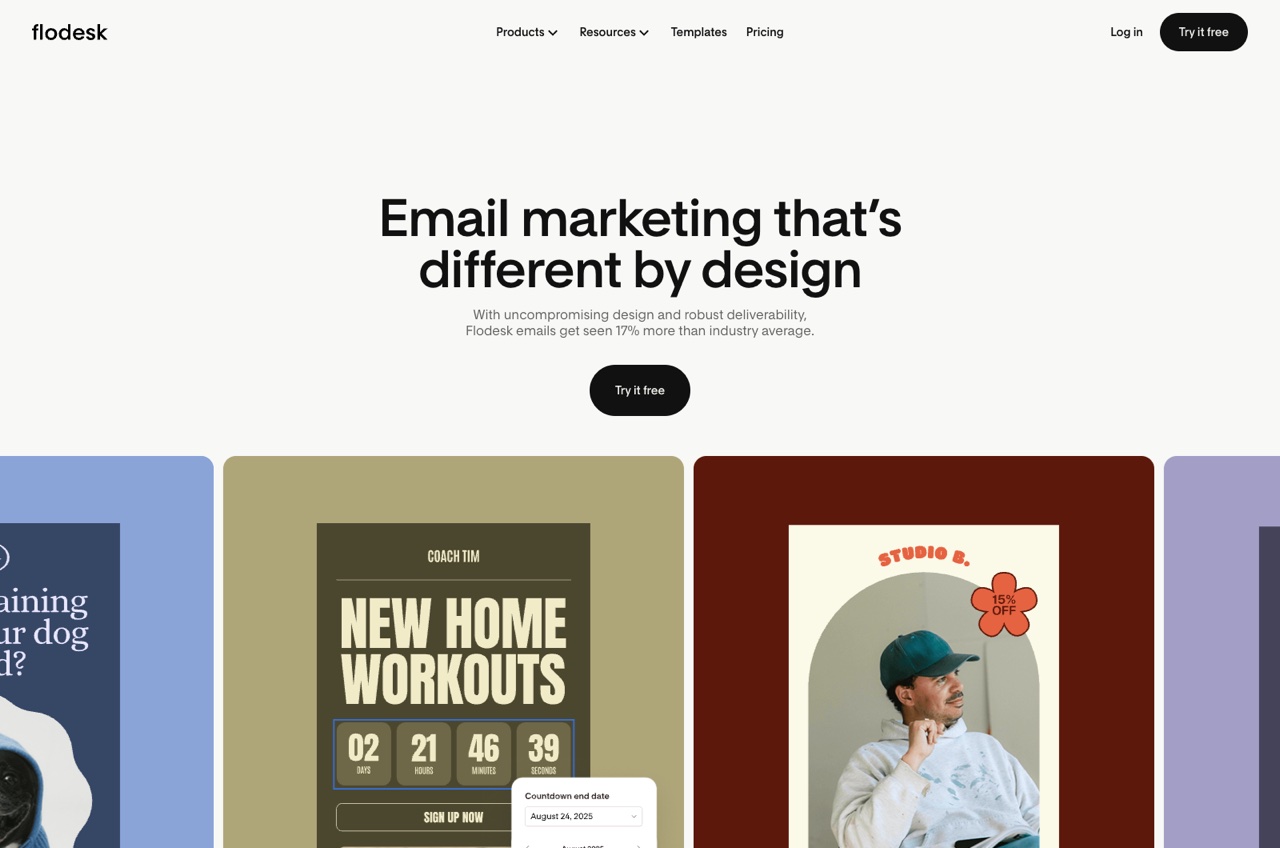
Flodesk's editor is genuinely beautiful. The templates are some of the best-looking defaults available in email marketing, and the drag-and-drop builder makes it easy for anyone to produce visually polished emails. This is Flodesk's core strength and the reason most people choose it. However, the editor prioritizes aesthetics over functionality. You're working within the constraints of their templates rather than building from scratch. There are no design systems in the reusable component sense, no fine-grained layout controls, and limited flexibility once you go beyond what the templates offer. If you want to create something that doesn't fit a template pattern, you'll hit walls quickly.
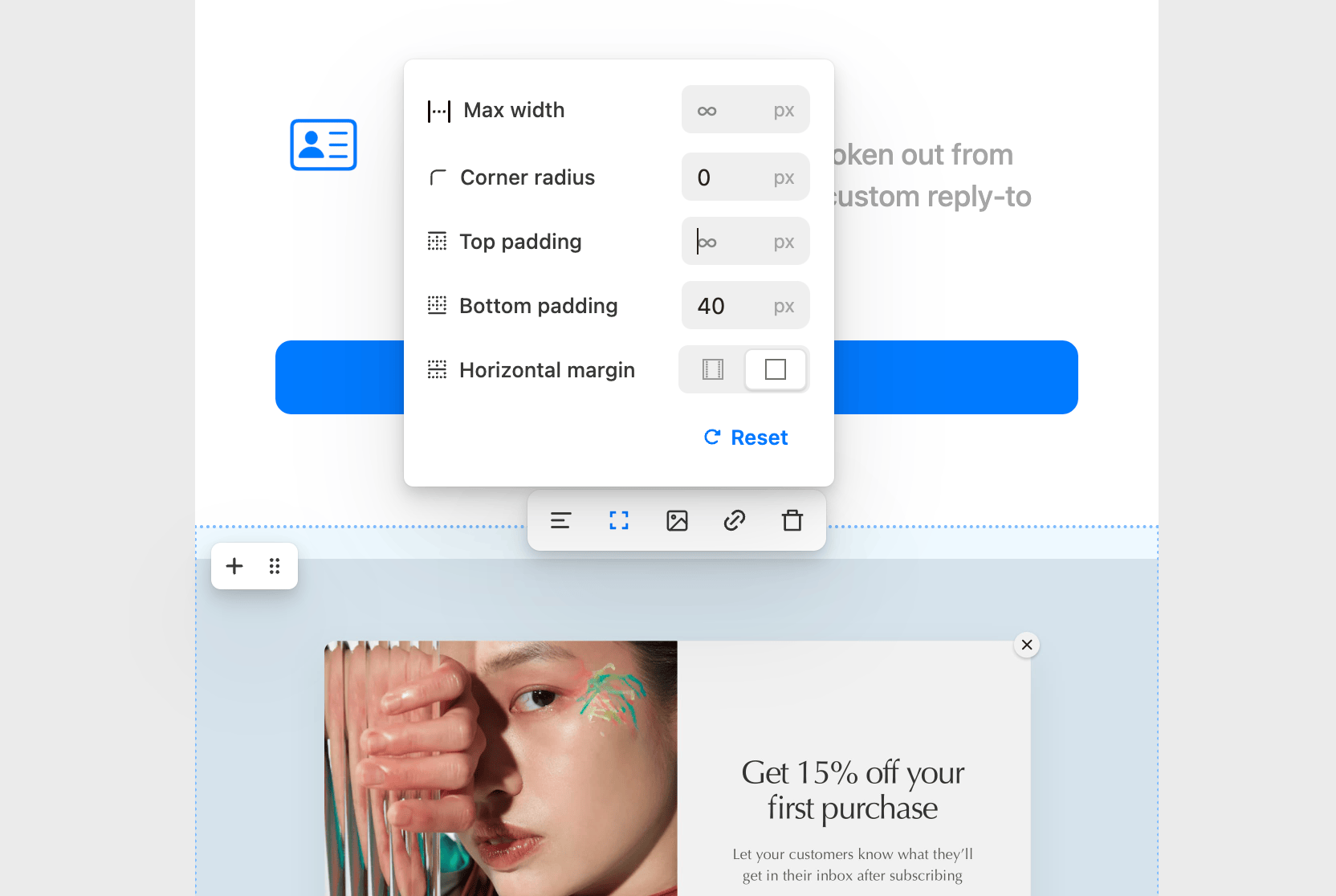
Audienceful's unified block editor takes a different approach: deep design control without sacrificing speed. You get a full design system with reusable styles and components, granular layout tools, and the ability to create visually rich emails that are unique to your brand, not variations of a shared template library. It's the difference between decorating a pre-furnished room and designing one from scratch with professional-grade tools.
Automation and Ecommerce
Summary: Audienceful's automation builder supports branching logic, conditional splits, and event-based triggers tied to native Stripe and Shopify integrations. You can build flows around purchase history, car...
Flodesk's automation capabilities are basic. You can set up simple linear sequences (welcome series, drip campaigns), but there's no branching logic, no conditional splits, and no event-based triggers tied to purchase behavior or product activity. There are no native Shopify or Stripe integrations, so there's no way to trigger automations based on cart activity, purchase history, or subscription events without third-party workarounds. Segmentation is equally limited: you can tag subscribers and create basic segments, but there's no behavioral segmentation based on purchase data or product engagement. For solopreneurs sending a welcome sequence and a weekly newsletter, this covers the basics. For anyone trying to drive revenue through email, it's insufficient.
Audienceful's automation builder supports branching logic, conditional splits, and event-based triggers tied to native Stripe and Shopify integrations. You can build flows around purchase history, cart abandonment, subscription status changes, and product engagement, the workflows that actually drive ecommerce and SaaS revenue. Advanced behavioral segmentation lets you target based on what customers have bought, how they've engaged, and where they are in their lifecycle. The gap here isn't incremental. It's structural.
Ready to see the difference?
Free up to 1,000 subscribers.
Integrations and Data
Summary: Audienceful offers native Stripe and Shopify integrations that sync purchase data, subscription events, and product catalogs directly into your email platform. Revenue attribution ties campaigns and a...
Flodesk takes a closed-platform approach. There's no API, which means no custom integrations, no data syncing with your product, and no way to push or pull subscriber data programmatically. Native integrations are limited: no Shopify, no Stripe for ecommerce, no deep connections to the tools that product businesses run on. You can connect basic tools through Zapier, but that's a workaround, not a solution. Reporting is minimal: open rates, click rates, and basic growth metrics. There's no revenue attribution, no conversion tracking, and no way to tie email performance back to business outcomes.
Audienceful offers native Stripe and Shopify integrations that sync purchase data, subscription events, and product catalogs directly into your email platform. Revenue attribution ties campaigns and automations to actual transactions, so you can see which emails are generating revenue and which aren't. Advanced segmentation uses this data to build precise audience segments based on behavior and purchase history. Full API access means you can integrate with anything your stack requires. The difference is between a tool that sends pretty emails and a tool that connects email to your business data.
Deliverability
Summary: Audienceful treats deliverability as an infrastructure challenge. A manual approval process for new senders prevents bad actors from degrading shared IP reputation.
Flodesk has decent deliverability for its core use case: sending visually designed newsletters to engaged subscriber lists. The platform handles straightforward sends reliably, and for creators sending to audiences who opted in and actively engage, inbox placement is generally solid.
Audienceful treats deliverability as an infrastructure challenge. A manual approval process for new senders prevents bad actors from degrading shared IP reputation. Dynamic batching staggers sends based on inbox provider limits and engagement signals, avoiding rate limit violations and bulk-sender flags. Smart retry logic re-attempts delivery with optimized timing when emails are temporarily deferred, rather than giving up or hammering providers. For teams running larger, more varied sends across multiple segments and campaigns, this engineering-first approach consistently achieves better inbox placement.
Who Each Tool Is Best For
Summary: Audienceful is built for ecommerce brands and SaaS teams that need email to drive measurable business results. Branching automation with event triggers, native Stripe and Shopify integrations, revenue...
Flodesk is a strong choice for solopreneurs, freelancers, and creators who want beautiful emails without complexity. If your needs are a gorgeous weekly newsletter, a simple welcome sequence, and a flat rate that doesn't penalize list growth, Flodesk delivers on exactly that promise. It's one of the easiest ways to send good-looking emails, period.
Audienceful is built for ecommerce brands and SaaS teams that need email to drive measurable business results. Branching automation with event triggers, native Stripe and Shopify integrations, revenue attribution, advanced behavioral segmentation, a collaborative editor with a built-in AI agent, and design systems for brand consistency. These are the capabilities that product businesses need. If your emails exist to generate revenue, reduce churn, and grow customer lifetime value rather than to look pretty in an inbox, Audienceful is the right platform.
Frequently asked questions
Is Audienceful better than Flodesk?
For ecommerce brands and SaaS teams, yes. Audienceful offers a modern block editor, native Shopify and Stripe integrations, and deliverability infrastructure designed for scale. Flodesk has strengths in other areas; read the full comparison above to see the detailed breakdown.
Can I migrate from Flodesk easily?
Yes. Export your subscriber list as a CSV from Flodesk and import it directly into Audienceful. We handle deduplication, tagging, and validation automatically. Most teams complete their migration in under 15 minutes.
Which is cheaper, Audienceful or Flodesk?
Audienceful is typically significantly cheaper. The free plan includes 1,000 subscribers with all features. At scale, Audienceful is typically 30–50% cheaper because we don't charge for unsubscribed or inactive contacts.
Does Flodesk have better automation?
Flodesk's automation is solid. Audienceful matches it on branching logic and adds native ecommerce triggers from Shopify and Stripe, so you can automate based on real purchase data without third-party middleware.
Which platform is better for ecommerce?
Audienceful. Native Shopify and Stripe integrations mean purchase data flows directly into segmentation and automation, with no middleware required.
How do deliverability rates compare?
Audienceful uses dynamic batching with per-provider throttling and smart retry logic, which typically results in higher inbox placement, especially for larger sends.
Migrate from Flodesk in less than 5 minutes
Import your contacts, templates, and automations. We handle the hard parts.
Start Free MigrationRelated comparisons
Audienceful vs ActiveCampaign
ActiveCampaign is a marketing automation and CRM platform known for its powerful automation builder, but its sprawling feature set, dated email editor, and confusing pricing tiers make it a complex choice for teams that just want great email marketing.
See comparison →Audienceful vs Amazon SES
Amazon SES is raw email sending infrastructure from AWS. It's incredibly cheap at $0.10 per 1,000 emails, but it provides zero marketing features, no editor, no automation, and no segmentation, requiring you to build everything yourself on top of a sending pipe.
See comparison →Audienceful vs AWeber
AWeber is one of the oldest email marketing platforms, launched in 1998. It's simple and beginner-friendly but has barely evolved, offering only basic autoresponders, a dated editor, no AI, no real-time collaboration, and no meaningful ecommerce integrations.
See comparison →Stop searching.
Start emailing.
Your first 1,000 subscribers are totally free.
Start Free