The best ActiveCampaign alternatives for ecommerce are Audienceful for native store data and collaborative email production, Klaviyo for a broader ecommerce setup, and Omnisend or Drip for another store-focused shortlist. Shopify Messaging, Mailchimp and Brevo are worth considering for different campaign and volume requirements. Before switching, identify which sales and CRM actions your current automations perform so the email migration does not interrupt the rest of the business.
We make Audienceful and list it first. Prices and plan information were checked against vendor sources on 14 November 2026. The website screenshots come from our competitor library.
ActiveCampaign alternatives: Best for use case
| Platform | Best for use case | Main decision |
|---|---|---|
| Audienceful | Shopify and Stripe automation with team editing and AI-agent control | The required flow count and data sources |
| Klaviyo | A specialist ecommerce marketing operation | Profile cost and the products you use |
| Omnisend | A store-focused email and SMS program | Standard versus Pro and SMS volume |
| Drip | Ecommerce workflows and behavior-based targeting | Workflow count and people-based pricing |
| Mailchimp | Store email within a broader campaign program | Automation depth and audience structure |
| Shopify Messaging | Sending operated inside Shopify | Native flow behavior and sending volume |
| Brevo | Volume-priced marketing and transactional messaging | Contact capacity, sends and feature tier |
Why an ecommerce team might replace ActiveCampaign
ActiveCampaign can run ecommerce automation. Its current plan matrix lists store integrations, abandoned cart and product-related functions. The useful question is whether its combination of email, sales workflows, plan limits and add-ons matches your business.
A store whose operations happen mainly in Shopify may prefer a setup that begins with products, orders, carts and repeat purchases. A wholesale business may depend heavily on deal stages, account ownership and sales tasks. Those teams should not necessarily choose the same destination.
Audit the last month of work. How much time went into assembling campaigns, repairing data mappings, investigating flow entries and reconciling revenue? Compare that workload alongside the bill. A lower subscription alone is not a useful saving if your team spends more time maintaining the replacement.
Current ActiveCampaign plan checkpoints
The live USD selector shows the following monthly equivalents with yearly billing, checked 14 November 2026. Taxes and add-ons are excluded.
| Contacts | Starter | Plus | Pro | Enterprise |
|---|---|---|---|---|
| 1,000 | $15 | $49 | $79 | $145 |
| 2,500 | $39 | $95 | $149 | $255 |
| 10,000 | $149 | $189 | $375 | $589 |
| 50,000 | Not offered | $609 | $969 | $1,169 |
| 100,000 | Sales quote | Sales quote | Sales quote | Sales quote |
Source: ActiveCampaign pricing. These are the current observed prices, rather than the older figures repeated in many comparisons. Obtain a quote for your own term, seats and add-ons before calculating the saving.
Starter's five-action limit matters if a flow needs several messages and decisions. The same matrix places broader automation, product blocks and integration capabilities at different tiers. Write down your required actions and connections before choosing the plan.
What your replacement needs to prove
Choose two or three real customer journeys for the evaluation. A useful test is a first-time buyer who abandons checkout, returns and buys, then qualifies for a replenishment reminder later. Another is a repeat customer who should bypass the introductory discount.
The replacement should receive the correct events, identify the person, apply consent, choose the right product details and stop obsolete reminders after the order. Inspect the delivered email and the resulting report. A feature labelled "automation" does not establish any of those behaviors on its own.
Also separate added-to-cart activity from a started checkout. They are different signals and can require different tracking and recovery links. Our cart versus checkout guide explains why the distinction matters.
Audienceful: for native store data and collaborative campaign work
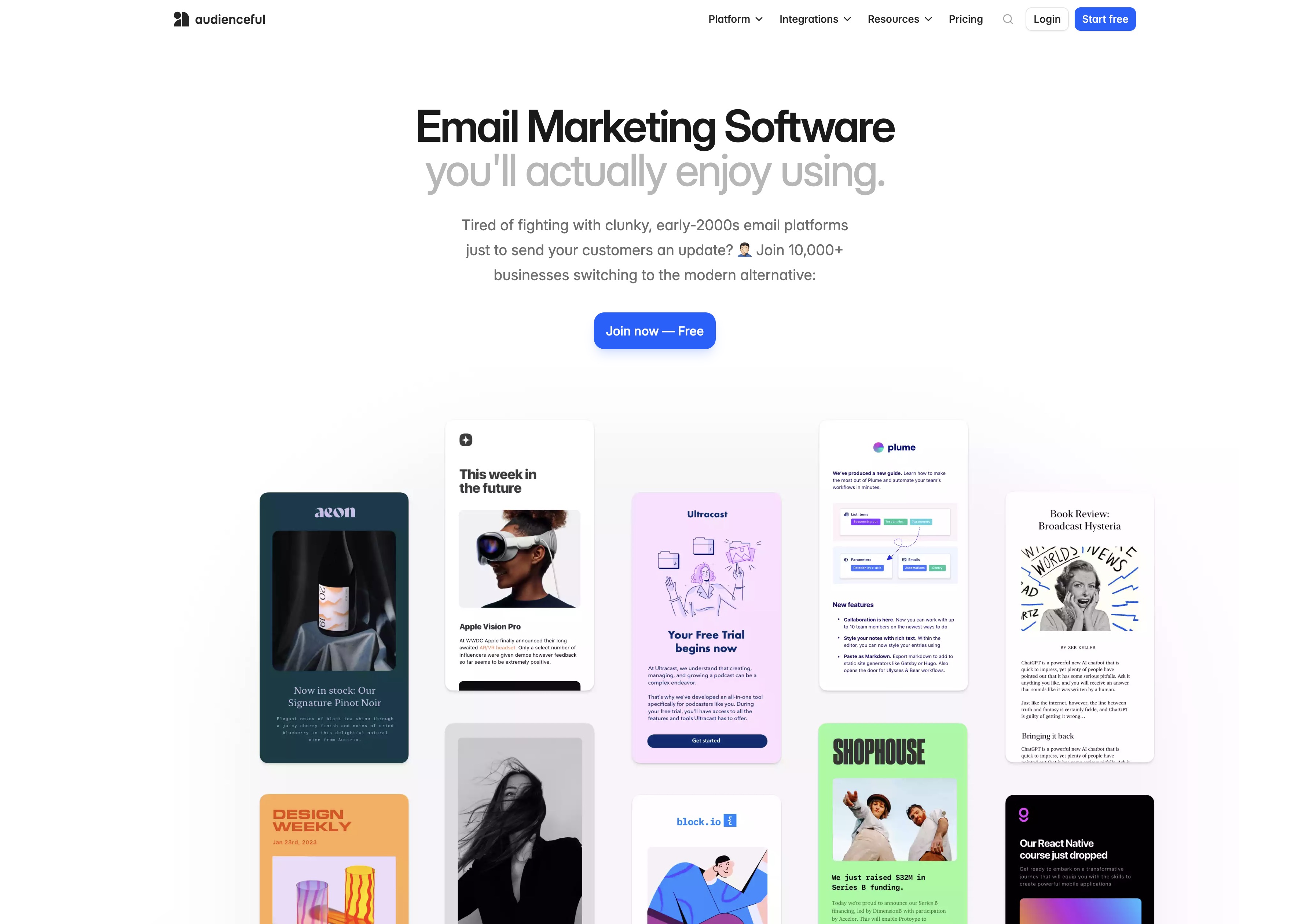
Audienceful is a strong fit when the work you want to move is ecommerce email: purchase-based segments, recovery messages, post-purchase follow-up and campaigns your team creates together. Its native Shopify integration supplies store data, and Stripe covers subscription and payment events for businesses selling software or recurring services.
Use Shopify flow templates to start the rebuild, then apply the timing and exclusions from your ActiveCampaign worksheet. The AI agent can assemble a paused draft from that specification, and the MCP server covers campaigns, segments, flows and newsletters for external agents. Agency-designed templates, revenue attribution and deliverability monitoring support the day-to-day program after the switch.
- Best for: ecommerce and SaaS teams combining revenue-based automation with regular collaborative campaign production.
- Starting price at 10K contacts: Essentials is $79/month billed yearly or $99 monthly, with three automated flows. Growth is $118/month billed yearly or $140 monthly, with unlimited automations. See current plans.
- Ecommerce integrations: native Shopify and Stripe, with store and billing data available for targeting.
- Automation depth: branching workflows, custom events and ready-made Shopify and Stripe flows.
- One drawback: an ActiveCampaign migration still requires workflow mapping and testing; a contact import does not preserve old timers.
Klaviyo: for an ecommerce-focused operating setup
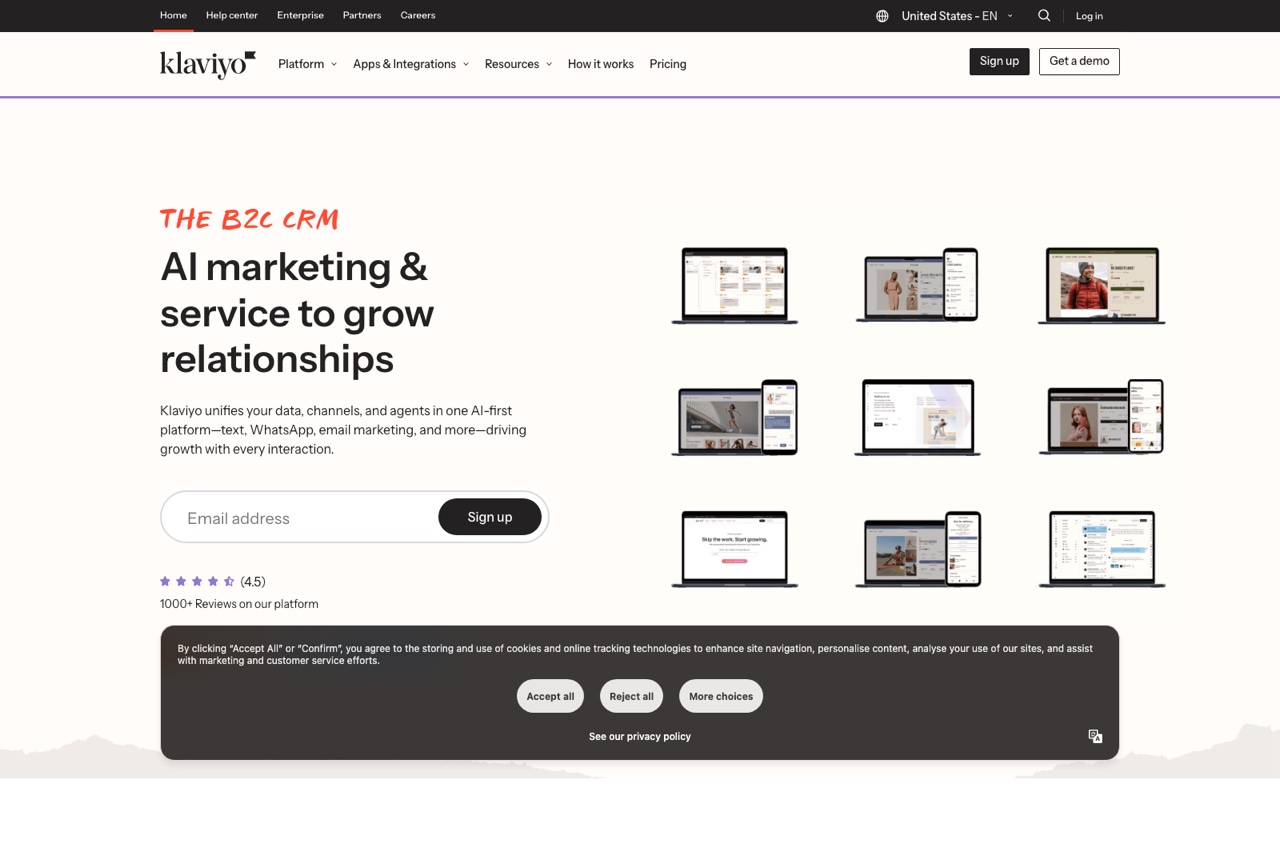
Klaviyo is worth evaluating if your team wants to move away from sales-oriented automation toward a specialist ecommerce environment. Use its Shopify setup and current plan selector to evaluate the actual store and package. If you choose it, follow an ActiveCampaign to Klaviyo migration checklist so tags and live automations move cleanly.
Build the same checkout recovery and repeat-purchase segments you use today. Check how the team investigates a skipped message and whether its purchase exit handles orders that arrive while a reminder is waiting. The operator experience matters as much as the template library.
- Best for: ecommerce teams comfortable operating a broader specialist marketing platform.
- Starting price at 10K contacts: $150/month for the Email plan, before tax and other products.
- Ecommerce integrations: evaluate the native Shopify setup through Klaviyo's Shopify page.
- Automation depth: campaigns, event-triggered flows and behavioral segments; test the conditions your store needs.
- One drawback: the bill follows active profiles, so campaign exclusions alone do not necessarily reduce it.
Omnisend: for email and SMS tied to store activity
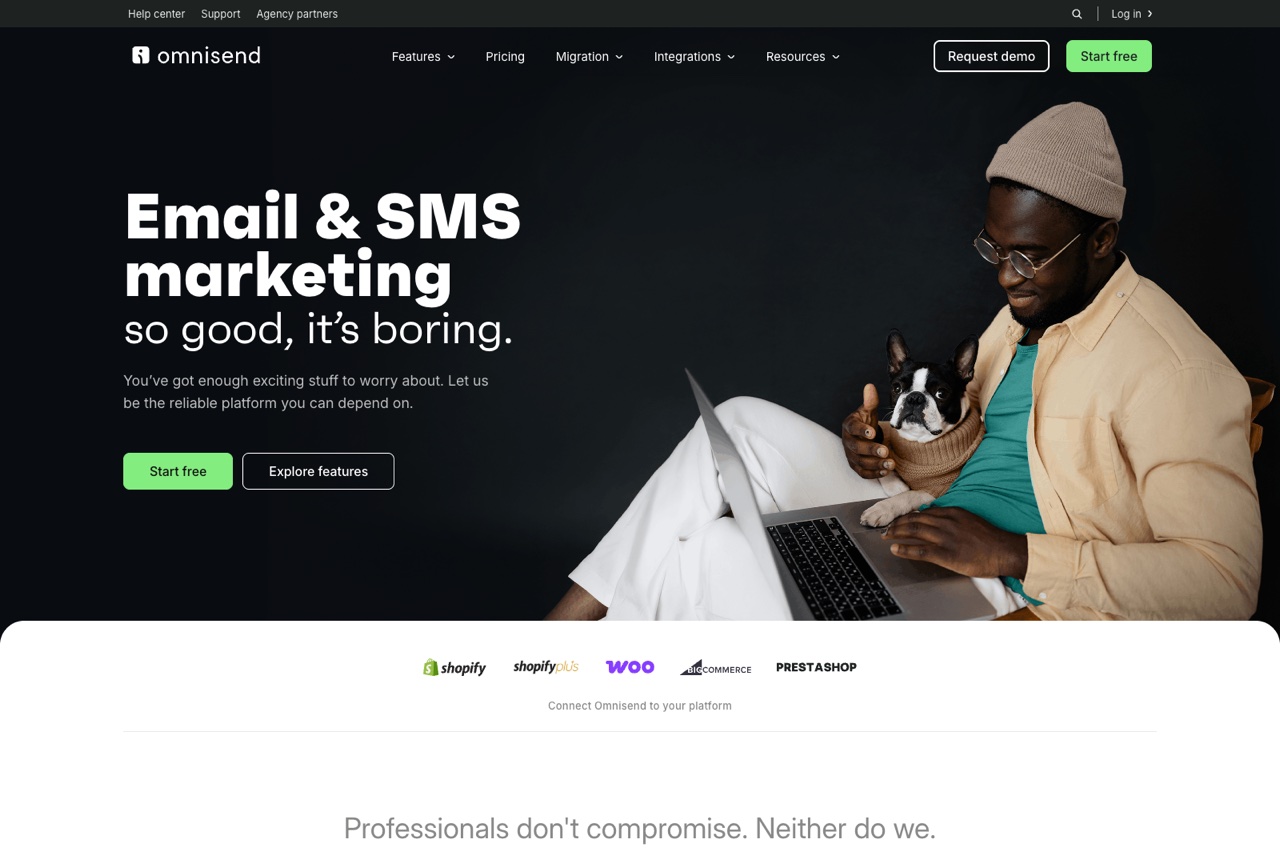
Omnisend is another store-focused option for teams whose program combines email and SMS. Compare its current plans against the channels you actually use, and read the 2026 pricing rules before applying an older quote.
For an ActiveCampaign migration, test whether your tag-driven sequence can become a direct store-event flow. That can reduce the number of intermediate tags your team maintains. Still document each tag's original purpose so a simplification does not remove a useful exclusion.
- Best for: ecommerce teams evaluating email and SMS in a store-focused platform.
- Starting price at 10K contacts: $132/month for Standard or $150 for Pro at regular monthly rates, excluding SMS spend.
- Ecommerce integrations: Shopify and other store connections listed on Omnisend's site.
- Automation depth: prebuilt ecommerce workflows plus plan-dependent custom workflow capabilities.
- One drawback: Standard's 12-times-contact email allowance and Pro's separate SMS budget require a volume calculation.
Drip: for ecommerce workflows and behavior-based segments
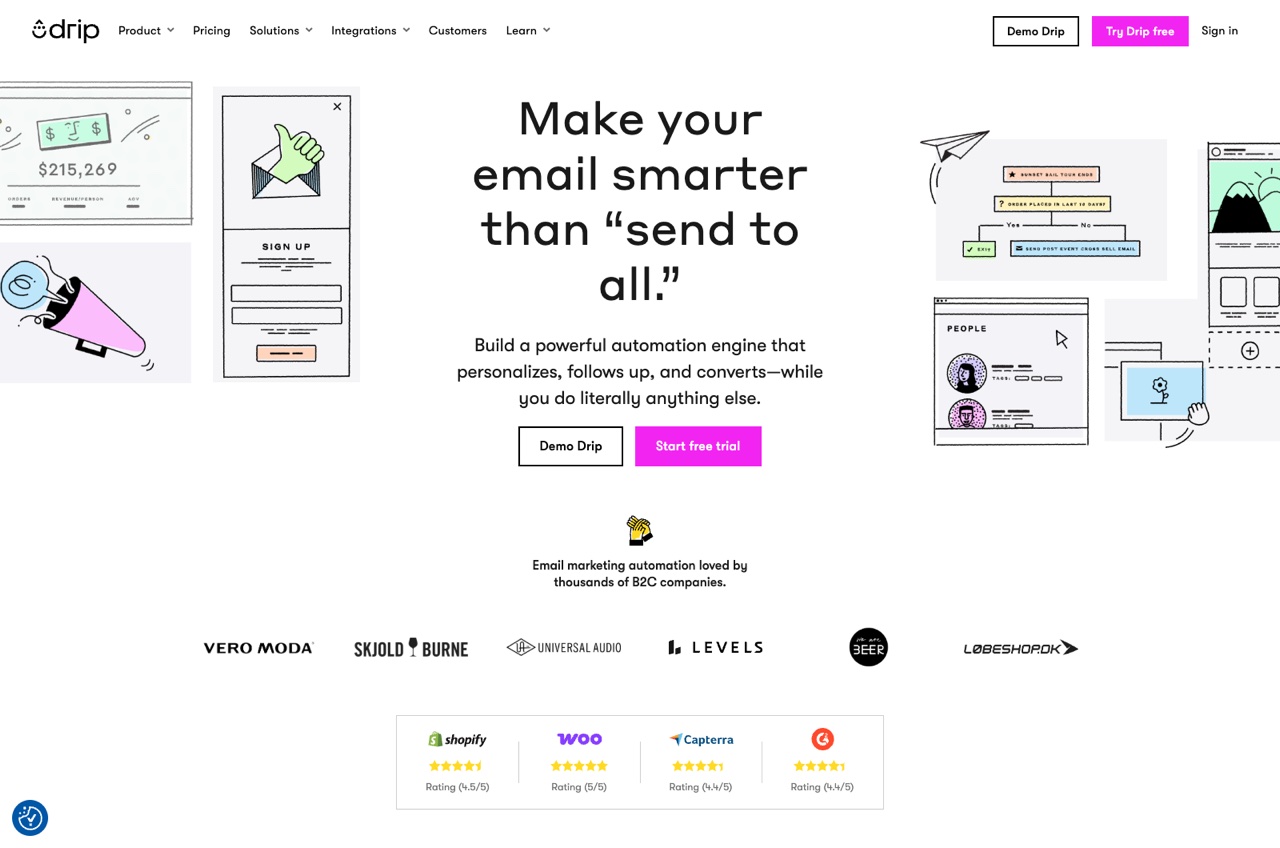
Drip is an ecommerce-focused alternative to a broader sales-and-email stack. Its pricing page lists store integrations, behavioral segmentation, playbooks, revenue reporting and an MCP connection. Evaluate those current capabilities rather than relying on an older comparison that says it has no AI connection.
For an ActiveCampaign move, recreate one revenue-producing journey and inspect the event data that drives it. A direct purchase trigger may replace several tags, but a sales-task action still needs an explicit destination. Keep those operational dependencies in the comparison.
- Best for: store teams evaluating an ecommerce workflow and segmentation platform.
- Starting price at 10K contacts: $154/month; the live selector shows $39 at 2,500 and $699 at 50,000 people.
- Ecommerce integrations: Shopify, WooCommerce and BigCommerce are listed by the vendor.
- Automation depth: ecommerce playbooks and up to 50 workflows in the displayed package; validate your own conditions and counts.
- One drawback: active people and larger-tier sending allowances require a volume and status audit.
See Drip pricing for current limits. Test the complete flow, including what happens after a purchase or unsubscribe, before treating a similar-looking canvas as a finished replacement.
Mailchimp: for general campaigns alongside store email
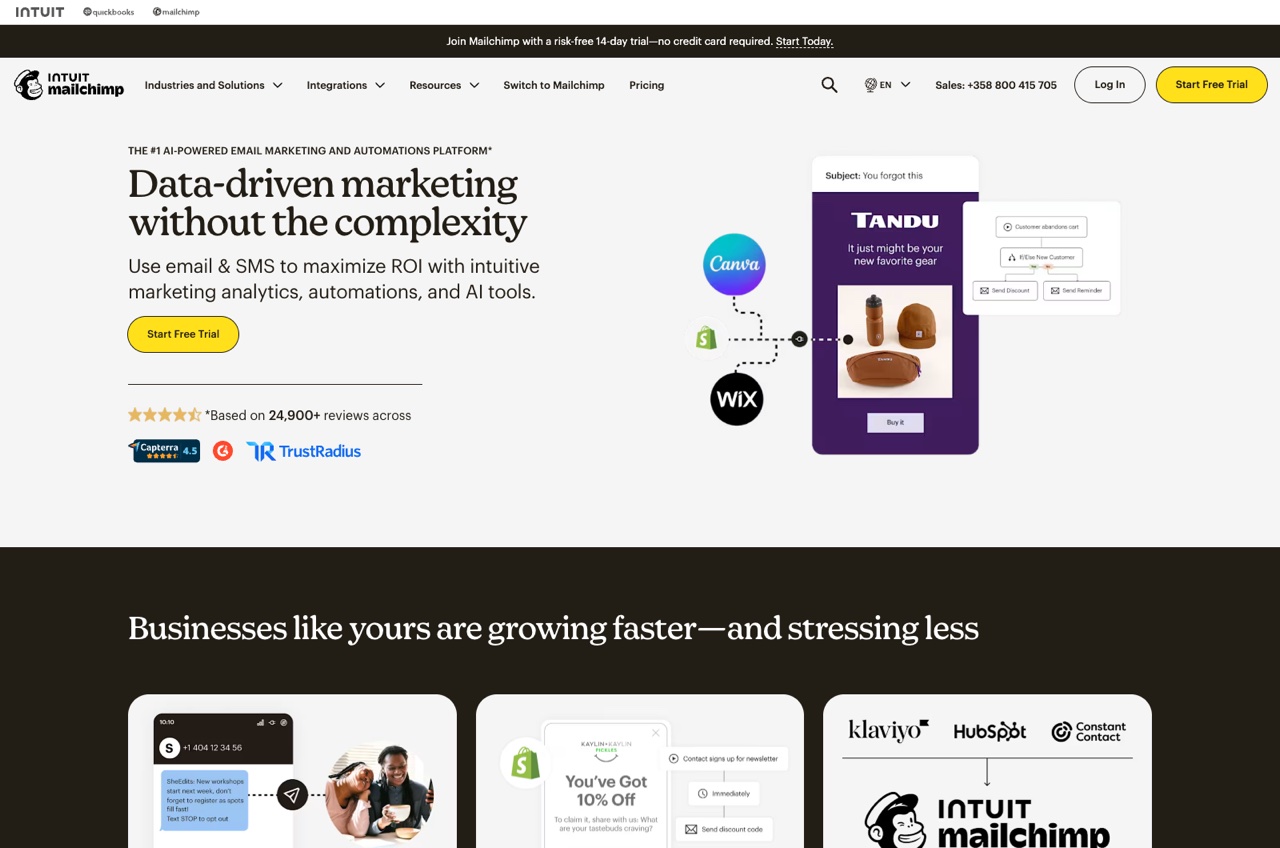
Mailchimp belongs on the shortlist when the business publishes newsletters and announcements alongside ecommerce follow-up. Its official Shopify connection and plan comparison provide the source material for evaluating the store and automation setup.
Compare Standard with the program you run today. A complex ActiveCampaign automation may exceed the cheaper tier's step allowance. If your old lists represent topic preferences, map those preferences deliberately rather than creating several overlapping audiences without checking their behavior.
- Best for: businesses with a substantial general campaign program alongside ecommerce.
- Starting price at 10K contacts: Standard's regular price is $135/month. A temporary promotional rate is not the regular renewal price.
- Ecommerce integrations: an official Shopify app, with setup documented by Mailchimp.
- Automation depth: plan-dependent marketing automation flows; map your sequence lengths and conditions before choosing.
- One drawback: contacts, sends and plan limits all affect the operating cost.
Shopify Messaging: for operating email in Shopify
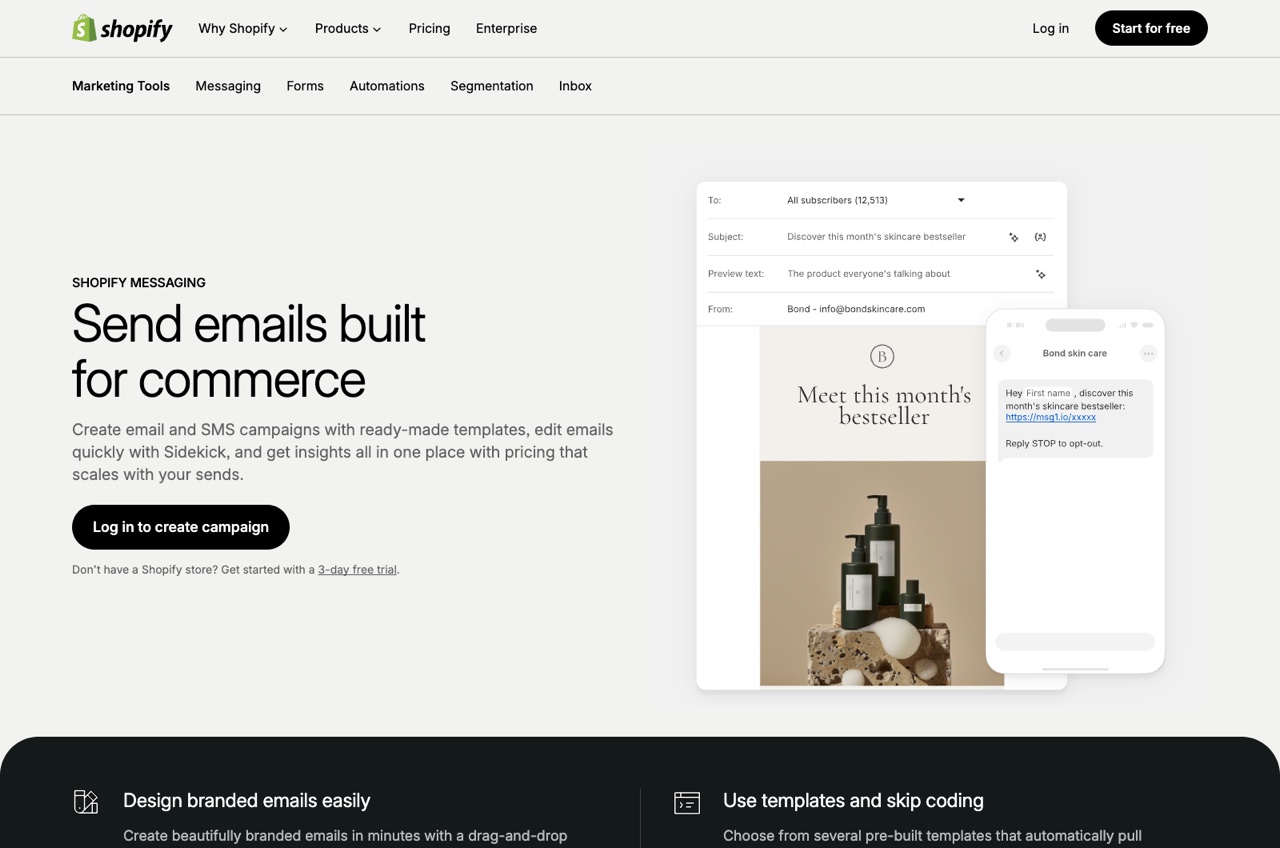
Shopify Messaging can make sense when the business wants email operated from the store admin. Its email-pricing guide bills by sends after the monthly allowance, so an audience size alone is not a full cost model.
Test each flow you intend to retire in ActiveCampaign. In particular, list anything driven by a sales stage, an external signup or an off-store billing event. Decide how that business behavior will continue before choosing solely on campaign sending cost.
- Best for: stores that want to operate email from Shopify and can validate their required automations there.
- Starting price at 10K contacts: $30 for the illustrative four-campaign schedule above, plus the existing Shopify subscription and any other chargeable sends.
- Ecommerce integrations: Shopify itself; evaluate the native customer and order data in your store.
- Automation depth: test your required store automations individually; do not infer flow parity from the campaign editor.
- One drawback: the campaign-only cost does not describe your whole automation program or every external data requirement.
Brevo: for a volume-based messaging budget
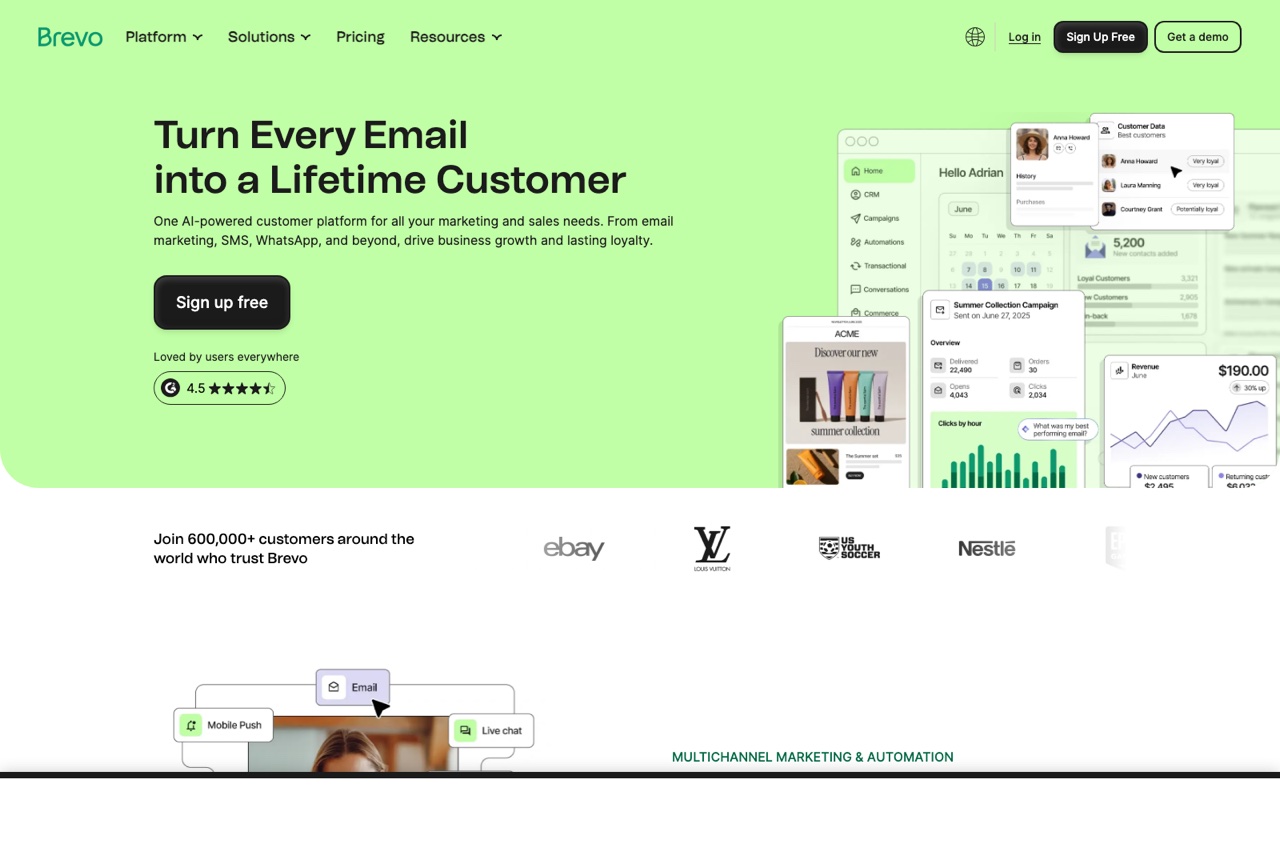
Brevo is useful to evaluate when your requirements span campaigns, transactional messages and volume-based budgeting. Its current pricing page distinguishes entry plans from Standard's multi-step automation and higher-tier ecommerce functions.
Take your contact capacity, campaign frequency and automated-message volume into the quote. Then test a real purchase-based branch and a preference change. A low starting price at a small send allowance is not a quote for a frequently mailed store audience.
- Best for: teams comparing marketing and transactional messaging on a volume-based budget.
- Starting price at 10K contacts: request the Standard quote for the contact capacity and sends you need. The published $18/month entry price is not a verified 10K-contact, 40K-send quote.
- Ecommerce integrations: validate your store connection and event scope through the vendor's integration documentation.
- Automation depth: Standard lists multi-step marketing automation and web/event tracking; advanced ecommerce functions vary by plan.
- One drawback: the cheapest advertised entry price can be misleading without volume, contact and feature requirements.
Ecommerce feature and flow checks
Use the same acceptance tests for every platform. This table is the evaluation worksheet, rather than an unsupported claim that every integration behaves identically.
| Requirement | What to inspect | Example test |
|---|---|---|
| Customer and order sync | Identifiers, history and updates | A repeat buyer with a changed address |
| Product data | Titles, images, variants and URLs | A product with multiple variants |
| Cart activity | Event and recovery-link availability | Add to cart without starting checkout |
| Checkout recovery | Purchase exit and reminder timing | Complete an order while a reminder waits |
| Revenue reporting | Attribution settings and refunds | An order followed by a partial refund |
| Consent | Store and email preference behavior | Unsubscribe during an active sequence |
Audienceful supplies Shopify templates for welcome, browse and cart follow-up, checkout recovery, post-purchase, review requests, replenishment, VIP and win-back. Start from those recipes, then test the behavior your store needs.
For each competing tool, inspect its current recipe library and plan documentation. Sources include Klaviyo flows, Drip playbooks, Omnisend plans, Mailchimp flows and the relevant Shopify or Brevo documentation.
| Flow family | What a template should save you | What still needs checking |
|---|---|---|
| Welcome | Initial trigger and message sequence | Consent, imported contacts and existing buyers |
| Browse and cart | Event-based follow-up structure | Identity, tracking scope and recovery link |
| Checkout | Reminder structure | Completed orders stop the flow |
| Post-purchase and reviews | Order or fulfillment timing | The product and review destination |
| Replenishment | A delayed repeat-purchase message | Product-specific timing and subscriptions |
| Win-back and VIP | Defined purchase-state targeting | New orders and refunds update eligibility |
Compare costs at the same audience size
USD, checked 14 November 2026. The billing terms are part of the comparison, and SMS, taxes and add-ons are excluded.
| Platform | 1,000 contacts | 10,000 contacts | 50,000 contacts | 100,000 contacts |
|---|---|---|---|---|
| ActiveCampaign Plus, yearly | $49 | $189 | $609 | Sales quote |
| Klaviyo Email, monthly | $30 | $150 | $720 | $1,380 |
| Omnisend Standard, monthly | $20 | $132 | $413 | $900 |
| Drip, monthly | $39, on its 2.5K tier | $154 | $699 | $1,199 |
| Mailchimp Standard, monthly | Check current selector | $135 | $450 | Check current selector |
| Shopify Messaging, four campaigns | $0 | $30 | $190 | $355 |
| Brevo Standard | Volume quote | Volume quote | Volume quote | Volume quote |
Sources: ActiveCampaign, Klaviyo, Omnisend, Drip, Mailchimp, Shopify, Brevo.
For the likely 10K-or-larger audience here, Audienceful Growth is $118 at 10K, $309 at 50K and $499 at 100K per month billed yearly, with unlimited automations. Essentials has a lower price and three automated flows. Use the plan comparison that matches your actual flow count.
The Shopify figures are derived campaign-only examples at four full-list sends per month. They exclude the required Shopify subscription and other chargeable messages. The other rows also have different sending, seat and feature allowances. Compare the program you need, not a row of numbers without its terms.
When staying on ActiveCampaign makes sense
Stay if the current setup meets your needs and the business depends on sales actions, deal relationships and integrations that would be costly to move. A mature workflow that reliably turns qualified leads into wholesale orders can justify more setup than a simple campaign program.
Before replacing it, price three options: clean up and resize the current account, move email while retaining the sales setup, or move the full stack. Include the work needed to preserve field ownership and subscription status in a split setup.
The current plan matrix helps identify which products and tiers you actually use. A lower-cost email platform is not automatically a replacement for every tool in that account.
Migrate tags and automations without restarting every customer
The full ActiveCampaign migration guide includes the export steps and automation worksheet. The short version is:
- Export contacts with tags and fields, plus separate status and preference groups.
- Map tag meaning before merging or renaming anything.
- Document triggers, waits, branches, goals and sales actions.
- Choose what happens to people already waiting in each flow.
- Connect store data, establish exclusions and test a representative import.
- Rebuild and test the revenue-producing flows.
- Authenticate, warm up and move new entries under a recorded cutoff.
- Replace forms and tracking, reconcile recent preferences and cancel last.
Do not replay old events into live triggers or treat list membership as consent. Use the migration overview and warming guide to plan the destination setup.
For more context, compare Audienceful and ActiveCampaign, the wider Klaviyo alternatives and Omnisend alternatives.
FAQs
Is ActiveCampaign good for ecommerce?
It documents ecommerce integrations and automation. The question is whether the required plan, store data and sales workflow fit your business. Test real recovery and repeat-purchase journeys before deciding.
What is better than ActiveCampaign for Shopify?
Audienceful is our pick for native Shopify flows, collaborative editing and AI-agent operation. Klaviyo, Omnisend and Drip also deserve evaluation. The right answer depends on the flows and non-email dependencies you need to preserve.
Is Klaviyo better than ActiveCampaign?
For a store-focused program, Klaviyo is a relevant specialist alternative. For a process tied to deal stages and sales actions, ActiveCampaign may remain useful. Compare the actual business workflow rather than a universal feature count.
Why did my ActiveCampaign bill go up?
Compare invoices, contact bands, plan, seats, add-ons and renewal terms. Do not assume a contact cleanup automatically changes the contracted price. Check the current billing and plan details for your account.
Can I migrate my ActiveCampaign automations?
You can rebuild equivalent behavior, but a contact import does not preserve executable flow logic or timers. Use a worksheet, test the replacement and choose a policy for existing recipients.
Ready to rebuild your store's email? Start an Audienceful trial, connect Shopify and test the automation templates against your current flows.
