The best email marketing for subscription ecommerce depends on where subscriptions are billed and which lifecycle events the platform receives. Audienceful is a strong first option for Stripe-billed subscriptions and Shopify brands that want native store data, branching flows, attribution and collaborative editing. For Recharge, Skio or Loop, verify the app-specific events before choosing: an ordinary order sync does not establish renewal, pause or failed-payment coverage.
We make Audienceful and list it first. Prices were checked 14 November 2026 where stated; quotes and integration checks are labelled separately. The recommendations below focus on retention and payment recovery as well as acquisition.
Best for use case
| Tool | Best for use case | First test |
|---|---|---|
| Audienceful | Native Stripe lifecycle plus Shopify email operations | Failure, recovery and subscription-state exits |
| Klaviyo | Shopify subscription brands using documented app integrations | App event and property mapping |
| Omnisend | Stores evaluating subscription email and SMS together | Selected app's webhook and contact properties |
| Drip | Ecommerce teams assessing product and purchase-driven retention | Recurring-order context and lifecycle data |
| Sendlane | Large databases with a send-based budget | Actual campaign and automation volume |
| Mailchimp | Existing Mailchimp teams adding supported subscription data | Required plan and preference mapping |
| Subbly built-ins | Brands already operating their subscriptions in Subbly | Native notifications versus marketing requirements |
| Cratejoy built-ins | Box businesses evaluating their existing platform's messaging | Operational notices and retention journeys |
How to choose the best email marketing for subscription ecommerce
A recurring order and a renewed subscription are related, but they are not the same event. An order may be one-time, prepaid or generated by a subscription. A pause can preserve the relationship without generating a new order, and a failed renewal may require payment recovery before fulfillment exists.
Inventory subscription started, next charge date, renewal succeeded, payment failed, payment recovered, skipped, paused, cancelled and reactivated. Keep product, variant, billing interval and customer identity beside those events.
Then assign one sender to each message purpose. The subscription app, billing provider and ESP can all have reminder settings. Two systems sending the same failed-payment message can confuse the customer and make recovery results hard to interpret.
Subscription-app integration matrix
“Documented” means the linked vendor source lists a supported connection; it does not mean every event, historical record or plan is included. “Verify” means this guide does not establish a native connection, rather than asserting one is impossible.
| Email option | Recharge | Skio | Loop Subscriptions | Stripe |
|---|---|---|---|---|
| Audienceful | Map app-specific custom events | Map app-specific custom events | Map app-specific custom events | Native billing integration |
| Klaviyo | Documented | Documented | Documented | Documented invoice/payment integration |
| Omnisend | Partner-supported listing | Documented webhook integration | Documented | Verify selected route |
| Drip | Verify selected route | Verify selected route | Verify selected route | Verify selected route |
| Sendlane | Verify selected route | Verify selected route | Documented | Verify selected route |
| Mailchimp | Documented listing | Verify selected route | Verify selected route | Verify selected route |
| Subbly built-ins | Different subscription platform | Different subscription platform | Different subscription platform | Verify your billing arrangement |
| Cratejoy built-ins | Different subscription platform | Different subscription platform | Different subscription platform | Verify your billing arrangement |
Sources: Recharge supported apps, Recharge and Klaviyo, Skio and Klaviyo, Skio and Omnisend, Loop email integrations, Klaviyo and Stripe, and Audienceful and Stripe.
For Audienceful, native Shopify events cover store behavior; app-specific subscription state can be mapped through custom events and maintained fields using the supported integration route. Do not relabel ordinary order data as a verified Recharge, Skio or Loop lifecycle event.
Audienceful
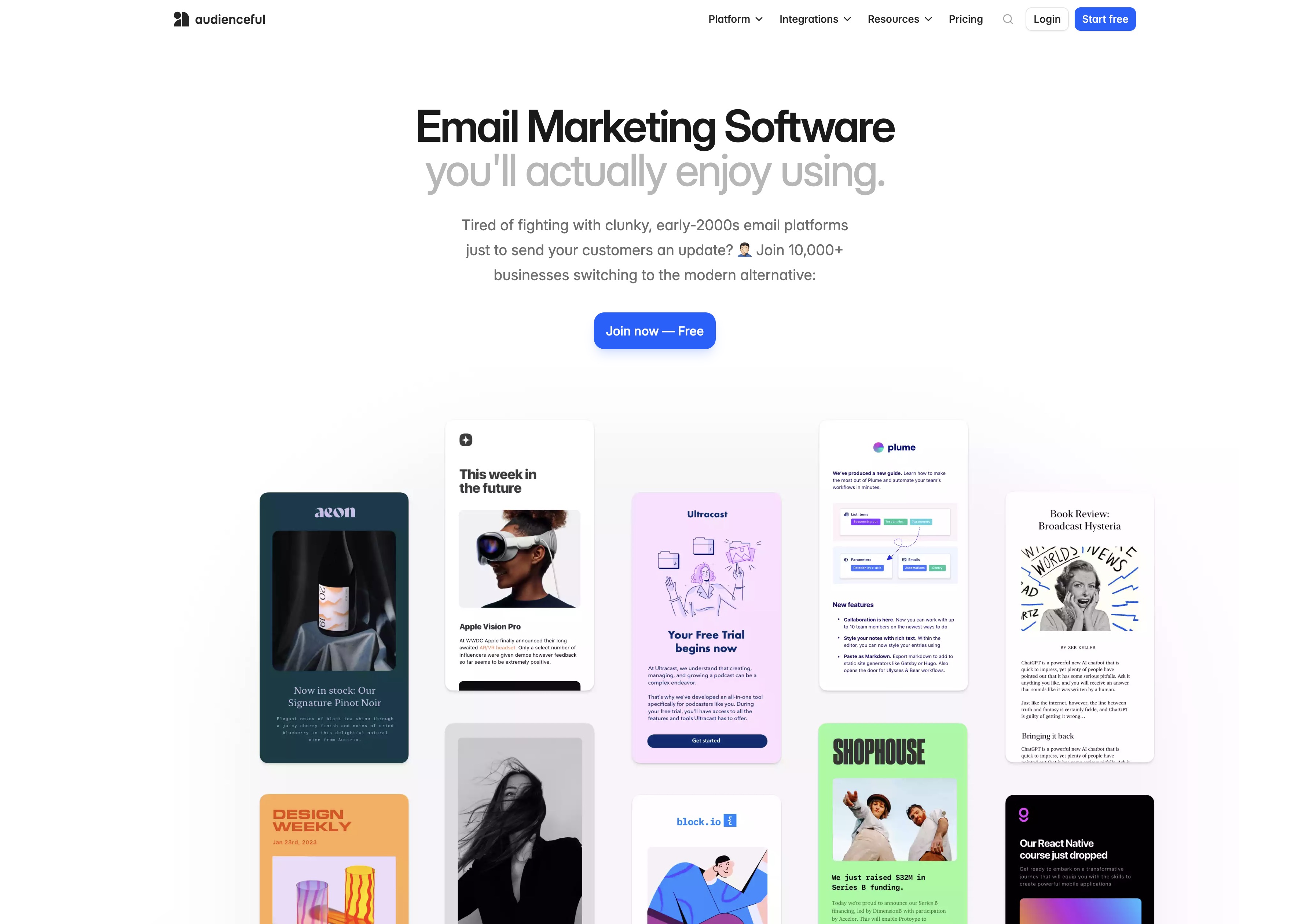
Best for: Stripe-billed subscriptions and Shopify teams that want lifecycle flows, newsletters and collaborative production in one workspace.
Starting price at 10K contacts: Growth is $118/month equivalent billed yearly, or $140 monthly, for a program needing unlimited flows. This is lower than the checked $150 Klaviyo Email monthly base at 10K; compare commitments and allowances.
Ecommerce integrations: Native Shopify and Stripe, with custom events for additional application-specific state.
Automation depth: Branching workflows, goals and custom events, with Stripe and Shopify templates for billing and store journeys.
One drawback: A migration still requires mapping the subscription app's event semantics and deciding which existing notification system remains responsible for each message.
Audienceful's native Stripe data supports onboarding, trial-ending, failed-payment and win-back structures. Shopify data supports post-purchase education, replenishment, VIP and lapsed-customer journeys. Keep those two paths distinct when your subscription system owns information not present in an order.
The AI agent and complete MCP coverage let an agent manage campaigns, segments and flows. Collaborative editing, agency-designed templates, revenue attribution and enterprise-grade delivery monitoring support the people operating the program. Use the dunning guide to test failure and recovery before activating the sequence.
Klaviyo
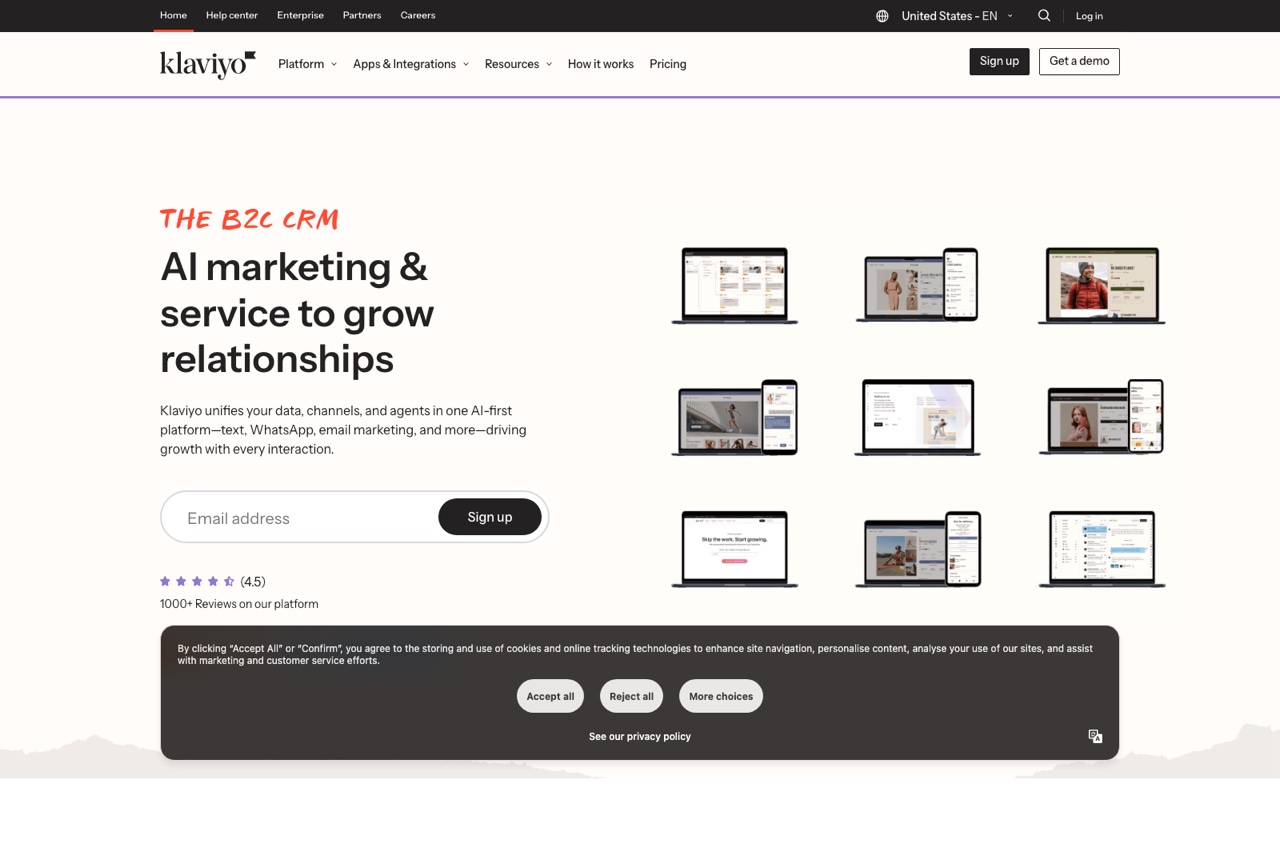
Best for: Shopify subscription brands whose app has a documented Klaviyo integration and whose team wants to operate the resulting flows there.
Starting price at 10K contacts: $150/month for the checked Email tier, before SMS and additional purchases.
Ecommerce integrations: Shopify, documented Recharge, Skio and Loop routes, plus Stripe invoice/payment data as linked in the matrix.
Automation depth: Event-driven flows and segmentation; validate the subscription event, property and exit supplied by the selected app.
One drawback: Active-profile billing can include a broader population than the subscribed recipients you currently mail, so audit the post-sync count.
Recharge's current integration guide distinguishes the newer Recharge-owned integration from the legacy version. Check which one is installed before copying an old event tutorial.
Test renewal reminders, pause and cancellation events with the subscription app. For billing data, a successful payment metric is not automatically equivalent to every subscription-state change. See Klaviyo pricing and Audienceful versus Klaviyo for the wider comparison.
Omnisend
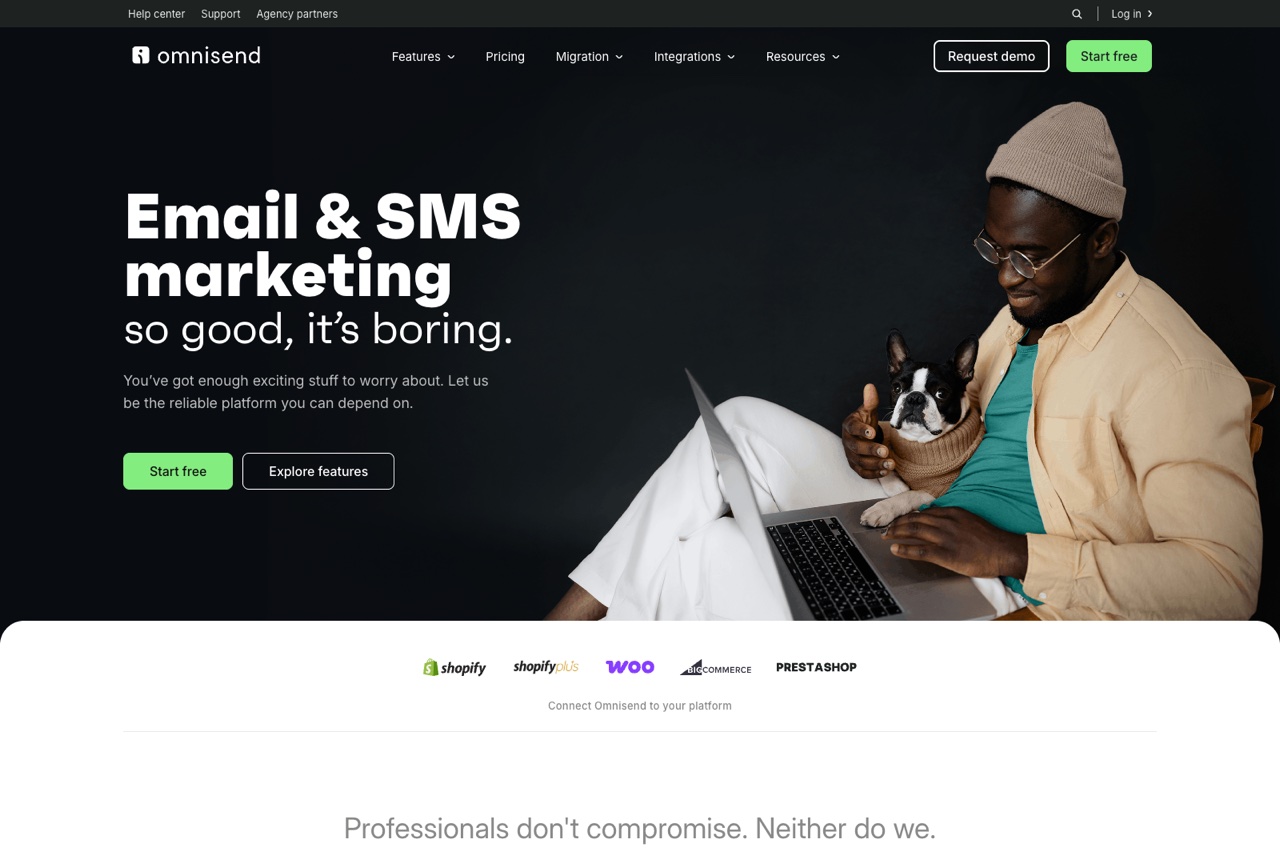
Best for: Subscription stores evaluating email and SMS together with a supported app route.
Starting price at 10K contacts: Standard is $132/month and Pro $150/month in the checked regular monthly selector; SMS and package conditions are separate.
Ecommerce integrations: Store integrations and documented Recharge, Skio and Loop routes, with ownership and setup varying by app.
Automation depth: Subscription events can trigger journeys when the selected connection supplies them; verify event versus persistent-property use.
One drawback: An app connector can have historical-data and segmentation conditions that are easy to miss in a generic feature list.
Skio's Omnisend guide describes real-time webhook events, contact properties and a lack of historical subscription-event backfill through that route. That means a new connection and a complete historic subscriber audience are separate tasks.
Test one new subscription and one existing customer after setup. Confirm renewal, failure, pause and cancellation behavior before transferring messages. Our Omnisend pricing guide explains the selected plan and send allowance.
Drip
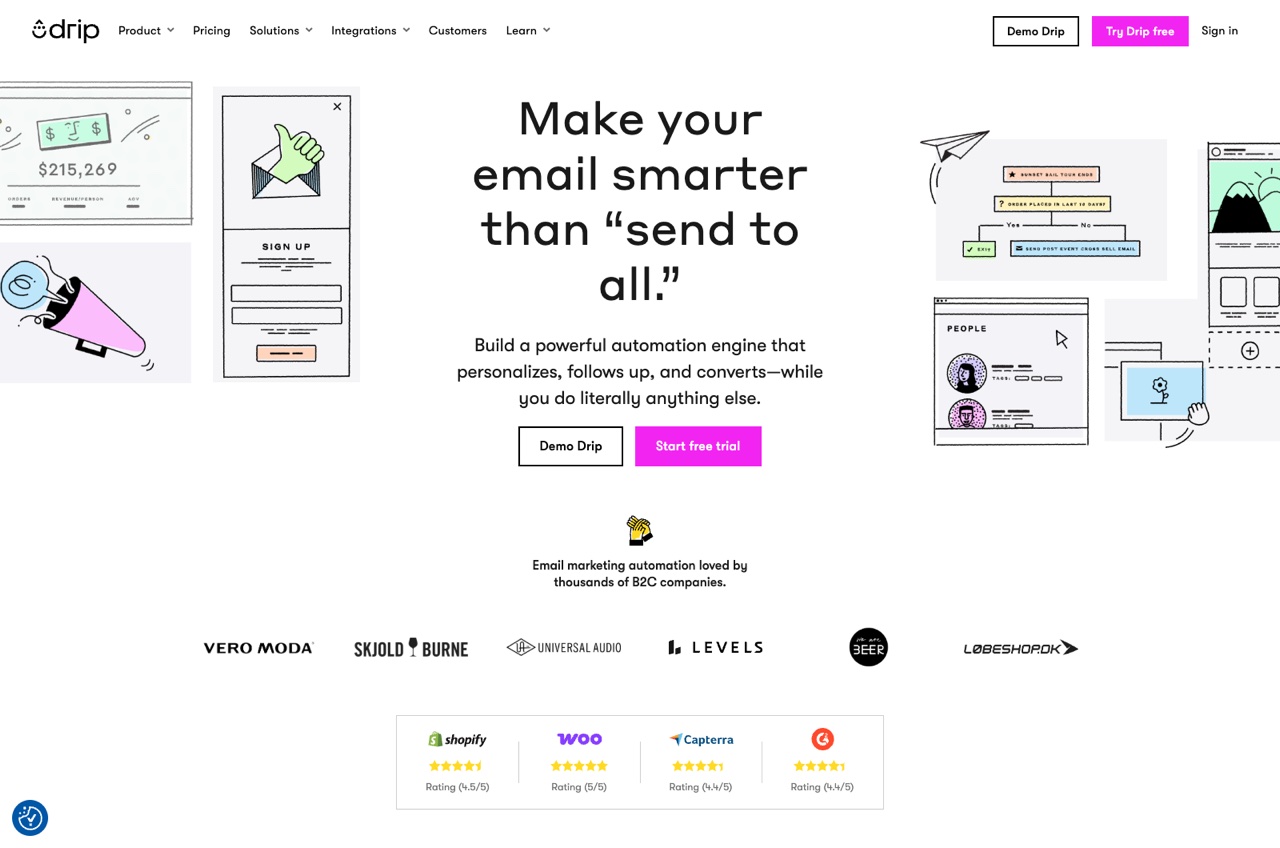
Best for: Ecommerce teams evaluating product and purchase-driven lifecycle retention.
Starting price at 10K contacts: $154/month in the checked selector.
Ecommerce integrations: The current package lists store integrations; confirm the selected subscription app's lifecycle route separately.
Automation depth: Ecommerce workflows, segmentation and onsite functionality, with up to fifty workflows in the checked package.
One drawback: An active person can remain billable without being an email subscriber, so the database needs a deliberate retention policy.
Drip deserves a test when recurring purchases and product-specific education drive the program. Do not assume it sees a subscription pause or next charge merely because it sees orders. Ask the app vendor to demonstrate the actual event route and ongoing field updates.
The Drip pricing guide covers the full checked ladder and larger-tier sending caps. Use the active-person definition when estimating the retained database.
Sendlane
Best for: Subscription brands with large stored databases and a send-volume budget they can forecast.
Starting price at 10K contacts: Contact count alone does not set the price. The checked entry is $100/month for 50K sends; eight full-list campaigns use 80K before flows and require its checked 100K-send tier at $200.
Ecommerce integrations: Evaluate the store data and documented Loop connection; confirm other app routes separately.
Automation depth: Test subscription event entry, branches, message timing and recovery exits on the selected integration.
One drawback: Heavy lifecycle activity can move the required send tier even when the contact count is unchanged.
A subscription brand's automated volume can be meaningful: renewal reminders, payment recovery, pause follow-up and post-shipment education all add messages. Use actual prior-month sends and the planned flows before choosing a package.
Sendlane's current pricing and our pricing explainer separate annual totals, monthly options and SMS questions. A claim that send-based pricing always wins for a large database ignores how often that database is contacted.
Mailchimp
Best for: An existing Mailchimp team whose subscription integration and selected feature plan meet the required lifecycle behavior.
Starting price at 10K contacts: Standard is $135/month in the checked regular monthly selector, before other products and usage.
Ecommerce integrations: Native Shopify and a Recharge listing in the supported-app matrix; confirm the exact subscription data delivered.
Automation depth: Plan-dependent journey entitlements; test the longest required flow and its branches on the quoted package.
One drawback: Several audiences can duplicate stored people, while permission and billing states need separate handling.
Do not migrate simply because an older article says Mailchimp cannot connect Shopify. Inspect the current sync behavior and the subscription app's route. Then test cancellation, pause and recovery as well as a basic purchase.
If the current bill is the issue, audit it first. Cleaning duplicated or unused storage can clarify whether the product fit or the database policy is the real problem.
Subbly built-in messaging
Best for: A brand already operating its subscription business in Subbly that wants to evaluate existing operational messaging before adding another ESP.
Starting price at 10K contacts: Obtain the current platform-and-email quote; do not treat a store-platform entry price as a verified 10K-contact ESP price.
Ecommerce integrations: The subscription platform is part of the business stack; verify any external store, billing and email connections in Subbly's current documentation.
Automation depth: Demonstrate the exact lifecycle messages and any external event handover your account supports.
One drawback: Moving subscription operations and moving email are different projects, so a platform change can add work far beyond the marketing program.
Start with what the existing platform already sends. Record operational renewal and account messages, then identify the marketing journeys that still need a separate tool. Avoid replacing a working billing reminder with an untested duplicate.
If adding an ESP, define the event and consent contract between the two systems. Keep subscription state authoritative in the service that actually manages it.
Cratejoy built-in messaging
Best for: Subscription-box businesses already using Cratejoy and reviewing the role of their current messaging before purchasing another platform.
Starting price at 10K contacts: Request a current quote for the actual subscription setup and email requirements.
Ecommerce integrations: Confirm the active store and marketplace arrangement in Cratejoy's official resources, plus any external email route.
Automation depth: Evaluate operational notices, marketing sequences and the data available to a connected ESP separately.
One drawback: A marketplace or subscription-platform relationship is not directly comparable with a standalone email subscription on price alone.
A box business needs messages tied to fulfillment, billing and subscriber expectations. Inventory those existing paths before adding another sender. Then test whether the selected route preserves the distinction between active, paused, skipped and cancelled customers.
Use a separate email platform where it solves a defined production or lifecycle requirement. Keep the complete customer experience on the acceptance sheet, including links back to the correct account portal.
Seven subscription flows and useful starting timing
The timings below are planning examples, not universal requirements or conversion benchmarks. Match them to the billing terms, customer promise, product cycle and existing provider notices.
| Flow | Example starting timing | Stop or change when |
|---|---|---|
| Subscription welcome | Immediately after confirmed signup | The required first step is completed |
| Upcoming renewal | Several days before the real charge date | Subscription is skipped, paused or cancelled |
| Payment failure | After a confirmed failure, coordinated with retries | Payment recovers or the invoice is no longer due |
| Pause/skip follow-up | After the customer makes that choice | Their next action changes the plan |
| Product education | Around delivery or expected first use | Content is no longer relevant to the purchased item |
| Replenishment | Based on actual product usage cycle | A qualifying reorder occurs |
| Win-back | After a relevant cancellation or lapse interval | Customer returns or opts out |
For payment recovery, separate the billing retry schedule from the message schedule. The Stripe automation guide and failed-payment flow show the event/exit approach. For physical products, read replenishment email and win-back email.
Measure churn and dunning with the right denominator
Track voluntary cancellations separately from involuntary payment loss. Define recovery as a paid invoice or restored subscription within a stated window, not merely a click on the billing link.
Recurly's benchmark definitions distinguish churn, renewal declines and dunning recovery. Its subscriber methodology also explains cohort eligibility and monthly measurement. Compare like periods and business types rather than mixing a monthly churn percentage with an annual one.
For retention context, Recurly's 2026 subscription report says returning subscribers account for nearly one in four new signups and reports that three in four subscribers who pause eventually return. These are observations from its dataset, not a promise that adding one email flow causes the same result for your store.
Establish your own baseline before testing new messages. Track failed invoices, recovered invoices, recovery time, pause returns and repeat purchase behavior alongside attributed email revenue. Keep a comparison cohort where practical so a seasonal promotion is not mistaken for a platform effect.
FAQs
What emails should a subscription brand send?
Start with welcome, renewal, payment recovery, pause/skip follow-up, product education, replenishment and win-back. Match the messages to actual subscription events and avoid duplicating the billing platform's existing notices.
How do you reduce subscription churn with email?
Address a specific reason to leave: unclear product value, poor timing, payment failure or an unsuitable delivery interval. Use the relevant event and a clear action, then measure actual retention or recovery rather than opens alone.
Do I need abandoned cart emails for a subscription store?
They can support acquisition, but they do not replace renewal, pause and recovery journeys for existing subscribers. Use a purchase exit and keep the acquisition and retention flows distinct.
What is a dunning email?
It asks a customer to resolve a failed or overdue payment through a trusted billing path. Coordinate messages with retries and stop after recovery so a paid customer does not keep receiving failure reminders.
Which email tools integrate with Recharge?
Recharge documents supported connections including Klaviyo and Mailchimp, and partner-supported Omnisend. Confirm your checkout setup, plan, integration version and required events using the linked app documentation. Our guide to Recharge email flows covers the eight flows to build once data arrives.
Does Stripe send failed-payment emails?
Review the recovery and notification settings active in your Stripe account before adding ESP messages. Assign one owner per reminder purpose and test failure and successful recovery in the complete setup.
Billing on Stripe or rebuilding Shopify retention flows? Start with Audienceful and test one renewal or recovery journey against real subscription state.
