The best ecommerce email automation software triggers on what shoppers actually do in your store, branches on order data, and tells you what each flow earned. For Shopify stores, Audienceful is our pick: nine ready-made Shopify flows, on-site product-view and add-to-cart triggers, per-flow revenue attribution, and an AI agent that builds a whole automation from a brief. Klaviyo has the deepest established flow library, Omnisend pairs flows with SMS, and Drip, ActiveCampaign, Mailchimp, Sendlane, Brevo and Shopify Messaging each fit a narrower need.
We make Audienceful, so it goes first. Competitor prices and capabilities were checked on vendor pages on 14 November 2026. Screenshots come from our competitor library and show vendor websites, not flow builders.
Most "best email marketing" lists judge campaigns and templates. This one judges automation only. If you want the broader picture, read our ecommerce email marketing guide or the ecommerce email service provider guide.
Best ecommerce email automation software: Best for use case
| Tool | Best for use case | Price at 10K contacts | Flow revenue reporting |
|---|---|---|---|
| Audienceful | Shopify automation with per-flow attribution and AI flow building | $118/month billed yearly (Growth, unlimited flows) | Per email and per flow |
| Klaviyo | The largest established flow library | $150/month | Per email and per flow |
| Omnisend | Flows that mix email, SMS and push | $132/month | Per workflow |
| Drip | Visual workflows with ecommerce playbooks | $154/month | Per email and workflow |
| ActiveCampaign | Complex automation with CRM actions | $189/month (Plus, yearly) | Plan-dependent |
| Mailchimp | Simple journeys next to a newsletter | $135/month (Standard) | Ecommerce reports |
| Sendlane | Send-based pricing for large lists | From $100 for 50,000 sends | Revenue reporting |
| Brevo | Workflows with transactional email in one tool | Priced by sends | Plan-dependent |
| Shopify Messaging | Basic flows inside Shopify | By emails sent | Shopify reports |
What ecommerce email automation means
Ecommerce email automation sends an email because a shopper did something: signed up, viewed a product, added to cart, started checkout, bought, or stopped buying. A good tool does four things well.
- Triggers on store events. Product viewed, added to cart, checkout started, order placed, order fulfilled, and custom events from other apps.
- Branches on data. First order versus repeat, order value, product bought, country, engagement.
- Exits at the right moment. A buyer leaves the cart flow the second the order lands.
- Reports revenue per flow. So you can see which automation to improve next.
The difference between tools shows up in points 1 and 3. Plenty of software can send "abandoned cart" emails. Fewer can tell a cart from a checkout, and fewer still stop cleanly after purchase. Our guide to abandoned checkout vs abandoned cart explains why that matters.
Automation capability matrix
Checked against vendor documentation on 14 November 2026. "Check vendor" means the vendor's public pages didn't settle it for us, not that the feature is missing.
| Tool | Browse and add-to-cart triggers | Checkout and order triggers | Conditional splits | Pre-built ecommerce flows | Custom events | AI flow building |
|---|---|---|---|---|---|---|
| Audienceful | Yes, via Shopify app embed | Yes | Yes | Nine Shopify flows | API and Zapier | Agent builds whole flows |
| Klaviyo | Yes | Yes | Yes | Large library | Yes | Check vendor |
| Omnisend | Yes | Yes | Yes | Yes | Yes | Check vendor |
| Drip | Check vendor | Yes | Yes | Playbooks | Yes | Check vendor |
| ActiveCampaign | Check vendor | Plan-dependent | Yes | Recipes | Yes | Check vendor |
| Mailchimp | Check vendor | Yes | On Standard | Pre-built journeys | Yes | Check vendor |
| Sendlane | Check vendor | Yes | Yes | Yes | Yes | Check vendor |
| Brevo | Check vendor | Store-dependent | Yes | Templates | Yes | Check vendor |
| Shopify Messaging | Yes | Yes | Limited | Shopify templates | No | Check vendor |
Audienceful: for Shopify automation with per-flow attribution
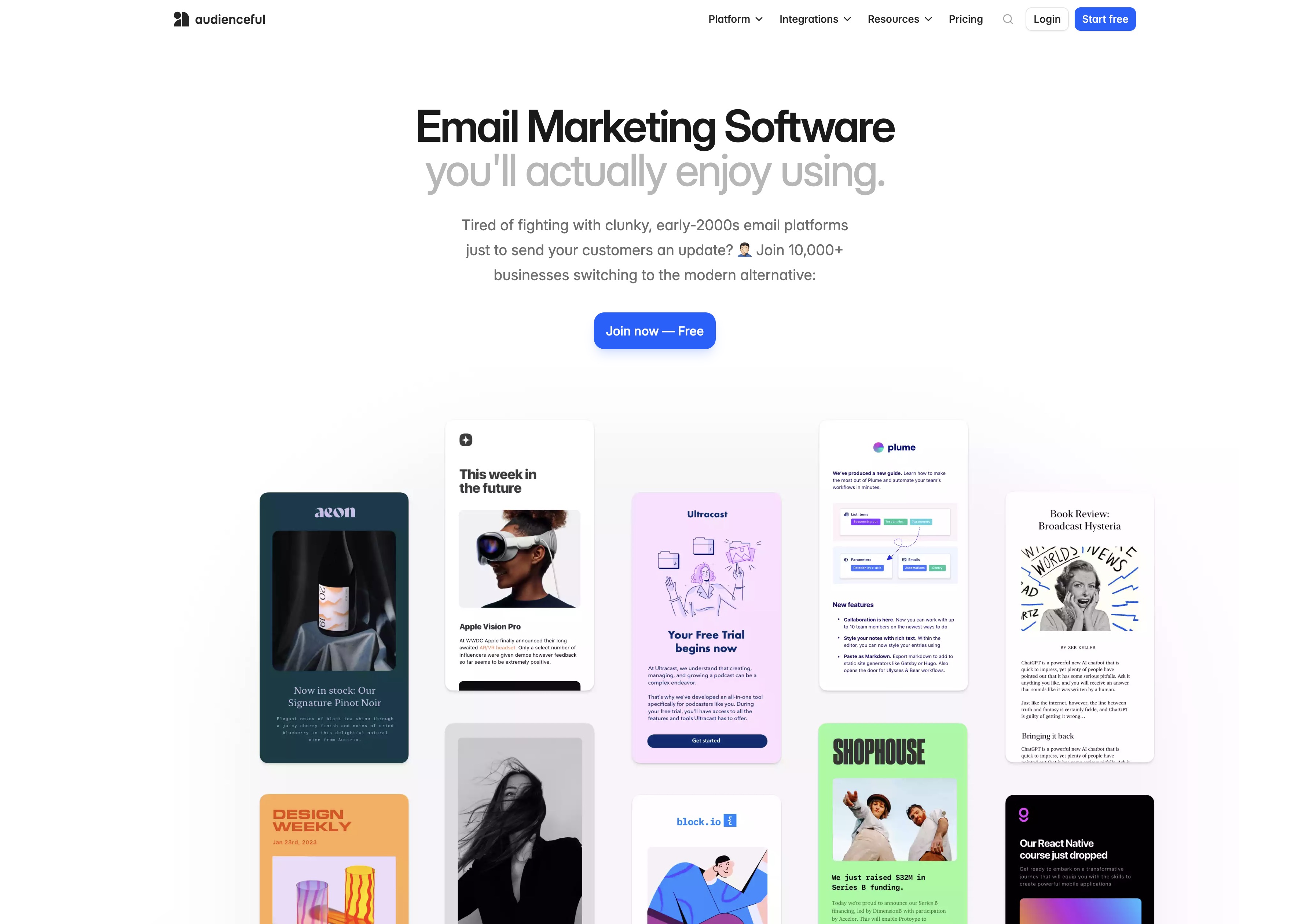
Audienceful's Shopify app syncs customers, orders, products, checkouts and carts, and the theme app embed records product views and add-to-cart events for known shoppers. That gives you the full set of store triggers without a developer. For anything else, such as a subscription renewal or a loyalty tier change, send a custom event through the API or Zapier and start a flow from it.
Flows are multi-step with conditional branches, waits, tags and goals. You start from nine ready-made Shopify flows (welcome, browse abandonment, added to cart, abandoned checkout, post-purchase, review request, replenishment, VIP and win-back), which arrive paused with triggers set. Applied templates only enroll people from new events after you switch them on, so nobody gets an old cart reminder.
The part most tools don't have: describe the flow you want and the AI agent builds the whole automation, with branches and emails in your brand voice, for you to review. The MCP server gives Claude, ChatGPT and other agents the same access to flows, segments, campaigns and newsletters. Revenue attribution reports what each flow and each email in it earned.
- Best for: Shopify stores that want deep automation, per-flow revenue and AI that builds flows.
- Starting price at 10K contacts: $118/month billed yearly on Growth with unlimited automations, against Klaviyo's $150, Drip's $154 and ActiveCampaign Plus at $189. Essentials is $79 billed yearly with three flows.
- Ecommerce integrations: native Shopify app, Stripe, WooCommerce, BigCommerce and Zapier.
- Automation depth: branching flows on store events, on-site behavior, goals and custom events.
- One honest drawback: fewer native third-party integrations than Klaviyo, so some apps connect through Zapier or the API.
The Shopify marketing automation guide covers setup.
Klaviyo: for the largest established flow library
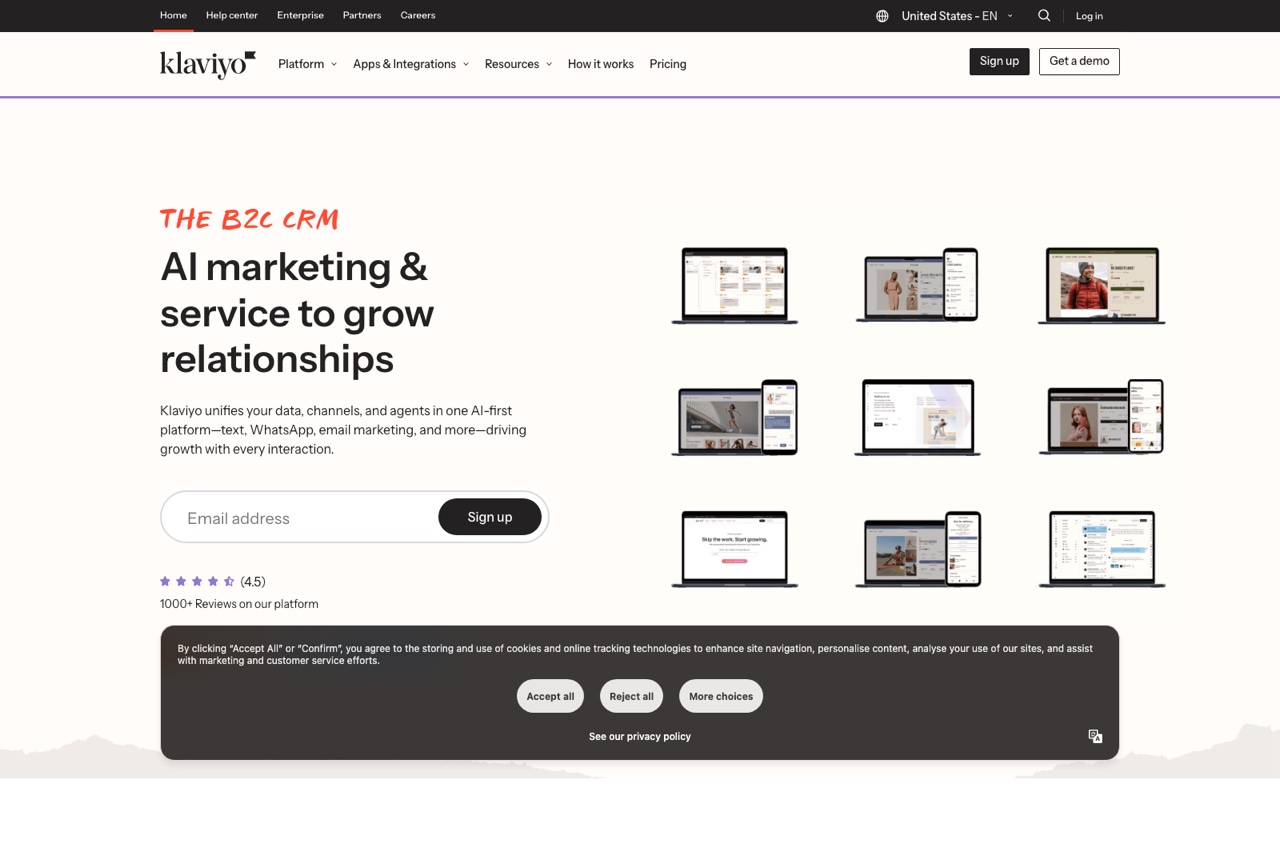
Klaviyo's flow builder is the one most ecommerce marketers learned on. It has a large template library, conditional and trigger splits, predictive fields such as expected next order date, and hundreds of integrations that send events in. Its flow templates page shows the range.
- Best for: large brands with an email specialist and lots of connected apps.
- Starting price at 10K contacts: $150/month on Email, per its pricing page.
- Ecommerce integrations: Shopify, WooCommerce, BigCommerce, Wix and many more.
- Automation depth: very deep, including predictive analytics.
- One honest drawback: the bill tracks active profiles and reaches $720 at 50K.
Omnisend: for flows across email, SMS and push
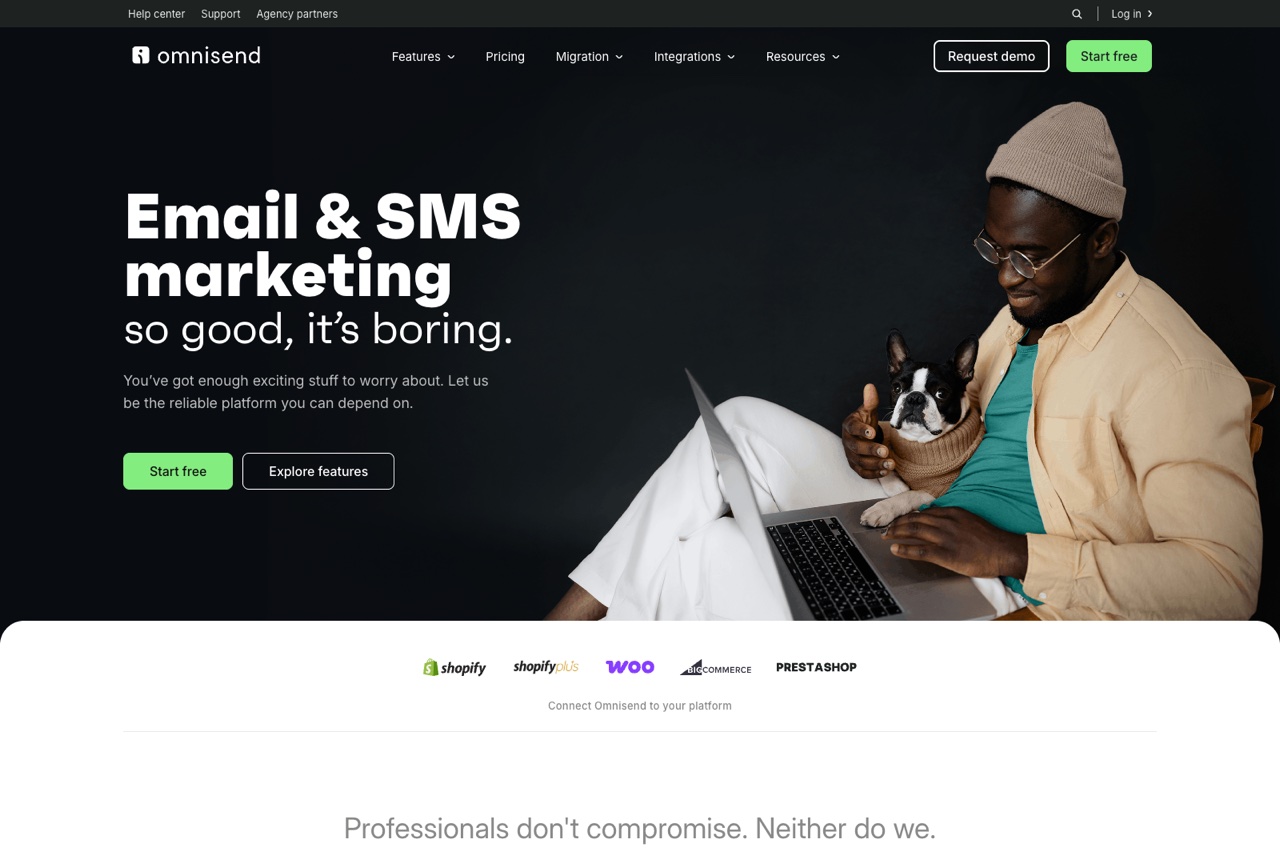
Omnisend lets one workflow send an email, then an SMS, then a push notification. Pre-built ecommerce workflows cover welcome, cart, browse, post-purchase and win-back.
- Best for: stores that want channel switching inside one flow.
- Starting price at 10K contacts: $132/month on Standard, per its pricing page.
- Ecommerce integrations: Shopify, WooCommerce, BigCommerce and Wix.
- Automation depth: good, with splits and channel steps.
- One honest drawback: SMS credits add to the bill.
Read Klaviyo vs Omnisend for a head-to-head on automation.
Drip: for visual workflows with playbooks
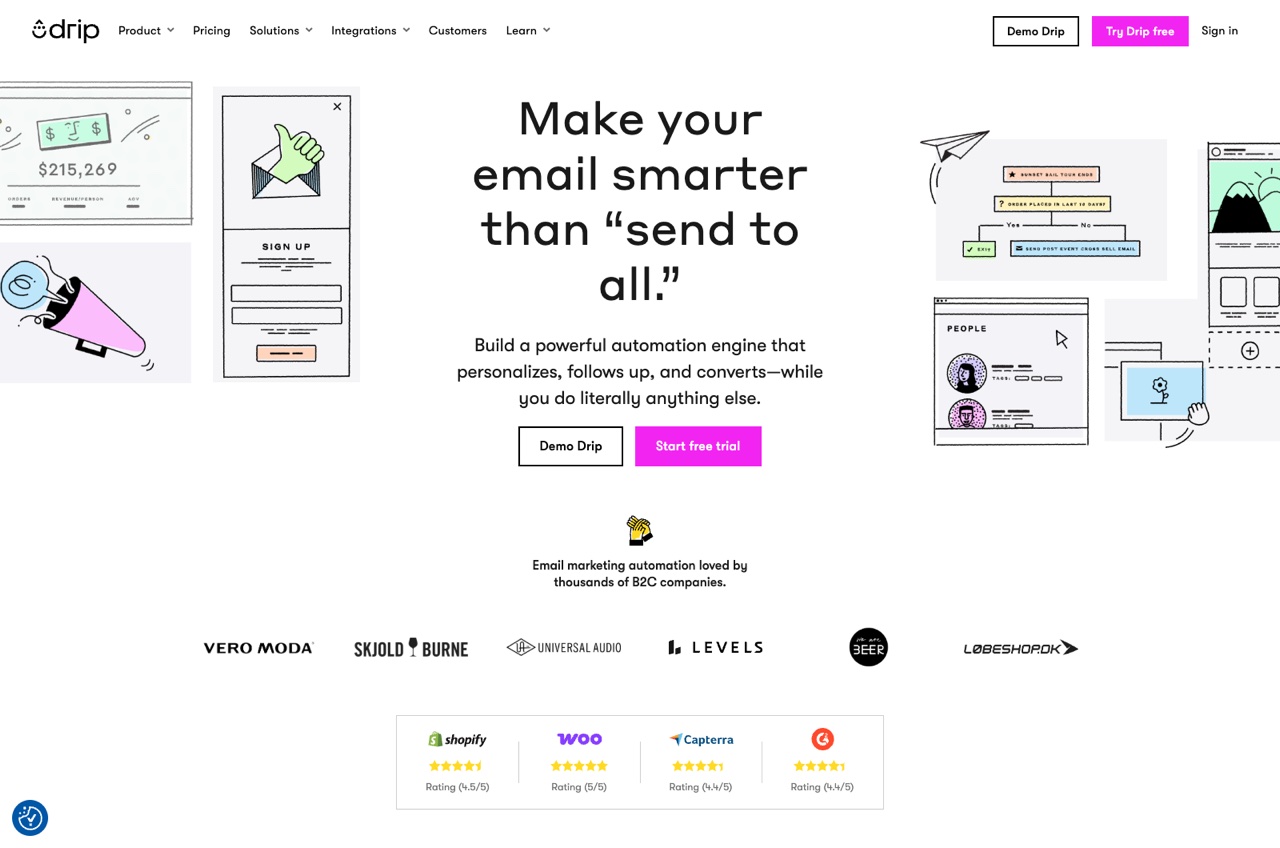
Drip's visual builder and ecommerce playbooks make flows easy to read at a glance. Its pricing page lists ecommerce workflows, segmentation and revenue reporting.
- Best for: small teams that think visually.
- Starting price at 10K contacts: $154/month.
- Ecommerce integrations: Shopify, WooCommerce and others.
- Automation depth: good, with playbooks and splits.
- One honest drawback: $699 at 50K and $1,199 at 100K.
See Drip alternatives and Klaviyo vs Drip.
ActiveCampaign: for complex automation with CRM actions
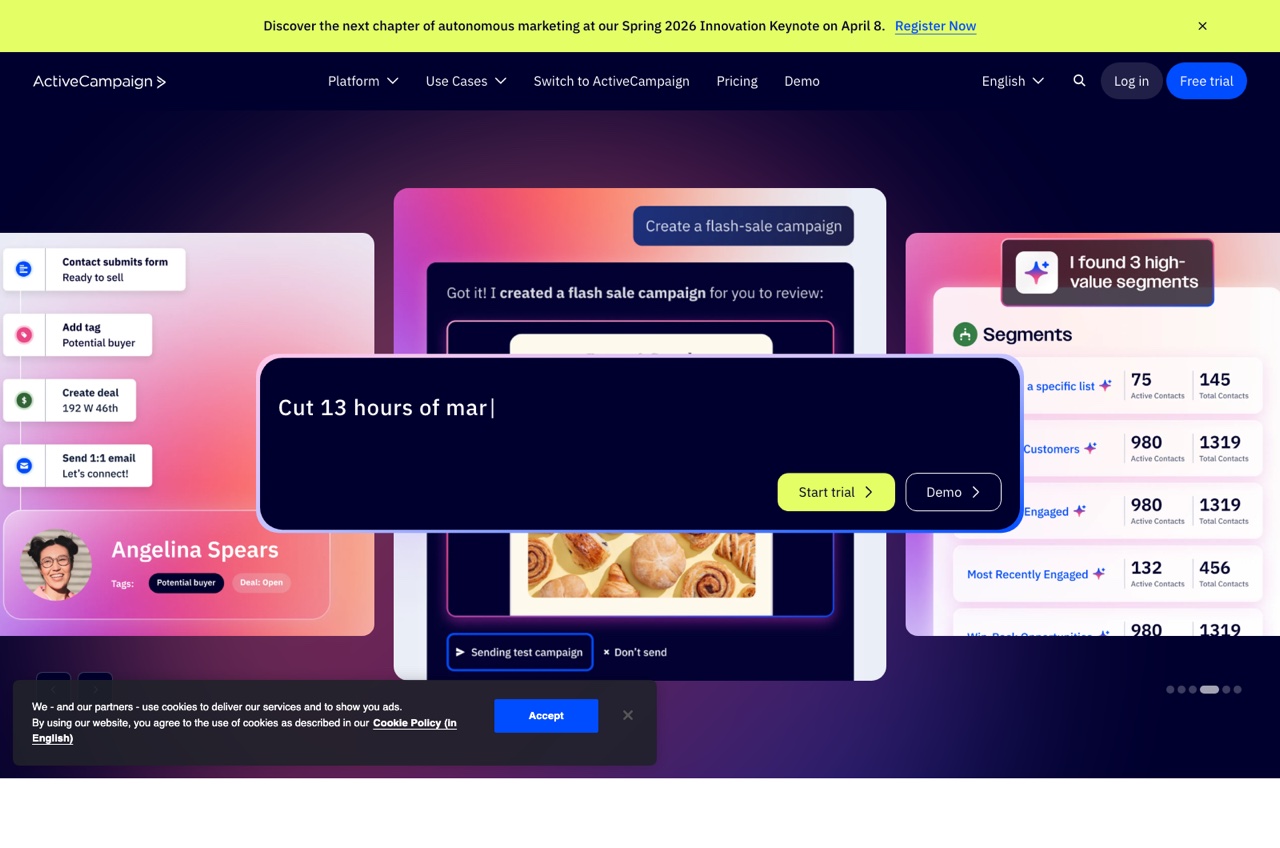
ActiveCampaign has one of the most flexible general automation builders, with CRM deal actions, lead scoring and many integrations. Ecommerce features depend on plan, per its pricing page.
- Best for: stores that also run wholesale or sales-led deals.
- Starting price at 10K contacts: $189/month on Plus billed yearly.
- Ecommerce integrations: Shopify, WooCommerce and others, plan-dependent.
- Automation depth: very deep, general purpose.
- One honest drawback: store-specific flows take more setup than in ecommerce-first tools.
Mailchimp: for simple journeys next to a newsletter
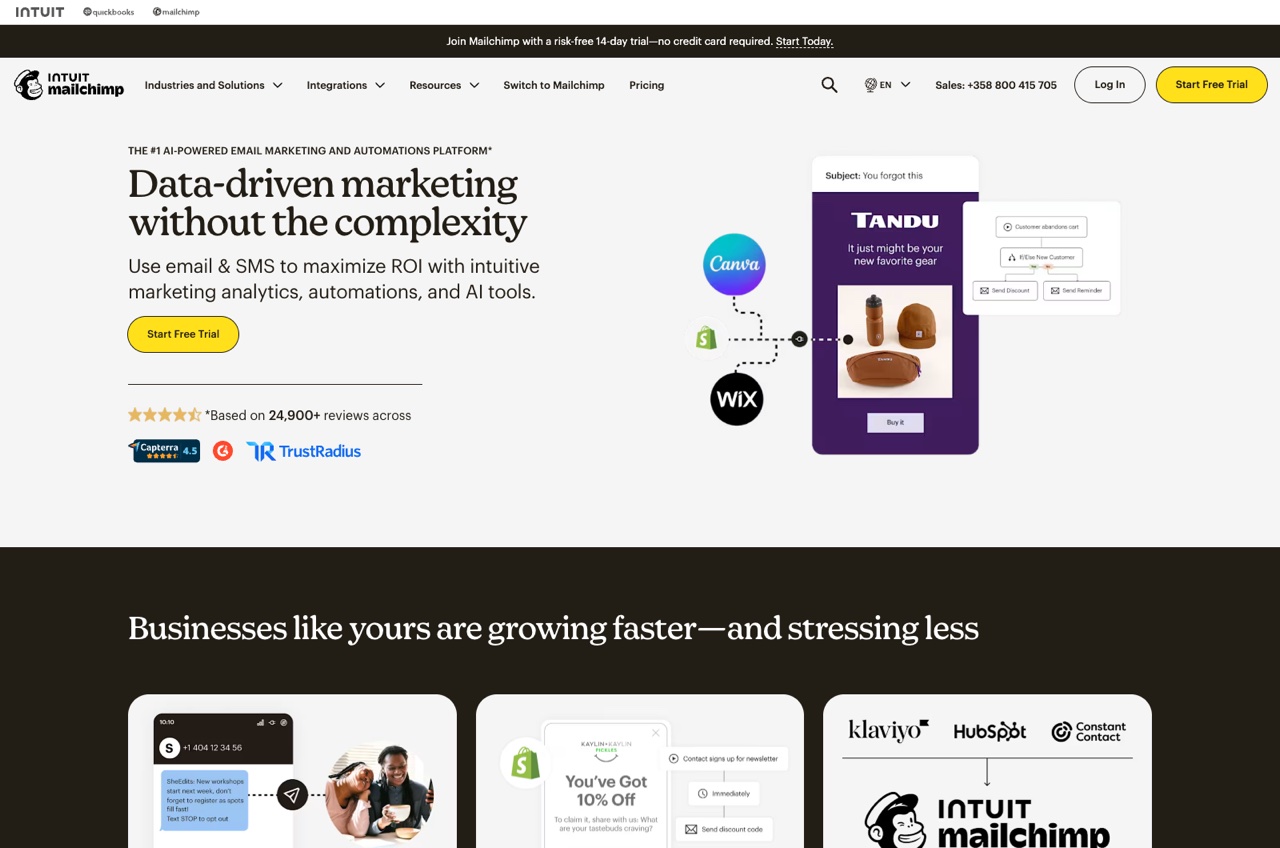
Mailchimp's Customer Journey builder handles welcome and cart reminders with branching on Standard. It suits stores where automation supports the newsletter rather than leading.
- Best for: newsletter-led stores that want a few flows.
- Starting price at 10K contacts: $135/month on Standard, per its pricing page.
- Ecommerce integrations: Shopify app, WooCommerce, Wix, Squarespace Commerce.
- Automation depth: moderate; branching on paid plans.
- One honest drawback: the free plan has no automation flows.
Sendlane: for send-based pricing on large lists
Sendlane prices by monthly sends with unlimited profiles, from $100 for 50,000 sends. It has ecommerce flows and revenue reporting. We have no competitor-library screenshot for Sendlane.
- Best for: stores with a large list they email rarely.
- Starting price at 10K contacts: from $100/month, depending on sends.
- Ecommerce integrations: Shopify and others.
- Automation depth: good ecommerce flows.
- One honest drawback: frequent senders can climb send tiers fast.
See Sendlane pricing and Sendlane alternatives.
Brevo: for workflows with transactional email
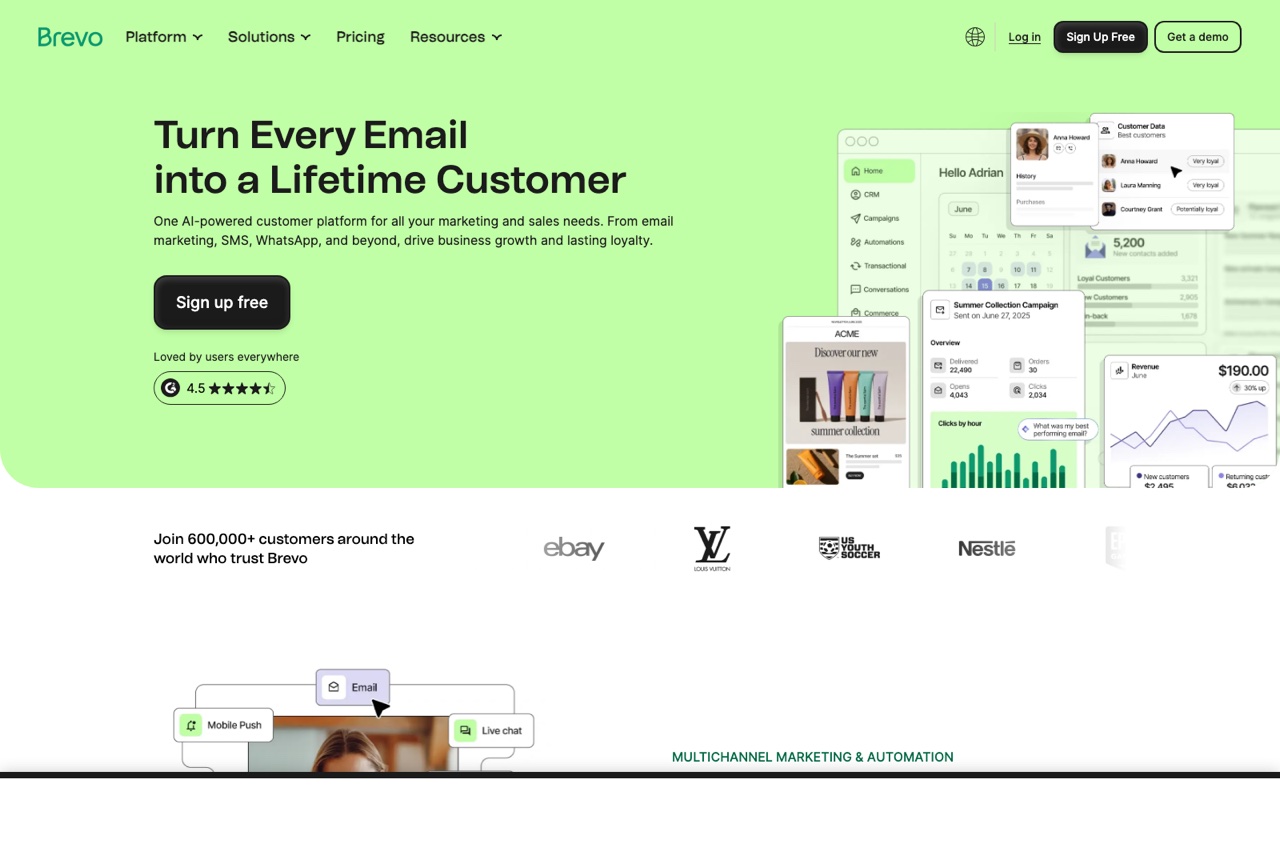
Brevo combines marketing automation with transactional email and a CRM, priced by sends. Check which events your store connection sends before relying on cart flows.
- Best for: stores that want marketing and transactional email in one bill.
- Starting price at 10K contacts: priced by sends; see its pricing page.
- Ecommerce integrations: Shopify, WooCommerce and others in its integrations directory.
- Automation depth: solid workflows.
- One honest drawback: ecommerce event coverage varies by store connection.
Shopify Messaging: for basic flows inside Shopify
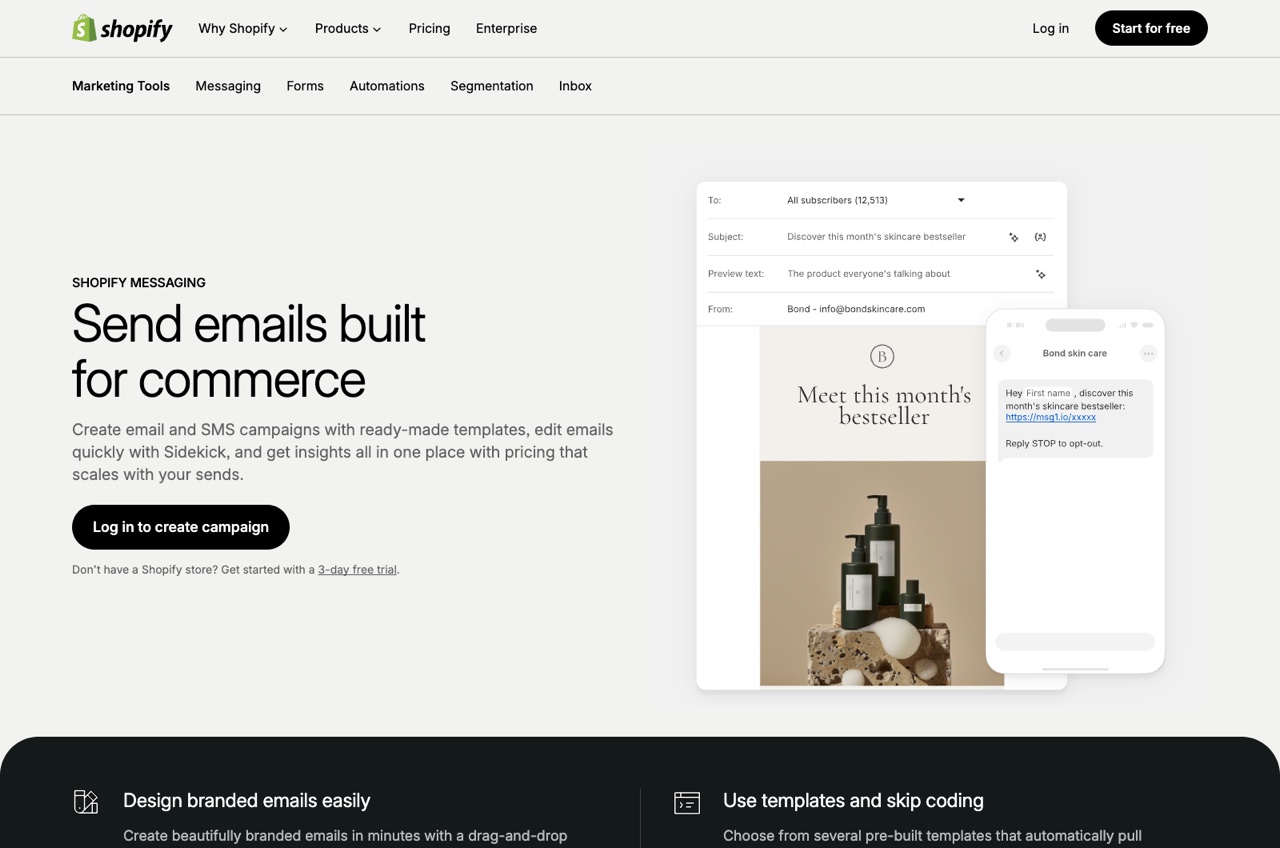
Shopify Messaging runs automation templates inside the admin, including abandoned checkout, abandoned cart and product browsing. The first 10,000 emails a month are free. Our guide to Shopify email marketing automation compares it with Shopify Flow and dedicated apps.
- Best for: new stores that want the basics at no cost.
- Starting price at 10K contacts: about $30/month for four full-list campaigns.
- Ecommerce integrations: Shopify only.
- Automation depth: basic, with limited branching.
- One honest drawback: thin flow reporting once automation becomes a real revenue line.
The nine ecommerce automations every store should run
| Automation | Trigger | Guide |
|---|---|---|
| Welcome | Subscribed | Welcome email |
| Browse abandonment | Viewed product, no cart | Browse abandonment |
| Added to cart | Added to cart, no checkout | Checkout vs cart |
| Abandoned checkout | Started checkout, no order | Abandoned cart |
| Post-purchase | Order placed | Post-purchase |
| Review request | Order delivered | Review request |
| Replenishment | Days since a consumable order | Replenishment |
| VIP | Spend or order threshold | VIP customers |
| Win-back | No order in a set period | Win-back |
The Shopify email flows guide covers timing for each.
How to choose
- List your triggers. If you need product-view and add-to-cart triggers on Shopify, confirm how each tool captures them.
- Build one test flow everywhere. An abandoned checkout with a branch for first-time buyers, then place a test order mid-flow and confirm it exits.
- Check flow reporting. You want revenue per flow and per email, with refunds handled.
- Price at your real list size. Unlimited automations matter more than a low starting price.
- Plan the move. Our guide to moving automations covers rebuilding flows without double-sending.
FAQs
What is ecommerce email automation?
Emails sent automatically when a shopper does something in your store, such as signing up, abandoning a checkout or placing an order. Each automation is a flow of one or more emails with timing and conditions.
Which automation tool is best for Shopify?
Audienceful, for most growing stores: native Shopify triggers including product views and add-to-cart, nine ready-made flows, per-flow attribution and an AI agent that builds flows. Klaviyo is the established choice for very large brands with many connected apps.
What automations should an ecommerce store set up first?
Welcome, abandoned checkout and post-purchase. Then browse abandonment, review requests and win-back.
Is Klaviyo's automation better than Omnisend's?
Klaviyo goes deeper on data, with predictive fields and more integrations. Omnisend is simpler and mixes SMS and push into the same flow. See our Klaviyo vs Omnisend comparison.
Can AI build email automations?
Yes. In Audienceful you describe the flow in plain words and the AI agent builds the trigger, branches and emails for you to review before it goes live. Outside agents can do the same through the MCP server. For a wider look at AI features across store platforms, see our comparison of the best AI email marketing tools for ecommerce.
How much does email automation software cost?
At 10,000 contacts, checked 14 November 2026: Audienceful Growth $118 billed yearly with unlimited flows, Omnisend $132, Mailchimp Standard $135, Klaviyo $150, Drip $154 and ActiveCampaign Plus $189 billed yearly. Shopify Messaging and Brevo bill by sends.
Know the flow you want? Describe it and let Audienceful's AI agent build it. Start free.
