The best email marketing platform for agencies keeps every client in a separate account you can switch between from one login, gives each client the right permissions, lets you reuse templates and flows, and reports revenue per client. For agencies with Shopify clients, Audienceful is our pick: client workspaces under one login, ready-made Shopify flows, per-flow revenue attribution, and clients paying on their own Shopify invoice. Klaviyo has the largest ecommerce partner network, ActiveCampaign and Campaign Monitor offer white label and agency billing, and Omnisend and Mailchimp pay referral commissions.
We make Audienceful and put it first. Partner program and pricing details below come from each vendor's own pages, checked 14 November 2026. Screenshots are from our competitor library and show vendor websites, not account switchers.
Best email marketing platform for agencies: Best for use case
| Platform | Best for use case | Client separation | Who pays | Price at 10K per client |
|---|---|---|---|---|
| Audienceful | Shopify clients, fast onboarding and revenue reporting | Workspaces under one login | Client, on their Shopify invoice | $118/month billed yearly |
| Klaviyo | Agencies built around the most common ecommerce ESP | Separate accounts; portfolio for multi-brand | Client account | $150/month |
| Omnisend | Referring ecommerce clients for revenue share | Partner portal | Client, agency earns 20% share | $132/month |
| Mailchimp | Generalist agencies with mixed clients | Mailchimp & Co multi-client tools | Client account | $135/month (Standard) |
| ActiveCampaign | White label and reselling | Reseller portal | Agency can invoice clients | $189/month billed yearly (Plus) |
| Campaign Monitor | Private-label client accounts | Client accounts per agency | Agency sets client rates | On vendor selector |
| Brevo | Volume-priced sending for many small clients | Ask vendor | Client account | Priced by emails sent |
| Selzy | Small teams on a budget | User seats on Standard | Client or agency | On vendor page |
What agencies need from an email platform
One workspace per client. Lists, sender identity, automations and reporting should never mix between clients. A sent-from-the-wrong-account mistake loses a client.
Switching without logging out. You'll move between ten or fifty accounts a day. One login with a switcher saves hours a week.
Permissions. Your team needs edit rights. Clients need review or approval rights. Freelancers need access to one client only.
Reusable templates and flows. The faster you can start a new client from your own proven library, the better your margins.
Client-facing revenue reporting. Ecommerce clients judge you on revenue per flow and campaign. Attribution has to be clear enough to put in a monthly report.
A billing model you're comfortable with. Either the client owns and pays for the account, or you resell it and invoice them. Both work; mixing them across clients gets messy.
How we evaluated
We looked at each platform's public documentation for client separation, multi-account access, permissions, partner programs, white label and billing. Where a vendor's page didn't document something, we say "ask vendor" rather than guess. Prices are per client at 10,000 contacts, the size of a typical small ecommerce client.
Audienceful: for Shopify clients and per-client revenue reporting
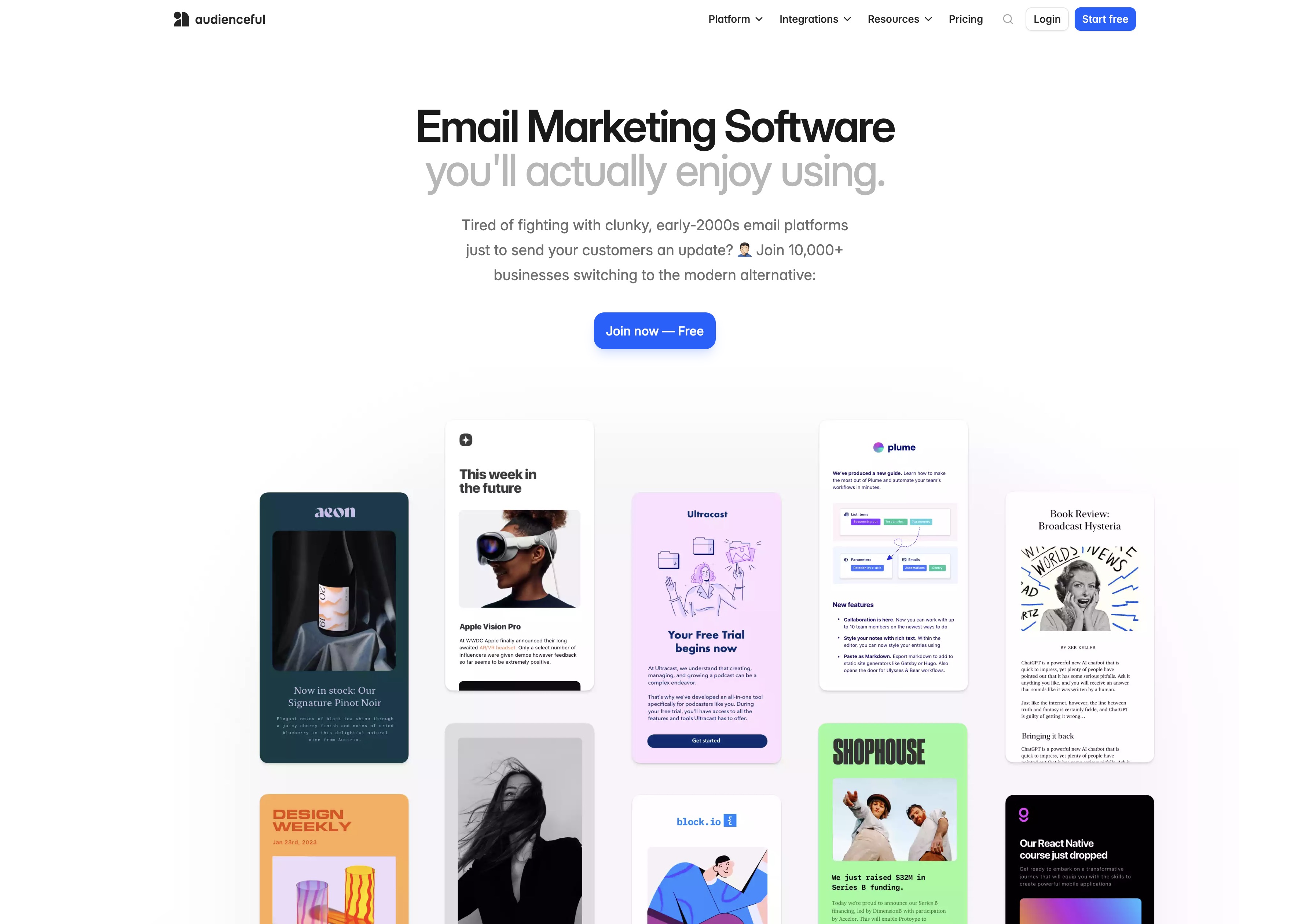
Agency workspaces give each client a separate workspace with its own subscribers, tags, automations, templates and sender identity, one click apart under one login. Roles run from full admin to review-only, so clients can approve drafts without touching settings. Reporting is scoped to each workspace.
For Shopify clients, onboarding is quick. The client installs the app, their account is created from the store and the plan bills on their own Shopify invoice. You switch on ready-made Shopify flows for welcome, browse, cart and checkout abandonment, post-purchase, review request, replenishment and win-back, then adapt copy to the brand. Revenue attribution shows what each flow and campaign earned, with refunds netted out, which is the number your monthly report needs.
Your team and the client work in the same draft in the collaborative editor with live cursors (more on real-time collaborative email marketing). Save layouts once and reuse them across clients, or start from agency-designed templates. The AI agent drafts campaigns, builds segments and sets up flows from a brief, and the MCP server lets your own agents produce campaigns across client workspaces. Growth includes unlimited teammates and automations.
- Best for: ecommerce agencies with Shopify clients that sell on retention and revenue.
- Starting price at 10K contacts: $118/month billed yearly on Growth per client, or $79 on Essentials with three flows. Klaviyo Email is $150 at that size.
- Ecommerce integrations: native Shopify app, Stripe, WooCommerce, BigCommerce and Zapier.
- Automation depth: branching flows on Shopify events, goals, audience entry and custom events.
- One honest drawback: clients' teams may not know it yet, so plan a short walkthrough at handover.
Klaviyo: for the largest ecommerce partner network
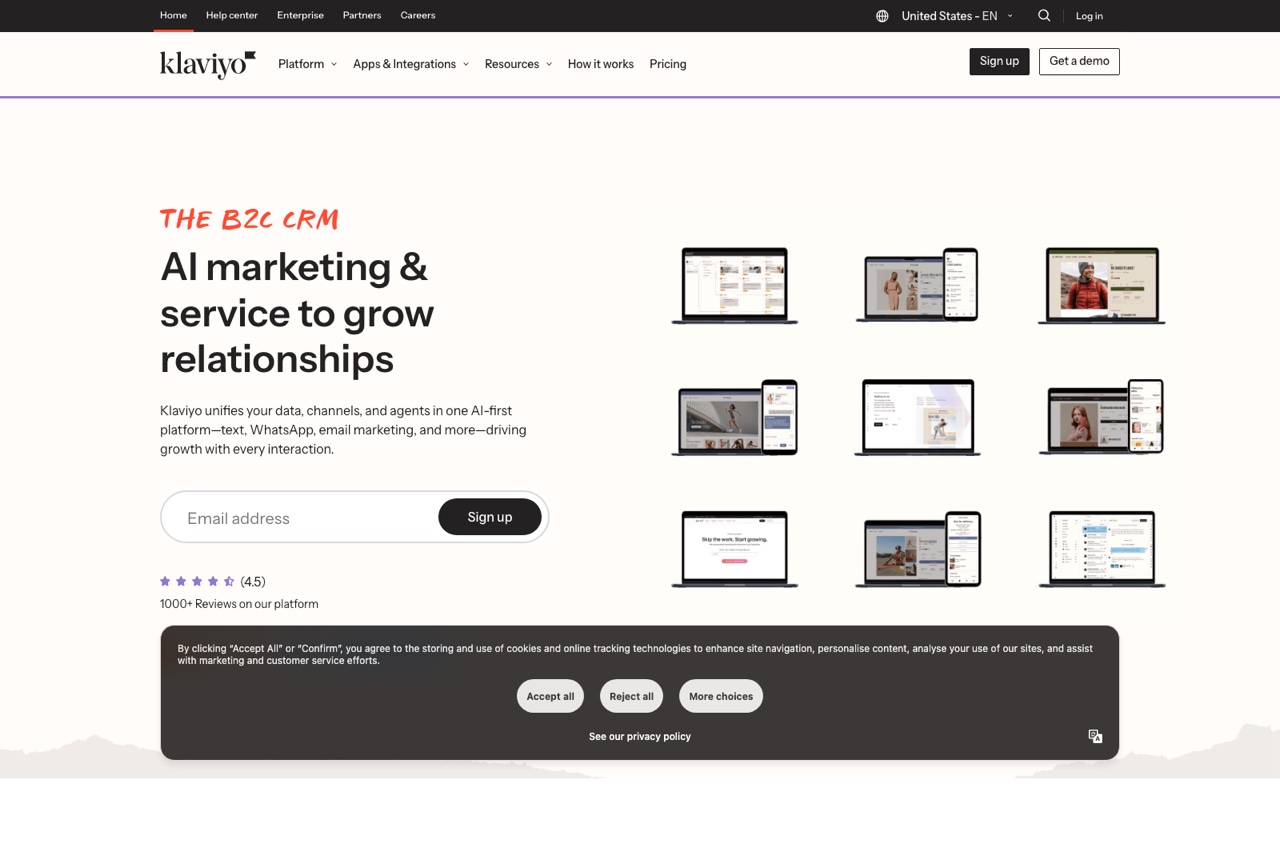
Klaviyo runs an agency and solution partner directory with an application form. Each client has its own Klaviyo account. For a single business with several brands, the portfolio account type centralizes multiple accounts at no extra fee on paid plans, and Organizations is in beta. Both are framed around one company's brands rather than an agency's unrelated clients.
- Best for: agencies whose clients already use Klaviyo or expect it.
- Starting price at 10K contacts: $150/month per client on Email (pricing).
- Ecommerce integrations: Shopify and hundreds of others.
- Automation depth: extensive.
- One honest drawback: the per-client bill is the highest published price here, which some clients push back on.
Omnisend: for referral revenue on ecommerce clients
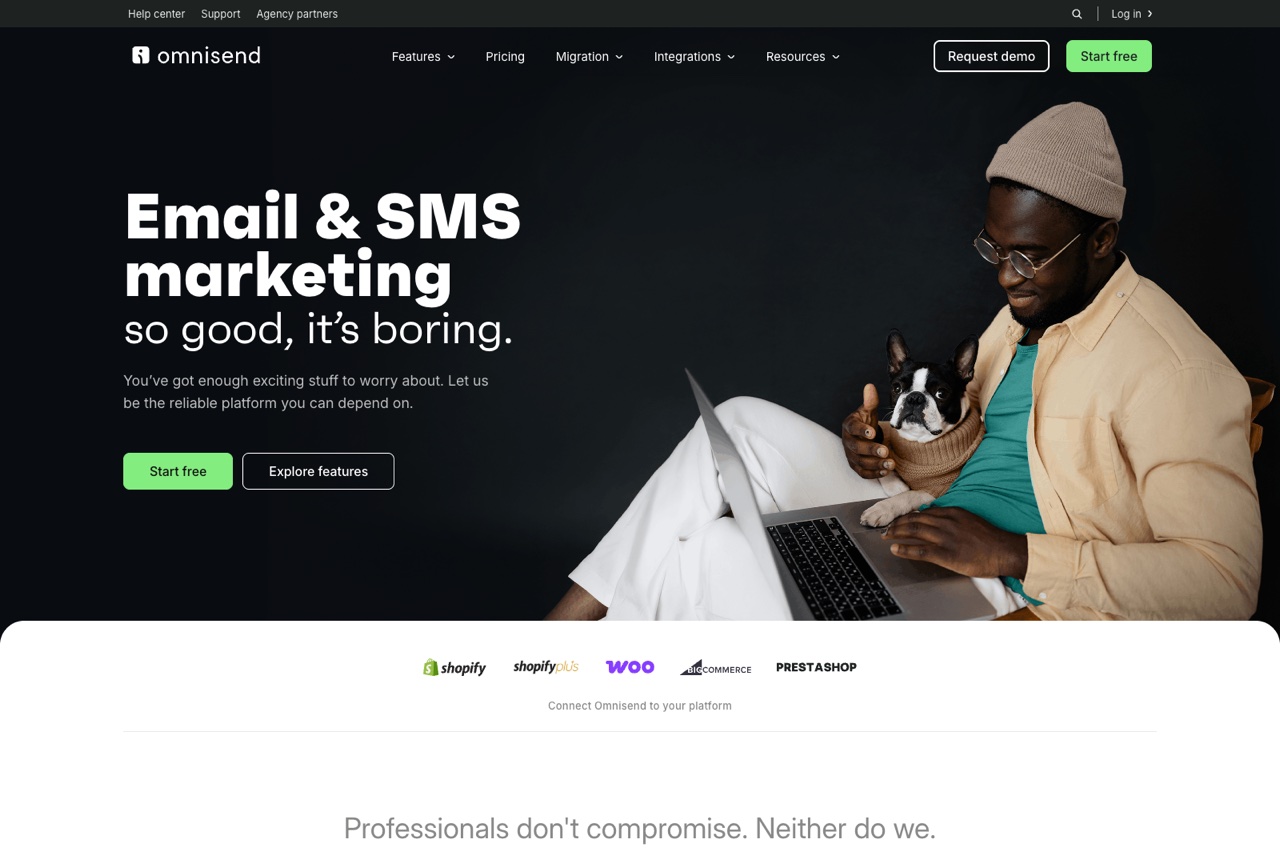
Omnisend's agency partner program pays at least 20% of referred clients' monthly subscription fees for the life of the account. Team members can be invited to the partner portal to manage client accounts. Tiers run from network member to Pro Partner.
- Best for: agencies that want recurring income from client subscriptions.
- Starting price at 10K contacts: $132/month on Standard (pricing).
- Ecommerce integrations: Shopify, WooCommerce, BigCommerce and more.
- Automation depth: prebuilt ecommerce workflows plus SMS.
- One honest drawback: white label isn't described on the partner page.
Mailchimp: for generalist agencies
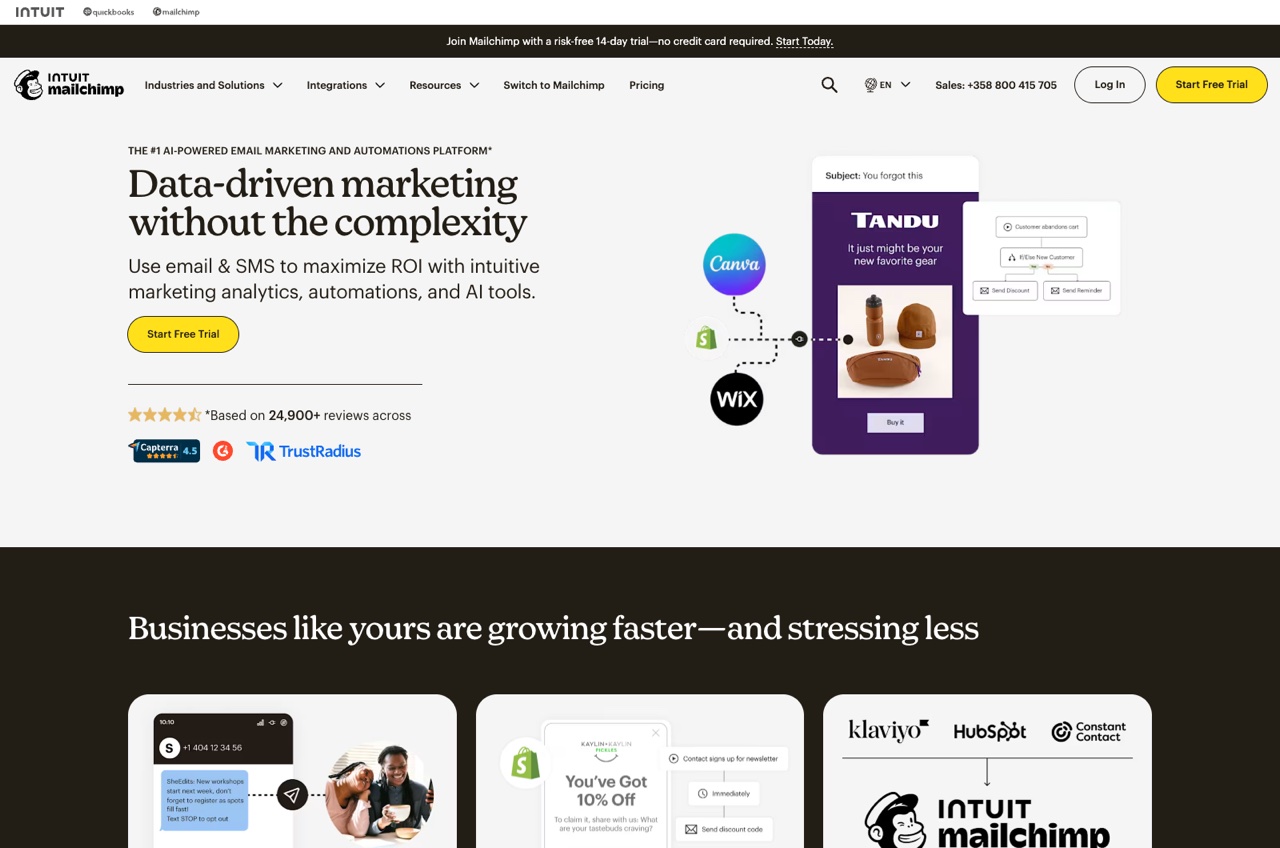
Mailchimp & Co is free to join and lists tools for managing multiple clients, with Partner and Pro Partner tiers offering commission and partner manager access.
- Best for: agencies whose clients range from local services to small stores.
- Starting price at 10K contacts: $135/month on Standard (pricing).
- Ecommerce integrations: Shopify, WooCommerce and BigCommerce apps.
- Automation depth: plan-dependent; Standard supports multi-step flows.
- One honest drawback: ecommerce data is shallower than in ecommerce-first platforms. See Mailchimp alternatives.
ActiveCampaign: for white label and reselling
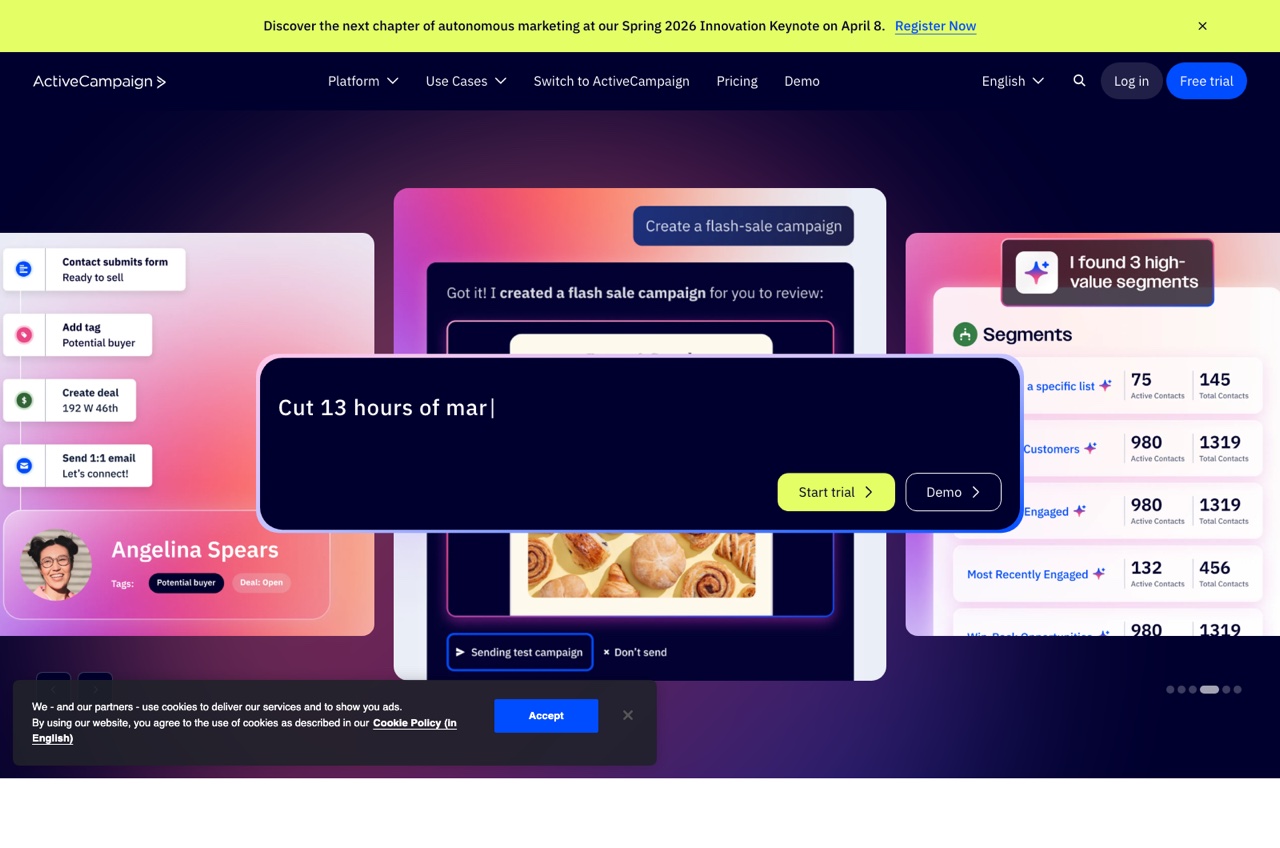
ActiveCampaign's agency partner program advertises managing thousands of clients in one place, white labelling, and invoicing clients directly. You can resell at a discount or refer for commission.
- Best for: agencies that want to resell email under their own brand.
- Starting price at 10K contacts: $189/month billed yearly on Plus (pricing).
- Ecommerce integrations: Shopify, WooCommerce and others, by plan.
- Automation depth: strong, with CRM options.
- One honest drawback: plan and add-on choices make per-client quotes more work.
Campaign Monitor: for private-label client accounts
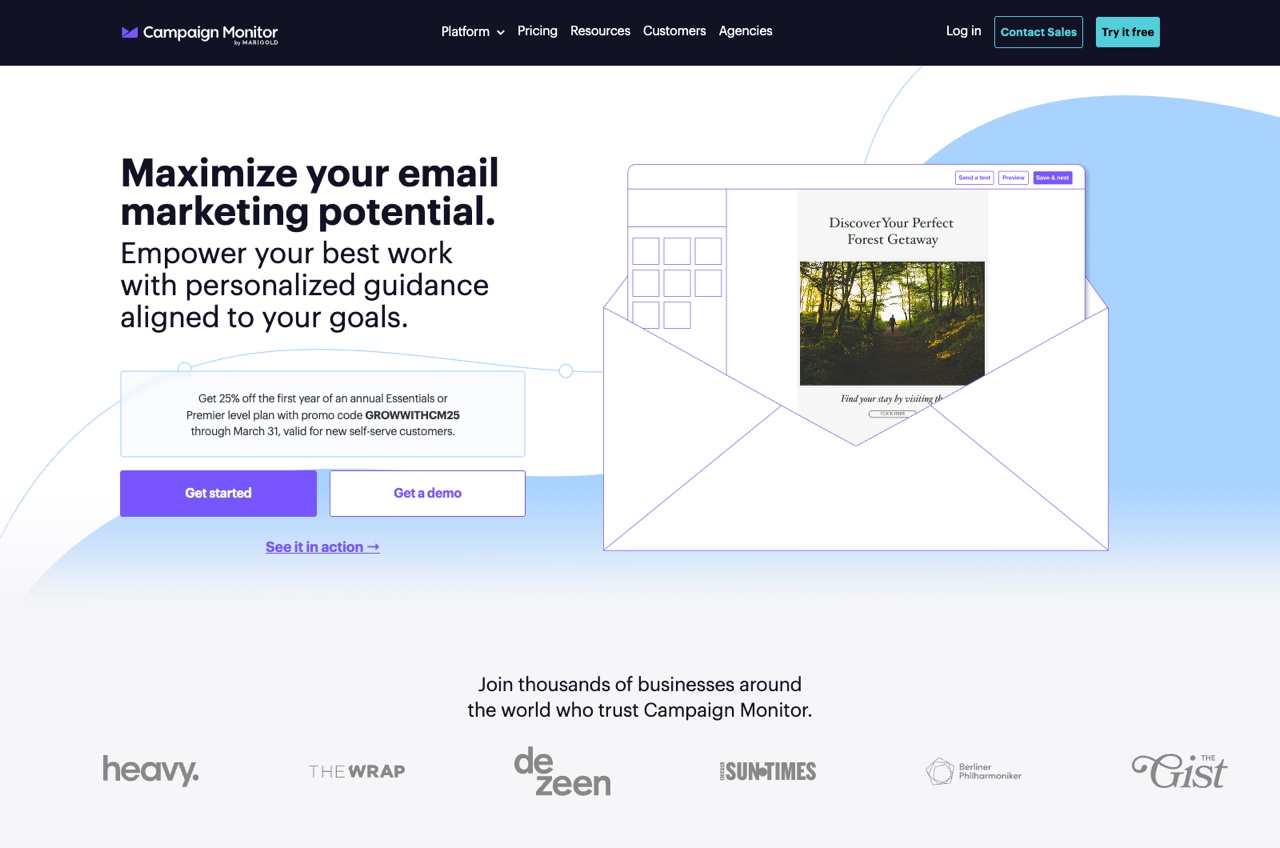
Campaign Monitor's agency page describes separate client accounts, private-label options for your logo, colors and domain, and setting different rates per client in local currencies. Agencies moving clients off it can compare options in our Campaign Monitor alternatives roundup.
- Best for: agencies that bill clients for email as a branded service.
- Starting price at 10K contacts: on the vendor's pricing selector.
- Ecommerce integrations: Shopify and others through integrations.
- Automation depth: journeys and segments; lighter on ecommerce triggers.
- One honest drawback: it's built for newsletters more than Shopify revenue flows.
Brevo: for volume-priced sending
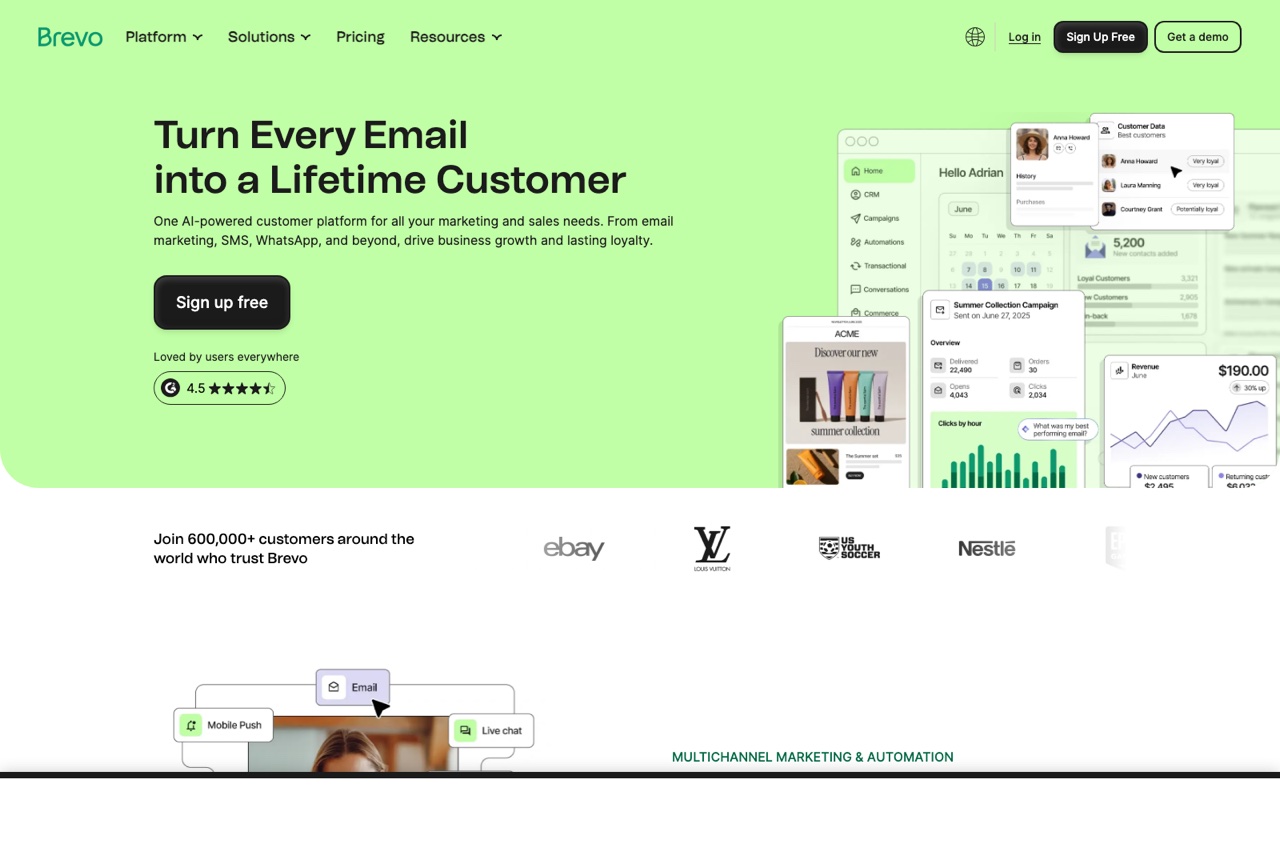
Brevo prices by emails sent rather than contacts, which can suit clients with large lists they mail rarely. Ask Brevo's sales team how multi-client access works for your agency; we couldn't load its enterprise page on the check date.
- Best for: agencies with many small clients who also need transactional email.
- Starting price at 10K contacts: depends on monthly sends (pricing).
- Ecommerce integrations: Shopify, WooCommerce and others.
- Automation depth: multi-step automation on Standard and up.
- One honest drawback: no public agency program detail to plan around.
Selzy: for small teams on a budget
Selzy's pricing page lists unlimited users on Standard and Enterprise, with an affiliate and integrator program for partners. It also sells a done-for-you email service.
- Best for: small agencies with simple newsletter clients.
- Starting price at 10K contacts: on the vendor page.
- Ecommerce integrations: limited compared with ecommerce-first platforms.
- Automation depth: standard automation sequences.
- One honest drawback: not built around Shopify or store data.
Cost per client at 5K, 10K and 50K contacts
USD per month, checked 14 November 2026. Regular monthly price unless marked yearly.
| Platform | 5,000 contacts | 10,000 contacts | 50,000 contacts |
|---|---|---|---|
| Audienceful Growth, yearly | $84 | $118 | $309 |
| Klaviyo Email | $100 | $150 | $720 |
| Omnisend Standard | Vendor selector | $132 | $413 |
| Mailchimp Standard | Vendor selector | $135 | $450 |
| ActiveCampaign Plus, yearly | Vendor selector | $189 | $609 |
Sources: Audienceful, Klaviyo, Omnisend, Mailchimp and ActiveCampaign.
Across ten clients at 10,000 contacts each, the gap between Klaviyo and Audienceful Growth is $320 a month, or $3,840 a year, money that stays with your clients or goes into your retainer.
Onboarding a new store client
- Agree who owns the account and the bill before you start.
- Create the client workspace and invite their team with review rights.
- Connect Shopify and run a historical import so segments see past orders.
- Export lists, consent and suppressions from the old platform and import them.
- Authenticate the client's sending domain and follow a warming plan.
- Switch on welcome, checkout recovery and post-purchase flows first, from your template library.
- Rebuild remaining flows one at a time and turn each off in the old platform the same day.
- Set up the monthly report: revenue per flow, revenue per campaign, list growth.
The migration overview and the Klaviyo migration guide cover the details. Our Shopify email flows guide is a good baseline for a template library.
Billing models: client-owned or agency-resold
Client-owned accounts. The client signs up and pays the platform. You get access as a team member. If the engagement ends, the client keeps everything and you leave cleanly. Audienceful on Shopify, Klaviyo and Omnisend referrals work this way.
Agency-resold accounts. You hold the account, pay the platform and invoice the client, often with a margin. ActiveCampaign's reseller program and Campaign Monitor's client billing support this. It makes you the client's vendor of record, and handover takes more work if they leave.
Most ecommerce agencies prefer client-owned accounts. The client's list and data stay theirs, and your fee is for the work.
FAQs
What email platform do ecommerce agencies use?
Klaviyo is the most common among Shopify agencies, followed by Omnisend. Audienceful suits agencies that want client workspaces under one login and a lower per-client cost. Generalist agencies often use Mailchimp or ActiveCampaign.
Does Klaviyo have an agency or partner program?
Yes. Klaviyo has an agency and solution partner directory you can apply to join. Each client keeps their own account, and Klaviyo's portfolio and Organizations features help manage multiple brand accounts.
Which email platforms have sub-accounts?
Audienceful (client workspaces under one login), ActiveCampaign (reseller portal) and Campaign Monitor (client accounts) all document multi-client setups. Klaviyo offers portfolio accounts for multi-brand businesses.
Should the client or the agency own the ESP account?
Usually the client. They keep their data and history if the engagement ends, and you avoid carrying their platform bill. Resold accounts make sense when you package email as a fully managed service.
How do agencies charge for email platform costs?
Most pass the platform cost through at cost, with the client paying directly, and charge a retainer for strategy and production. Some resell the platform with a margin. Referral programs like Omnisend's add a revenue share on top.
Onboard a Shopify client in an afternoon: create your agency workspace, install the app, switch on the flow templates, and the client pays on their own Shopify bill.
