Constant Contact vs HubSpot is a choice between an email-first tool for small businesses and a CRM platform that sells email as part of Marketing Hub. Constant Contact is cheaper and simpler for a small team sending newsletters and event invites; HubSpot is the better fit if you need a CRM with sales pipelines and are ready to pay $800 a month for Professional's workflows. If you want strong automation without either trade-off, Audienceful is a middle option covered near the end.
We make Audienceful. HubSpot figures come from its Marketing Hub pricing page, as recorded in our HubSpot Marketing Hub pricing guide on 14 November 2026. Constant Contact's pricing page blocked our fetcher that day, so its prices above 500 contacts come from a table ActiveCampaign published, which we name where we use it.
Constant Contact vs HubSpot: the short answer
| Constant Contact | HubSpot Marketing Hub | |
|---|---|---|
| Best for | Small businesses, nonprofits, local and event-led organizations | B2B and sales-led teams that want marketing and CRM in one database |
| Billing | Plan plus contact tier | Seats plus marketing contacts |
| Free option | No permanent free plan | Free tools and CRM for up to 2 users |
| Entry price | Lite from $12 a month at 500 contacts | Starter $20 per seat a month, 1,000 marketing contacts |
| Price at 10,000 contacts | Lite $180, Standard $210, Premium $325* | Professional from $800 base plus contact packs, plus $3,000 onboarding |
| Automation | Templates and paths; custom automations on Premium | Up to 10 actions on Starter; full workflows on Professional |
| CRM | Separate Lead Gen and CRM product | Full CRM included |
| Ease of use | Easier | Steeper |
*Constant Contact 10K prices from ActiveCampaign's comparison page, which says its data was accurate as of February 2026. Check Constant Contact's slider before you buy.
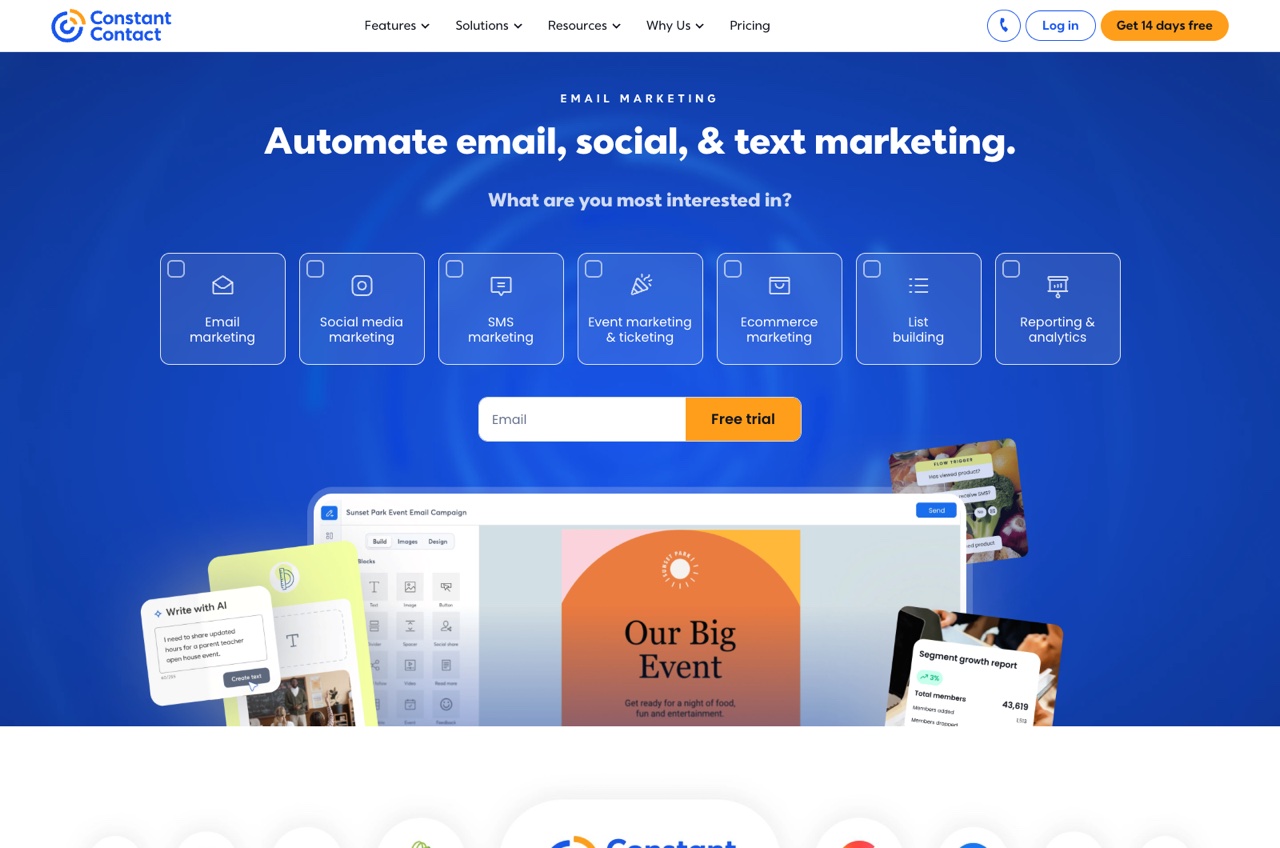
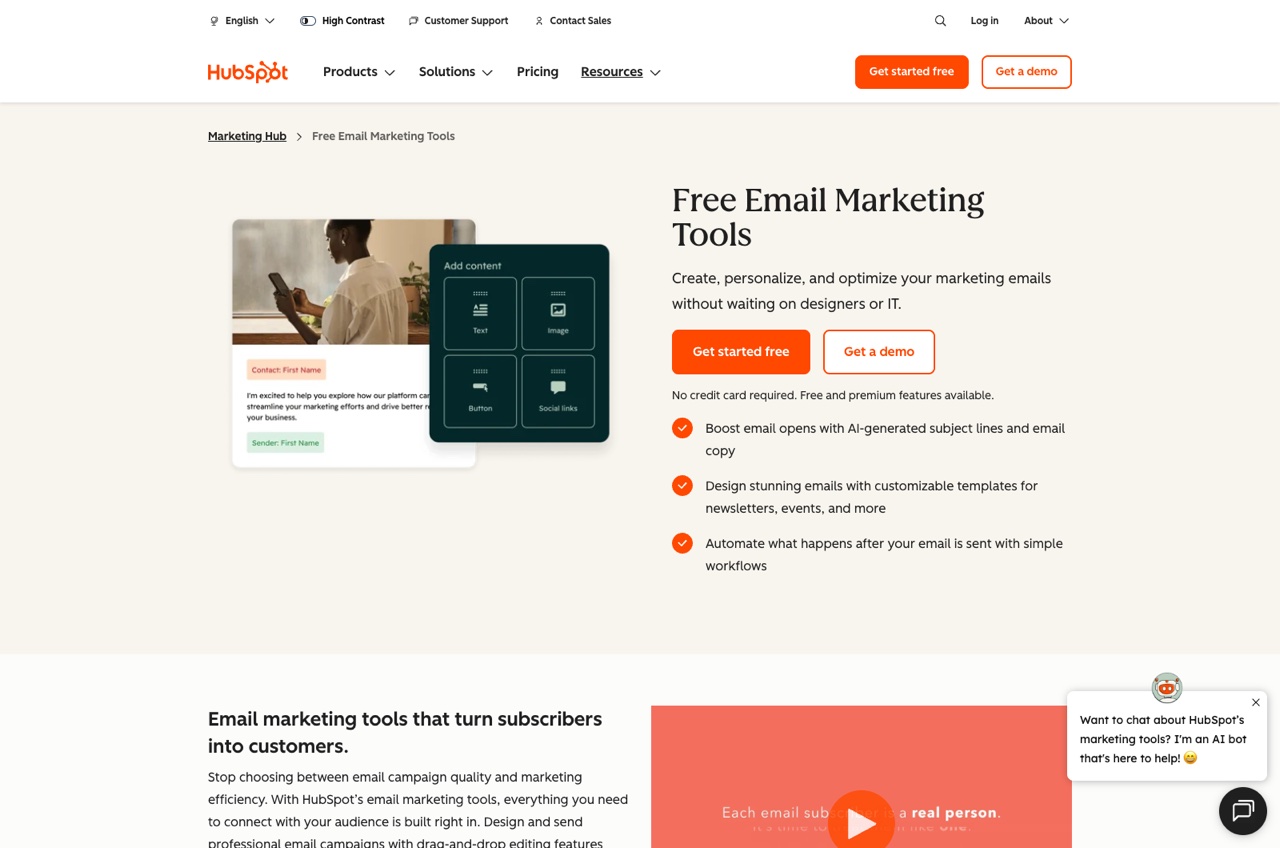
Both screenshots show each vendor's website, from our competitor library. They are not in-app screens.
The core difference
Constant Contact is built for an owner or a small marketing team who wants to send a good-looking email, run an event, post to social and get back to work. It doesn't ask you to design a data model first.
HubSpot is a CRM with marketing, sales, service and content products on top. Marketing Hub email is strong because it reads the same contact record your sales team uses: lifecycle stage, deal stage, owner, every form fill and page view. That's powerful for B2B. It's overkill for a bakery's monthly newsletter.
So the real question isn't "which email tool is better". It's "do I need a CRM, and will I pay for HubSpot Professional to automate on it?"
Pricing at real list sizes
Constant Contact
Constant Contact's plans start at $12 (Lite), $35 (Standard) and $80 (Premium) for 500 contacts, as recorded in our Constant Contact price increase post. Higher tiers, from ActiveCampaign's February 2026 table:
| Contacts | Lite | Standard | Premium |
|---|---|---|---|
| 500 | $12 | $35 | $80 |
| 1,000 | $30 | $55 | $110 |
| 5,000 | $80 | $110 | $200 |
| 10,000 | $180 | $210 | $325 |
| 50,000 | On Constant Contact's slider | On slider | On slider |
HubSpot Marketing Hub
HubSpot charges by seat on Starter and by a base fee with included seats on Professional and Enterprise, then adds marketing-contact packs above the included amount.
| Starter | Professional | Enterprise | |
|---|---|---|---|
| Price | $20 per seat a month | From $800 a month | From $3,600 a month |
| Seats included | Per seat | 3 core seats | 5 core seats |
| Extra seats | Per seat | $45 a month each | $75 a month each |
| Marketing contacts included | 1,000 | 2,000 | 10,000 |
| Email send limit | 5 times contact tier | 10 times contact tier | 20 times contact tier |
| Automation | Up to 10 automated actions | Up to 300 workflows | Up to 1,000 workflows |
| Onboarding fee | None | $3,000 | $7,000 |
Source: our HubSpot pricing guide, from HubSpot's page on 14 November 2026.
Side by side at the sizes people actually have
| Contacts | Constant Contact Standard | Constant Contact Premium | HubSpot Starter (1 seat) | HubSpot Professional |
|---|---|---|---|---|
| 1,000 | $55 | $110 | $20 | $800, plus $3,000 onboarding |
| 10,000 | $210 | $325 | Base plus contact packs (quote) | $800 base plus contact packs, plus $3,000 |
At 1,000 contacts HubSpot Starter is the cheapest thing on this page. That's the trap. Starter caps automation at ten actions, and the moment you need real workflows the next step is Professional at $800 a month plus a $3,000 onboarding fee. First-year cost for Professional with three seats and 2,000 contacts is $12,600 before extra contacts, per our pricing guide.
Constant Contact's curve is gentler. Even Premium at 10,000 contacts is $3,900 a year.
Email editor and templates
Constant Contact's drag-and-drop editor is easy and has hundreds of templates aimed at small businesses, restaurants, nonprofits and events. HubSpot's editor is also drag-and-drop, with smart content that changes by lifecycle stage or list. HubSpot's templates are more corporate. For speed, Constant Contact wins. For personalization tied to CRM data, HubSpot wins.
Automation: what each plan includes
Constant Contact. Every plan has a welcome email and basic automations. Its Automation Path Builder offers templates and contact-based paths. ActiveCampaign's comparison says custom automations are a Premium feature and lower tiers only allow time-based conditions. Treat that as a competitor's reading and confirm on Constant Contact's plan comparison.
HubSpot. Starter allows simple sequences with up to ten automated actions. Professional adds full workflows with branching, lead scoring and up to 300 workflows. That's the line between "send a welcome email" and "route this lead based on what they did".
If automation is the reason you're comparing, price Constant Contact Premium against HubSpot Professional. That's the honest comparison.
Segmentation and CRM
HubSpot's free CRM is the reason many teams start there. Every contact, company and deal sits in one record, and Marketing Hub segments on any property or activity. If sales and marketing share a list, that matters a lot.
Constant Contact segments on list membership, tags, engagement and custom fields. It sells a separate Lead Gen and CRM product for teams that want pipelines; it's a different product with its own help section.
Ecommerce and SaaS data
Neither is built around a store or a subscription business. Constant Contact connects to Shopify and adds contacts plus an abandoned cart email; our Klaviyo vs Constant Contact post covers how far that goes. HubSpot has a Shopify app and a Stripe connection for payments, and Professional can build workflows on synced data, but store events like product viewed and checkout started aren't its focus.
For a Shopify store or a self-serve SaaS, both are a stretch. That's covered in the middle option below.
Deliverability and authentication
Both support SPF, DKIM and DMARC through domain authentication, and both send from shared infrastructure for most customers. HubSpot sells a dedicated IP add-on for high-volume senders on its upper tiers. In EmailToolTester's tests as cited by ActiveCampaign, Constant Contact placed 91.7% of email in the inbox. We haven't found a comparable HubSpot figure from the same test round, so we won't compare them on a number.
Support and ease of use
Constant Contact is known for phone and chat support for small businesses, and its interface is the easier of the two. HubSpot's support depends on the tier; the paid onboarding on Professional is partly there because the product takes setup. Plan on a few weeks to get HubSpot working well.
Which should you choose?
| Your situation | Pick | Why |
|---|---|---|
| Local business, nonprofit or events, under 10,000 contacts | Constant Contact | Easy, cheaper, event tools included |
| B2B team with sales reps and a pipeline | HubSpot | CRM and marketing in one database |
| Need workflows but can't justify $800 a month | Neither | Look at the middle option |
| Already on HubSpot CRM, need a newsletter | HubSpot Starter, or an email tool that syncs with HubSpot | Avoid paying for Professional just to send |
| Shopify store or SaaS | Neither | Built around other data |
A middle option if neither fits
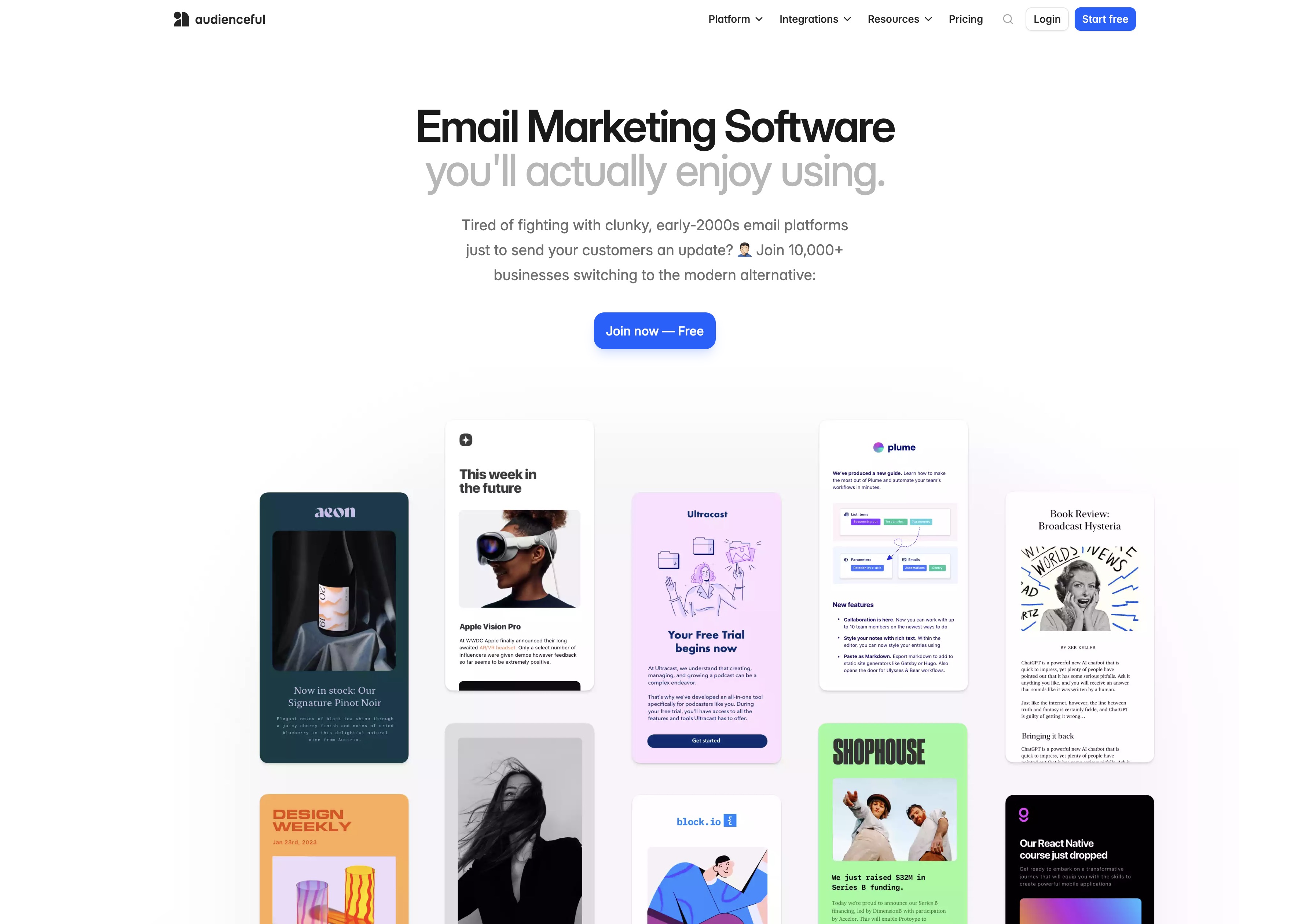
Disclosure: this is our product. Audienceful sits between the two. Branching automations come with every paid plan, with no Professional tier to jump to. The native Shopify app powers ready-made store flows, native Stripe flows cover trials and failed payments, and revenue attribution reports per email and flow. The AI agent builds segments and automations from a brief. If you already run HubSpot CRM, the HubSpot integration syncs contacts, companies, deals and lifecycle stages so you can automate on them without Marketing Hub Professional. Audienceful also includes a lightweight CRM with pipelines.
| Contacts | Constant Contact Standard | HubSpot Professional | Audienceful Growth (yearly) |
|---|---|---|---|
| 10,000 | $210* | $800 base plus contact packs and $3,000 onboarding | $118 |
*From ActiveCampaign's February 2026 table. Audienceful price from our pricing page, checked 14 November 2026. Growth includes unlimited automations.
See Audienceful vs Constant Contact and Audienceful vs HubSpot. If you've decided to move, the migration help guide covers the import order, and our guides to cancelling Constant Contact and migrating from HubSpot cover the exports. For a third comparison, see ActiveCampaign vs Constant Contact.
FAQs
Is HubSpot better than Constant Contact?
For B2B teams that need a CRM and lead-based workflows, yes. For small businesses that mainly send newsletters and event invites, Constant Contact is easier and cheaper. HubSpot's advantage only pays off on Professional, which starts at $800 a month plus $3,000 onboarding.
Is Constant Contact cheaper than HubSpot?
At 1,000 contacts, HubSpot Starter with one seat ($20) is cheaper than Constant Contact Standard ($55). Once you need workflows, Constant Contact is far cheaper: Premium at 10,000 contacts is $325 a month against HubSpot Professional's $800 base plus contact packs and onboarding.
Does HubSpot have free email marketing?
Yes, with limits. HubSpot's free tools include up to 2,000 email sends a month with HubSpot branding, for up to two users, per its pricing page as recorded on 14 November 2026.
Can Constant Contact integrate with HubSpot?
Yes, through Zapier or a third-party sync tool, which pass contacts between the two. Check what each connector syncs. Most move contacts and list membership, not full activity history.
Which is better for small business?
Constant Contact, for most. It's simpler, cheaper once you need automation, and includes event and social tools small businesses use. HubSpot suits small businesses with a sales process that lives in a CRM. For other options, see our picks for the best email marketing platform for small business.
Which is better for ecommerce?
Neither is built around store data. Both connect to Shopify, but cart, checkout and product events are thin on both. A tool with a native Shopify app and ready-made store flows is a better fit.
Need HubSpot-level automation without the Professional price? Import your list and start a 14-day Growth trial.
