The best email marketing for startups is the tool you won't have to leave at 10,000 contacts. If your startup earns money through Stripe or Shopify, pick Audienceful for automations on native billing and store data. Kit and MailerLite suit newsletter-led founders on a tight budget, and Loops, Customer.io and Resend suit product teams that live in events and code.
We make Audienceful, and it's listed first. Every price below was checked on the vendor's own page on 14 November 2026, and the screenshots come from our competitor library. They show each vendor's website, not a paid account we tested.
Best email marketing for startups: Best for use case
| Tool | Best for use case | Free plan |
|---|---|---|
| Audienceful | Startups that bill through Stripe or sell on Shopify and want revenue-driven automations | Yes, one automation |
| Brevo | Startups that send a lot of email to a list they mail rarely | 300 emails a day |
| MailerLite | Newsletter-first founders who want a cheap, simple tool | 250 subscribers |
| Mailchimp | Founders who want the name everyone knows | 250 contacts |
| Kit | Founder-led newsletters and creator products | Up to 10,000 subscribers, no automations |
| Loops | Early SaaS teams that want marketing and transactional email in one light tool | 1,000 contacts |
| ActiveCampaign | B2B startups that need a sales pipeline next to email | Trial only |
| Customer.io | Product-led SaaS with engineers sending events | Startup program |
| Klaviyo | DTC startups that expect to scale a Shopify store fast | 250 active profiles |
| Resend | Developer teams that start with transactional email | 3,000 transactional emails a month |
What a startup actually needs from email
Most startups don't need the biggest feature list. They need five things, and the cheap tiers often miss one of them.
- A free plan you can actually use. Several free plans now stop at 250 contacts or exclude automations. A free plan without a welcome sequence is a trial in disguise.
- Automations on the cheap tier. Your first three automations (welcome, onboarding or abandoned checkout, and win-back) should work before you pay much.
- Native Stripe or Shopify data. If revenue lives in Stripe or Shopify, the email tool should read it directly. Webhooks and Zapier glue break at the worst moment.
- Deliverability you don't have to babysit. Domain authentication, bounce handling and list verification matter more at 2,000 contacts than founders expect.
- No painful price cliff. Check what you'll pay at 10,000 and 50,000 contacts now, because moving later costs you a week.
Cost as you grow: price at 1K, 10K and 50K contacts
USD per month, checked 14 November 2026. Yearly rates are monthly equivalents billed annually.
| Tool and plan | 1K contacts | 10K contacts | 50K contacts |
|---|---|---|---|
| Audienceful Essentials, yearly | Free plan | $79 | $272 |
| Klaviyo Email | $30 | $150 | $720 |
| Mailchimp Standard | See selector | $135 | $450 |
| MailerLite Comfort, yearly | See selector | $80.10 | $287.10 |
| Kit Creator, monthly | See selector | $139 | $379 |
| ActiveCampaign Plus, yearly | See selector | $189 | $609 |
| Customer.io Essentials | $100 (5K minimum) | $145 | From $505 |
| Resend marketing | Free | $80 | $250 |
| Loops Growth | Free | Not published | Not published |
| Brevo Standard | Volume quote | Volume quote | Volume quote |
Sources: Klaviyo, Mailchimp, MailerLite, Kit, ActiveCampaign, Customer.io, Resend, Loops and Brevo. Brevo prices by monthly email volume, not contacts, so it has no contact-based row. Kit's monthly Creator figures come from our Klaviyo vs Kit research on the same date.
Two cliffs stand out. Kit's free plan covers 10,000 subscribers, but the day you need an automated sequence you're on Creator. Customer.io has no free tier and starts at a 5,000-profile minimum, although its startup program can cover the first year for companies that qualify.
Audienceful: for startups that make money through Stripe or Shopify
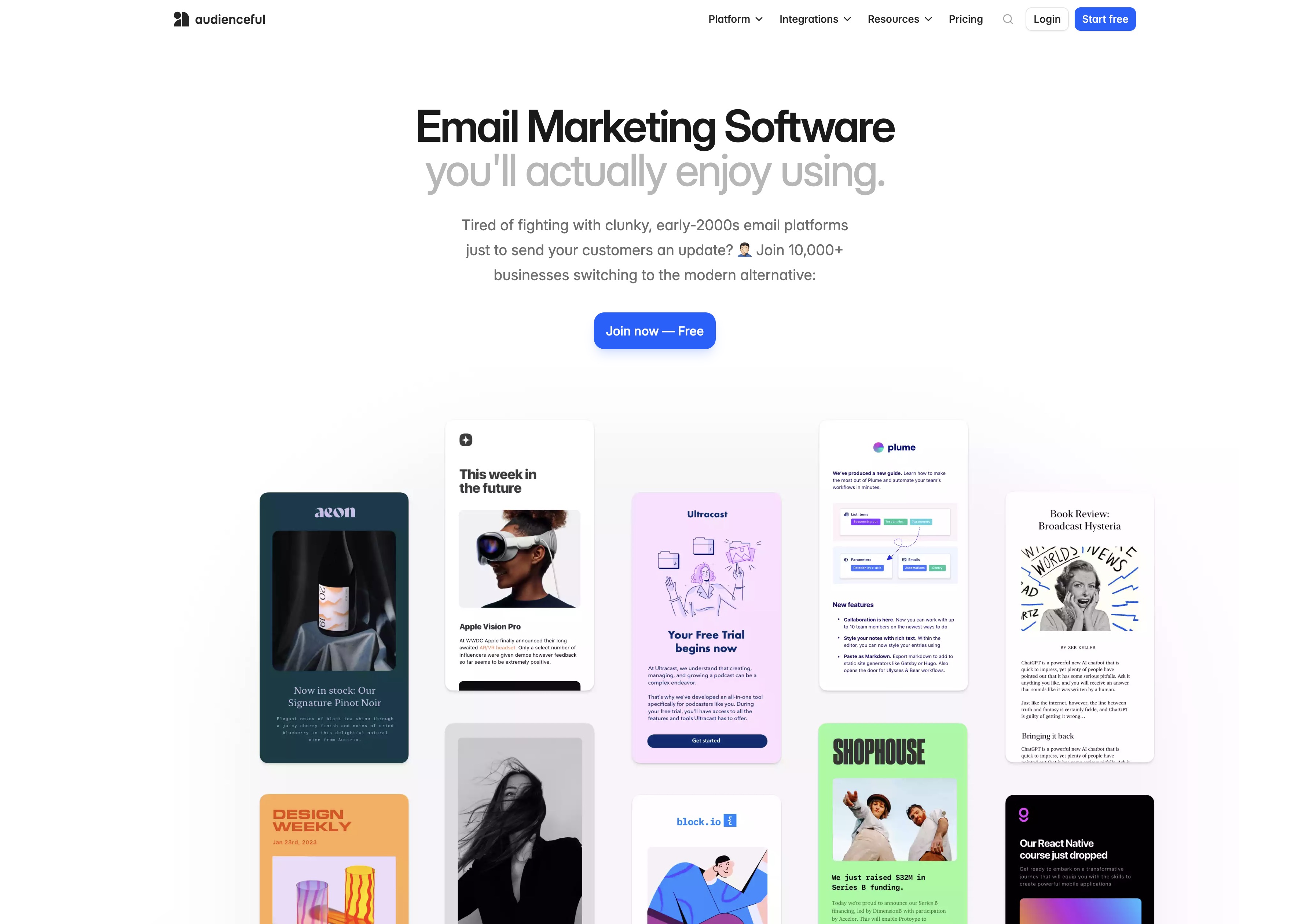
Audienceful connects natively to Stripe and Shopify. Subscriptions, trials, failed payments, orders and carts show up as data you can segment and trigger on, with no webhook code to maintain. A SaaS founder can send a trial-ending reminder or a dunning email off a real Stripe event. A DTC founder can turn on abandoned checkout and post-purchase flows from ready-made templates.
Revenue attribution ties paid orders and invoices back to the email or flow that drove them, which is the number investors ask about. The built-in AI agent builds segments, campaigns and paused automations from a short brief, and the MCP server lets Claude, Cursor or your own agents run campaigns, segments, flows and newsletters. Templates come from leading ecommerce agencies, and the collaborative editor lets a cofounder and a contractor work on the same email at once.
- Best for: SaaS and ecommerce startups whose revenue runs through Stripe or Shopify.
- Starting price at 10K contacts: Essentials is $79/month billed yearly ($99 monthly) with three flows. Growth is $118/month billed yearly with unlimited automations. See pricing.
- Ecommerce integrations: native Shopify and Stripe, plus Clerk for SaaS signups and a REST API.
- Automation depth: branching flows on billing and store events, custom events and ready-made Shopify and Stripe templates.
- One honest drawback: the free plan is for one user with one automation, so a team will move to a paid plan or the 14-day Growth trial early.
See Audienceful vs Mailchimp for the most common comparison founders run.
Brevo: for high send volume on a small budget
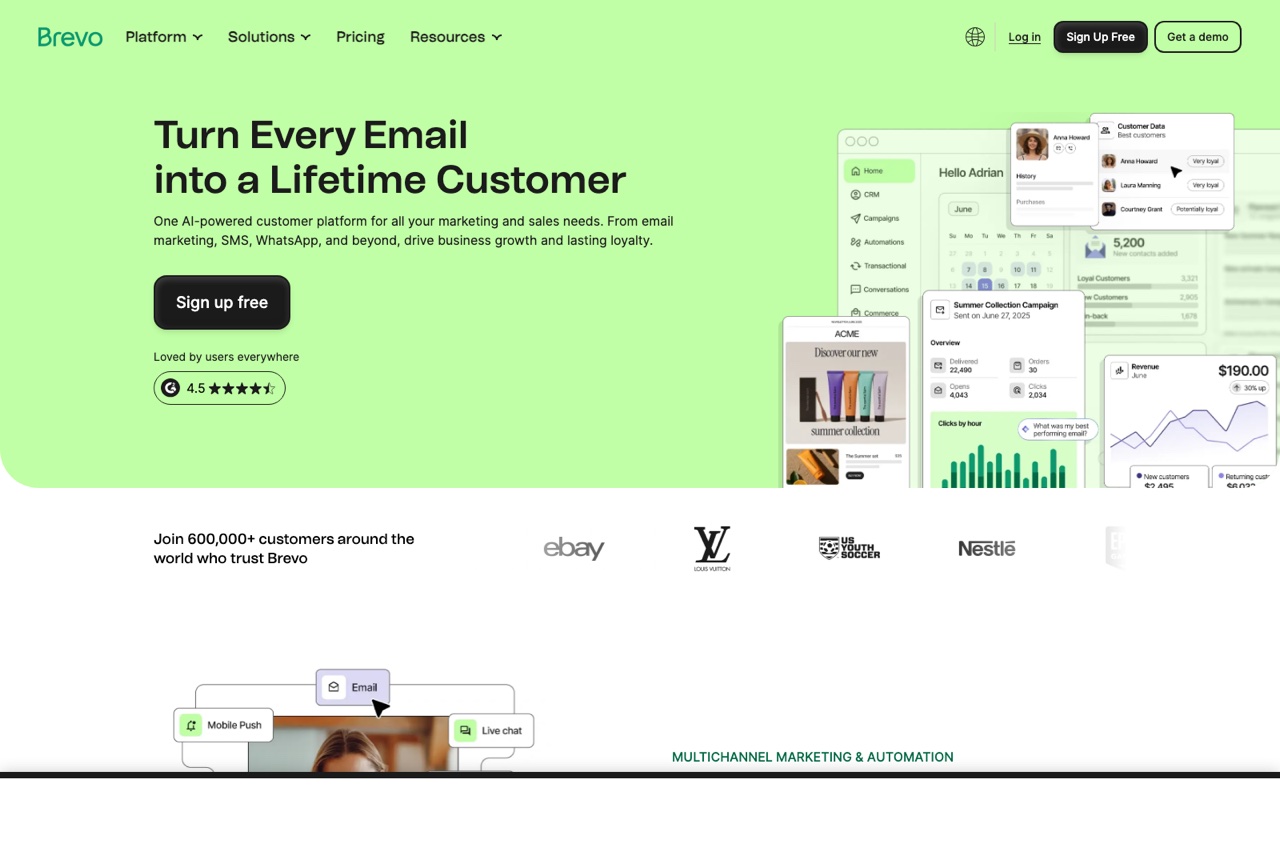
Brevo charges by emails sent rather than contacts. Its pricing page lists a free plan with up to 300 emails a day, Starter from $9/month, Standard from $18/month and Professional from $499/month. A startup with a large list it mails once a month can pay very little. It also covers transactional email and SMS.
- Best for: startups with big lists and low sending frequency.
- Starting price at 10K contacts: depends on monthly send volume; set it on the pricing page.
- Ecommerce integrations: Shopify and WooCommerce plugins.
- Automation depth: multi-step workflows on paid plans; check which plan your conditions need.
- One honest drawback: volume pricing gets harder to predict once you send often or run several flows.
Our Audienceful vs Brevo page covers the product differences.
MailerLite: for newsletter-first founders
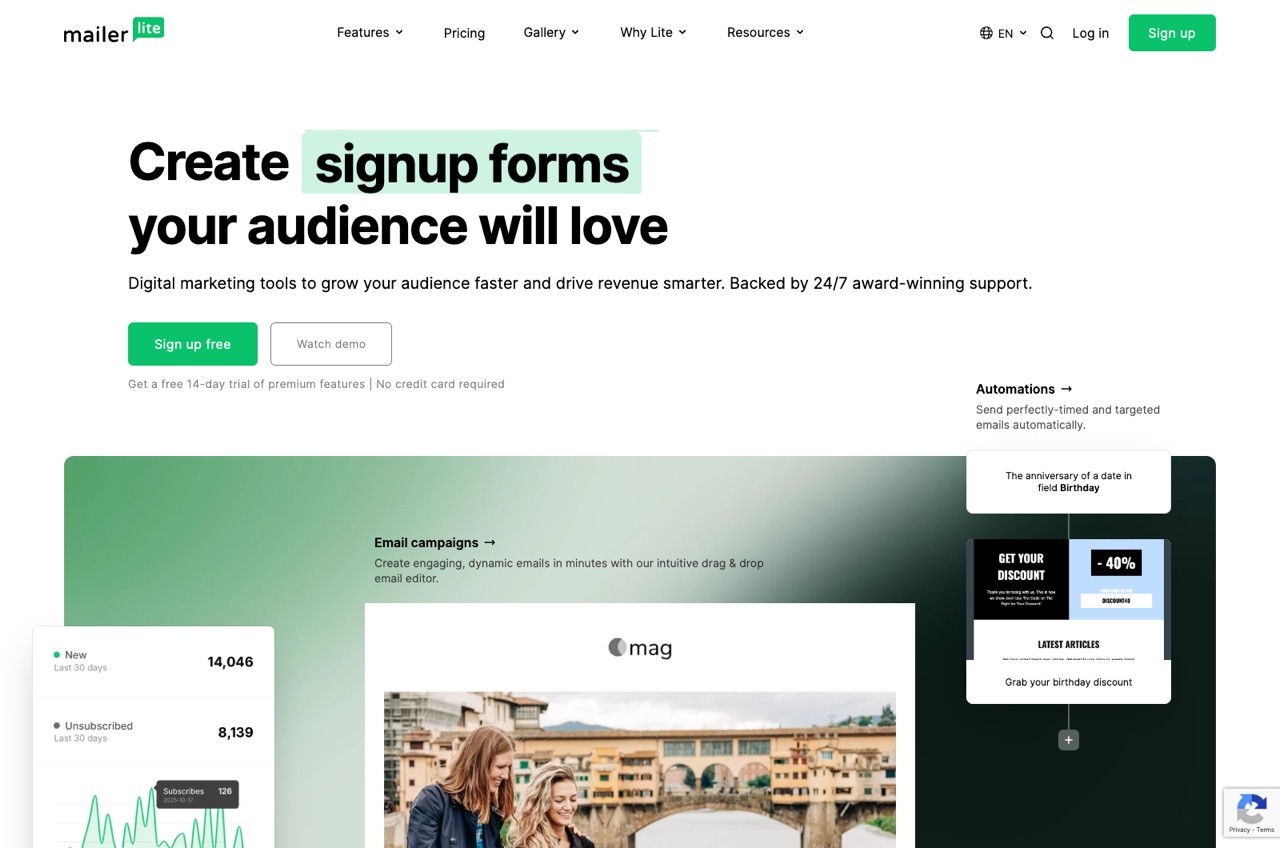
MailerLite is cheap and easy. The pricing page lists a free plan for 250 subscribers and 2,500 emails a month with three automations, then Comfort and Power. At 10,000 subscribers, Comfort is $89/month or $80.10 billed yearly.
- Best for: founders publishing a newsletter with light automation.
- Starting price at 10K contacts: $80.10/month billed yearly on Comfort.
- Ecommerce integrations: Shopify, WooCommerce and Stripe connections listed on its plan page.
- Automation depth: solid for welcome and simple sequences; Comfort caps active automations at 50.
- One honest drawback: the free plan shrank to 250 subscribers, so older reviews that say 1,000 are out of date.
Mailchimp: for founders who want the familiar option
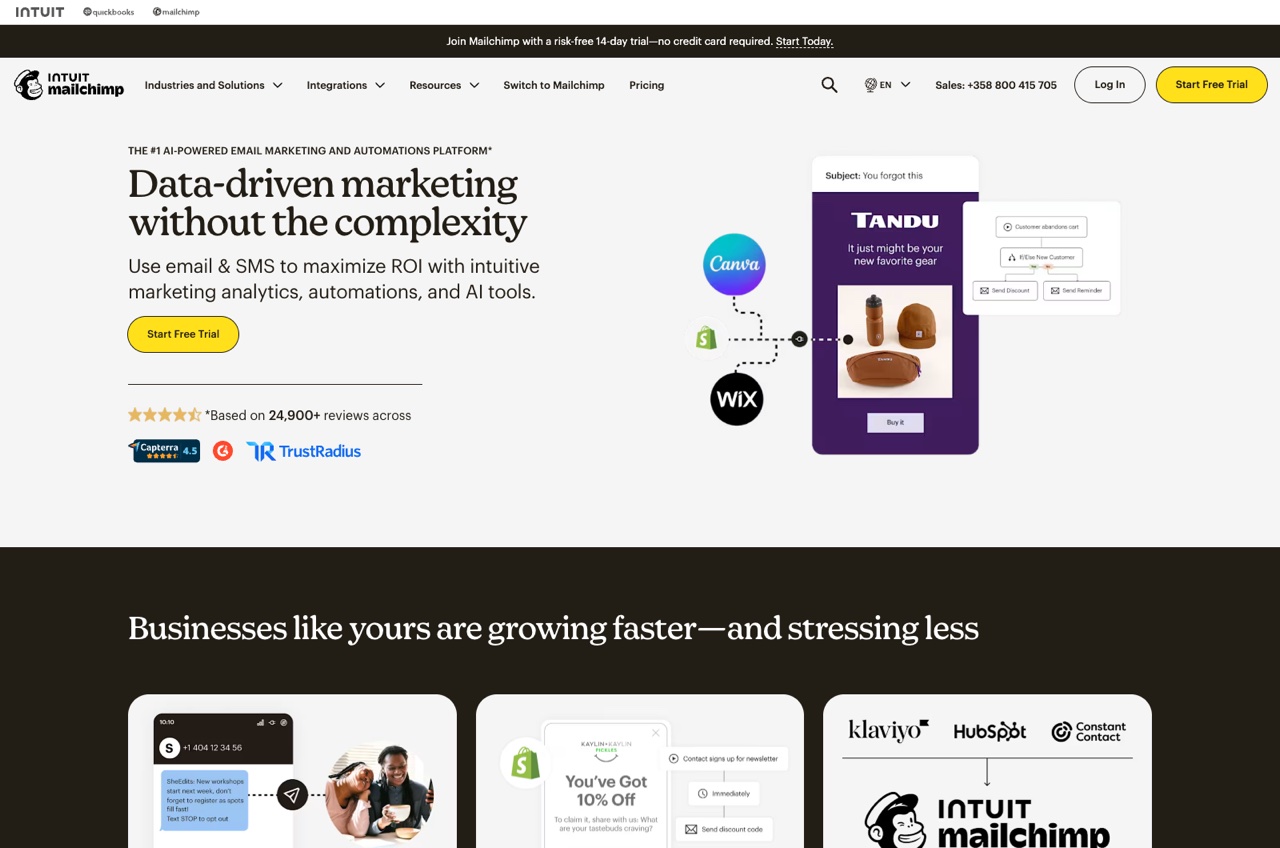
Mailchimp is the default many founders reach for first. Its pricing page now limits the free plan to 250 contacts and 500 sends a month, and Standard at 10,000 contacts is $135/month at the regular rate. Lists of 10,000 or more were getting 15% off for the first 12 months when we checked.
- Best for: general newsletters and announcements with a big template library.
- Starting price at 10K contacts: $135/month on Standard.
- Ecommerce integrations: an official Shopify app and many third-party connections.
- Automation depth: plan-dependent; Essentials limits flow length, Standard is the practical floor.
- One honest drawback: the free plan is now too small to grow on, as we cover in Mailchimp's free plan is dying.
Kit: for founder-led newsletters
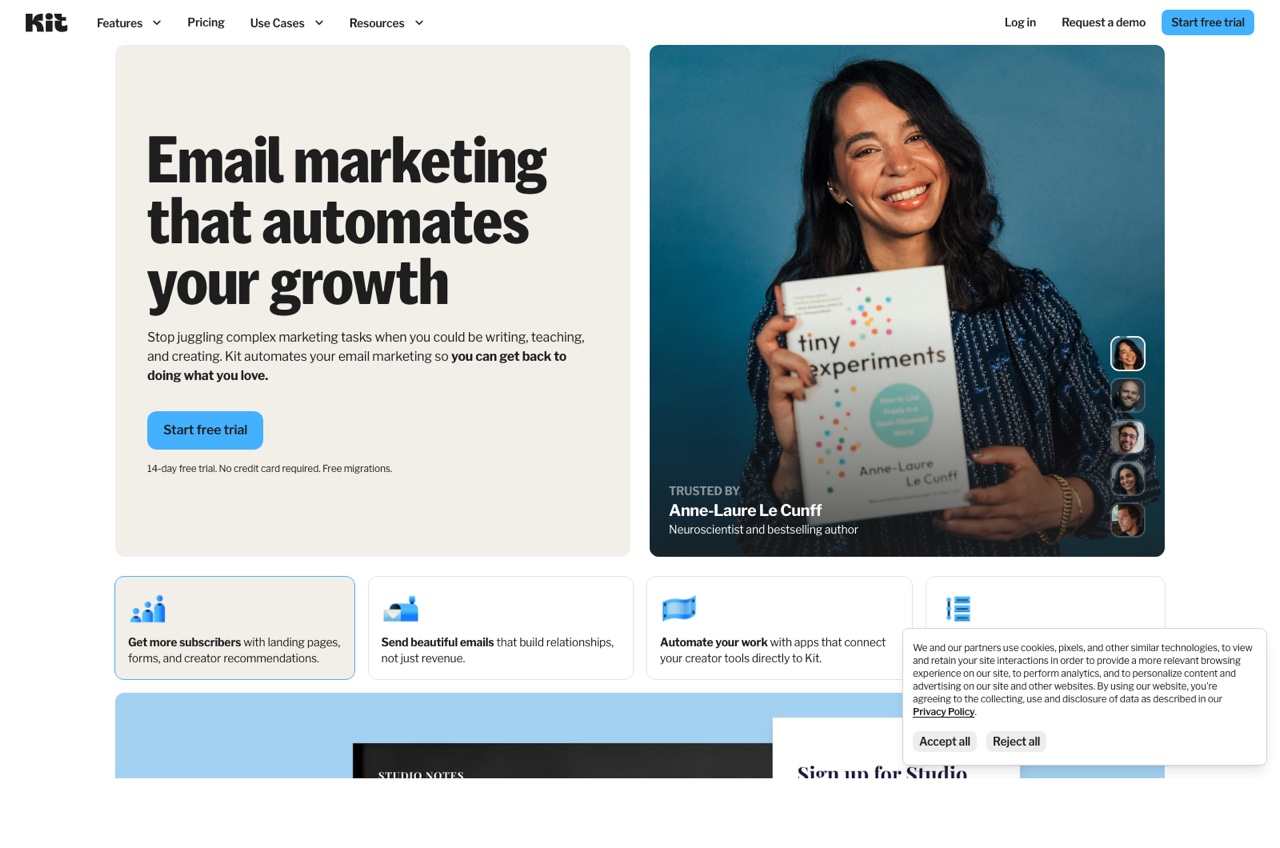
Kit (formerly ConvertKit) has the most generous free plan here: up to 10,000 subscribers on its pricing page. The catch is that Free has no automated sequences or visual automations. Creator adds them, at $139/month for 10,000 subscribers billed monthly, or about $116 billed yearly.
- Best for: founders building an audience through writing before the product ships.
- Starting price at 10K contacts: Free with no automations; Creator $139/month monthly.
- Ecommerce integrations: Shopify, Stripe and its own commerce features for digital products.
- Automation depth: visual automations and sequences on Creator and Pro.
- One honest drawback: the free-to-paid jump arrives the moment you need a welcome sequence.
Our Kit alternatives roundup covers the trade-offs.
Loops: for early SaaS teams that want one light tool
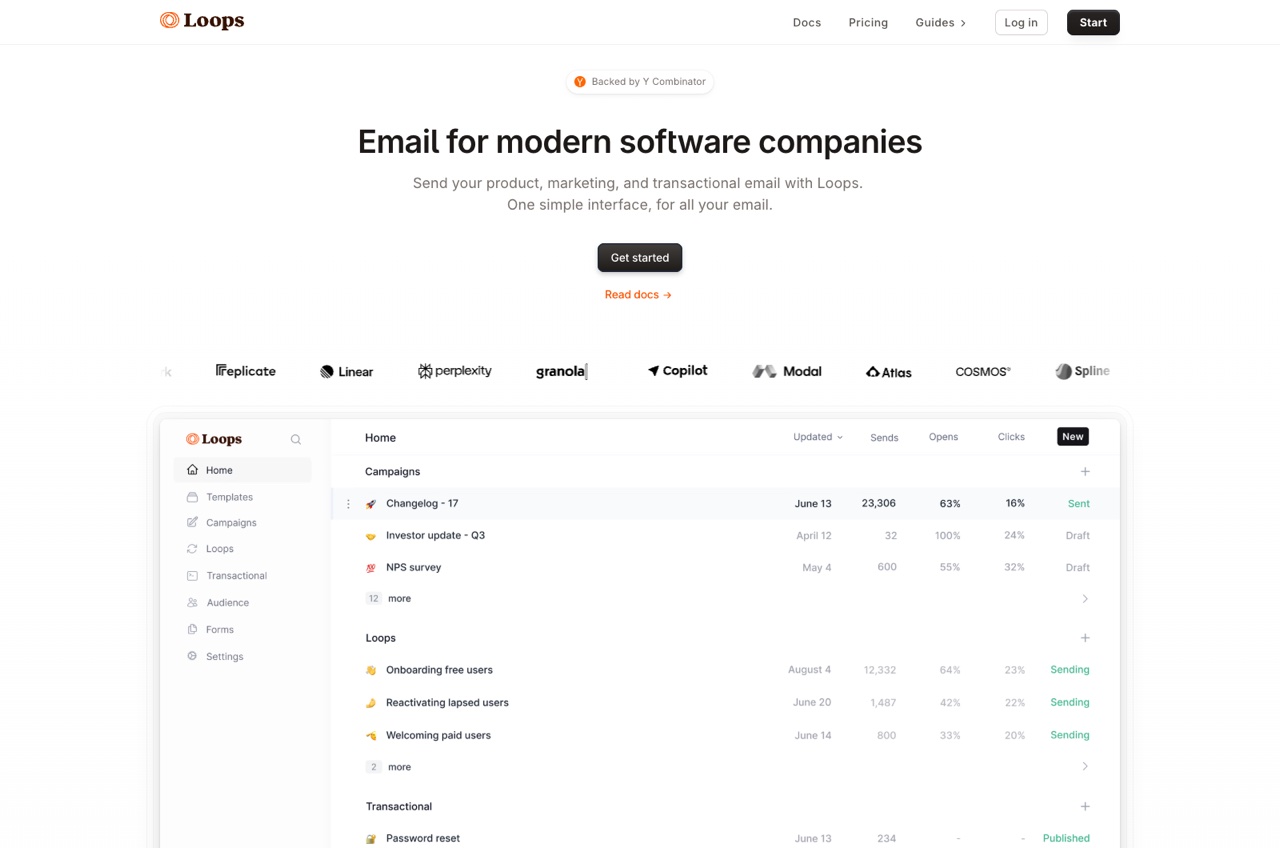
Loops was built for SaaS. Its pricing page gives a free plan for your first 1,000 subscribed contacts with 4,000 sends per 30 days, and Growth from $49/month at 5,000 contacts. Transactional email is included on paid plans.
- Best for: seed-stage SaaS that wants marketing and product email in one place.
- Starting price at 10K contacts: not published on the page we checked.
- Ecommerce integrations: Stripe and auth-provider integrations; not built for stores.
- Automation depth: event-triggered loops with branching.
- One honest drawback: larger tiers aren't public, so you can't model the price curve in advance.
ActiveCampaign: for B2B startups with a sales process
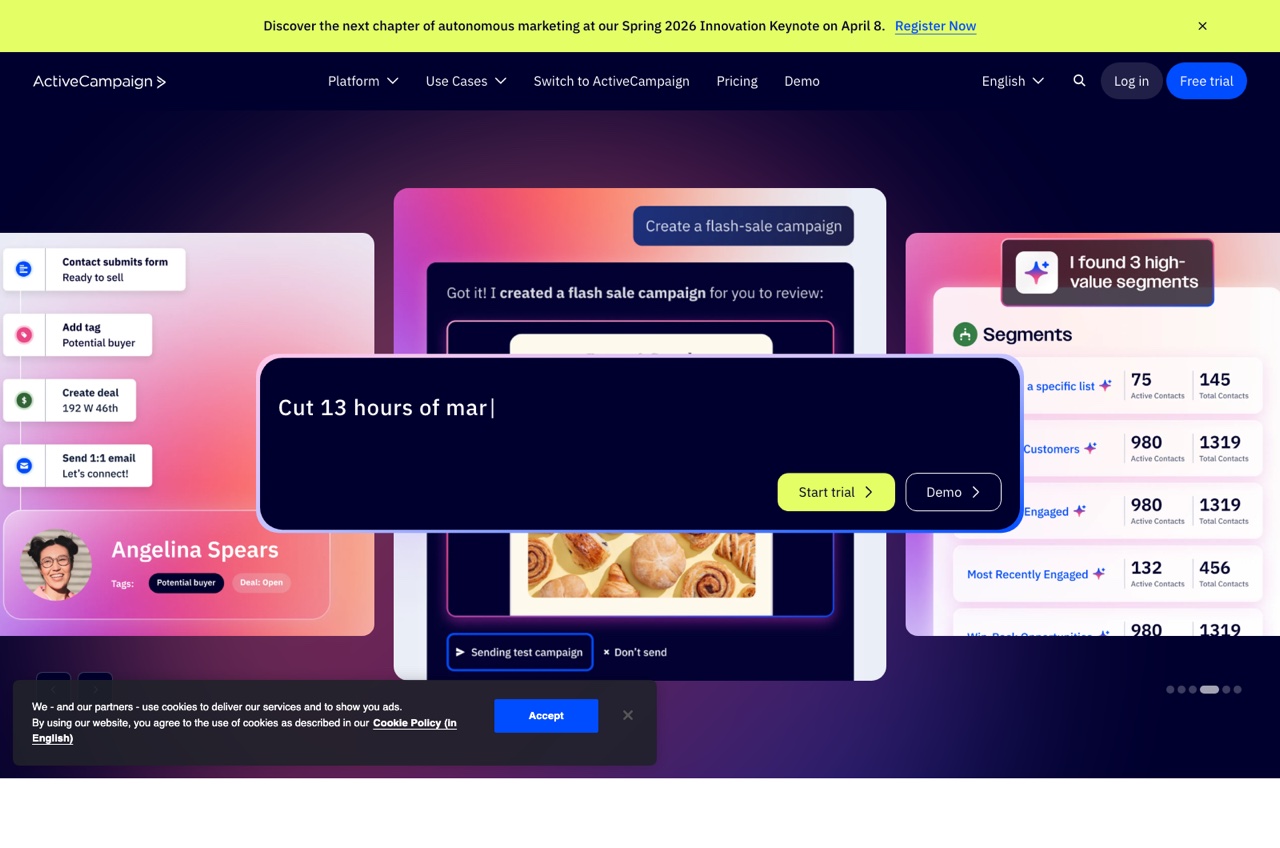
ActiveCampaign pairs automation with a CRM, which helps when founders are still closing deals by hand. The pricing page lists Starter at $149 and Plus at $189 per month billed yearly for 10,000 contacts.
- Best for: B2B startups running sales-assisted deals.
- Starting price at 10K contacts: $189/month billed yearly on Plus. Starter is $149 but doesn't include Stripe.
- Ecommerce integrations: Shopify, WooCommerce and Stripe, depending on plan.
- Automation depth: deep branching; Starter limits actions per automation.
- One honest drawback: the plan and add-on matrix makes the real price hard to read.
Customer.io: for product-led SaaS with engineers on hand
Customer.io runs on events your app sends. Its pricing page lists Essentials at $100/month for 5,000 profiles and $145 at 10,000. Companies that have raised under $10M may qualify for up to 12 months free through its startup program.
- Best for: product teams with engineering time to send clean events.
- Starting price at 10K contacts: $145/month on Essentials.
- Ecommerce integrations: via data pipelines and APIs rather than store apps.
- Automation depth: very deep, event-driven journeys.
- One honest drawback: it needs a developer to set up well, which is expensive time at a startup.
See our Customer.io alternatives if that's a blocker.
Klaviyo: for DTC startups that plan to scale fast
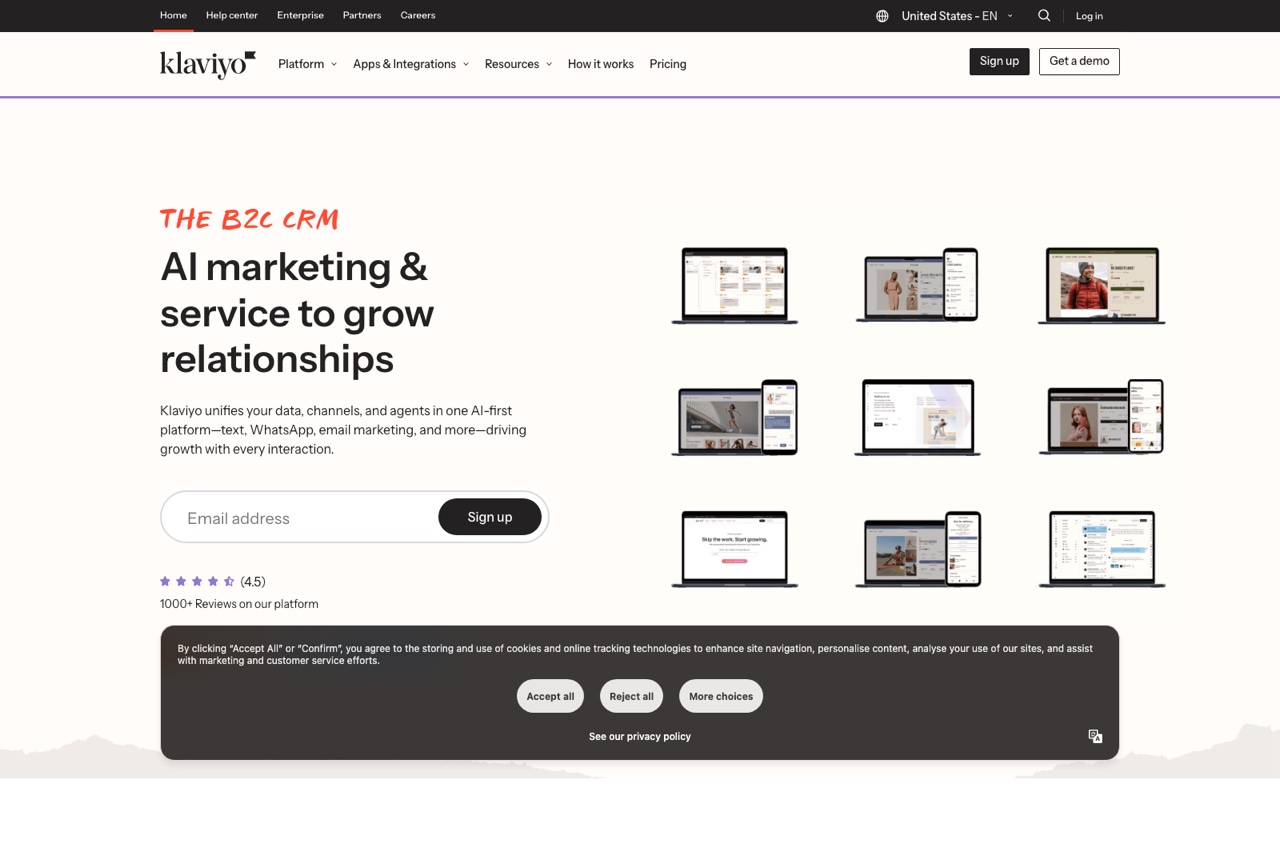
Klaviyo is the established Shopify platform. Its pricing page lists a free plan for 250 active profiles, then $150/month at 10,000 and $720 at 50,000 on the Email plan.
- Best for: venture-backed DTC brands that want the ecommerce default.
- Starting price at 10K contacts: $150/month on Email.
- Ecommerce integrations: deep Shopify integration plus Stripe and many store apps.
- Automation depth: a large flow library and predictive segments.
- One honest drawback: the bill grows faster than the list, as our Klaviyo pricing breakdown shows.
Resend: for developer teams starting with transactional email
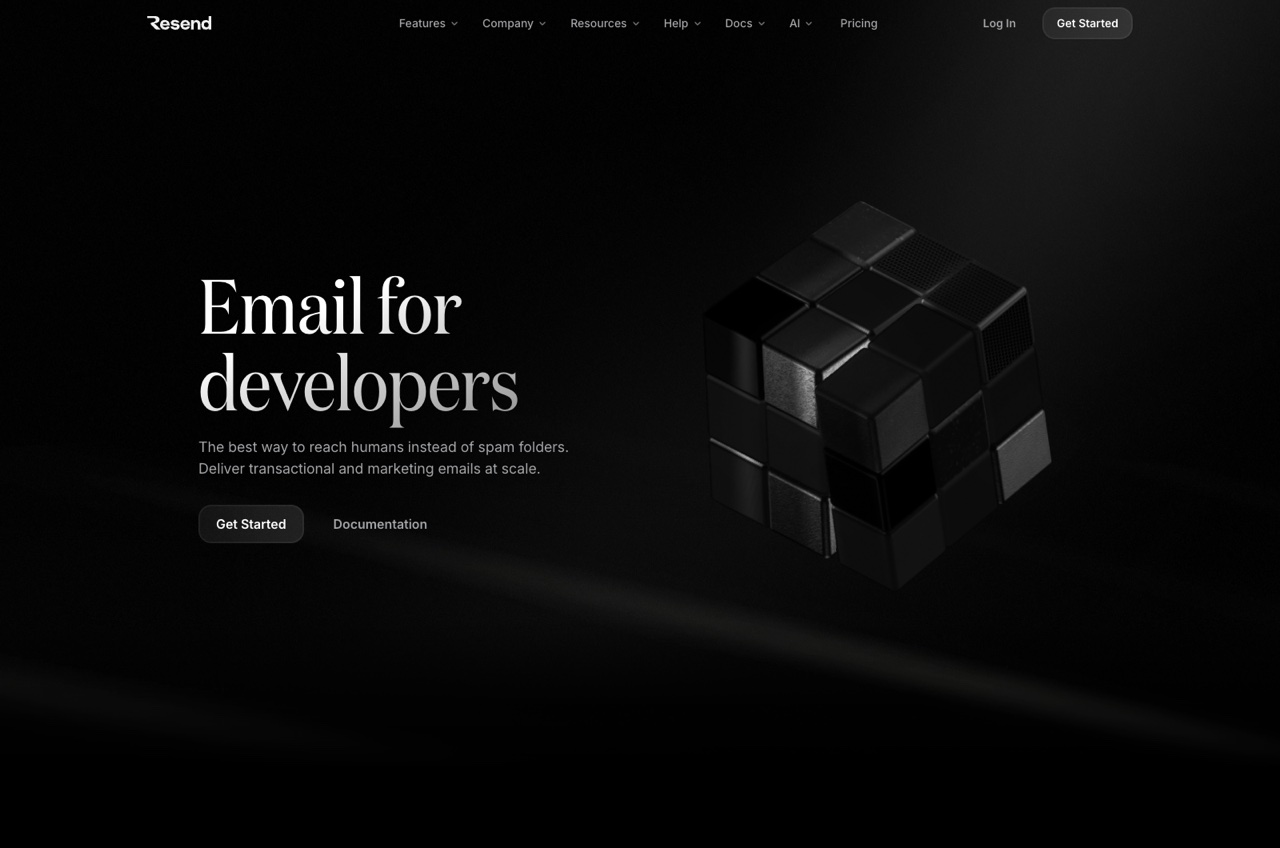
Resend began as an email API and added marketing broadcasts. Its pricing page splits transactional plans (Free covers 3,000 emails a month, Pro from $20) from marketing plans priced by contacts, at $80/month for 10,000.
- Best for: developer-led teams sending password resets and receipts first.
- Starting price at 10K contacts: $80/month for marketing, plus transactional usage.
- Ecommerce integrations: none native for stores; you build them in code.
- Automation depth: newer and lighter on the marketing side.
- One honest drawback: non-technical teammates will find campaign work harder than in a marketing-first tool.
The three automations every startup should launch first
Set these up before you send a single newsletter. They run while you build product.
| Automation | SaaS trigger | Ecommerce trigger | Guide |
|---|---|---|---|
| Welcome | Account created | Newsletter signup | Welcome sequence |
| Onboarding or recovery | Trial started | Checkout abandoned | Trial onboarding, abandoned checkout |
| Win-back | Subscription canceled | No order in 90 days | Win-back emails |
For SaaS, add a failed-payment email once you have paying customers. Our Stripe email automation guide walks through the events.
When a startup should switch email platforms
These signals mean the current tool is costing more than a move would:
- You're writing webhook code or Zapier zaps to get Stripe or Shopify data into email.
- The next tier up costs more than the revenue email currently drives.
- Your free plan blocks the automation you need.
- Nobody can say which emails make money.
- Deliverability drops and the tool gives you no way to see why.
A move takes a few days if you plan it. Export contacts with consent status and suppressions, rebuild the two or three flows that matter, authenticate your domain and import. The migration guide and Mailchimp import guide cover the steps, and our platform switching guide covers the order.
FAQs
What's the best free email marketing tool for startups?
It depends on what "free" needs to cover. Kit's free plan has the most subscribers (10,000) but no automations. Audienceful's free plan includes one automation and native Stripe and Shopify data. Loops covers 1,000 contacts with 4,000 sends a month. MailerLite and Mailchimp now stop at 250.
How much should a startup spend on email marketing?
Before product-market fit, spend close to nothing and use a free plan with at least one automation. Once email drives measurable revenue, a plan in the $80 to $150 range at 10,000 contacts is normal. Spend more only when attribution shows email paying for it.
Is Mailchimp good for startups?
It's fine for simple newsletters, but the free plan now covers only 250 contacts and 500 sends a month, and the useful automations sit on Standard at $135/month for 10,000 contacts. Startups with Stripe or Shopify revenue usually get more from a tool that reads that data natively.
When should a startup switch email platforms?
Switch when you're maintaining glue code for billing or store data, when the next tier costs more than email earns, or when you can't tell which emails drive revenue. Moving at 5,000 contacts is much easier than at 50,000.
Do I need separate tools for transactional and marketing email?
Not always. Loops, Resend, Brevo and Audienceful all send both. One tool keeps your sender reputation and unsubscribes in one place, as our transactional and marketing email guide explains. Large engineering teams sometimes still split them.
For SaaS-specific picks, read best email marketing for SaaS.
Start free on Audienceful, connect Stripe or Shopify in a few minutes and let the AI agent draft your first welcome flow.
