In Klaviyo vs Kit, Kit (formerly ConvertKit) is the better pick if you're a creator whose income is the newsletter, digital products and sponsorships, and Klaviyo is the better pick if a Shopify store is now the main business. Kit's Shopify app covers buyers, purchases and abandoned checkout, but Klaviyo goes much deeper on store events and segments, at a higher price. If you're a creator who became a store owner and wants store flows without Klaviyo's bill, Audienceful is the middle option we cover below.
We make Audienceful, so treat this as a competitor's comparison. Prices were read from both vendors' live pricing pages on 14 November 2026, and each feature claim links to the vendor's own documentation.
Klaviyo vs Kit: the short answer
Choose Kit if you write a newsletter people subscribe to for the writing, you sell courses, ebooks or memberships, and a Shopify store is one revenue stream among several. Kit's free plan covers up to 10,000 subscribers, which is hard to beat while you grow an audience. Course sellers comparing more options can see our guide to email marketing for course creators.
Choose Klaviyo if most of your revenue comes through Shopify and you want email to react to what shoppers do: view a product, add to cart, reach checkout, buy, stop buying. Klaviyo is built for that and reports revenue per email.
The in-between case is the creator with merch or a product line that grew. You still send a weekly letter, but now you also need browse abandonment, post-purchase and win-back. That's the person who usually searches this, and it's where the choice is least obvious.
At a glance
| Kit | Klaviyo | |
|---|---|---|
| Built for | Creators, newsletters, digital products | Online stores, especially Shopify |
| Free plan | Up to 10,000 subscribers, no automations | Up to 250 active profiles |
| Paid plans | Creator, Pro | Email, Email and SMS |
| Billing basis | Unique, active subscribers | Active (emailable) profiles |
| Shopify | Syncs buyers, purchases as product tags, abandoned checkout trigger | Full sync of customers, orders, catalog and browsing events |
| Automation builder | Visual automations on paid plans | Flow builder on every plan |
| Creator tools | Digital product sales, recommendations, landing pages | Not its focus |
Sources: Kit pricing, Kit and Shopify, Klaviyo pricing.
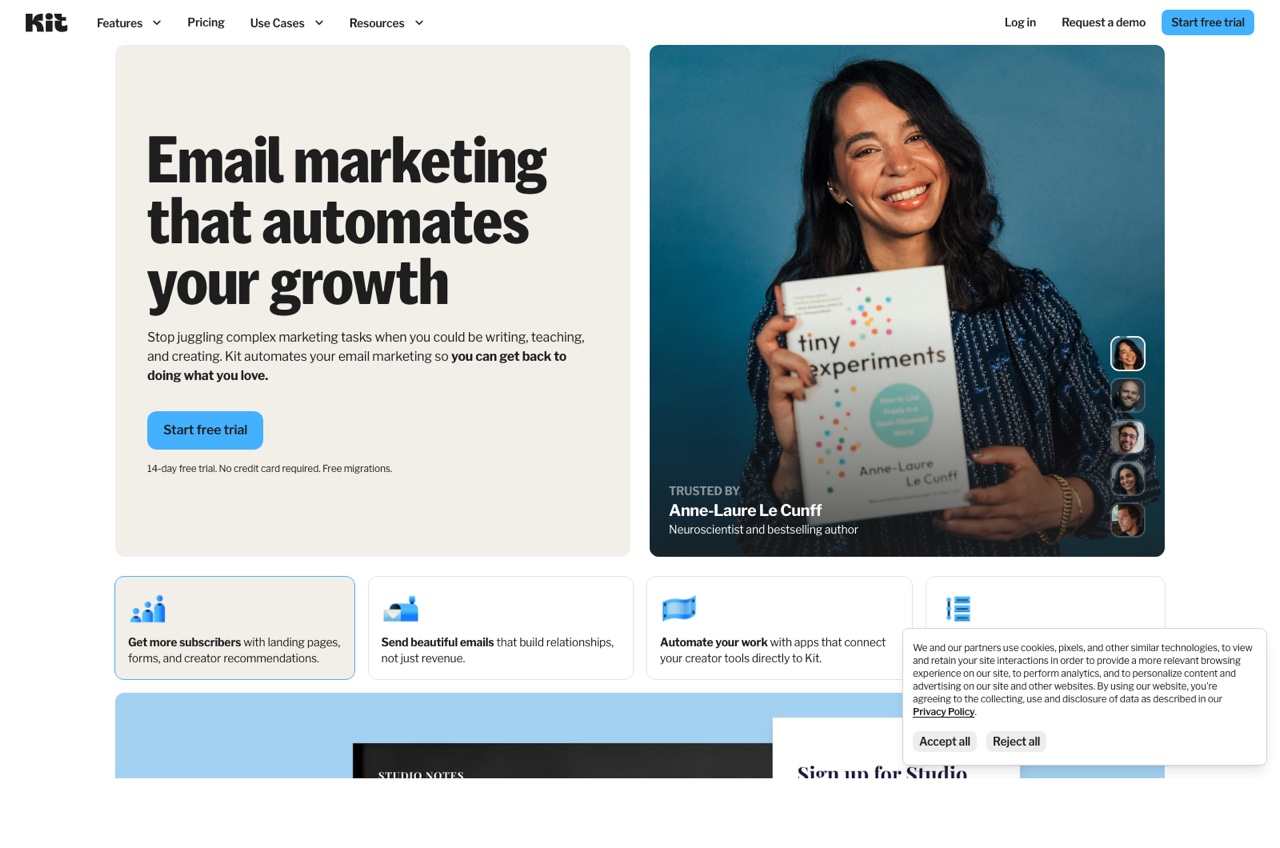
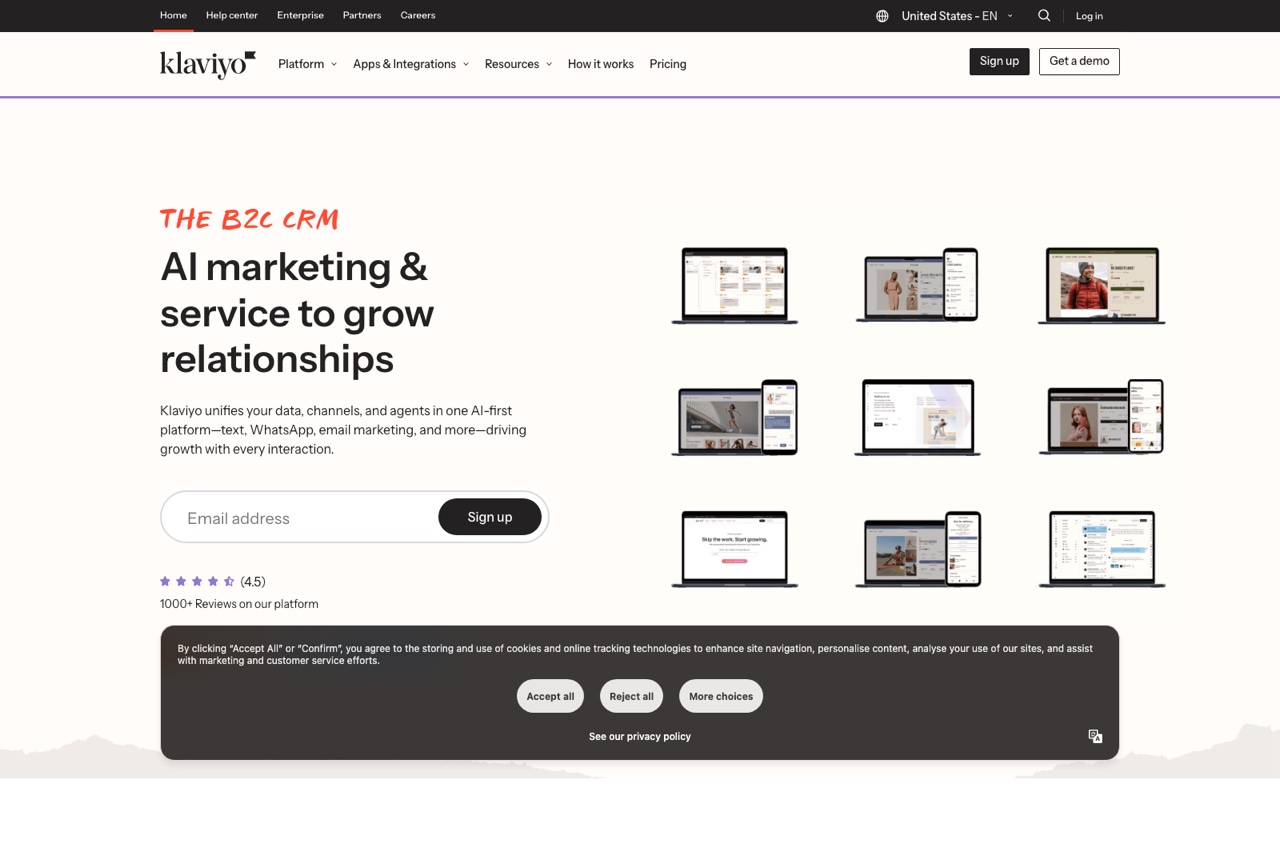
Website screenshots from our competitor library, not in-app screens.
Klaviyo vs Kit pricing at five list sizes
Kit's pricing page lists a Free plan up to 10,000 subscribers and two paid plans, Creator and Pro. Creator adds the visual automation builder, automated sequences and the app integrations. Kit says subscribers count only if they are unique and active. Klaviyo's Email plan bills on active profiles.
Monthly prices, checked 14 November 2026:
| Subscribers | Kit Free | Kit Creator | Kit Pro | Klaviyo Email |
|---|---|---|---|---|
| 1,000 | $0 | $39 | $79 | $30 |
| 3,000 | $0 | $59 | $99 | See selector |
| 10,000 | $0 | $139 | $189 | $150 |
| 25,000 | Not available | $199 | $279 | $400 |
| 50,000 | Not available | $379 | $519 | $720 |
| 100,000 | Not available | $679 | $879 | $1,380 |
Sources: Kit pricing and Klaviyo pricing. Kit's yearly billing works out to roughly two months free: Creator is $33 a month at 1,000 subscribers ($390 a year) and $116 a month at 10,000. Kit's Pro price was showing a first-year promotion on the day we checked; the table uses the regular monthly figures.
Two things stand out. Kit Creator undercuts Klaviyo at every size from 10,000 up, and the gap widens as you grow: $379 against $720 at 50,000. But Kit's free plan has no automated sequences or visual automations, so a store that needs an abandoned checkout email has to be on Creator at minimum.
For the full Klaviyo breakdown, read our Klaviyo pricing guide. For Kit's recent changes, see Kit's price increase, and for options when the bill is too high, what to do when Kit is too expensive.
Shopify and ecommerce data
Kit's Shopify help article says Shopify customers who have bought at least one product are synced to Kit, and past purchases come over only if you opt in to the purchase history import at install. Each buyer gets a product tag for each product bought. Buyers who opted out of marketing at checkout are tagged so their preference carries over.
That's a useful, clean setup for a creator. It is buyer-centric: the sync is built around purchases rather than a full feed of store browsing.
Klaviyo syncs customers, orders, products and catalog data, plus on-site events such as Viewed Product and Added to Cart through its Shopify integration. That event stream is what drives browse abandonment, product recommendations and predictive segments.
Store automations
| Store flow | Kit | Klaviyo |
|---|---|---|
| Abandoned checkout | Yes, Abandoned Checkout node with a 3-email template and a Shopify cart block | Yes, pre-built |
| Abandoned cart (before checkout) | Not part of the documented Shopify triggers | Yes, Added to Cart trigger |
| Browse abandonment | Not part of the documented Shopify triggers | Yes, pre-built |
| Post-purchase | Yes, Shopify and Product purchased entry points | Yes, pre-built |
| Specific-product follow-up | Yes, by product or collection | Yes |
| Win-back | Build it with tags and purchase data | Pre-built, based on order history |
| Revenue per flow | Purchases appear on the Subscribers page | Built into every flow report |
Kit's abandoned checkout template waits an hour, sends three emails with the abandoned products in a cart block, and tags people as recovered or lost, according to its help article. For a creator store selling a handful of products, that covers the flow that earns the most.
Where Klaviyo pulls ahead is the earlier stages of the funnel. A shopper who browsed but never entered an email at checkout can still get a browse abandonment email if Klaviyo knows who they are.
Creator features
This is Kit's home ground. Its plans include landing pages and forms, digital product sales, and a recommendations network that helps newsletters grow by recommending each other. Pro adds Subscriber Signals and engagement analytics. If your newsletter is the product, these matter more than any store trigger.
Klaviyo has forms, but it doesn't try to help you sell an ebook or grow a newsletter through recommendations.
Segmentation and tagging
Kit is tag-first. You tag people based on forms, links clicked, products bought and automations, then send to tag combinations. It's simple and works well for a creator who thinks in topics and offers.
Klaviyo segments on any synced property or event, with conditions like order count, total spend, products viewed and predicted next order date. For a store that wants to send fewer, sharper emails, that depth is the main reason to pay more.
Editor and templates
Kit's editor is plain by design. Many creators send emails that look like letters, and Kit makes that easy. Klaviyo's editor is block-based with product blocks, product recommendations and conditional content, closer to what a store sending three promotions a week needs.
Deliverability
Both platforms deliver well when the sender does the basics. Authenticate your domain with SPF, DKIM and DMARC, keep your list clean and avoid sudden jumps in volume. Our deliverability checklist covers it. Be wary of any third-party chart that ranks them by "inbox rate"; the methods are rarely published.
When to move from Kit to an ecommerce platform
Look at where your revenue comes from. If store orders have passed your digital product and sponsorship income, and you're building workarounds with tags to imitate browse or win-back flows, you've outgrown a creator tool for the store side.
A second sign: you want to see revenue per email and per flow next to opens and clicks, so you can stop sending what doesn't sell.
A third: your list is past 10,000, Kit's free plan no longer covers you, and you're comparing paid plans anyway.
The middle option: Audienceful
Audienceful is for creators who now run a Shopify store and want both the newsletter and the store flows in one place.
- Native Shopify app. Install it from the Shopify App Store and customers, orders, line items, refunds and products sync in, with a one-time import of your store history. Billing goes on your Shopify invoice.
- Store flows ready to switch on. Welcome, browse abandonment, added to cart, abandoned checkout, post-purchase, review request, replenishment, VIP and win-back, from the Shopify flow library.
- Revenue attribution for every campaign and flow.
- An AI agent that writes in your brand voice and builds segments and flows from a brief. Full MCP coverage means your own AI tools can run campaigns, segments, flows and newsletters too.
- A design-system email builder with agency-designed templates and real-time collaboration, plus newsletter publishing for the writing side.
On price, Audienceful is $79 a month billed yearly ($99 monthly) at 10,000 contacts against Kit Creator's $139 monthly and Klaviyo's $150. At 50,000 it's $272 billed yearly ($320 monthly) against $379 and $720. Prices checked on all three pages on 14 November 2026.
Coming from Kit, export your subscribers as CSV and import them; Audienceful verifies addresses on import. The list import guide has the steps. Compare products directly in Audienceful vs Kit and Audienceful vs Klaviyo, or see more options in Kit alternatives and Klaviyo alternatives.
FAQs
Does Kit integrate with Shopify?
Yes. Kit's Shopify app syncs customers who have bought at least one product, tags them by product purchased, carries over marketing opt-outs, and can import purchase history at install. Shopify purchases can start visual automations.
Can Kit send abandoned cart emails?
Kit can send abandoned checkout emails through its Abandoned Checkout automation node, which starts when a shopper enters their email at checkout and doesn't buy. Its included template sends three emails with the cart contents. Visual automations need a paid Kit plan.
Is Kit cheaper than Klaviyo?
From 10,000 subscribers up, yes. Kit Creator is $139 a month at 10,000 and $379 at 50,000, against Klaviyo Email's $150 and $720, checked 14 November 2026. Below 10,000, Kit's free plan costs nothing but has no automations.
Should a creator with a store use Klaviyo?
If the store has become the main business and you want browse abandonment, deep purchase segments and revenue reporting, Klaviyo or another ecommerce platform fits better. If the newsletter and digital products still earn most of your income, Kit is the more natural home.
How do I move subscribers from Kit?
Export subscribers from Kit as a CSV, including unsubscribed and bounced people so you keep suppressing them. Import into the new platform, map tags to tags or fields, set up your sending domain, and rebuild your sequences before you turn Kit's off. The migration guide covers the order.
Sell on Shopify? Get the store flows and keep your newsletter. Start free, no card.
