The best Drip alternatives for ecommerce are Audienceful for Shopify flows and collaborative campaign work, Klaviyo for an established ecommerce operating setup, and Omnisend for a store-focused email and SMS shortlist. Shopify Messaging deserves a look if you want sending inside Shopify, while Mailchimp, ActiveCampaign, MailerLite and Brevo suit different combinations of campaigns, sales workflows and sending volume. Choose around the flows your store actually runs, then compare the bill at your retained list size.
We make Audienceful and put it first. Prices and product information below were checked against vendor sources on 14 November 2026. Screenshots come from our competitor library and show the vendors' websites, not a claim that we tested every feature in a paid account. If you're still deciding whether to leave, our Drip review covers what it does well and where it falls short.
Drip alternatives: Best for use case
| Platform | Best for use case | What to check first |
|---|---|---|
| Audienceful | Shopify and Stripe automation with collaborative editing and AI agents | Contact count and number of live flows |
| Klaviyo | Ecommerce teams invested in a broad store-marketing setup | Active-profile billing and the selected products |
| Omnisend | Store-focused email and SMS | Standard versus Pro and current SMS terms |
| Mailchimp | General campaigns alongside store marketing | Standard automation and contact allowances |
| ActiveCampaign | Email connected to a sales process | The plan required by integrations and actions |
| MailerLite | Newsletters and a measured automation program | Comfort usage limits versus Power |
| Shopify Messaging | Sending inside the Shopify admin | Total campaign and automation volume |
| Brevo | A volume-priced marketing and transactional shortlist | Both contact capacity and email volume |
When replacing Drip makes sense
First, identify what you want to improve. A price increase, slow campaign production and a missing integration requirement are different buying problems. A new platform should solve the actual constraint without making your best-performing flow harder to maintain.
Drip's current pricing page lists ecommerce workflows, segmentation, store integrations, revenue reporting and an MCP connection. It is not accurate to dismiss it as having no automation or AI connection. The decision is whether its operating model, current plan and editing workflow suit your team.
At 10,000 people, the live Drip selector shows $154/month. At 50,000 it shows $699 with 600,000 monthly sends, and at 100,000 it shows $1,199 with 1.2 million sends. Those figures matter more than a starting price if your store already has a substantial audience.
Write down the flows that earn revenue, the campaigns you send each month and the systems supplying their data. Use that inventory for every demo. Otherwise, the comparison turns into a list of impressive features you may never use.
Audienceful: for store automations and a team that ships campaigns together
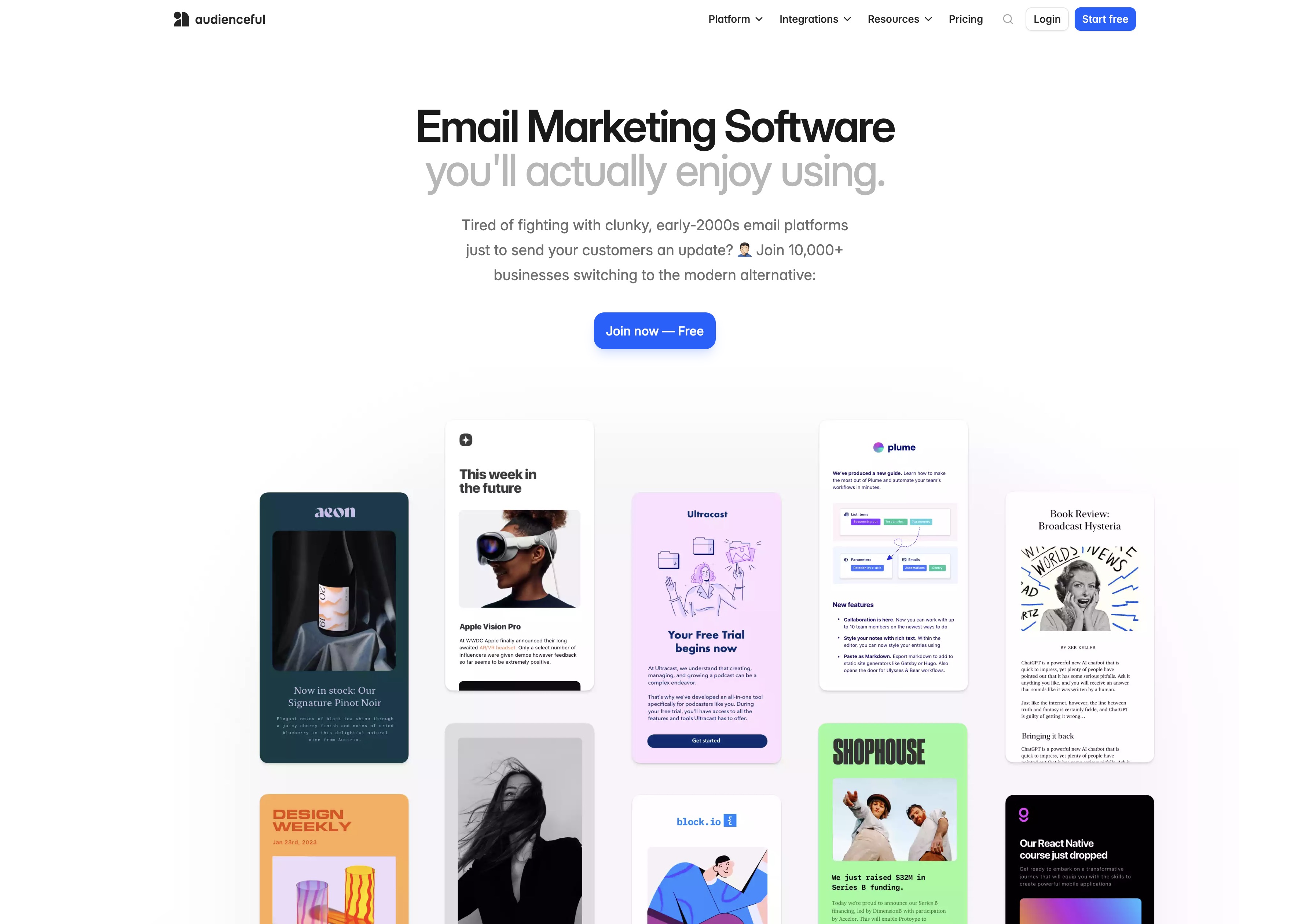
Audienceful connects directly to Shopify and Stripe. Customer, order and subscription data can drive segments and branching automations without asking your team to maintain a separate spreadsheet of who bought or upgraded.
For a Shopify store, start with ready-made automation templates, then adapt the messages and timing. A replenishment flow should reflect the product's actual consumption cycle. A post-purchase flow should distinguish a first order from a repeat purchase. The useful feature is the ability to make those decisions on the underlying store data.
The collaborative editor helps the people writing, designing and approving a campaign work on the same message. Agency-designed templates provide a starting layout, and the built-in AI agent can assemble a segment, campaign or paused automation from a brief. The MCP server covers campaigns, segments, flows and newsletters for external agents too.
- Best for: ecommerce and SaaS teams combining revenue-based automation with regular collaborative campaign production.
- Starting price at 10K contacts: Essentials is $79/month billed yearly or $99 monthly, with three automated flows. Growth is $118/month billed yearly or $140 monthly, with unlimited automations. See current plans.
- Ecommerce integrations: native Shopify and Stripe, with store and billing data available for targeting.
- Automation depth: branching workflows, custom events and ready-made Shopify and Stripe flows.
- One drawback: a Drip migration still requires workflow mapping and testing; a contact import does not preserve old timers.
Revenue attribution and deliverability monitoring help your team evaluate the new setup after launch. For the platform comparison, see Audienceful vs Drip.
Klaviyo: for teams that want an established ecommerce platform
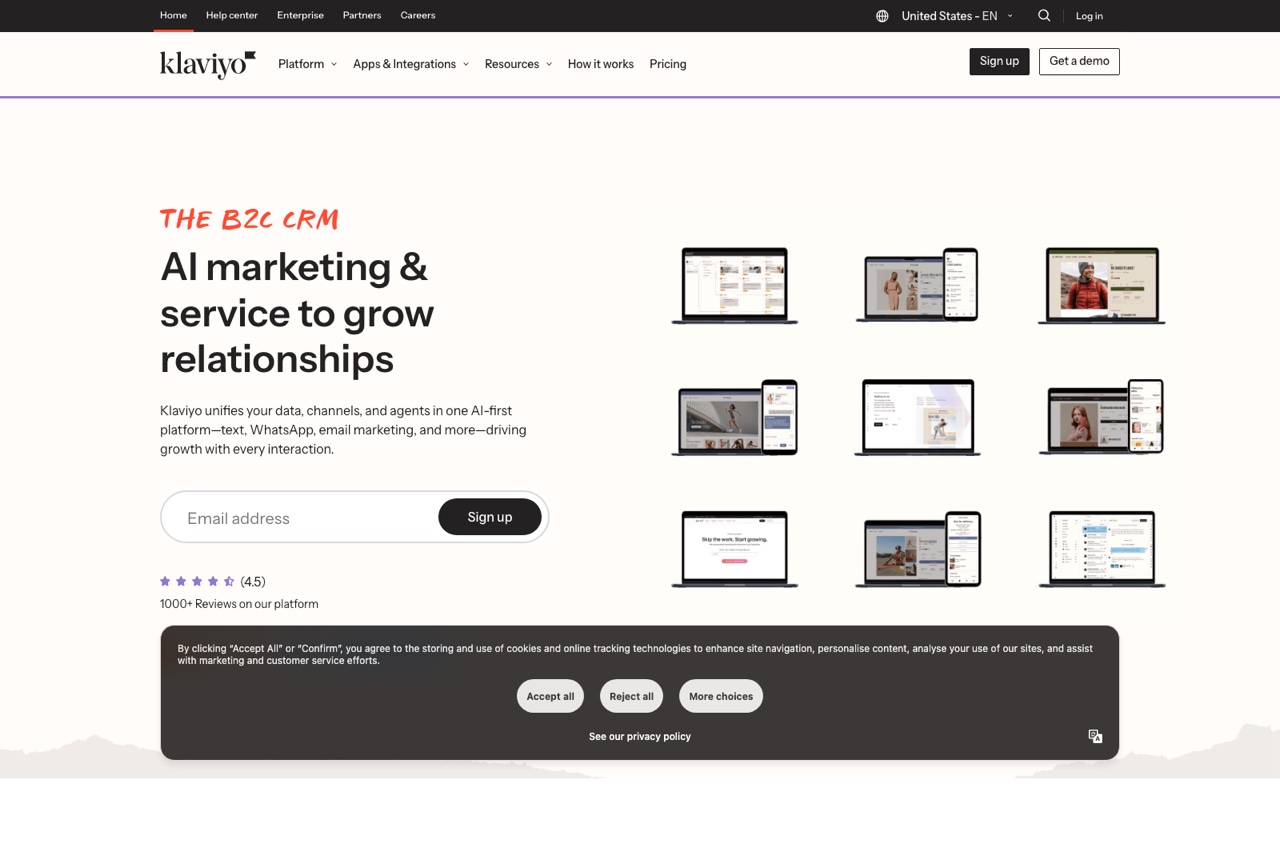
Klaviyo belongs on a Drip shortlist if your team wants its ecommerce data model and broader store-marketing ecosystem. Its pricing page separates Email, Marketing and custom plans, so identify the actual package before comparing the headline number. If you pick it, our Drip to Klaviyo migration guide covers moving workflows and suppressions.
Use your existing workflow inventory in the trial. Build a new subscriber path, a checkout recovery and a repeat-purchase segment. Check whether the team understands how to exclude recent buyers, stop messages after conversion and investigate skipped recipients.
- Best for: ecommerce teams comfortable operating a broader specialist marketing platform.
- Starting price at 10K contacts: $150/month for the Email plan, before tax and other products.
- Ecommerce integrations: evaluate the native Shopify setup through Klaviyo's Shopify page.
- Automation depth: campaigns, event-triggered flows and behavioral segments; test the conditions your store needs.
- One drawback: the bill follows active profiles, so campaign exclusions alone do not necessarily reduce it.
Klaviyo's active-profile documentation explains the billing distinction. A platform change should not merely exchange one unexpected contact bill for another. Our Klaviyo alternatives guide examines that decision in more detail.
Omnisend: for a store-focused email and SMS shortlist
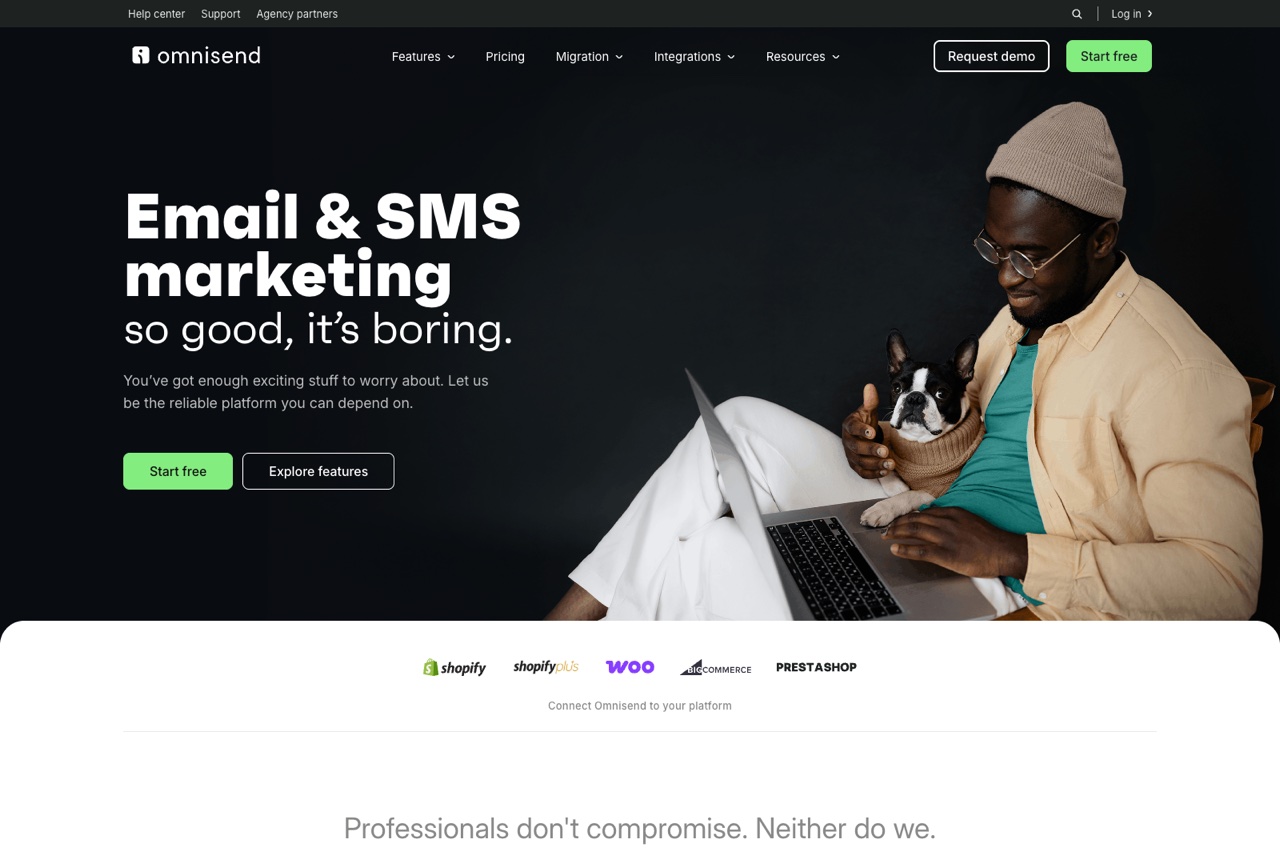
Omnisend is worth evaluating when your program combines store campaigns and automated follow-up with SMS. Its current plans distinguish Standard's email allowance from Pro's sending and SMS setup.
For a Drip move, test the customer events that your workflows depend on, not just the template gallery. Check a product-specific post-purchase branch and an order arriving after a checkout reminder has been queued. Those examples show whether the new flow behaves as intended.
- Best for: ecommerce teams evaluating email and SMS in a store-focused platform.
- Starting price at 10K contacts: $132/month for Standard or $150 for Pro at regular monthly rates, excluding SMS spend.
- Ecommerce integrations: Shopify and other store connections listed on Omnisend's site.
- Automation depth: prebuilt ecommerce workflows plus plan-dependent custom workflow capabilities.
- One drawback: Standard's 12-times-contact email allowance and Pro's separate SMS budget require a volume calculation.
Read the 2026 plan rules if you are comparing against an older quote or legacy SMS arrangement. Our Omnisend alternatives guide covers its place in the wider market.
Mailchimp: for a broader campaign program
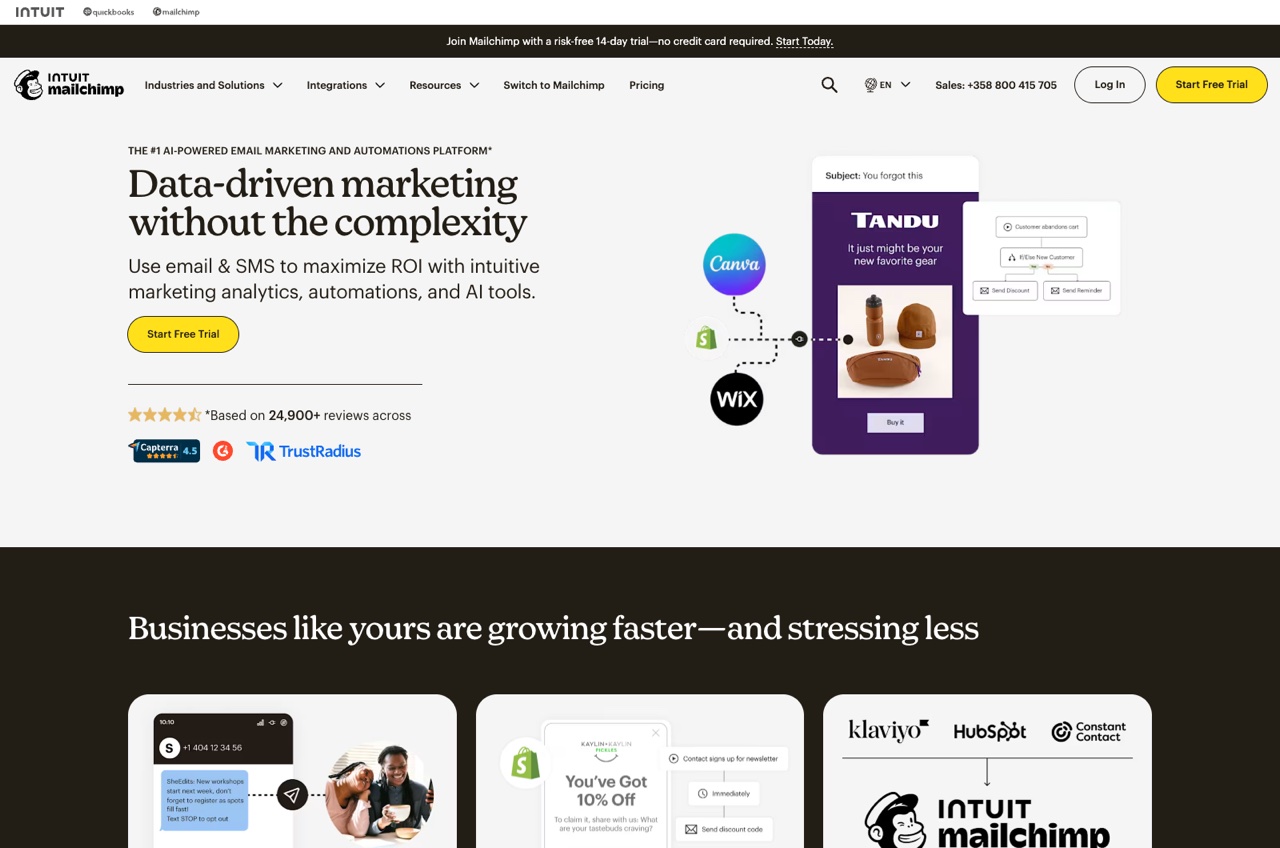
Mailchimp can suit a business that wants store marketing alongside newsletters, announcements and other general campaigns. Its official Shopify setup guide explains the connection; its plan comparison shows the automation and sending limits.
For this use case, compare Standard rather than assuming the cheapest paid tier replaces a long Drip sequence. Mailchimp's current pricing comparison gives Essentials up to four flow steps, while Standard supports a broader automation program. Our Drip vs Mailchimp comparison goes through the trade in more detail.
- Best for: businesses with a substantial general campaign program alongside ecommerce.
- Starting price at 10K contacts: Standard's regular price is $135/month. A temporary promotional rate is not the regular renewal price.
- Ecommerce integrations: an official Shopify app, with setup documented by Mailchimp.
- Automation depth: plan-dependent marketing automation flows; map your sequence lengths and conditions before choosing.
- One drawback: contacts, sends and plan limits all affect the operating cost.
Test preference handling across audiences if your old Drip tags represented several newsletters. Our Mailchimp Shopify guide covers the store connection in more detail.
ActiveCampaign: for a store tied to a sales workflow
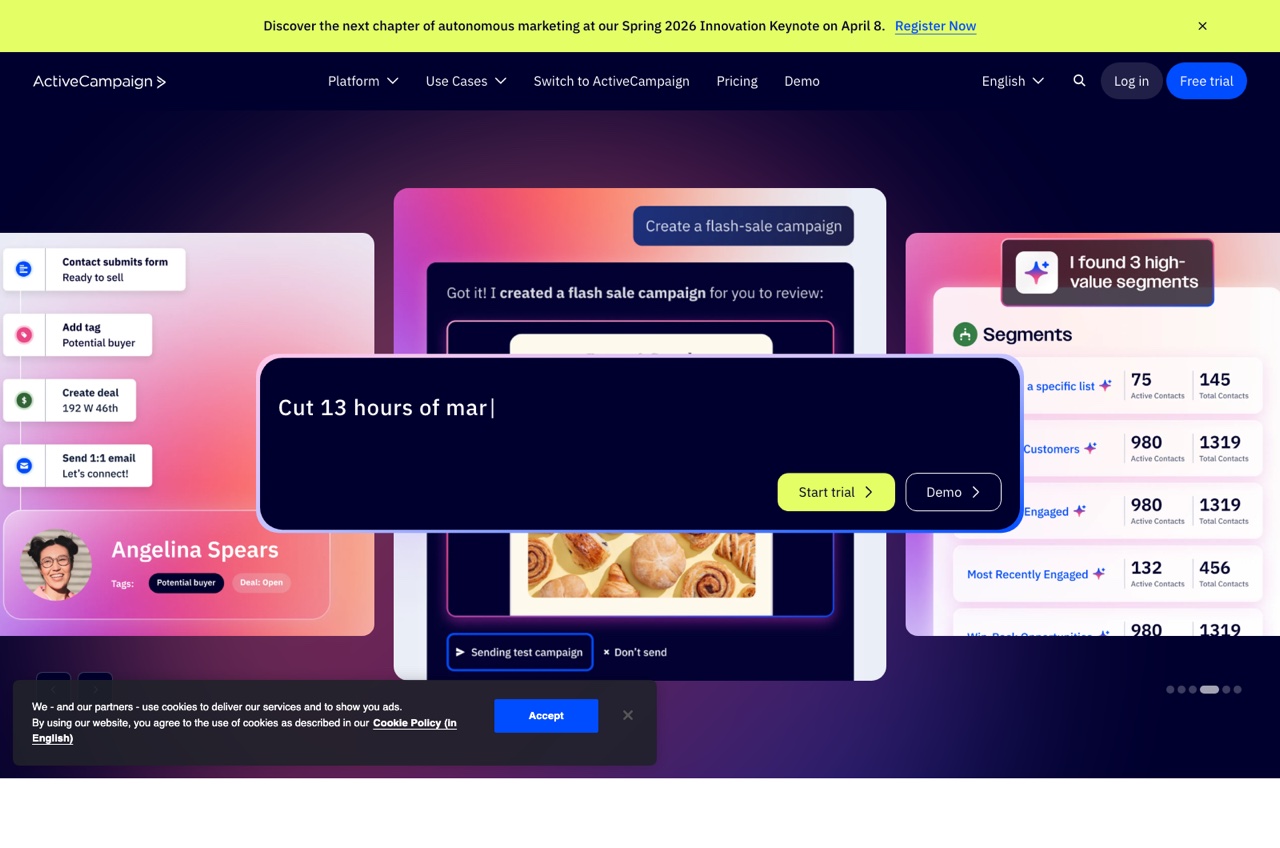
ActiveCampaign deserves a place when ecommerce email is only part of a sales process. A store selling high-value equipment, wholesale orders or services may also need deal stages, account ownership and sales follow-up.
Its current plan matrix differentiates automation limits, CRM add-ons, ecommerce functions and integrations. Evaluate the whole workflow. A cheaper email tier is not a saving if the integration or action you need requires another purchase.
- Best for: ecommerce businesses whose email program is closely tied to sales operations.
- Starting price at 10K contacts: Starter $149, Plus $189 and Pro $375 per month billed yearly, before add-ons.
- Ecommerce integrations: the current matrix lists standard Shopify, Square and WooCommerce integrations; premium ecommerce connections depend on plan.
- Automation depth: Starter has a five-action limit per automation; higher plans have broader action capacity.
- One drawback: the plan and add-on choices make a feature-level quote more useful than the starting price.
Use the ActiveCampaign migration worksheet as a model for auditing tags and actions, even if you are moving into rather than out of that ecosystem.
MailerLite: for newsletters with a defined automation workload
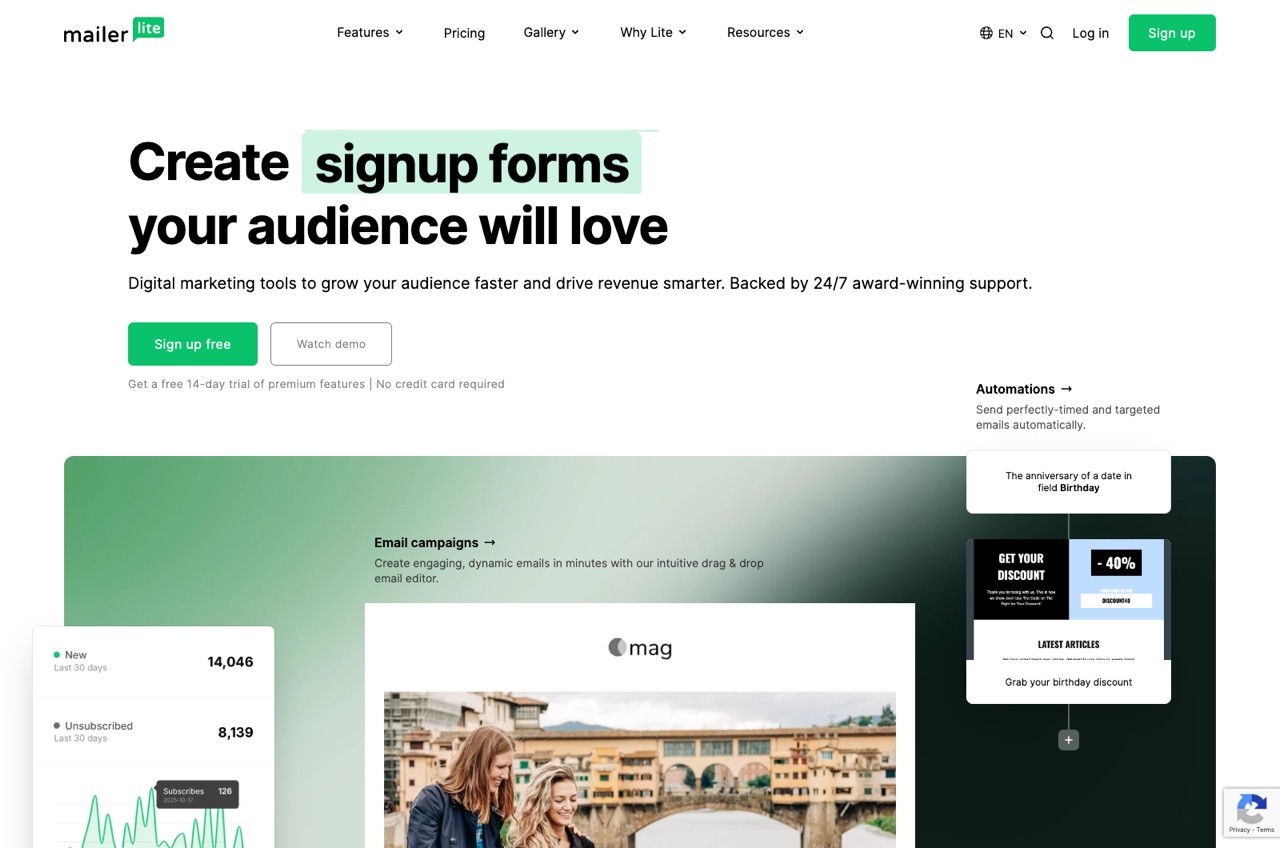
MailerLite's current plans are Free, Comfort, Power and Enterprise. Do not rely on older comparisons that quote Growing Business or Advanced as if those remain the current package names. The live pricing page explains contact and sending limits.
For a Drip replacement, the question is whether the ecommerce triggers and reporting meet your store's needs while the publishing workflow suits your team. Build the actual welcome and recovery flows rather than using a simple newsletter as the entire evaluation.
- Best for: newsletter-led businesses with a clearly defined store-automation program.
- Starting price at 10K contacts: Comfort $89/month, or $80.10/month billed yearly. Power is $129/month, or $116.10/month billed yearly.
- Ecommerce integrations: the vendor lists Shopify, WooCommerce and Stripe connections in its plan comparison.
- Automation depth: Comfort includes 50 active automations; Power includes unlimited active automations, with other usage limits documented by plan.
- One drawback: the cheaper plan's sending and usage allowances still need to fit your program.
Do not choose solely on contact price. Compare the team's ability to operate segments, inspect orders and maintain product-specific messages after the migration.
Shopify Messaging: for email operated inside Shopify
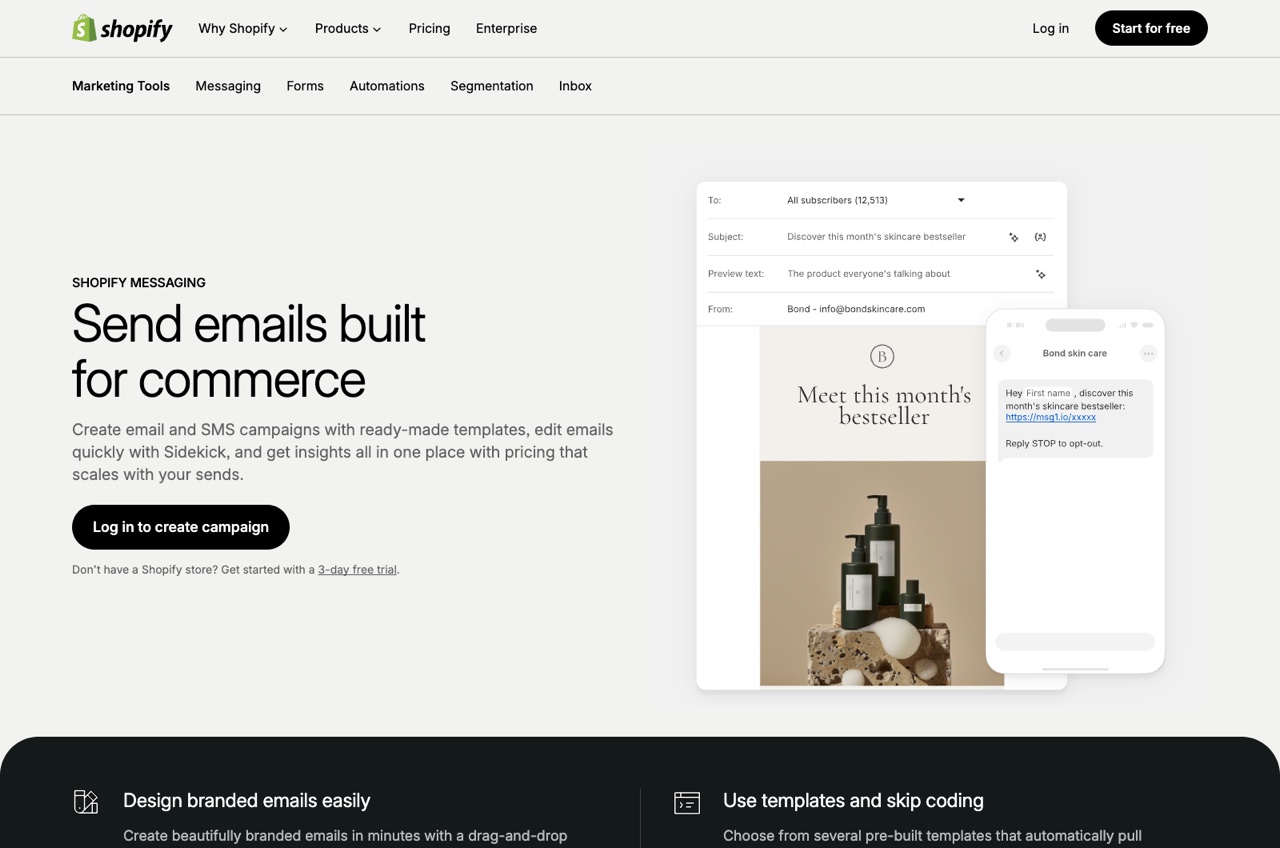
Shopify's email product is now documented as Shopify Messaging. Its email pricing guide gives stores 10,000 monthly emails before additional sending charges, on eligible Shopify plans.
This is a sending-volume model, so "10,000 contacts" is not itself a monthly quote. Four campaigns to a full 10,000-contact audience use 40,000 sends before counting other chargeable messages. Under the published first volume band, that campaign-only example costs $30 in additional email charges.
- Best for: stores that want to operate email from Shopify and can validate their required automations there.
- Starting price at 10K contacts: $30 for the illustrative four-campaign schedule above, plus the existing Shopify subscription and any other chargeable sends.
- Ecommerce integrations: Shopify itself; evaluate the native customer and order data in your store.
- Automation depth: test your required store automations individually; do not infer flow parity from the campaign editor.
- One drawback: the campaign-only cost does not describe your whole automation program or every external data requirement.
Abandoned checkout email has a separate treatment in Shopify's pricing guide and does not count toward the monthly email allowance. Our Shopify email flows guide helps frame what to test.
Brevo: for a volume-priced shortlist
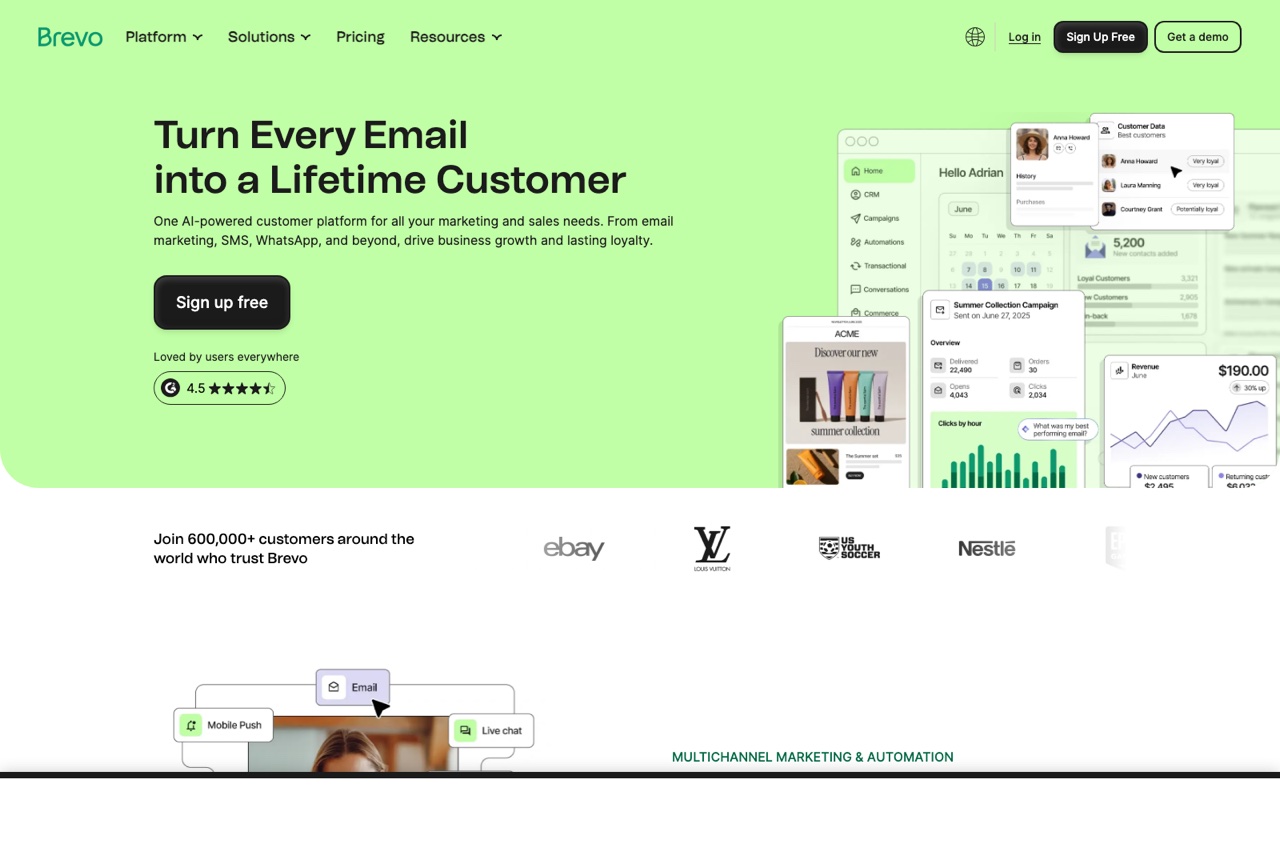
Brevo is worth evaluating if sending volume, transactional messages and a broad channel mix drive the decision. Its current pricing lists Starter, Standard, Professional and Enterprise, with volume and feature differences.
Standard is the more relevant starting point for a store that needs automated multi-step workflows. Check the contact capacity and monthly sends together; a starting price at the smallest volume is not a quote for an existing 10,000-contact program.
- Best for: teams comparing marketing and transactional messaging on a volume-based budget.
- Starting price at 10K contacts: request the Standard quote for the contact capacity and sends you need. The published $18/month entry price is not a verified 10K-contact, 40K-send quote.
- Ecommerce integrations: validate your store connection and event scope through the vendor's integration documentation.
- Automation depth: Standard lists multi-step marketing automation and web/event tracking; advanced ecommerce functions vary by plan.
- One drawback: the cheapest advertised entry price can be misleading without volume, contact and feature requirements.
A useful trial is a purchase-triggered branch with a real product field and a subsequent order exit. That checks the data path you need rather than merely confirming an API key connects.
Price comparison at the same list sizes
USD, checked 14 November 2026. Regular monthly billing unless marked yearly. Taxes, SMS and add-ons are excluded. These are plan prices, not a claim that every row has identical allowances.
| Platform and plan | 2,500 contacts | 10,000 contacts | 50,000 contacts | 100,000 contacts |
|---|---|---|---|---|
| Drip | $39 | $154 | $699 | $1,199 |
| Klaviyo Email | Check current selector | $150 | $720 | $1,380 |
| Omnisend Standard | $44 | $132 | $413 | $900 |
| Mailchimp Standard | $60 | $135 | $450 | Check current selector |
| ActiveCampaign Plus, yearly | $95 | $189 | $609 | Sales quote |
| MailerLite Comfort, yearly | $29.70 | $80.10 | $287.10 | Check current selector |
| Shopify Messaging, four campaigns | $0 | $30 | $190 | $355 |
| Brevo Standard | Volume quote | Volume quote | Volume quote | Volume quote |
Sources: Drip, Klaviyo, Omnisend, Mailchimp, ActiveCampaign, MailerLite, Shopify and Brevo.
At the likely 10K-or-larger list sizes for this comparison, Audienceful Growth is $118 at 10K, $309 at 50K and $499 at 100K per month billed yearly. Those figures cover unlimited automations. Compare its full plan details and billing commitment against the destination you choose.
Check flow parity with your actual store data
A template's presence is only the beginning. Every candidate should pass the same practical tests.
| Flow | Template or recipe evidence to inspect | The acceptance test |
|---|---|---|
| Welcome | Audienceful's Shopify templates and each vendor's current library | Existing imports do not restart it |
| Browse abandonment | Product-view trigger and identity requirements | A purchase or exclusion prevents an irrelevant reminder |
| Added to cart | A distinct cart event and recovery link | It is not confused with a started checkout |
| Abandoned checkout | Checkout recovery recipe | A completed order stops reminders |
| Post-purchase | Order or fulfillment recipe | Product and repeat-buyer branches work |
| Win-back | Lapse-based trigger | A new order exits the flow |
Audienceful supplies ready-made versions of these flows. For other candidates, inspect the current Klaviyo flow library, Drip playbooks, Omnisend plans, ActiveCampaign automation matrix or the relevant vendor documentation. Confirm whether a recipe is included, plan-gated or needs building. A blanket tick in a feature table hides those distinctions.
Move off Drip without restarting every sequence
Use the full Drip migration guide for the export steps and mapping worksheet. The important order is:
- Export contacts, fields and tags, plus unsubscribed and undeliverable groups.
- Save useful engagement cohorts as dated snapshots.
- Document workflows and decide what happens to existing recipients.
- Move owned images and rebuild templates.
- Connect store data, establish exclusions and test an import.
- Authenticate and follow a warming plan.
- Move new entries one flow at a time, then cancel last.
Do not replay old purchase or signup events into live triggers. Keep a single sending owner for each message type, and reconcile preference changes that arrive during the overlap. The migration overview and CSV guide cover the destination setup.
FAQs
What is the best Drip alternative for Shopify?
Audienceful is our pick for native store flows, collaborative campaign production and AI-agent control. Klaviyo and Omnisend also belong on a Shopify shortlist. Test the workflows and compare the required plan, not just the first advertised price.
Is there a cheaper alternative to Drip?
At 10K contacts, the verified options above include plans below Drip's $154/month. Billing terms, sending allowances and flow limits differ, so use the plan that actually covers your program.
Is Drip better than Klaviyo?
It depends on the store's requirements and operating preference. Both document ecommerce automation. Compare the data, flow behavior, editing process and regular price for the same audience rather than assuming one wins every use case.
Can I move my Drip workflows to another platform?
Plan to rebuild their behavior from a specification. A people export preserves data, not executable workflow logic or waiting positions. Test conversion exits and existing recipients explicitly.
Does Drip have a free plan?
The current pricing page advertises a 14-day trial and paid pricing from $39/month for up to 2,500 people. Its trial has different sending terms from a paid plan; check the current FAQ.
Ready to test your replacement flows? Start an Audienceful trial, connect Shopify and build from the store automation library.
