The best email marketing for food and beverage brands times the reorder email to how fast people actually eat or drink the product, turns repeat buyers into subscribers, and handles the gifting rush in November and December. For DTC coffee, tea, snack, sauce and pantry brands on Shopify, Audienceful is our pick for reorder flows on native order data with revenue per flow. Klaviyo suits brands with deep order history, and Omnisend, Seguno, Drip, Mailchimp and Brevo each fit a narrower case.
We make Audienceful and list it first. Prices were checked on 14 November 2026 on vendor pricing pages. Screenshots come from our competitor library and show vendor websites.
Best email marketing for food and beverage brands: Best for use case
| Platform | Best for use case | What to check first |
|---|---|---|
| Audienceful | Shopify F&B brands that want reorder and subscription-upsell flows measured in revenue | Consumption rate per SKU and your subscription app's events |
| Klaviyo | Large brands with years of order data and documented subscription-app links | Prediction thresholds and active-profile billing |
| Omnisend | Brands that want SMS for shipping-cutoff and flash-sale alerts | Send cap during the holiday peak |
| Seguno | Small Shopify-only food brands that want everything in the admin | Segmentation beyond Shopify customer data |
| Drip | Brands with long recipe and origin-story sequences | Price past 10K contacts |
| Mailchimp | Brands whose recipe newsletter is the main channel | Plan needed for the flows you run |
| Brevo | Big seasonal lists emailed a handful of times a year | Monthly sends in December |
What food and beverage brands need from an email platform
Food and drink brands have the fastest repeat cycles in ecommerce. A bag of coffee can be gone in under two weeks, so a reorder email on day 30 arrives long after she bought beans at the supermarket. The rest of the program follows from that.
- Reorder timing by consumption rate. Product-scoped triggers with delays you set per SKU and pack size.
- Subscribe-and-save conversion. The second order is the best moment to offer a subscription. The platform needs to know who is already subscribed, which usually means data from Recharge, Skio or Loop.
- Recipe and content email. Recipes give a reason to email that isn't a discount, and they drive use, which drives reorders.
- Gifting and holiday peaks. Gift buyers are a different segment from self-buyers, and the recipient is a new lead.
- Shipping-cutoff emails. Perishables and holiday parcels need clear "order by" dates.
- Review requests timed to the first use, not the delivery date.
Related reading: email marketing for cafes and coffee shops, and for drinks brands, craft breweries and vineyards and wineries.
How we chose
We scored each platform on reorder timing (fixed per SKU, or predicted per customer), how it learns subscription status, product blocks for recipe and gift emails, and price at 10,000 contacts from the vendor's own page, checked 14 November 2026.
Audienceful: reorder flows on native Shopify data
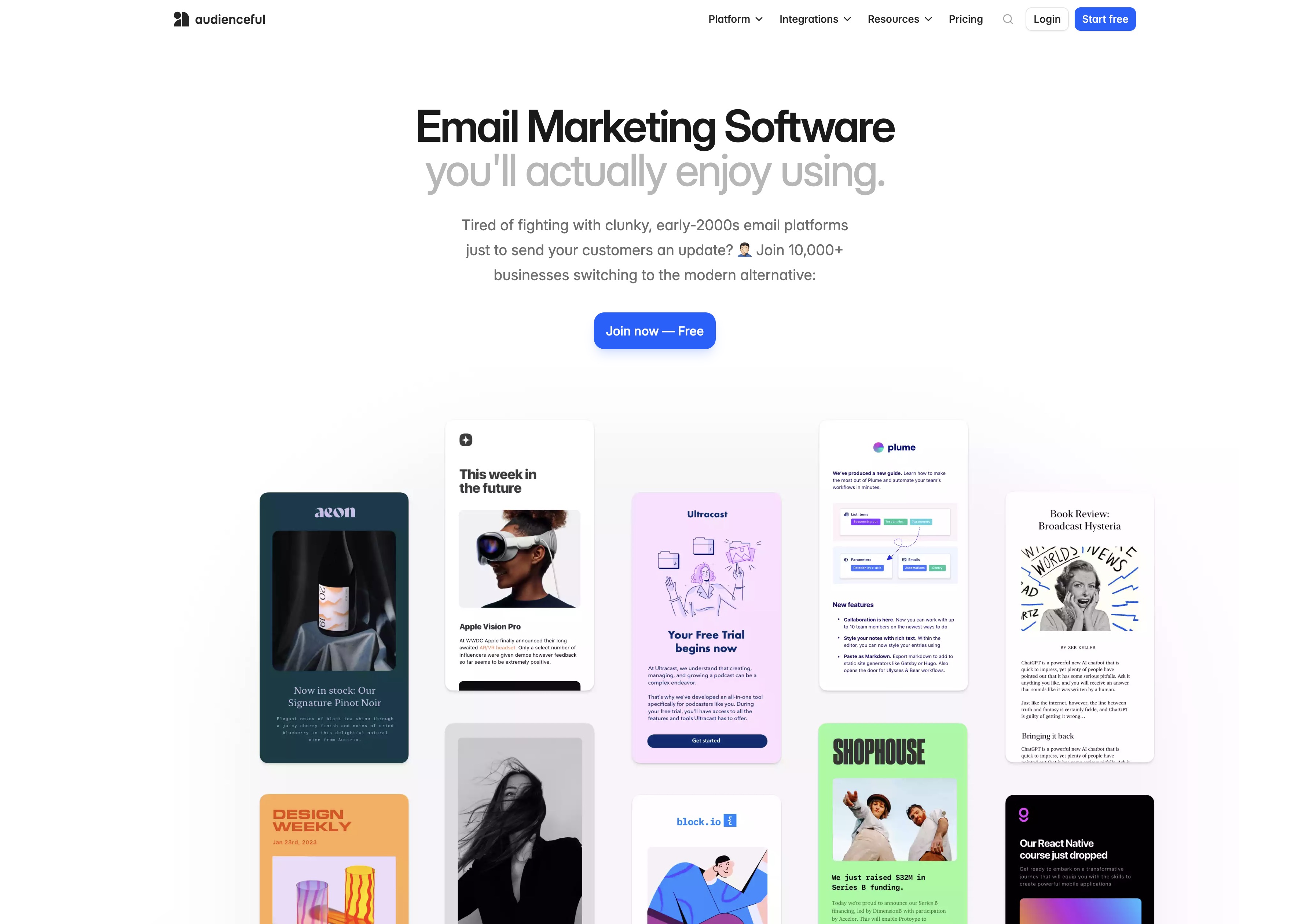
Audienceful's Shopify app syncs orders, products, carts and checkouts, and imports past orders so reorder conditions see your existing buyers. The replenishment flow triggers on a paid order with a wait you set per product, and a branch exits anyone who has already reordered. Its second email is a subscribe-and-save offer, which is exactly where F&B brands make their margin.
Subscription status arrives as a custom event or contact field from your subscription app, so subscribers never get a reorder nudge. The post-purchase flow can branch by product, sending brew guides to coffee buyers and recipes to sauce buyers. The product list block drops live product cards into a recipe email, so "make this tonight" sits next to the jar that makes it.
The AI agent drafts recipe and origin emails in your brand voice from a short brief or a link to your own blog post. Revenue attribution reports what each flow and campaign earned, so you can see whether the recipe newsletter actually sells. Templates designed by ecommerce agencies give gift guides a polished starting layout, and the collaborative editor lets the whole team work on the holiday campaign at once.
- Best for: Shopify food, coffee and pantry brands that run on reorders and subscription conversion.
- Starting price at 10K contacts: Growth is $118/month billed yearly with unlimited flows, against Klaviyo's $150 and Drip's $154.
- Ecommerce integrations: native Shopify and Stripe; subscription apps through custom events or fields.
- Automation depth: branching flows, product-scoped conditions, goals, custom and date-based triggers.
- One drawback: you will want separate reorder flows per pack size, so the first setup takes longer than switching on one generic template.
See Audienceful vs Klaviyo for the full comparison.
Klaviyo: for big brands with deep order history
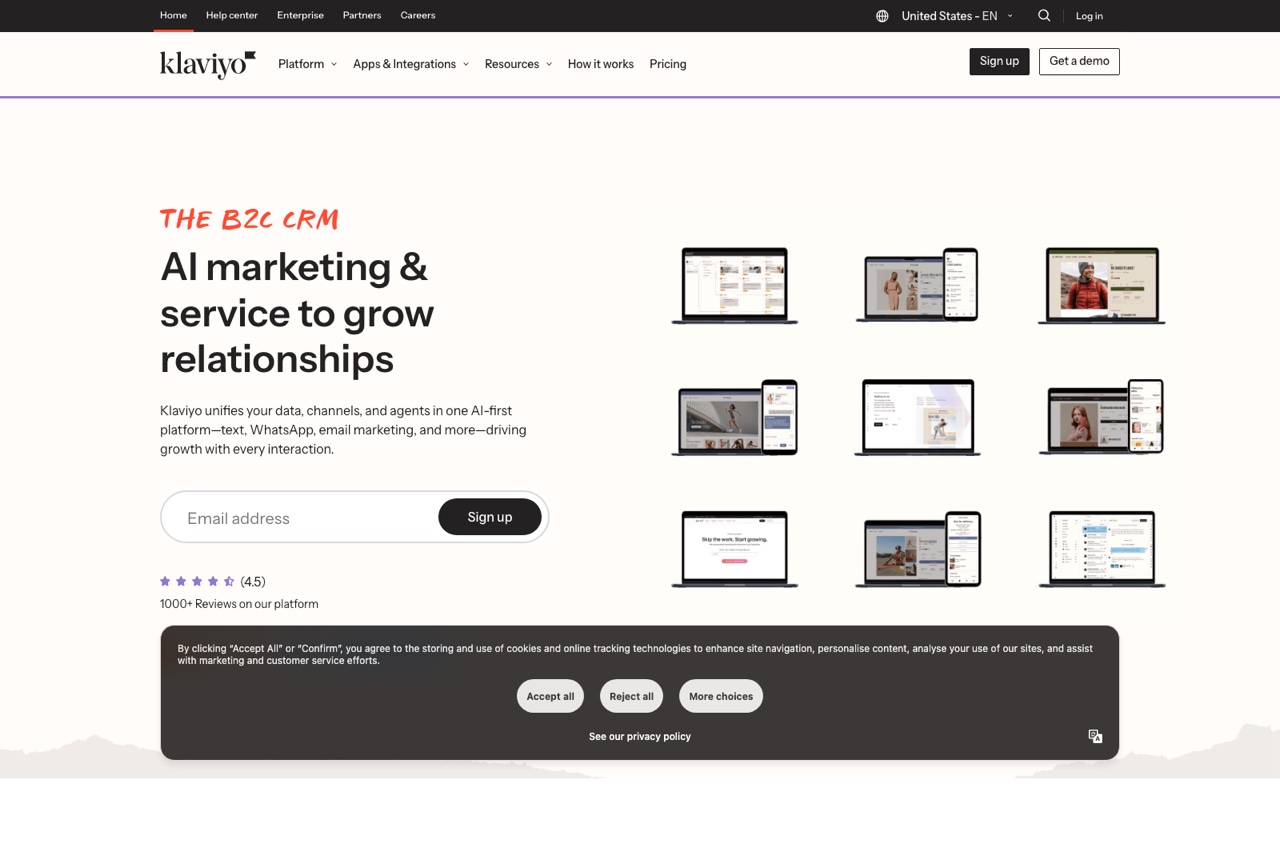
Klaviyo's predictive analytics give each customer an expected date of next order, which helps when the same coffee bag lasts one household 10 days and another 25. They switch on at 500 customers with orders, 180 days of history, recent orders and some three-time buyers. Recharge documents a Klaviyo integration.
- Best for: established F&B brands with large order histories.
- Starting price at 10K contacts: $150/month on the Email plan, per its pricing page.
- Ecommerce integrations: Shopify plus documented subscription-app integrations.
- Automation depth: extensive, with predictive branching.
- One drawback: $720/month at 50K on active-profile billing, which hurts brands with a large one-time gift-buyer list.
Our Klaviyo alternatives roundup covers the switch if the bill is the problem.
Omnisend: for SMS cutoff and flash-sale alerts
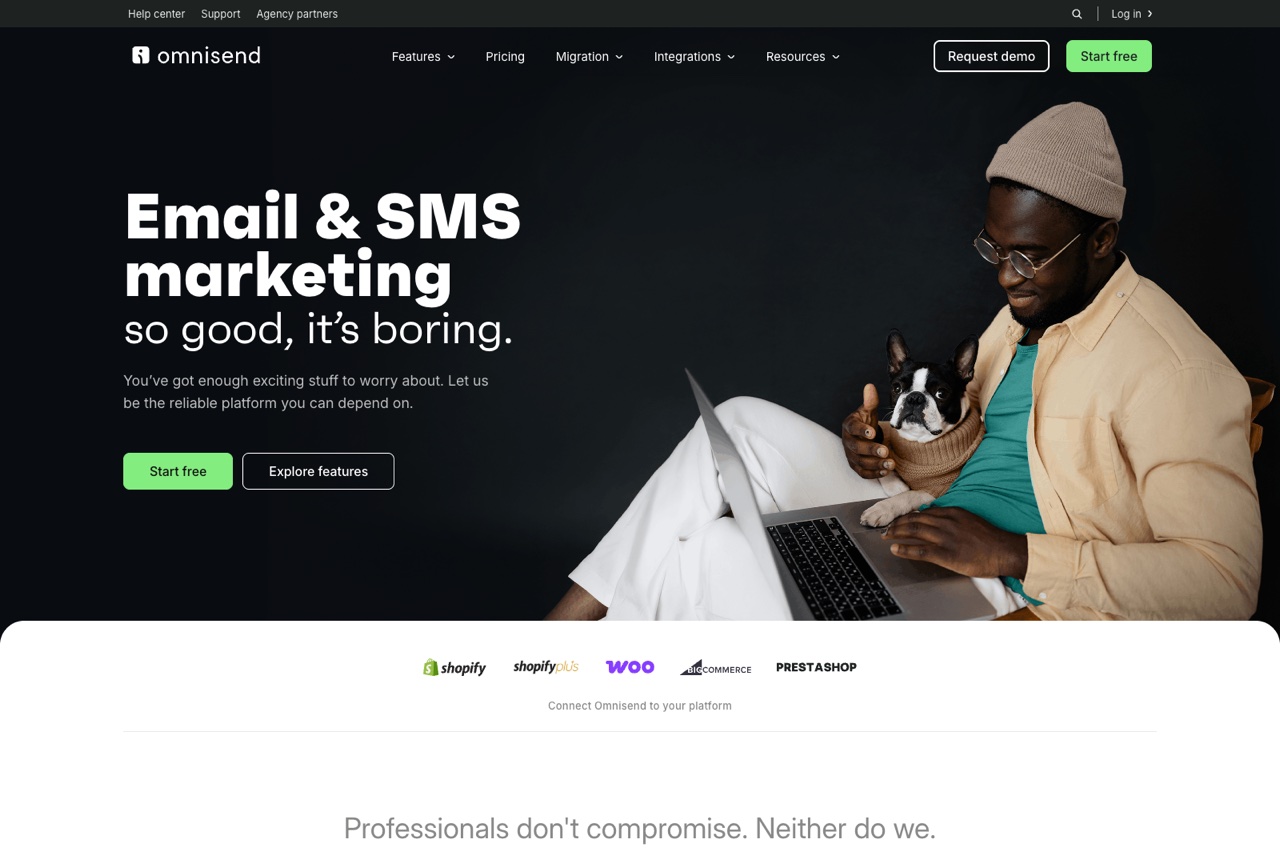
Omnisend bundles SMS on Pro, which is handy for "order by midnight for Christmas delivery" texts. Its pricing page caps Standard at 12 sends per contact a month.
- Best for: food brands that lean on SMS around holidays and drops.
- Starting price at 10K contacts: $132/month Standard, $150 Pro.
- Ecommerce integrations: Shopify, WooCommerce and BigCommerce.
- Automation depth: prebuilt ecommerce workflows with splits.
- One drawback: December send volume can push Standard past its cap.
Seguno: for small Shopify-only food brands
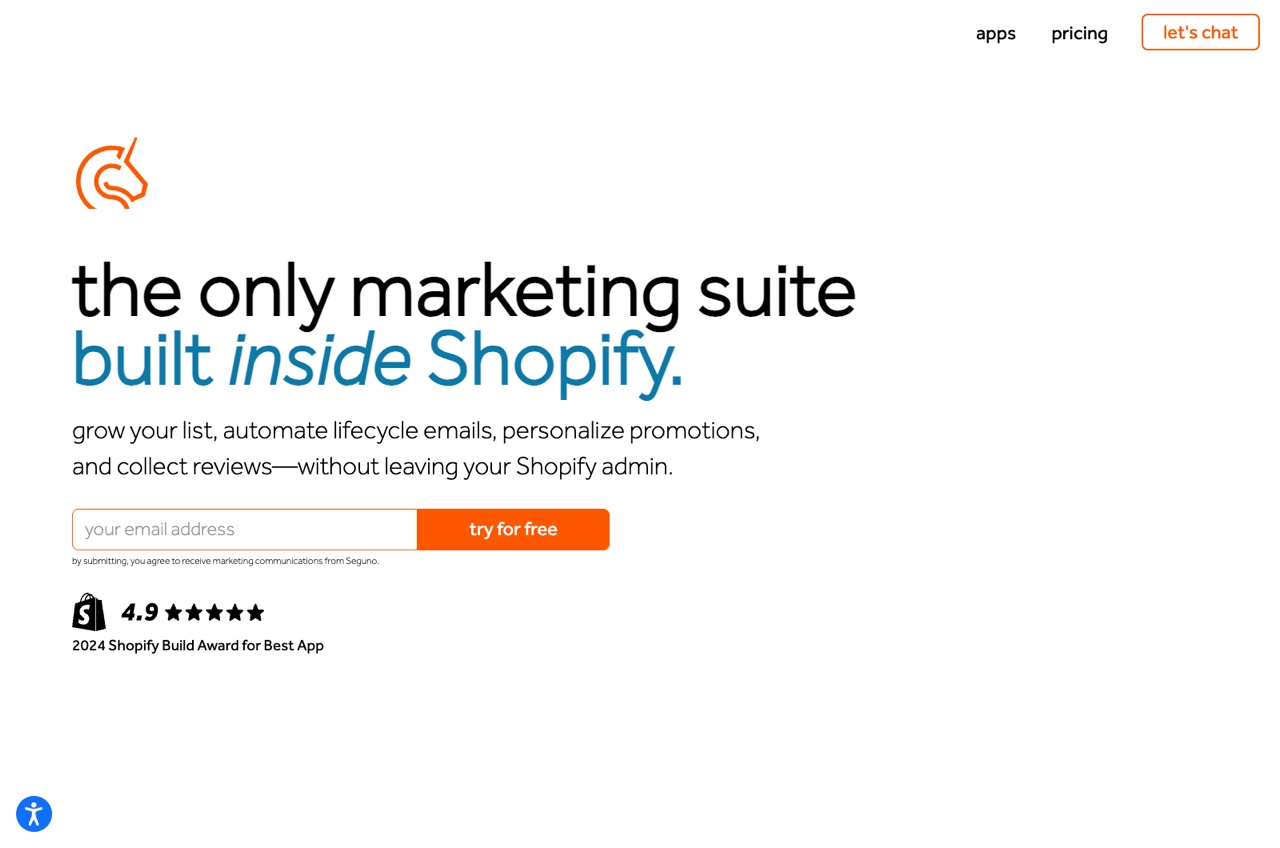
Seguno runs inside the Shopify admin and bills through Shopify. Its billing doc sets $35 for up to 2,500 subscribers plus $20 per extra 2,500, with unlimited sending, which suits brands that email often.
- Best for: small Shopify food brands that want one admin and unlimited sends.
- Starting price at 10K contacts: $95/month by its published tier rule.
- Ecommerce integrations: Shopify only.
- Automation depth: prebuilt and custom automations.
- One drawback: subscription-app data is harder to use for exclusions than in a platform with custom events.
Drip: for long recipe and origin sequences
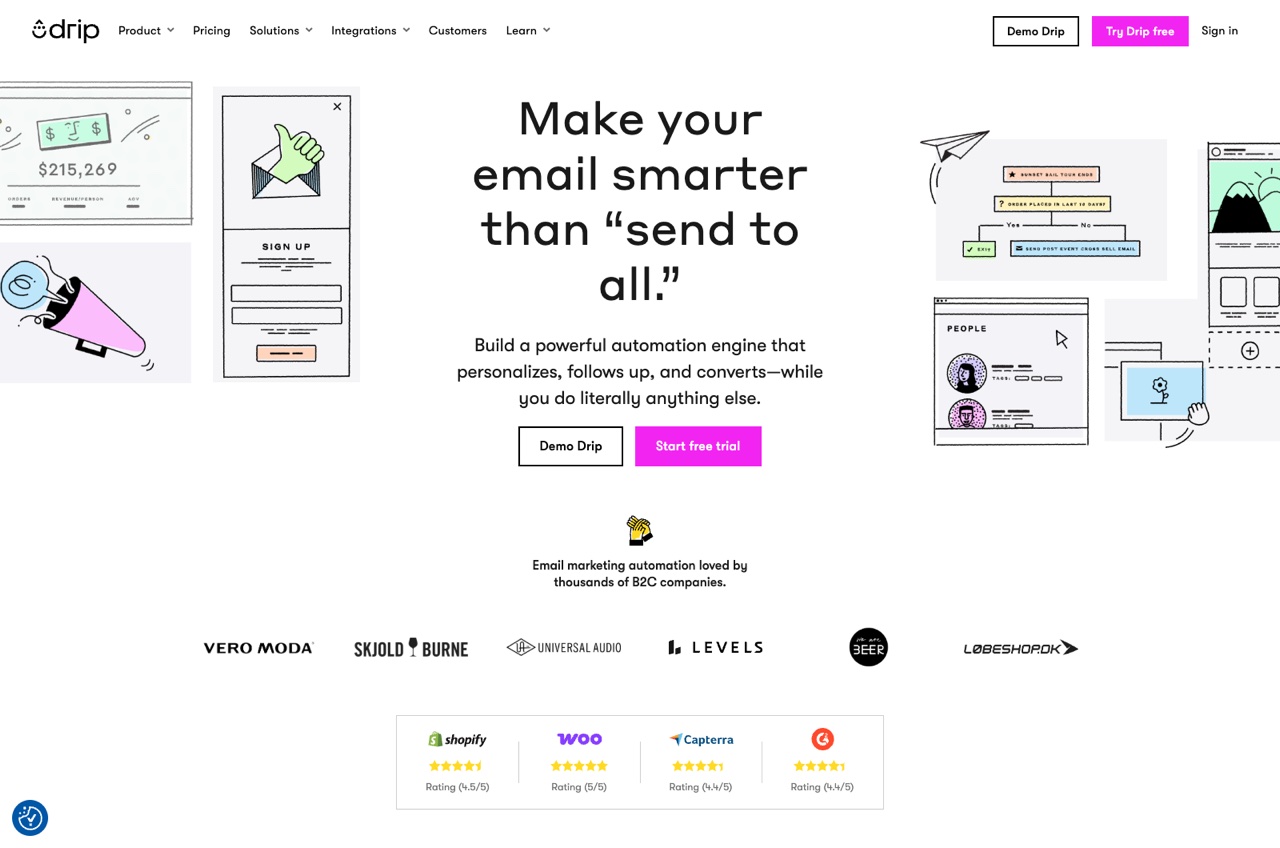
Drip's branching sequences suit a specialty coffee roaster with a six-email "meet the farms" series. Its pricing page lists ecommerce workflows and revenue reporting.
- Best for: story-led brands with long nurture sequences.
- Starting price at 10K contacts: $154/month.
- Ecommerce integrations: Shopify and WooCommerce.
- Automation depth: strong workflows with goals.
- One drawback: $699/month at 50K.
Mailchimp: for recipe-newsletter-first brands
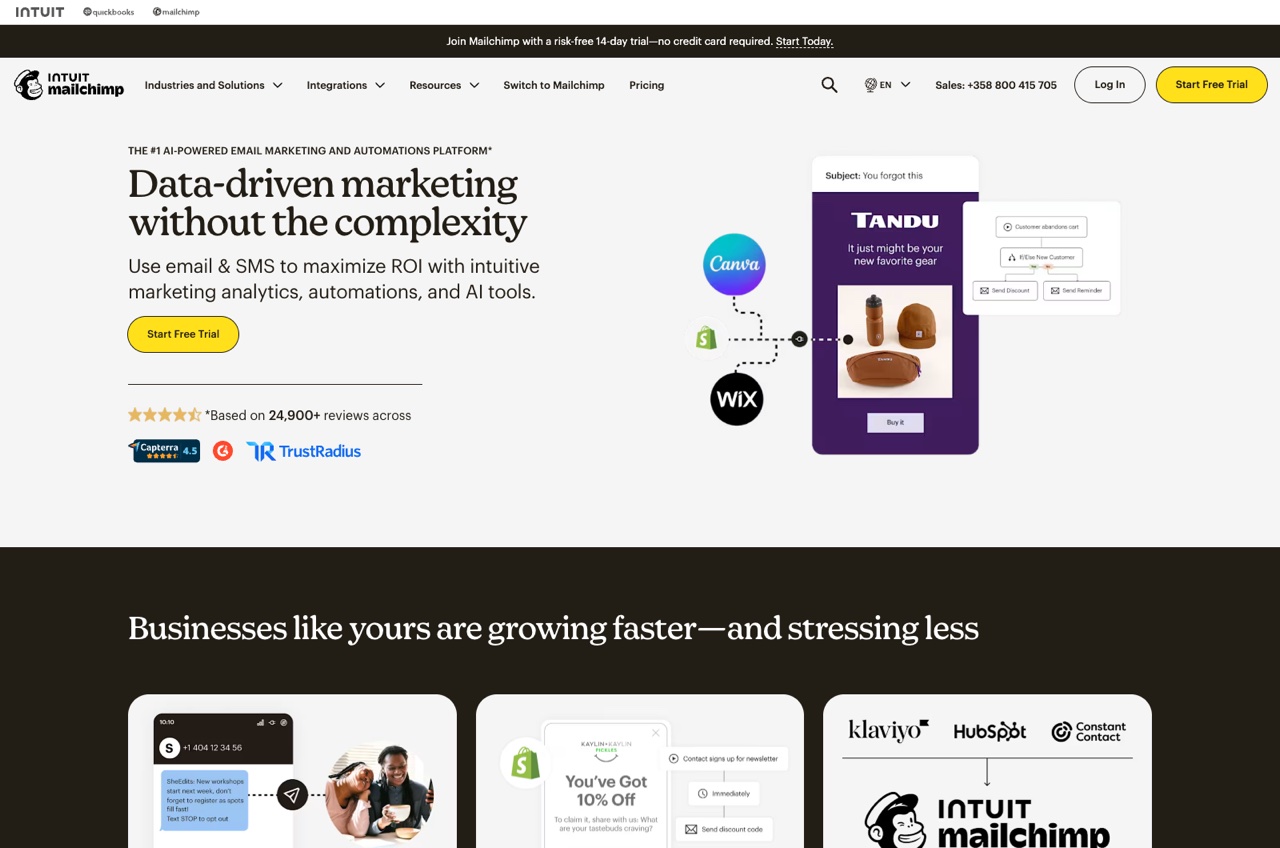
If the weekly recipe email is the program, Mailchimp handles newsletters well and connects to Shopify via an official app. Its plan comparison limits Essentials to four flow steps, so reorder and subscription flows point to Standard.
- Best for: content-led food brands.
- Starting price at 10K contacts: $135/month on Standard at the regular rate.
- Ecommerce integrations: official Shopify app.
- Automation depth: up to 200 flows on Standard.
- One drawback: product-specific reorder timing takes more manual segmenting.
Brevo: for big seasonal lists
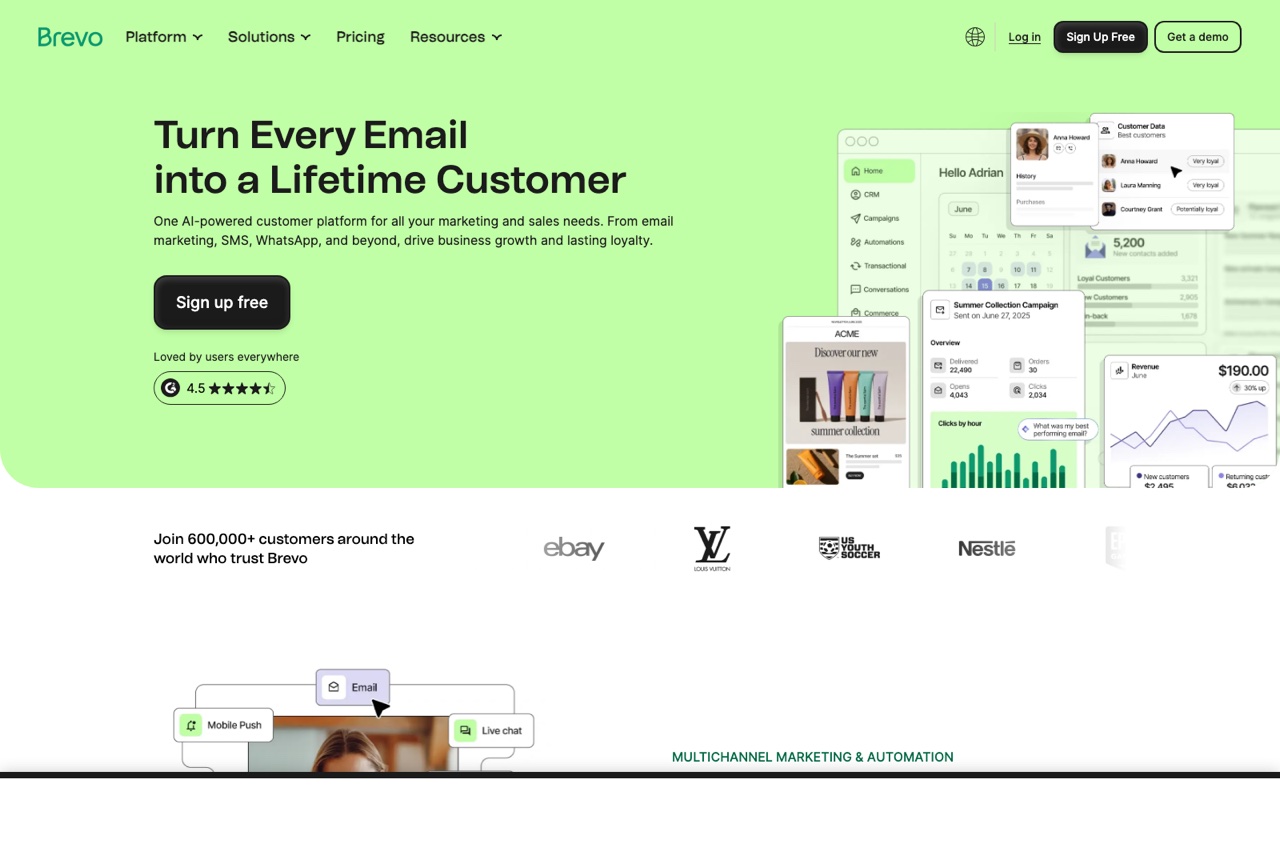
A gift-hamper brand with 80,000 contacts that emails mostly in Q4 may pay less on Brevo's send-based pricing, which starts at $18 for Standard at entry volume.
- Best for: seasonal food gifting brands with large, quiet lists.
- Starting price at 10K contacts: set by monthly sends; request the Standard quote.
- Ecommerce integrations: Shopify and WooCommerce apps in its directory.
- Automation depth: multi-step workflows on Standard.
- One drawback: consumption-based reorder flows per pack size need careful setup.
Price comparison at the same list sizes
USD per month, checked 14 November 2026, regular monthly billing unless marked.
| Platform and plan | 1,000 contacts | 10,000 contacts | 50,000 contacts | 100,000 contacts |
|---|---|---|---|---|
| Klaviyo Email | $30 | $150 | $720 | $1,380 |
| Omnisend Standard | $20 | $132 | $413 | $900 |
| Seguno | $35 | $95 | $415 | $815 |
| Drip | $39 | $154 | $699 | $1,199 |
| Mailchimp Standard | See selector | $135 | $450 | See selector |
| Brevo Standard | Priced by sends | Priced by sends | Priced by sends | Priced by sends |
Seguno's larger rows apply its published tier rule. Sources: Klaviyo, Omnisend, Seguno, Drip, Mailchimp, Brevo.
Cost example at 10,000 contacts. A coffee roaster running seven flows plus a weekly newsletter pays $150 on Klaviyo Email, $132 on Omnisend Standard or $154 on Drip. Audienceful Growth, with unlimited flows and sends, is $118/month billed yearly. At 50,000 contacts Audienceful is $309 against Klaviyo's $720.
Reorder timing by category
One rule for every row: days it lasts = pack size ÷ daily use. Send the reminder 5 days before that, which covers about 3 days of shipping and 2 days of slack. The daily-use figures are typical assumptions; swap in your own.
| Product | Pack size | Assumed daily use | Lasts | Send reminder on |
|---|---|---|---|---|
| Coffee, whole bean | 340g | 30g (two cups) | 11 days | Day 6 |
| Coffee, whole bean | 1kg | 30g | 33 days | Day 28 |
| Loose-leaf tea | 100g | 6g (two cups) | 16 days | Day 11 |
| Protein powder | 900g | 30g (one scoop) | 30 days | Day 25 |
| Hot sauce | 150ml | 5ml | 30 days | Day 25 |
| Snack bars | Box of 12 | 1 on weekdays (about 0.7 a day) | 17 days | Day 12 |
| Olive oil | 500ml | 15ml | 33 days | Day 28 |
The coffee rows show why subscriptions matter so much for roasters. An 11-day cycle is too fast for reminder emails alone, so the second email in the flow should offer a subscription, and the first reorder email should arrive barely a week after delivery. After 90 days, check your median reorder day per SKU and move the reminder to match.
Alcohol brands: age verification and state-by-state shipping rules apply to DTC wine, beer and spirits. Check the TTB and your state rules, and confirm your email platform's and store's policies before sending promotions.
The 7 flows every food and beverage brand should run
| Flow | Trigger | Timing |
|---|---|---|
| Welcome | Signup | Brand story immediately, best sellers day 2, recipe day 4 |
| Abandoned checkout | Checkout started | 1 hour, 24 hours, 72 hours |
| Post-purchase recipe or brew guide | Order fulfilled | Delivery day, then a second recipe on day 5 |
| Replenishment | Paid order for a SKU, not subscribed | Per the table above |
| Subscription upsell | Second order paid, not subscribed | 2 days after the second order |
| Review request | Order fulfilled | Day 7 to 10, after first use |
| Win-back | No order in 3x the product's cycle | Day 35 for a 340g coffee bag, then day 50 |
See our guides on replenishment, post-purchase and review request emails for templates and copy.
Holiday and gifting calendar
- Early November: gift guide to the full list. Add a "buying for someone else?" question to the checkout or a post-purchase survey so you can tag gift buyers.
- Black Friday week: your biggest offer. Our Black Friday guide has the countdown.
- Ten days before your ground-shipping cutoff: "order by" email with the exact date.
- Three days before the cutoff: reminder, plus express options for perishables.
- Cutoff day: last call, then switch to e-gift cards.
- January: thank gift buyers and invite gift recipients who signed up from an insert card to a welcome flow.
Perishables need earlier cutoffs than shelf-stable goods. Use your carrier's published holiday dates, minus your own packing time.
FAQs
What's the best email platform for a DTC food brand?
For a Shopify food brand that runs on reorders, pick a platform with product-scoped triggers, past-order import and a way to exclude subscribers. Audienceful does that and is free up to 1,000 contacts. Klaviyo makes sense once you have the order history to use its predictions.
When should I send coffee reorder reminders?
Divide the bag weight by daily use and send 5 days earlier. A 340g bag at two cups a day lasts about 11 days, so send around day 6 and offer a subscription in the next email.
How do I convert one-time buyers into subscribers?
Wait for the second order. Two days after it, offer subscribe-and-save with a reason beyond the discount, like never running out or first access to limited lots. Exclude current subscribers using data from your subscription app.
Should food brands send recipe emails?
Yes. Recipes give people a reason to open that isn't a sale, and they increase how fast the product gets used. Put product cards next to the recipe so the ingredients are one click away.
How far ahead should I email about holiday shipping cutoffs?
Start ten days before your ground cutoff, send a reminder three days before, and a last call on the day. Perishable products need earlier dates than shelf-stable ones.
Run a Shopify food or drink brand? Sign up for Audienceful and launch a replenishment flow today. It's free up to 1,000 contacts.
