The best email marketing for fashion brands handles three things well: drop and new-arrival campaigns with real product images, browse and cart recovery on items that sell out, and post-purchase emails that cut returns by getting fit right. Audienceful is our pick for growing Shopify labels that want those flows tied to revenue. Klaviyo and Omnisend lead on native back-in-stock, Shopify Messaging and Seguno suit new labels that want to stay inside Shopify, and Drip and Flodesk fit narrower cases.
We make Audienceful and put it first. Prices were checked on 14 November 2026 on each vendor's own pricing page. Screenshots come from our competitor library and show each vendor's website.
Best email marketing for fashion brands: Best for use case
| Platform | Best for use case | What to check first |
|---|---|---|
| Audienceful | Growing Shopify fashion brands that want drops and flows measured in revenue | Product feeds for new arrivals and the storefront pixel |
| Klaviyo | Scaling labels with large catalogs and native back-in-stock | Active-profile billing at 50K and above |
| Omnisend | Brands that want email and SMS drop alerts in one tool | Standard's send cap during launch weeks |
| Shopify Messaging | New labels under 2K contacts sending a few campaigns a month | Flow depth beyond the basics |
| Seguno | Shopify-only brands that want back-in-stock alerts in the admin | Segmentation beyond Shopify customer data |
| Drip | Small labels with a long brand-story welcome series | Price past 10K contacts |
| Flodesk | Design-led indie labels with a small catalog | How much order data reaches workflows |
What fashion brands need from an email platform
Fashion buying is impulsive, visual and seasonal. A shopper looks at the same jacket three times over a week, it sells out in her size, and then it comes back. The email program that wins is the one that sees all of that.
- Drops and new arrivals. A launch email needs a product grid with current images and prices, sent to the right segment at the right minute (our Shopify product launch email sequence lays out the timing). A "newest products" feed that fills itself saves hours every week.
- Back-in-stock and low-stock. Sizes sell through unevenly. A shopper who wanted the medium is your warmest lead when it returns.
- Browse abandonment with product images. Shoppers browse clothes far more often than they add them to a cart, so the browse email reaches people the cart email never sees.
- Size and fit after purchase. Returns are the margin killer in apparel. A fit guide and an easy exchange link sent before the parcel arrives prevents a share of them.
- VIP early access. Your top 5% of customers will buy a drop before it goes public if you give them a head start.
- Image-heavy templates that render on mobile. Most fashion email is opened on a phone. Product grids must stack cleanly.
Our page on email marketing for ecommerce covers the broader store setup.
How we chose, by stage
We grouped picks by where the brand is. A new label under 2,000 contacts needs cheap and simple. A growing brand around 10,000 needs real flows and segmentation. A scaling brand at 50,000 and up needs depth and a bill that doesn't run away. Each tool gets the same five fields, priced at 10,000 contacts.
Audienceful: drops and flows tied to revenue
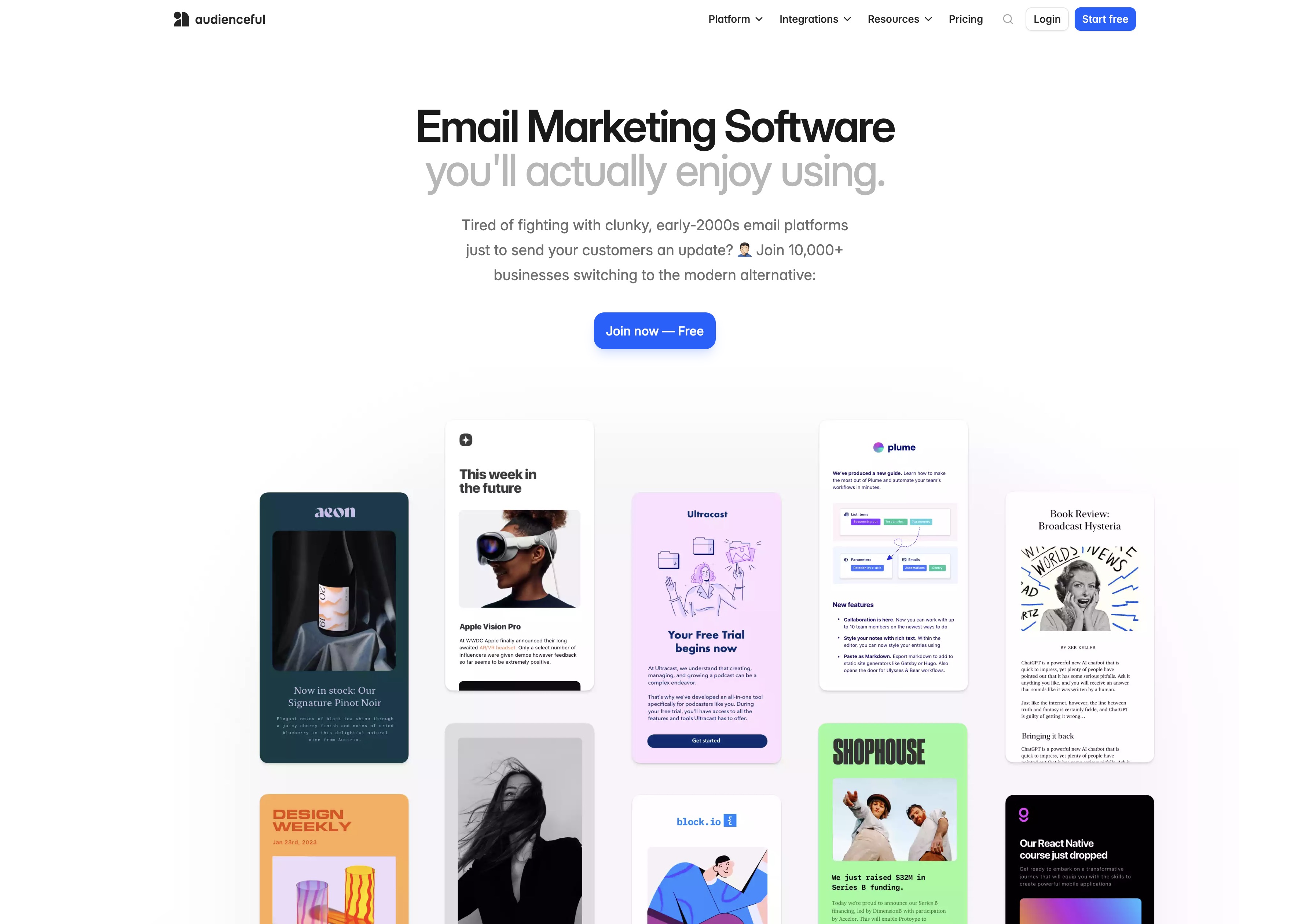
Audienceful's Shopify app syncs customers, orders, products, carts and checkouts, and its storefront pixel records product views and add-to-carts. That gives you the triggers fashion runs on: browse abandonment, added to cart, abandoned checkout, post-purchase, VIP and win-back, all as ready-made Shopify automations.
For drops, the product list block can pull from a product feed set to Newest, Best-selling or Most viewed, refreshed at every send. Build a weekly "new in" email once and it fills itself. For a launch, pick products by hand and send to a VIP segment (total spend over a threshold, or two or more orders in the last year) a day before the public send.
Restock alerts run as a flow on a custom event sent when your inventory app reports a variant back in stock, so the alert goes only to people who asked for that item. Revenue attribution then shows what browse abandonment earned against the drop campaigns, which is the comparison most fashion teams never get to see. Themes keep every template on brand, the collaborative editor lets the designer and the copywriter work on the drop email together, and the AI agent drafts launch copy in your voice.
- Best for: growing Shopify fashion brands around 5K to 50K contacts that want flows and drops measured in revenue.
- Starting price at 10K contacts: Growth is $118/month billed yearly with unlimited flows, against Klaviyo's $150 and Omnisend's $132.
- Ecommerce integrations: native Shopify app with on-site product-view and add-to-cart triggers, plus Stripe.
- Automation depth: branching flows, audience-entry triggers, custom events, date-based triggers and goals.
- One drawback: restock alerts need a custom event from your inventory or restock app, so plan an hour of setup.
Compare plans in Audienceful vs Klaviyo and Audienceful vs Omnisend.
Klaviyo: for scaling labels with big catalogs
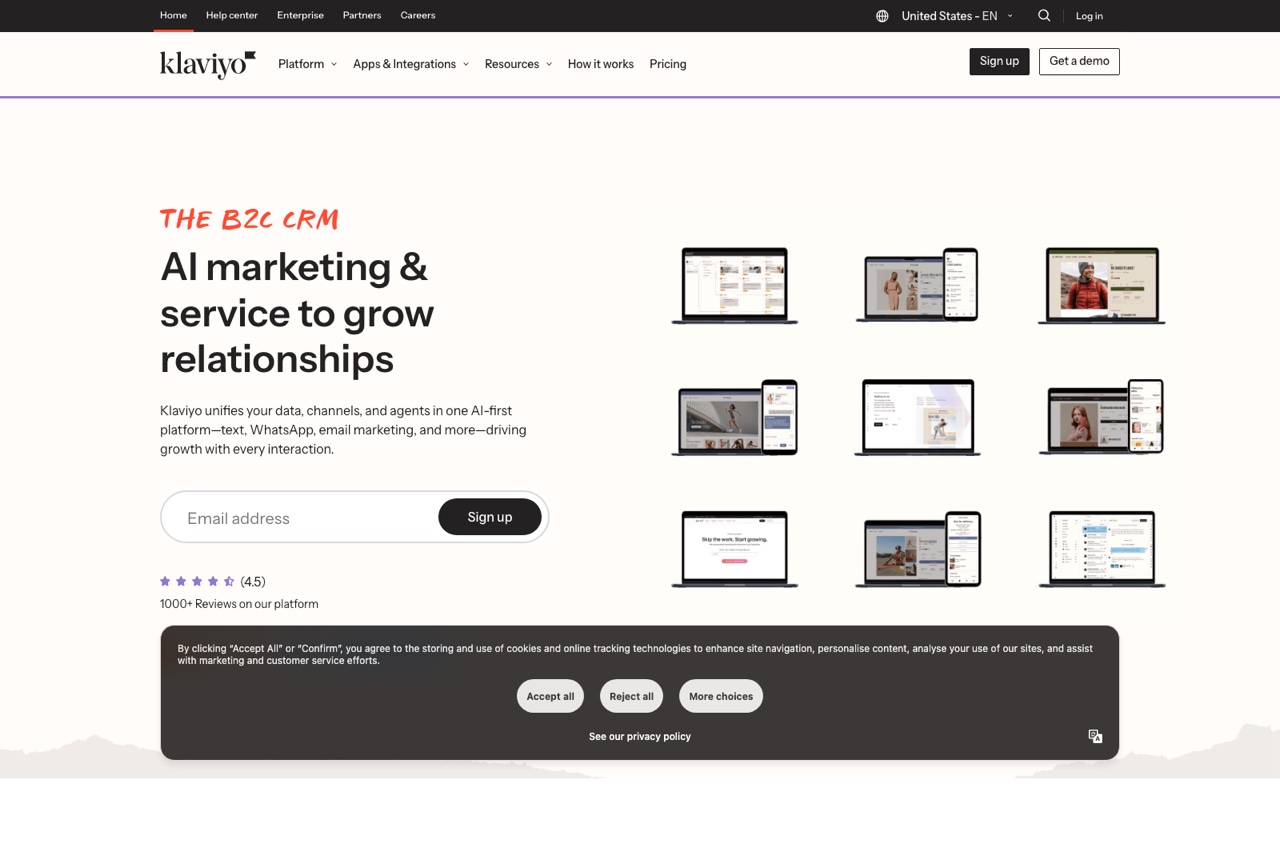
Klaviyo has a native back-in-stock flow triggered when a shopper subscribes from a back-in-stock form on an out-of-stock product. One caveat from its own docs: it can't detect restocks for products set to "continue selling when out of stock" in Shopify, so turn that off for items you want alerts on.
- Best for: fashion brands past 50K contacts with large catalogs and a team to run them.
- Starting price at 10K contacts: $150/month on the Email plan, per its pricing page.
- Ecommerce integrations: deep Shopify integration and a big partner ecosystem for reviews and loyalty.
- Automation depth: extensive, with predictive properties once you meet its data thresholds.
- One drawback: $720/month at 50K and $1,380 at 100K, billed on active profiles, which adds up fast for brands with many one-time sale buyers.
See Shopify Email vs Klaviyo if you are weighing the two ends of the market, or Klaviyo alternatives if the bill is the issue.
Omnisend: for email and SMS drop alerts together
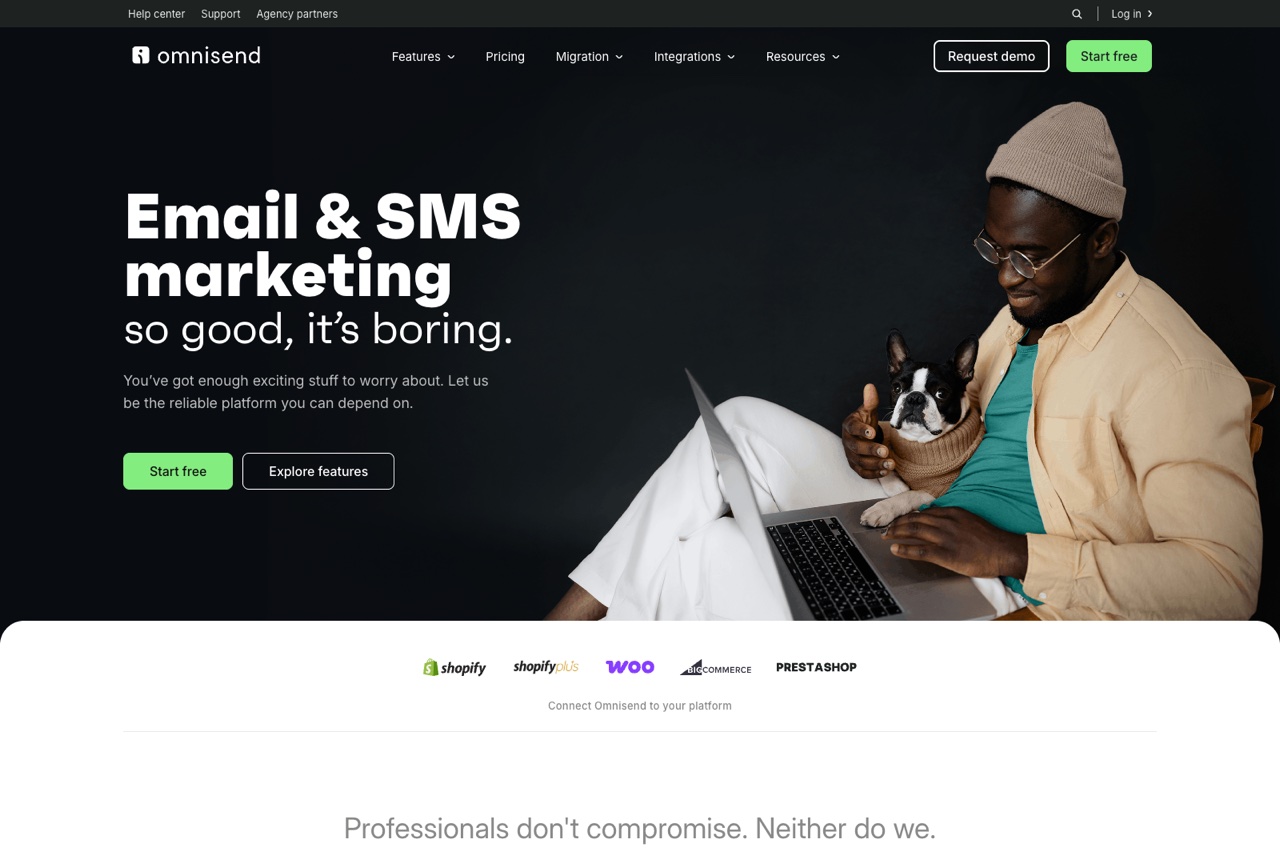
Omnisend also has native back-in-stock: a "gather interest in out-of-stock" form plus a Back in Stock workflow preset. Contacts collected that way are non-subscribers unless you add a consent block, which matters for whether you can market to them later.
- Best for: fashion brands that want SMS drop alerts and email in one place.
- Starting price at 10K contacts: $132/month Standard, $150 Pro, per the pricing page.
- Ecommerce integrations: Shopify, WooCommerce and BigCommerce.
- Automation depth: prebuilt ecommerce workflows with splits; custom builds vary by plan.
- One drawback: Standard caps sends at 12 times your contact tier, which a busy drop month can hit.
Klaviyo vs Omnisend compares the two most common picks.
Shopify Messaging: for new labels sending a few campaigns
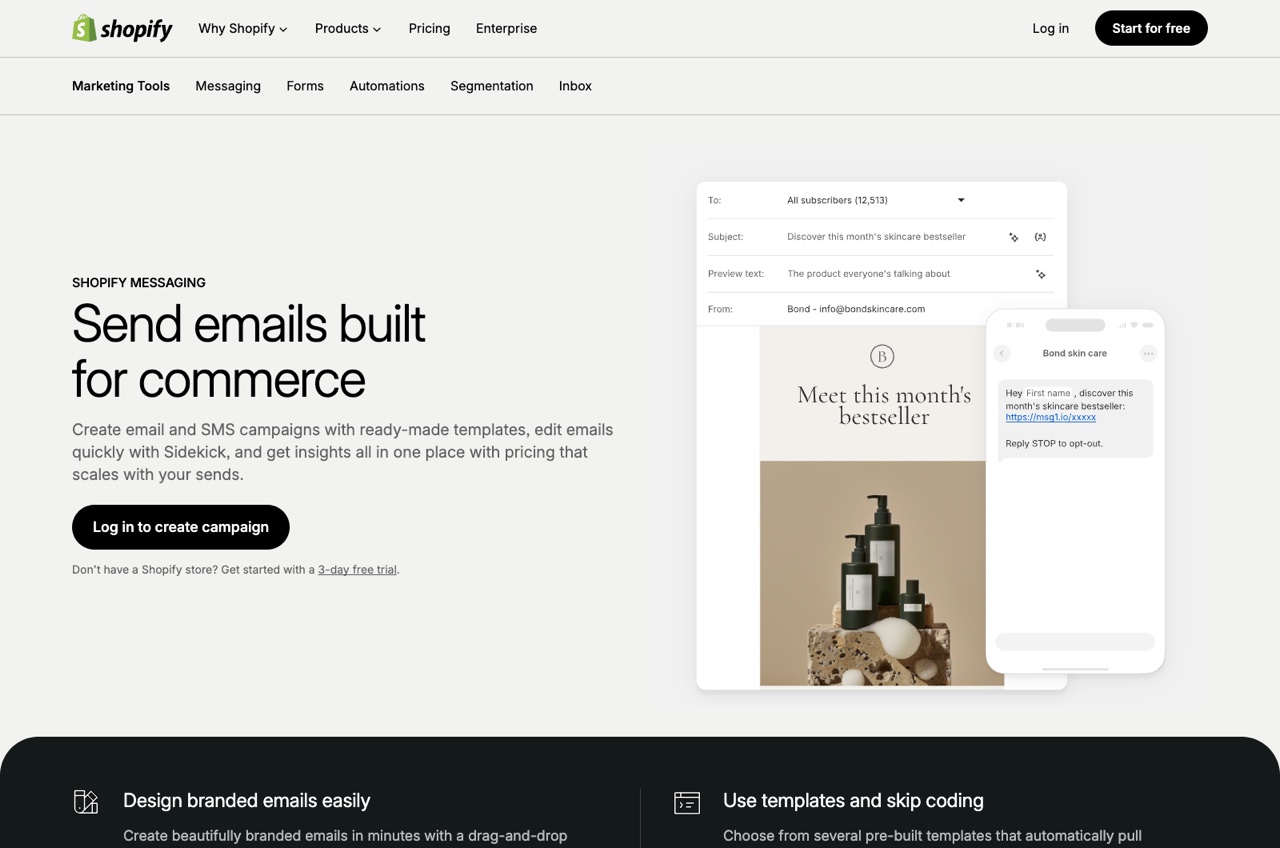
Shopify's built-in email, now called Shopify Messaging, gives eligible stores 10,000 emails a month before charging per thousand, according to its cost guide. For a label with 1,500 subscribers sending a launch and a newsletter each month, that's free.
- Best for: new labels under 2K contacts that want to stay in the Shopify admin.
- Starting price at 10K contacts: about $30/month for four full-list campaigns, on top of your Shopify plan.
- Ecommerce integrations: Shopify itself.
- Automation depth: core store automations; test each flow you need before relying on it.
- One drawback: browse-level personalization and multi-branch flows are thinner than in a dedicated platform.
Our Shopify Email alternatives post covers when brands outgrow it.
Seguno: for Shopify-only brands that want restock alerts in the admin
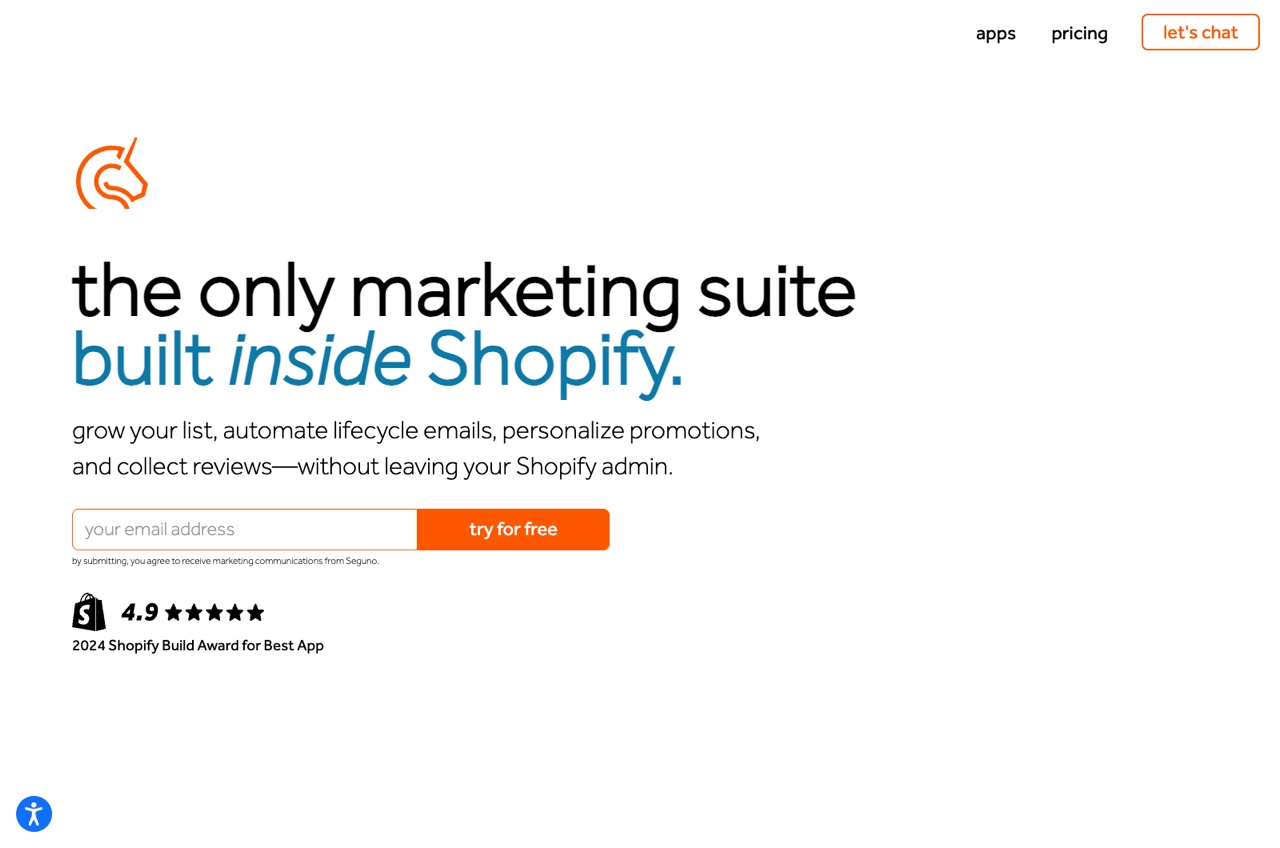
Seguno runs inside the Shopify admin, bills through Shopify, and its pricing page lists back-in-stock alerts, browse and cart abandonment and unlimited sending. Its billing doc sets $35 for up to 2,500 subscribers, plus $20 for every extra 2,500.
- Best for: small and mid-size Shopify fashion brands that want everything in the admin.
- Starting price at 10K contacts: $95/month by its published tier rule.
- Ecommerce integrations: Shopify only.
- Automation depth: prebuilt and custom multi-email automations.
- One drawback: it works only on Shopify, and segmentation centers on Shopify customer data.
Drip: for a long brand-story welcome series
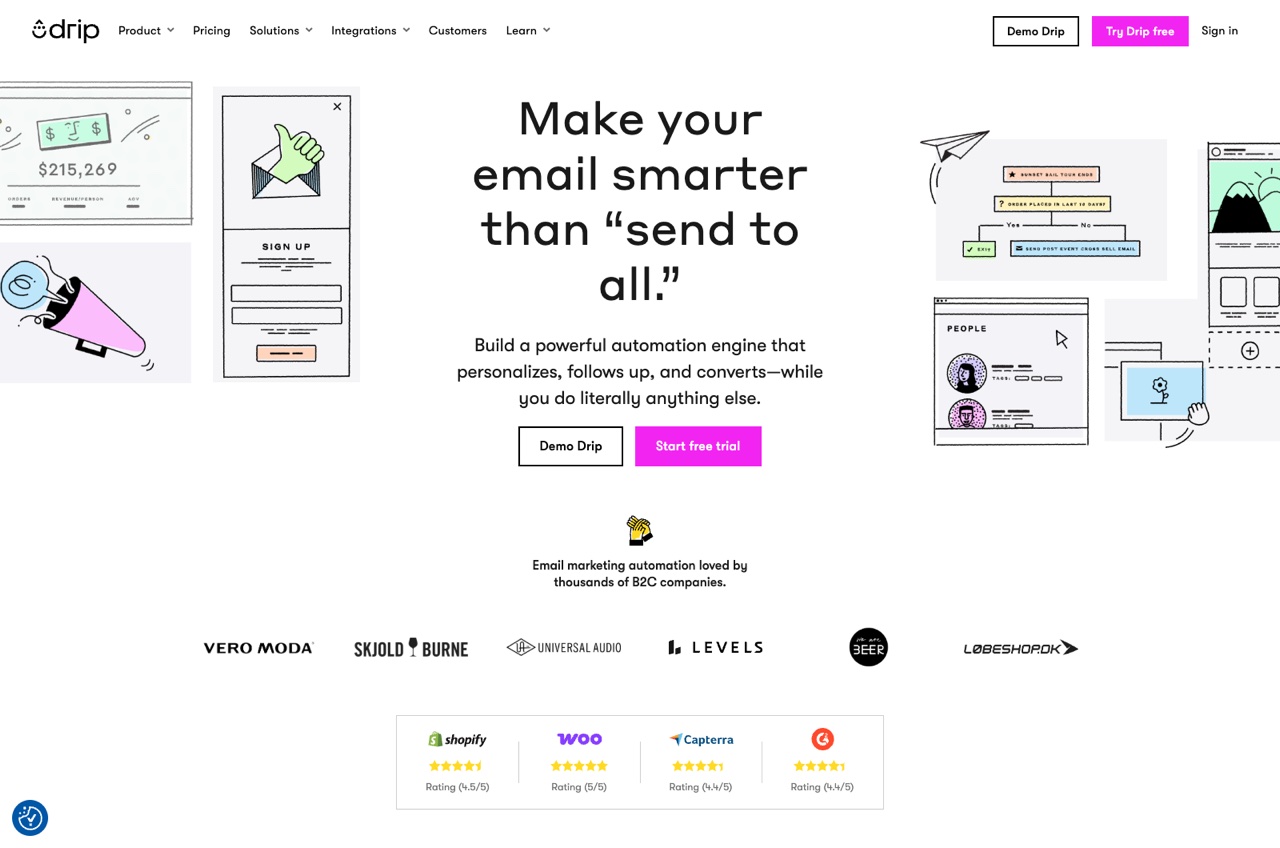
Drip suits a label whose best email is the founder's welcome series about fabric sourcing and how the pieces are made. Its workflows branch well, and its pricing page lists ecommerce workflows and revenue reporting.
- Best for: small labels with a story-led welcome and few flows.
- Starting price at 10K contacts: $154/month.
- Ecommerce integrations: Shopify and WooCommerce.
- Automation depth: strong branching workflows.
- One drawback: $699/month at 50K, and no native back-in-stock flow to lean on.
Flodesk: for design-led indie labels
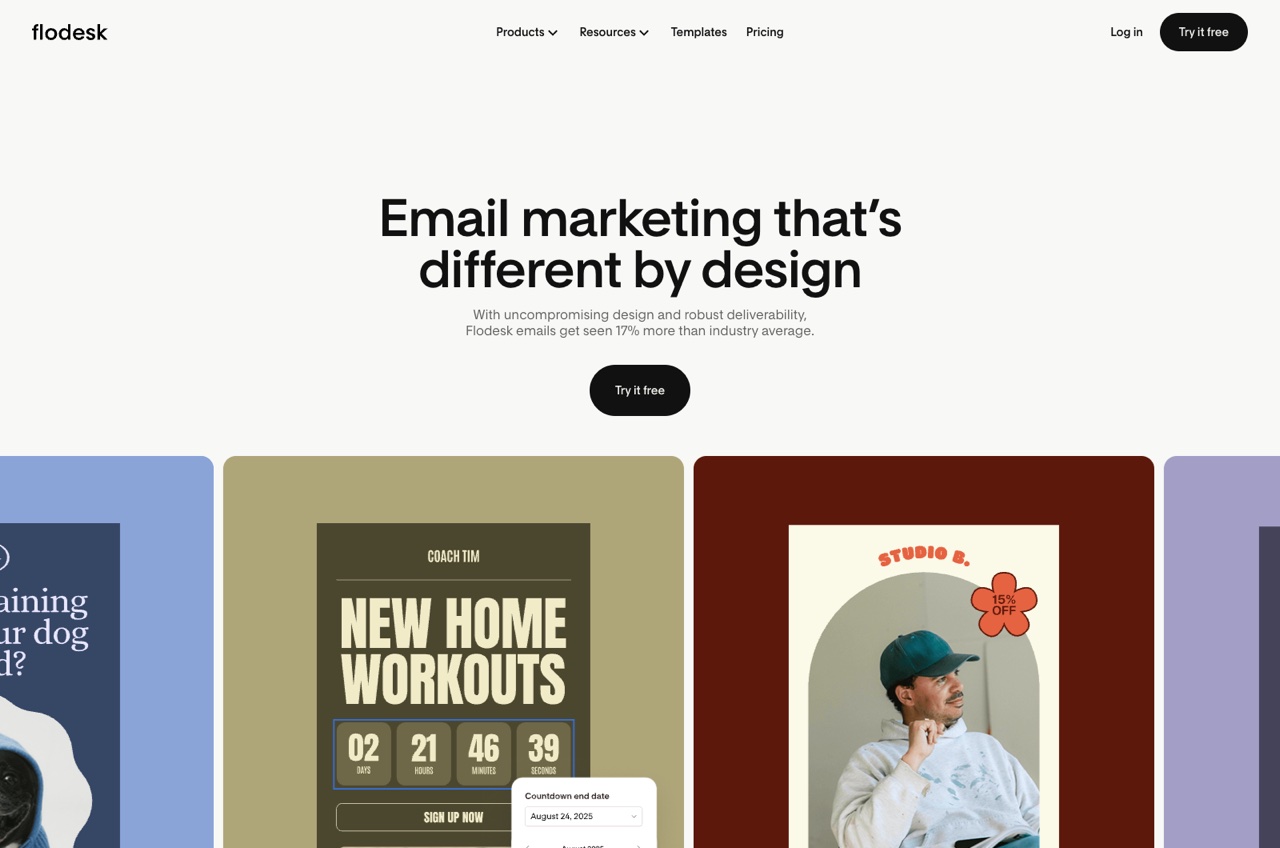
Flodesk's templates look good out of the box, and its pricing page lists a flat $46/month, or $38 billed yearly, with unlimited subscribers. A one-person label sending a lookbook every two weeks can live happily here.
- Best for: indie labels where the lookbook email is the whole program.
- Starting price at 10K contacts: $46/month, or $38 billed yearly.
- Ecommerce integrations: a Shopify connection is listed; check which order and product data reaches workflows.
- Automation depth: linear workflows for welcome and nurture.
- One drawback: browse abandonment and size-level segmentation are out of reach without deep store events.
Price comparison by stage
USD per month, checked 14 November 2026, regular monthly billing unless marked.
| Platform and plan | 1,000 contacts | 10,000 contacts | 50,000 contacts | 100,000 contacts |
|---|---|---|---|---|
| Klaviyo Email | $30 | $150 | $720 | $1,380 |
| Omnisend Standard | $20 | $132 | $413 | $900 |
| Shopify Messaging, four campaigns | $0 | $30 | $190 | $355 |
| Seguno | $35 | $95 | $415 | $815 |
| Drip | $39 | $154 | $699 | $1,199 |
| Flodesk Email | $46 | $46 | $46 | $46 |
Seguno's 50K and 100K rows apply its published $20-per-2,500 rule; confirm in its selector. Shopify's rows assume four full-list campaigns a month. Sources: Klaviyo, Omnisend, Shopify, Seguno, Drip, Flodesk.
At 10,000 contacts, a fashion brand running seven flows pays $150 on Klaviyo, $132 on Omnisend Standard or $154 on Drip. Audienceful Growth, with unlimited flows and sends, is $118/month billed yearly. At 50,000 it is $309 against Klaviyo's $720 and Omnisend's $413.
Back-in-stock: which tools do it natively
| Platform | How restock alerts work |
|---|---|
| Audienceful | Flow on a custom restock event from your inventory or restock app |
| Klaviyo | Native form and flow on Shopify and BigCommerce |
| Omnisend | Native form and workflow preset |
| Seguno | Back-in-stock alerts listed on its pricing page |
| Shopify Messaging, Drip, Flodesk | Use a restock app and pass its signups to the email tool |
The 7 flows every fashion brand should run
| Flow | Trigger | Timing |
|---|---|---|
| Welcome | Signup | Brand story immediately, best sellers day 2, first-order offer reminder day 5 |
| Browse abandonment | Viewed product, no cart | 2 to 4 hours, then 1 day with similar styles |
| Abandoned checkout | Checkout started | 1 hour, 24 hours (with low-stock note if true), 48 hours |
| Post-purchase fit and styling | First order paid | On dispatch: fit guide and exchange link. Day 7: three ways to wear it |
| Review request with photos | Order fulfilled | Day 10 to 14, after the return window question has settled |
| VIP early access | Enters VIP segment, or 24 hours before a drop | Drop access 24 hours ahead of the public send |
| Win-back | No order in 120 days | Day 120 new arrivals, day 135 offer, day 150 last call |
The fit email is the one to obsess over. Send it when the order ships, not when it arrives, with the size guide for exactly what she bought and a one-click exchange link. A shopper who is unsure about fit will choose an exchange over a refund if you make it easier. Our guides on browse abandonment and VIP customer emails go deeper.
Campaign calendar for drops and seasonal sales
- Two weeks before a drop: teaser to the full list with a waitlist signup.
- 48 hours before: lookbook to waitlist and VIPs.
- 24 hours before: VIP early access opens.
- Launch morning: full-list send with the product grid.
- Launch plus 2 days: "selling fast" to openers who didn't click, with live stock.
- Launch plus 7 days: styling email to buyers, "still available" to browsers.
For Black Friday, start building the segment and creative six weeks out. Our Black Friday email guide has the full timeline.
FAQs
What's the best email platform for a new clothing brand?
Under 2,000 contacts, Shopify Messaging or Audienceful's free plan (up to 1,000 contacts) keep costs near zero. Pick the one whose flows you'll still want at 10,000, so you don't migrate twice.
Is Klaviyo or Omnisend better for fashion?
Klaviyo has more depth and a bigger app ecosystem. Omnisend is cheaper at most sizes and bundles SMS. Both do back-in-stock natively. Our Klaviyo vs Omnisend post has the detail.
How often should fashion brands send emails?
Two to four campaigns a week is common for active labels, more during drops and sales. Keep unengaged subscribers on a slower cadence so they don't drag down inbox placement for everyone.
How do I send back-in-stock emails on Shopify?
Use a native back-in-stock flow in Klaviyo, Omnisend or Seguno, or a restock app that passes signups and restock events to your email platform. In Audienceful, trigger the alert from a custom event when the variant is back.
Can email reduce returns for apparel?
Yes, mostly through the post-purchase fit email. Send the size guide and an exchange link when the order ships, and ask fit questions before the return window closes.
Do fashion brands need SMS?
It helps for drops, where minutes matter, and for VIP early access. Email still carries the welcome, browse, cart and fit flows that make most of the revenue.
Growing a Shopify fashion brand? Start with Audienceful, install the Shopify app and launch browse abandonment and the post-purchase fit flow in an afternoon. The 14-day Growth trial needs no card.
